John Keiger

John Keiger

John Keiger is a former Research Director at the University of Cambridge and author of the biography of French president Raymond Poincaré

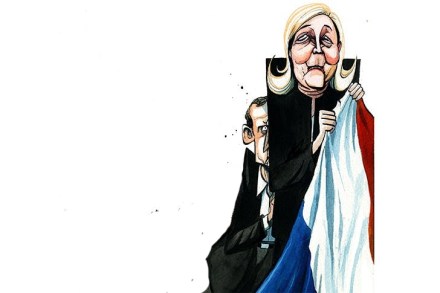
Might Macron lose to Le Pen?

The latest French opinion poll puts Marine Le Pen on around 26 per cent, ahead of President Emmanuel Macron on 23 per cent when it comes to voting intention for the 2022 presidential race. This reverses Macron's 2017 first-round score of 24 per cent and Le Pen on 21.3 per cent. Of course, Macron won the second round convincingly with 66.1 per cent because mainstream voters could not bring themselves to vote for Le Pen's Rassemblement National. So does this poll change the outlook for the elections in 16 months? Ever since Macron’s presidential victory, polls have consistently shown a second-round run-off between Macron and Le Pen.
This pandemic has shown the best and worst of France

France is having a torrid pandemic with a succession of failures, from PPE equipment to vaccine invention, a stalled vaccination programme and now interminable and frustrating hesitation over a third lockdown. But we, and the French, should focus on the many things they do get right. Traducing Mark Antony’s speech to the Romans, it is time to praise France not to bury her. The ninth French-organised Vendée Globe – the world’s most gruelling 80-day, round the world solo yacht race – drew to a close in the small hours last night at Sables d’Olonne in the Vendée in western France. Its competitors, overwhelmingly French, have provided a dazzling example of the best of sport.

France’s vaccine problem

France is the only permanent member of the UN Security Council not to have developed a coronavirus vaccine, and it hurts. USA: two; UK: one; Russia: one; China: one, France nul points. To make matters worse, France also has an embarrassing international ranking in the number of its citizens it has vaccinated.  ‘France is the laughing stock of Europe’, cry a range of politicians and media. How is this possible in the land of Louis Pasteur, the French ask themselves? Even discounting Edward Jenner a century before Pasteur (whom France’s health minister graciously acknowledged), the French see this as the continuation of the country’s ‘déclassement’, a relentless historical decline from better days.

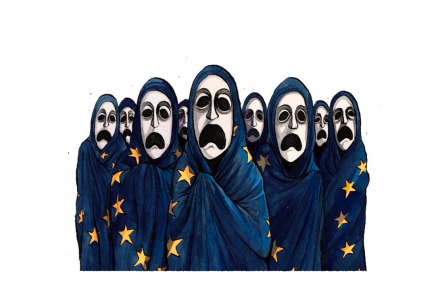
The EU is a divided house

What does 2021 hold for the European Union? At the end of 2020 Brussels has gone out of its way to engage in unity-signalling, announcing that all 27 members will begin vaccination on the same day and feigning a united front in the face of the UK’s new strain of coronavirus. But in truth its 27 member states are confronted by serious structural divisions in three fundamental areas: economics, culture, defence. Deep economic divisions surfaced in the EU after the 2008 financial crash along a north-south axis. The split between the richer ‘frugal’ northern economies and the ‘profligate’ southerners was starkest in 2012-13 over Brussels’ treatment of Greece.

France would be foolish to veto a Brexit deal

Britain and France are heading for an almighty bust-up over Brexit. This morning the French junior minister for European affairs, Clément Beaune, specifically confirmed that if France was unhappy with the final Brexit deal — notably on fishing — it would use its veto. France would carry out ‘her own evaluation’ of the deal and act accordingly, he told radio Europe 1. Whether there is a deal or not, a blame game is about to be unleashed. Given this late stage, if there is a deal then the French cannot possibly get all they want on fishing. The French Prime Minister said so yesterday to French fishermen at France’s largest fishing port, Boulogne.

Joe Biden isn’t the president the EU thinks he is

For four years, president Donald Trump radicalised international relations. There was a shift towards the nation state and unilateralism, beginning with the United States. He viewed intergovernmental organisations like the WHO or the World Trade Organization with acute scepticism thanks to what he saw as their bureaucratic sloth and partisanship. His perception of the European Union and Nato was little better; the first he perceived as an unfair competitor; the second a free-loading bureaucracy. So it came as no surprise that the EU could barely contain its joy at Joe Biden’s election, even if certain eastern member states were reticent. However, the EU will be disappointed if it believes president-elect Biden’s foreign policy will align with its own.

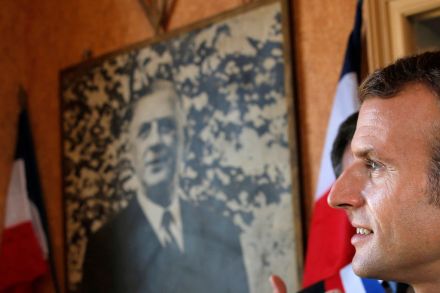
Is Macron following in the footsteps of de Gaulle?

It can’t be much fun being a national leader these days. Be it the US, the UK, all are assailed on myriad fronts by coronavirus, widespread societal division and impending economic ruin. But being president of France takes the biscuit. Since 2014, France is fighting a war against Islamist extremists in the Sahel. 5,100 French troops are battling insurgents across five states in an area several times the size of France. France is doing so to hold back the tide of northward advancing Islamist extremists and to block them reaching the shores of the Mediterranean. Despite this being in the interests of the European Union, France fights on with a death toll already over 50. Yet few other western states, let alone the EU, is willing to help.

Emmanuel Macron’s Trumpian transformation

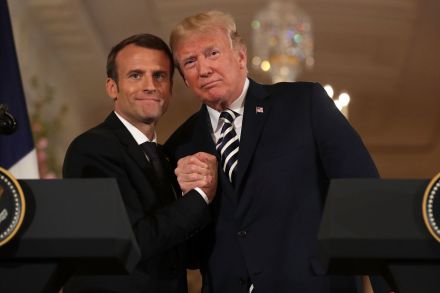
This new world disorder is distorting our vision, so please excuse an apparently fatuous question. Is Emmanuel Macron turning into Donald Trump? As the 45th President of the US prepares to step down from the world stage he may be leaving behind another disciple – Emmanuel Macron (Trump would say a ‘mini-me’). The comparison is audacious, and their bracketing together would irk both. But Macron appears to be on a trajectory bringing him closer to the politician whose style and substance he has spent much time deriding. Macron is of course a more intellectual and urbane individual than Trump. But in style and increasingly in substance the resemblance is growing.

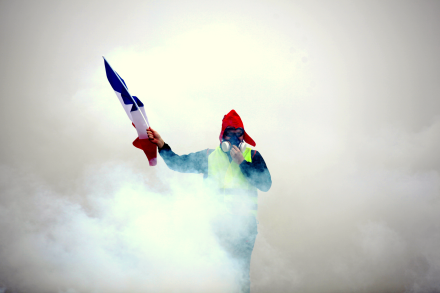
France is revolting against Macron’s second lockdown

Second lockdowns are increasingly difficult for democratic governments to impose and maintain. Violent anti-lockdown demonstrations in Spain and Italy have hit the headlines recently. It was with considerable trepidation, then, that French political leaders ordered France’s second lockdown to begin at midnight last Thursday. It did not help that Macron like Boris had repeatedly said there wouldn’t be a second one.  Ahead it went, to last officially until 1 December with a mid-term review around 14 November. In his TV address to the nation, president Macron foolhardily declared that lockdown would end when daily infections – running at 50,000 – were reduced to 5,000.

France must define its values so it can defend them

France is the most rigorously secular state of the democratic world. Separation of Church and State enshrined in the famous 1905 law was the result of over a century of hostility between the Catholic Church and the French State. Mutual hostility began with the 1789 French Revolution. Until then monarchical France bathed in the glory of being recognised as the ‘elder daughter of the Catholic Church’. But the revolutionaries saw the Church, like the aristocracy, as a pillar of the old regime that had to be rooted out, often by violence. Many took their cue from the Enlightenment philosopher Diderot: ‘Men will never be free until the last king is strangled with the entrails of the last priest.

How Macron reacts to the Nice attack will be critical

The suspected terrorist attack in Nice’s Notre Dame Basilica this morning appears to be the third such incident in France in the last few weeks. Two female worshippers and a man thought to be the Basilica’s sexton had their throats slit by an assassin who, it is claimed, cried 'Allahu Akbar' after being shot and wounded by French police. A crisis unit has been set up at the Interior Ministry. France has jumped to urgent terror alert. Emmanuel Macron is flying down to Nice. His words will be listened to across France and worldwide. Things are at a tipping point. An emotional Mayor of Nice, Christian Estrosi, has called for ‘Islamo-fascism to be wiped from our territory’.

Why is Macron so determined to infuriate the rest of the world?

In the course of his three-and-a-half year presidency, Emmanuel Macron must have the record for the most number of international states antagonised in the shortest time. From eastern Europe to the United States via Brexit he has the knack of putting states’ backs up by a mixture of outdated Gaullian pomposity, lesson-giving and base tactlessness. The latest and most dangerous variant is with Turkey, which is already spilling over to the wider 1.5 billion Muslim world. Macron’s differences with president Erdogan are not new.

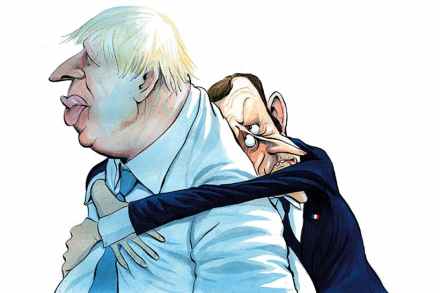
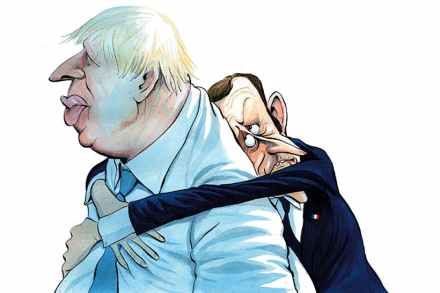
Macron and Boris are now bound together on Brexit

Last Saturday the French president and British Prime Minister had a phone conversation about the pandemic and Brexit that received little coverage. But the subject matter highlights the extent to which the two leaders have troubles in common and solutions to share. Emmanuel Macron and Boris Johnson have had a bad pandemic for similar reasons: lack of PPE, confused messaging on masks and quarantine, poor quality test and trace and unreliable Covid apps on phones (with the French prime minister and sundry ministers confessing not to have even downloaded the French version, which is unusable with a mere 2.6 million downloads).

The EU is adrift and in search of an anchor

The EU has never been a serious global foreign policy player. Without a European army or a meaningful defence pact, the pretence of a Common Foreign and Security Policy is mere sound and fury signifying nothing. Back in 1991, the Gulf War served as a stocktake of the international weakness of the European communities with the Belgian foreign minister lamenting Europe’s position as ‘an economic giant, a political pygmy and a military worm.’ If anything that position has worsened today with China on the cusp of overtaking the EU economically. The global pandemic — in which Europe has been severely affected — is shaping up as another stock-take of where the EU’s vital international interests really lie.

How the EU is breaking its own Lisbon Treaty

That the European Union takes to the moral high ground on international law when it suits it is hardly new. Nor is its infringement of international treaties, even when they are its own. For six months now, the European Union has been in breach of its fundamental international treaty: the 2007 Lisbon Treaty.  Brussels has fallen foul of Article 341 and Protocol 6 – or what might be called the ‘Alsace-Lorraine protocol’ – of what is officially known as the Treaty on the Functioning of the European Union (TFEU). This section of the treaty permanently situates the European Parliament’s plenary seat in the Alsatian capital of Strasbourg.

What explains France’s Covid chauvinism?

It’s that old Covid chauvinism again. France is in denial about the severity of its new pandemic flare up and possibly a second wave. French news bulletins, but also supposedly authoritative newspapers like Le Monde, have concentrated on how badly things are going elsewhere. In the last few days, Spain was singled out as having reached a new peak of around 3000 positive tests in the previous 24 hours, Britain had hit a similar number. Few mention that France’s numbers were way above that. What is behind this diversionary tactic? To put it bluntly, as I explained in The Spectator on 5 May, Covid statistics are just international politics by other means.

Macron’s Brexit swansong is about to unfold

At a solemn ceremony at the Panthéon to mark the 150th anniversary of the (re-)birth of the Republic, president Macron chose a 59-year-old anti-Brexit British expatriate to be one of five newly naturalised French citizens emblematic of what it means to become French. Macron does nothing without gauging its historical and political theatre. Coming just days before the eighth and final round of Brexit negotiations, here was Macron thumbing his nose at Britain and signalling his intention to return to the Brexit arena. What will this mean for the Brexit negotiations? First it will see Michel Barnier increasingly sidelined. Barnier is, after all, a mere EU functionary whose brief was drafted before Covid and which he has very legalistically stuck to.

Macron’s battle against the forces of French anarchy

This week France announced a €100 billion (£89 billion) stimulus package equivalent to 4 per cent of GDP over two years. It might seem churlish to ask why the French government has put so much money on the table. To save the French economy, of course. But there's a graver concern in France that has lately come to the fore. But first, some context to the ‘France Revival’ stimulus programme. It adds to the most generous furlough scheme of any developed economy, which in the spring was already calculated to push France’s debt to GDP ratio over 121 per cent, according to France’s budget statistics.

The French are baffled by the BBC’s Rule Britannia censorship

From 1940 to 1944, the Vichy regime set aside France’s 150-year-old rousing national anthem La Marseillaise for Maréchal nous voilà, a sycophantic hymn to France’s collaborationist leader Marshal Pétain. Pétain in the southern zone and the occupying German forces in the north brutally punished any singing of La Marseillaise. During the Second World War, Land of Hope and Glory and Rule Britannia were popular hymns of resistance to fascist invasion and oppression by British peoples in these islands and across the world. Rule Britannia was played at the ceremonial surrender of the Japanese imperial army in 1945 by the massed band of Australian, British and American forces.

France is furious at Boris’s quarantine decision

The French gently mocked the pop-singer Petula Clarke on French media in the 1970s for her contortions about her heart being English but her soul French, or was it the reverse? But however much the British metropolitan classes may cloy to France as a mythical ‘world they have lost’, the French perceive the Franco-British relationship very differently. Competition is the watchword. And it is sharp. General de Gaulle the most acute of politicians and contriving of historians remarked, when French policy in the 1960s called for Britain to be rejected from the Common Market: ‘Our hereditary enemy, it was not Germany, but England.