John Keiger

John Keiger

John Keiger is a former Research Director at the University of Cambridge and author of the biography of French president Raymond Poincaré

Macron’s France is at a turning point

France is confronted by a serious social crisis, morphing into a grave political crisis, which could become a regime crisis.   To be fair, political instability did not begin with Emmanuel Macron. It has been growing since 2000 when the presidential mandate was cut from seven to five years, rendering it coterminous with parliamentary elections and reducing the President of the Republic to little more than a super prime minister. But Macron has made things worse.   Now at only the beginning of his second term he survives with a hung parliament, obliged to get his flagship pension legislation by executive order for fear of defeat.  Where will this lead France in the next four years?
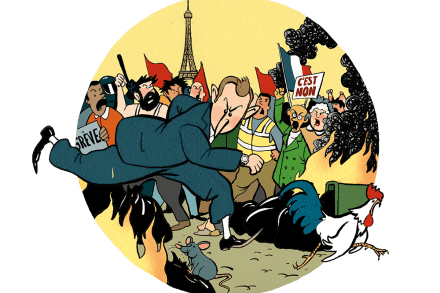
Could the markets force Macron to back down on pension reforms?

Is Emmanuel Macron reaching his Liz Truss moment when financial markets finally determine his future? On 20 March Moody’s ratings agency strode into France’s explosive pensions reform turmoil. While keeping France’s rating at Aa2 ‘stable’ it nevertheless warned that President Macron’s constitutional sleight of hand denying the National Assembly a vote on the bill risked undermining future macro-economic reforms for the four remaining years of his mandate.  Two days later, citing political tension and social unrest, Fitch Ratings warned that the government’s ability to reduce high public debt will be constrained. Uncertainty surrounding the debt trajectory is reflected in the negative outlook on France’s ‘AA’ rating.

Is Macron dreaming of Aukus becoming Fraukus?

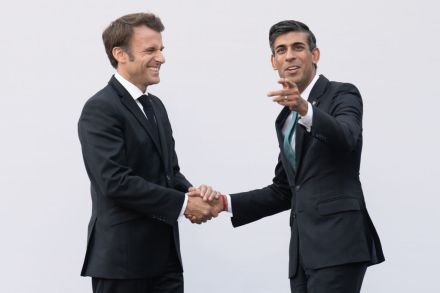
When silhouetted against the symbolism – as French media proudly insist – of King Charles choosing France for his first state visit at month’s end, this weekend is very much an Anglo-French affair. On Friday, Rishi Sunak and seven ministers visited Paris – a first for five frosty years – for a Franco-British summit with president Macron and relevant ministers on everything from energy policy, immigration, defence and security to Ukraine and the Asia-Pacific. Saturday saw France slaughter England at rugby in the worst ever defeat at Twickenham. More awkwardly for France and Macron, this is also the weekend of further revelations about next stages in the Aukus deal.

Macron’s France is a tinderbox

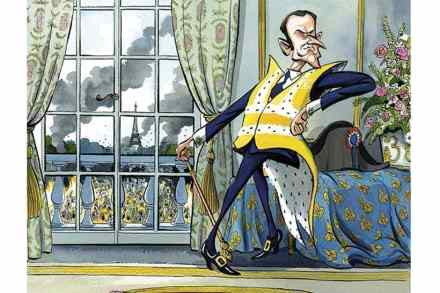
On 22 March 1968 the slow burn that would eventually flare into France’s ‘May ‘68’ began. The radical student movement known as ‘22 March’, with Daniel Cohn-Bendit (Dany le Rouge) at its heart, was unaware its actions on this day would lead to riots and the eventual paralysis of the French state after workers joined them. History does not repeat itself, it echoes. Even then, echoes from the past do not necessarily produce the same effects, no matter how many revolutions France has known. Nevertheless, 55 years later on this 7 March, France will be paralysed by widespread rolling strikes and demonstrations against President Macron’s proposed legislation to extend the retirement age from 62 to 64 years.

Is Macron really saying the France-Afrique is finished?

On 2 March in Gabon, West Africa, President Macron declared that ‘the days of France-Afrique are over’.  Since the early nineteenth century the African continent has emblazoned France’s aspiration to international power status. Like any empire it provided natural resources. It also provided manpower. Unlike other imperial powers with surplus domestic populations to deploy, France’s demography was stagnant at 40 million from the 1840s until the 1940s. Africa provided troops for her armies (tirailleurs sénégalais) to compete with Germany’s demography and growing forces. Even after the troubled decolonisation in the 1960s Africa continued to provide cheap labour to a thriving French domestic industry.

Europe’s centre of gravity is shifting towards Poland

The President of the United States of America flies into Poland this month. Not to Germany or France or even the UK. There is great symbolism in this gesture, which goes further than Washington merely showing solidarity to the front-line states in Russia’s war against Ukraine. It is emblematic of a trend which has seen Europe’s geopolitical fulcrum shift eastwards. Russia’s war against Ukraine has exposed the impotence of the western-European establishment Once upon a time Europe’s centre of gravity was west of the Elbe. This was underlined by the reality of the Cold War, by economic might, by western Europe’s military ascendancy reinforced by the United States’ physical presence, and by the western focus on European integration.

What Germany can learn from Japan about the new world order

The end of the second world war saw the defeated aggressors Germany and Japan accept moral capitulation and begin new international lives as liberal democratic and largely pacifist states bent on cooperation not coercion. But over the last few years an increasingly unsettled international order has emerged to test the pacifism of the fourth and third largest economic powers. Russia’s aggression against Ukraine has finally cajoled a reluctant Germany out of its semi-neutral stance. As war returned to the European continent, Berlin has bowed to Western pressure to release its Leopard tanks to a martyrised Ukraine. No longer virgo intacta, Berlin has forfeited its 80 year state of innocence.

Britain’s Ukraine strategy could reap dividends for Brexit

Ever since at least the French revolution it has been in Britain’s strategic interest to ensure no single power or group of powers dominates the continent of Europe. Britain’s motives were always military and, as an international trading nation, commercial. Today the Russian invasion of Ukraine presents the UK with a strategic opportunity to stymie Moscow’s aggression and to mollify the EU’s cussedness over the Brexit settlement. Britain’s stock has risen amongst EU members, just as France and Germany’s has declined Britain’s forward military stance on defending Ukraine against Russia is in the same vein as her defence of Belgium in 1914 or Poland in 1939.

All is not well in Macron’s France

The relationship entertained by French elites to their homeland is very different from their English counterparts. 'England is perhaps the only great country whose intellectuals are ashamed of their own nationality', wrote George Orwell in 1945. That derisory sentiment continues today among Britain's urban elites. French elites by contrast – though they can be highly critical of their country among themselves – do not shy from exalting its status abroad. French nationalism, born of the French Revolution, only came to be embraced by the right a century later. From then onwards, basic patriotism crosses political boundaries. While Britain’s position is not rosy, France’s is certainly no better Elite francofilia has long been a facet of English snobbery.

Brexit’s critics are strangely quiet about the European parliament scandal

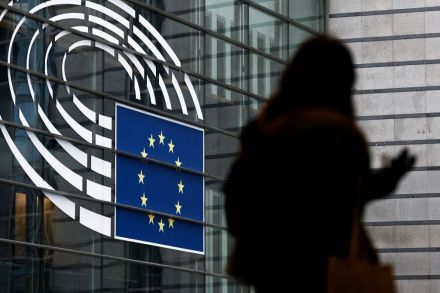
The corruption scandal embroiling the European parliament and the European Union’s institutions at the highest level is shaping up to be its biggest to date. Belgian police have arrested Eva Kaili, a vice-president of the parliament, and three others in an investigation into alleged bribes involving spectacular sums in cash, allegedly from Qatar, to influence EU officials and parliamentary voting. ‘The shockwave of 'Qatargate' is Le Monde’s take on a story it says threatens to 'destabilise Europe’s institutions’. This isn't an exaggeration: the probe ripples out to the whole progressive ecosystem surrounding the parliament. Among the suspects, according to the BBC, is former MEP Pier Antonio Panzeri, who now manages the human rights group Fight Impunity.

Macron’s humiliating climbdown over Aukus

Guess who turned up in Bangkok this week at the 21-nation Asia-Pacific Economic Cooperation meeting? The forum, which includes the US, China, Australia, Japan, Russia, but not France, was visited by none other than President Macron. ‘You must be asking yourself what a French president is doing here’, he charmed in English.  Macron claimed to be the first European leader to be invited to the forum. He insisted he was there because France is ‘a country of the region’. According to the Elysée this invitation ‘validates the Indo-Pacific strategy launched in 2018’. It does indeed, but with far more subtle ramifications.

Is Macron trying to lasso London?

Some supporters of the EU might struggle with the concept, but Europe is about much more than just what unfolds in Brussels. The EU’s 27 states may be a large part of Europe, but the two are not coterminous. Nor, more importantly, do they all have the same interests. The newly created European Political Community (EPC) had its first meeting in Prague over the last couple of days. Including those states on the fringes of Europe, as the EPC does, the number in attendance was 44 (with Belarus and Russia excluded). Beyond the EU 27 there is Turkey, the UK, Ukraine, Norway, Switzerland, Iceland, Liechtenstein, six Western Balkans nations, Moldova, Georgia, Armenia and Azerbaijan.

France and Britain are brothers in despair

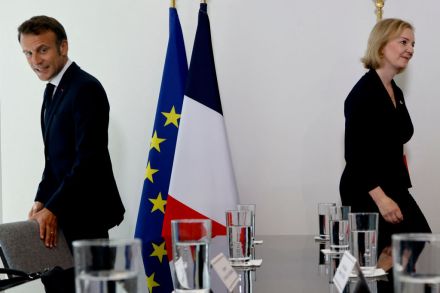
Since Brexit, Britain and France appear to have drifted apart. Leaders from both countries have engaged in an on-off war of words. But despite these political fractures, Britain and France have actually come to resemble each other more closely than ever. It is now difficult to differentiate the economic, financial, social and political conditions that exist on both sides of the Channel.  France and Britain face a wave of strikes over the coming months. After a lull over the summer, Gallic workers are once again walking out: public sector and railway worker unions staged a national strike for wage increases last week. Even moderate unions are now threatening mass stoppages if Macron continues his labour reforms.

France loved the Queen

The tribute paid by France to Her Majesty Queen Elizabeth II has been heartfelt, fulsome and moving. French media across the board have paid generous homage, as though to one of their finest, to Britain’s longest serving monarch – surpassed in world history only by Louis XIV acceding as a babe-in-arms. This vicarious Panthéonisation was admirably encapsulated by Emmanuel Macron, the 10th French president the British sovereign had known. In a moving video in English posted on Twitter on Friday, foregrounded against the Union Jack, he poignantly encapsulated the feelings of his people and their ‘emptiness’ at the British monarch’s death: ‘To you she was your Queen; to us she was the Queen’.

The French buy-out that explains Macron’s strategy

It’s a platitude that France and Britain are rivals and have been for centuries. But, since the 1904 Entente Cordiale, the rivalry is more a question of competition than conflict. Always, in the darkest hour, each sided with the other, even if post-war they didn’t fully recognise the other’s contribution. Britain congratulated itself over the Dunkirk evacuation when in truth without French troops holding off the Germans, the ‘plucky’ armada would never have completed its mission; to this day the French believe that American troops were more numerous than British in the Normandy landings.  With the passing of the French war-time generation the postwar moral debt to Britain and residual goodwill were expunged.

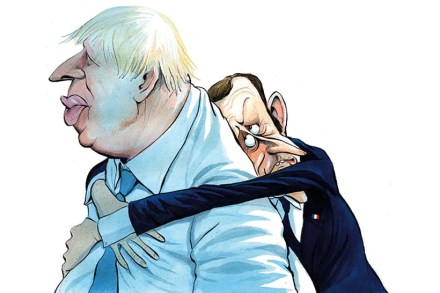
Boris and Macron’s ‘bromance’ is rooted in despair

Is 'Le Bromance' really back on? Boris Johnson suggested as much at the G7 summit in Bavaria this week, where he strolled arm-in-arm with Emmanuel Macron. Yet when one considers the breadth of subjects the two avoided in their discussions – no Northern Ireland Protocol, cross-Channel migration, or Aukus – it is hard to believe the basis of their renascent friendship is better Franco-British relations. The reality is that their jaunt overseas, epitomised by Bojo and Manu’s communal clowning, comes as a blissful diversionary and recreational break from domestic woes. Their new-found fraternity may lie in shared solace at their strikingly similar political predicaments. Macron may have been reelected president on 24 April, but over half of his 58.

Emmanuel Macron’s future looks bleak

The single headline across the front page of the centre-left daily Libération said it all: ‘La Gifle’. But much more than a slap in the face, Emmanuel Macron has taken a heavyweight sock in the jaw. With only 245 seats for his ‘Ensemble!’ grouping, the French president is a country mile from having a parliamentary absolute majority (289). Then there is the drubbing his lieutenants took with the ousting of three ministers, the president of the national assembly and the leader of his parliamentary LREM party. All lost their seats. Sunday’s legislative results are a full-frontal humiliation for Macron personally, ideologically, politically and institutionally.

Why is Macron so desperate to bring Russia in from the cold?

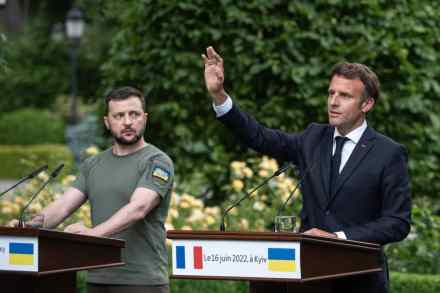
Emmanuel Macron should get a new historical advisor. He continues to repeat – this time at his Kyiv press conference on Thursday – that Russia must not be humiliated following its invasion and war against Ukraine. Politicians indiscriminately pluck at historical examples to justify controversial policies. For Macron, the aftermath of the First World War serves as a warning against the dangers of humiliating adversaries. According to the French president, humiliation of Germany in the 1919 Versailles Peace treaty resulted in the allies losing the peace and Germany plotting revenge and renewed war twenty years later. He actually turned at this point to German chancellor Olaf Scholz, who had accompanied him (with Mario Draghi of Italy), to emphasise the point.

France could plunge the eurozone into its next crisis

In the French presidential elections, and now in the legislatives that will close on Sunday evening, the one issue kept under the carpet is finance. Neither the centrist Macronista grouping ‘Ensemble!’, nor the far-left Corbynista-like Nupes coalition of Jean-Luc Mélenchon has updated the electorate on how their manifestos are to be funded. And yet over the last month French finances have deteriorated dramatically. Neither programme has the slightest chance of being implemented without plunging French finances, and thus the eurozone generally, into a new sovereign debt crisis. France is dancing on a debt volcano.

France is eternally divided

A lot happened in France last night. After a lacklustre performance, long disillusioned supporters were unable to summon any enthusiasm for Paris Saint Germain football team’s French league championship success. Emmanuel Macron was re-elected French President beating Marine Le Pen 58.5 to 41.5 per cent and the official disco party celebration organised beneath the Eiffel Tower finished early. A short distance away on the Pont Neuf police shot and killed two men who drove a car at them. Demonstrators took to the streets and threw fireworks in protest against Macron’s election in Paris, Lyon, Strasbourg, Rennes, Grenoble and a host of other French towns where teargas scuffles took place. Emmanuel Macron made the shortest victory speech of his career.