John Ferry

John Ferry

John Ferry is a contributing editor for the think tank These Islands and a former financial journalist

How to silence Scottish nationalists

It's been the favourite gotcha question put forward by supporters of the SNP and the Scottish Greens at hustings events and TV debates throughout this Holyrood election period. What is the democratic route to a second independence referendum? The result has usually been awkward deflections by non-nationalist politicians as they try to avoid being framed as anti-democratic – which is, of course, the point of the question in the first place. If the SNP were truly good democrats would they not be more tolerant of the inclusive democracy they are already part of? Scottish Labour, which more than any other party must woo a section of the electorate that has previously voted SNP, is particularly vulnerable to this attack.

The SNP’s food price cap is a ‘gimmick’

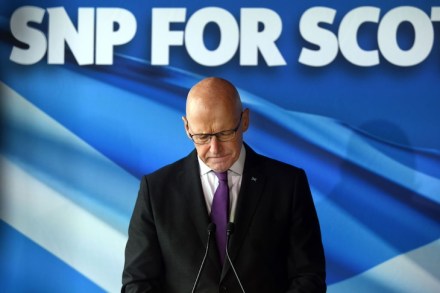
First Minister John Swinney needed a headline-grabbing new policy for the launch of his party’s Holyrood election manifesto yesterday, and it came in the form of a pledge to cap supermarket prices on ‘essential’ foods. Speaking in Glasgow’s East End, Swinney said that while inflation has come down, people are struggling to afford their groceries to such an extent that ‘for some the cost of food is so high that it is hitting their health and wellbeing’. He went on: ‘Now, with the current powers of our parliament, I cannot normally set prices at the till. But things have got so tough it is now impacting on our nation’s nutrition. That is a public health issue, and I have public health powers.

The SNP’s Holyrood campaign is thoroughly dishonest

Has there ever been a more dishonest Holyrood election campaign than the one John Swinney is currently running? I don't believe there has been. Break away from Britain's integrated electricity market and you smash the model that has led to Scotland being a 'leader' in wind energy in the first place A look at Swinney or the SNP's X or Instagram feeds appears to show a steady stream of misinformation in recent months. Of course, we anticipate that politicians will at times stretch the truth – or, at the very least, not be completely open with us. It would be naive to think otherwise. But the consistency and brazenness of SNP lies during this campaign takes misinformation in our politics to a new level.

It’s rich of Nicola Sturgeon to criticise flag-waving

The audacity of it! The hypocrisy! First, Nicola Sturgeon says yesterday in a TV interview that she’s ‘not that into flags’ and tells us all to ‘calm down about flags’. Then, later in the day, her successor as first minister, Humza Yousaf, chimes in with one of those creepy walking-while-talking videos in which he informs us that ‘Hate wrapped in a Saltire is still hate.’ Scotland’s flag ‘belongs to everyone’, he mawkishly intones. This, of course, comes in the context of Operation Raise the Colours, the flag raising campaign seen by some as a robust exercise in patriotism but criticised by others as intimidatory and racially motivated. The movement has spread to Scotland, with Saltires appearing on lampposts in towns and cities from Glasgow to Aberdeen.

Why is the SNP resurrecting full fiscal autonomy for Scotland?

John Swinney's strategy for retaining the office of first minister after next year's Holyrood election was fairly straight forward. All he had to do was sit back and watch a combination of the rise of Reform and Labour's growing unpopularity split the opposition vote and the SNP would once again emerge as the biggest party in parliament. No rocking the boat with radical policy announcements – and definitely no campaigning for another referendum. The SNP had asked for full fiscal autonomy as part of the new fiscal settlement put in place after the 2014 referendum As Alex Salmond had done in the run-up to the 2011 Scottish election, the constitution, even though it is the raison d'être of the SNP, would be firmly side-lined until after votes had been cast.

Scotland’s ferry fiasco is never-ending

Scotland's troubled nationalised shipyard, Ferguson Marine, has failed in its bid to win a crucial order for seven small electric ferries that will operate on Scotland's west coast, it was announced yesterday. Caledonian Maritime Assets Limited (CMAL), the state body in charge of ferries procurement, says it intends to award the contract for the new 'loch class' vessels to Polish firm Remontowa Shipbuilding. A budget of £175 million has been allocated to the build, which will include harbour and shore power upgrades. Six shipyards were invited to tender for the contract, with five returning responses. 'Bids were robustly assessed against technical and financial criteria, with a 65 per cent/35 per cent weighting, respectively,' reports CMAL.

The SNP’s ferries disaster isn’t over yet

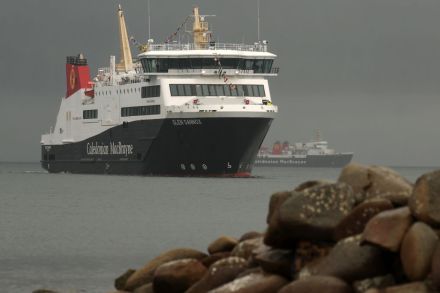
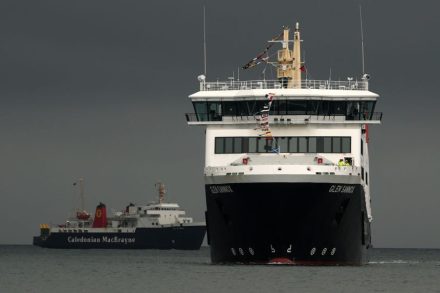
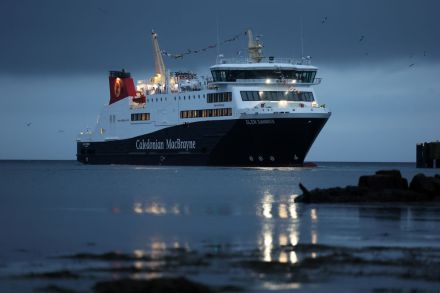
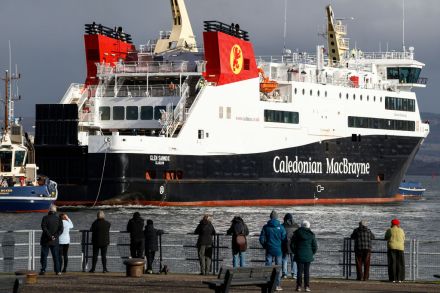
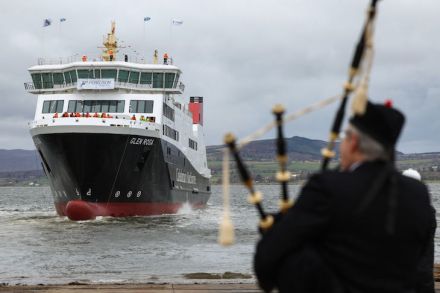
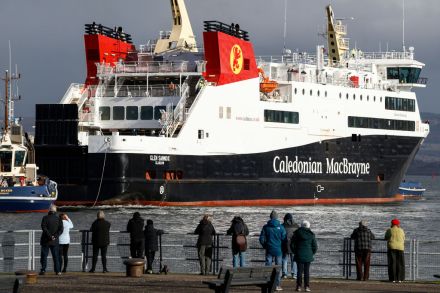
The Scottish ferry, the Glen Sannox, has completed its first passenger journey, 2,610 days after it was infamously launched with fake parts and painted on windows by then First Minister Nicola Sturgeon.  Unlike the staged fanfare of that 2017 event, no children were bussed in to wave Saltire flags at Troon harbour this morning, nor speeches given by any government official. This was a quiet affair, in line with current First Minister John Swinney’s strategy of distancing himself from the failings of the Sturgeon era.  In 2017, Nicola Sturgeon said the new boat would contribute to ‘Scotland’s world-leading climate change goals’.

The SNP can only blame itself for its budget mess

Higher-than-expected public sector pay deals, social security reform and the SNP’s freeze on council tax have all contributed to putting pressure on the Scottish government's budget, according to a new report from Scotland's fiscal watchdog.  In a statement accompanying its latest fiscal report, the Scottish Fiscal Commission (SFC) seems keen to remind Scots that the Scottish government bears most of the responsibility for the budget challenges it now faces. ‘While UK government policies contribute to the pressures on the Scottish budget, much of the pressure comes from the Scottish government’s own decisions,’ says the SFC.

The SNP needs to get to grips with its £22 billion black hole

The Scottish government has published its latest Government Expenditure and Revenue Scotland (Gers) report, the official statistics outlining how much tax is raised in Scotland versus public spending for and on behalf of the country. The numbers have been followed with interest over the past decade because they give as accurate a view as possible of the starting fiscal position of any newly independent Scotland. They therefore provide an insight into the budget challenges the newly seceded state would face if the current Scottish government's constitutional preference were to come to fruition. So what do this year's numbers show?

When will Scotland’s ferries start to work?

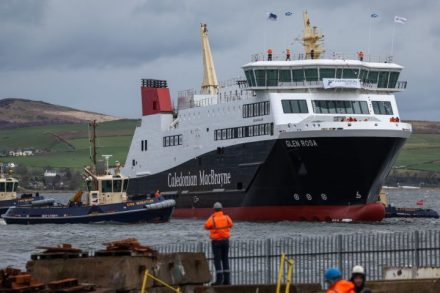
It appears Scotland's troubled Ferguson Marine Port Glasgow shipyard will be kept afloat. A further £14 million of public money has been injected into it, according to announcements this week. At the same time, the Scottish government also took the opportunity to confirm the nationalised yard will not be directly awarded a contract to replace state-owned ferry operator CalMac's ageing fleet of small vessels. Instead, the contract will be put out to tender. This is the latest in what has become known as Scotland's ferries fiasco. It started with an SNP government wanting to be seen to be rescuing commercial ship building on the Clyde just before the 2014 independence referendum. Then there were allegations of a rigged contract for two new ferries to serve Scotland's west coast.

The SNP’s catastrophic defeat is an opportunity for Scotland

Like the wider UK result, the SNP getting a hammering in yesterday’s general election was largely predicted by the polls. But this has not lessened the impact of seeing the many well-kent faces of high-profile former SNP MPs being given their marching orders by the Scottish electorate. One after another they fell, and with them the hubris that has defined the party since 2014 melted away.  Popularity in democracies tends to be cyclical, but the SNP has defined itself not as a mere political party but as the beating heart of a national liberation movement and, as such, able to transcend political gravity. It also has a particular emotional pull for many of its members, many of whom have an unfortunate tendency to conflate party and nation.

The SNP needs to come clean about rejoining the EU

John Swinney and his colleagues continuously claim Scotland ‘rejoining’ the EU is possible, and that by voting SNP we can make it happen. In this general election the SNP manifesto commits to ‘an independent Scotland in the EU.’ This is a perfect example of the way a comforting lie becomes more popular than an unpleasant truth. Why deal with reality and its messy trade-offs when off-the-shelf utopia is available instead?  An independent Scotland in the EU is a myth for the simple reason that the act of separating from the UK would create a new Scottish state structurally prohibited from entering the EU, certainly within any reasonable timeframe.

The flaw in the SNP’s plan to strengthen Scottish shipbuilding

The Scottish government under John Swinney and his deputy Kate Forbes could be on the verge of missing an opportunity to strengthen UK/Scottish shipbuilding while possibly failing islanders and the working communities of Glasgow's Clyde area. This is according to the former head of Scotland's nationalised shipyard, David Tydeman, who has decided to speak out.Tydeman was unceremoniously sacked from his job as chief executive of Ferguson Marine in March. As covered here earlier this week, Tydeman had finally managed to overcome the production and design issues that had held up the two highly controversial ferries the yard has spent years and hundreds of millions of pounds of taxpayer's money trying to build.

Did the SNP miss the boat on saving commercial shipbuilding on the Clyde?

Scotland's SNP government would like nothing better than to be seen to have saved commercial shipbuilding on the Clyde. It likes the idea so much it has spent almost half a billion pounds of taxpayer money on the effort while trying to produce two new ferries for Scotland's island communities. How ironic would it be if an opportunity emerged to finally create a commercially viable yard in Glasgow only for nationalist politics to get in the way of it coming to fruition? Yet that may well be what has happened in recent months.

Who’s to blame for Scotland’s ferry fiasco?

You wait eight-and-a-half years for someone to lose their job over the SNP's ferries fiasco, then two sackings come at once. So which Scottish government minister has finally paid the price for a scandal that has left islanders without reliable ferry services, brought the Scottish government and its agencies into disrepute, and cost Scottish taxpayers hundreds of millions of pounds and counting?  Not Derek Mackay, the junior minister responsible for transport when the contract was awarded in October 2015 – in a typically boosterish fashion at the SNP's conference. He resigned in February 2020 after it emerged he had sent messages to a teenage boy.

The SNP’s star economist eviscerates the case for independence

He's only gone and done it again. Mark Blyth, born in Dundee but now professor of international economics at the prestigious Brown University in the United States – the man who was wooed by the Scottish government to join its economic advisory council in 2021 in the obvious hope he would lend credibility (and maybe a touch of stardust) to its case for secession – has eviscerated the economic arguments for splitting from the UK. What was meant to be a PR triumph for the SNP completely backfired As a quick recap, not long before Blyth took up his role formally advising the Scottish government, video emerged of him criticising the economic case for a Scottish exit from the UK on the basis it would be 'the biggest Brexit in history'.

Humza Yousaf fails to make the economic case for independence

Try to start a speech with a joke to warm up your audience. That's always good advice. And so Scotland's first minister, Humza Yousaf, began his speech at the London School of Economics this week by light-heartedly pointing out that the LSE might be a world-class institution but it only came fourth in a recent newspaper ranking of Britain's best universities. Scotland's St Andrews University, on the other hand, he said, came out in first place. He went on to say he was reminded of a 'famous saying' that there are two types of people in this world: 'Scots, and those who want to be Scottish'. I'm guessing you've never heard of this famous saying, mostly because it isn't a famous saying, but, whatever, it got a smattering of a laugh.

The Covid inquiry has damaged Sturgeon’s legacy beyond repair

If you thought senior Conservatives giving evidence to the UK Covid inquiry in London was rough then you should watch the footage now emerging from Edinburgh, where the Inquiry's lawyers have moved to take evidence. It's a bloodbath. Former first minister Nicola Sturgeon and current first minister Humza Yousaf are yet to even take the stand. But already the sessions have revealed a Scottish SNP government embroiled in secrecy, cover-up and the politicisation of a deadly pandemic in the interests of furthering the cause of independence. The latest revelations are startling. On Friday morning, the inquiry established that Sturgeon and other senior Scottish government officials had deliberately deleted WhatsApp messages the inquiry wanted as evidence.

Tax changes are another reason the SNP needs to go

Much of the speculation in the build-up to the Scottish budget yesterday focused on the possibility of the introduction of yet another new income tax band for the well off. And So it came to pass. Speaking at Holyrood yesterday afternoon, Deputy First Minister and Finance Secretary Shona Robison announced a new ‘advanced rate’ of 45 per cent for those earning between £75,000 and £125,140, meaning they will pay more tax than they currently do. Meanwhile, Scotland’s top rate of tax, levied against those earning more than £125,000, will also rise next year, by 1 per cent, to 48 per cent. The ‘starter’ and ‘basic’ rate bands (note, not the thresholds) will increase by the level of inflation, while Scotland's three other rates will see no increase.

Why is the SNP trying to take control of Scotland’s legal system?

There have been extraordinary goings on at Holyrood this week – and I don't mean more iPad-on-holiday revelations or sleazy claims two SNP politicians broke lockdown rules while having an affair. I'm referring to evidence put to the Scottish parliament's equalities, human rights and civil justice committee on the Regulation of Legal Services (Scotland) Bill, which aims to change the way legal services are regulated in Scotland. The profession is regulated by the Law Society of Scotland, the Faculty of Advocates and the Association of Construction Attorneys, under the general supervision of the Lord President, Scotland's most senior judge who presides over the Court of Session. The bill would radically reform this arrangement.