James Kirkup

James Kirkup

James Kirkup is a partner at Apella Advisors and a senior fellow at the Social Market Foundation.

Liz Truss is still at the mercy of the Bank of England

Last week, I wrote here that 14 October was the key date in British politics, because the expiry of the Bank of England’s gilt-buying programme would force the Government to act to lower gilt yields. Be in no doubt: the sacking of Kwasi Kwarteng today is a consequence of the Bank’s refusal to go on supporting bond prices and artificially shielding the Government from the credibility-shredding consequences of the September fiscal statement. That’s not to say the Bank planned or engineered this. I don’t think Andrew Bailey, the Governor, is a Machiavellian political strategist. It’s just to say that the nature of the UK’s economic and financial position is that the Bank’s decisions have huge political impact.

In praise of Jacob Rees-Mogg, the secret centrist

These are hard times for centrists, though we should be used to that by now. My tribe – clever, technocratic, sometimes liberal and sometimes smug – has been losing arguments and elections consistently for several years, often deservingly. We may know all about how policy works, but we haven’t been great at politics. A common centrist lament comes from looking at the current government and despairing at the way libertarian ideologues have taken control, running the country according to the ideas found in Institute for Economic Affairs pamphlets and Allister Heath columns. Is there no one in government who is prepared to take a pragmatic, what-works approach to policy? Well, I have good news for my anguished centrist chums.

Liz Truss’s fate rests with the Bank of England

James Carville, an ostentatiously aggressive adviser to Bill Clinton, once said that when he died, he wanted to be reincarnated ‘as the bond market – you can intimidate everybody’. Carville and Clinton had learned something that a lot of people in UK politics seem to be overlooking. The bond market, where government loans (gilts, in the UK) are traded, can decide what governments can – and cannot – do. It can also determine whether governments survive. But because bonds are boring and a bit complicated (yields go up as prices go down – what does that even mean? And what on earth is a yield curve?) they don’t get enough attention.

Things could be about to get worse for Liz Truss

It’s a cliche to report an air of unreality at the Conservative conference here in Birmingham. All party conferences are divorced from political reality, cut off from the rest of the country by steel fences and self-absorption. But this little bubble of self-referential noise feels even further away from normality than usual. Safe behind the fences and still, just about, comfortable in the familiar company of their colleagues and contacts, conference-goers (Tories and non-Tory visitors alike) risk failing to grasp just how much trouble the party, the government, and the country, are in. Start with talk of a fresh austerity programme, trimming between £20 billion and £40 billion a year from public spending. Those are big numbers: they mean real, tangible cuts.

Can Labour take advantage of Truss’s mini-Budget?

I used to write about bond markets, so I speak with some authority when I say this: bonds are boring. Really, most normal people find talk of gilts and yields extremely tedious. Likewise, terms like debt and deficit are off-puttingly technical and easy to mix up. Basically, the public finances are hard to get excited about. But getting people excited about bonds and debt could well be a vital factor in deciding the next general election. Today, Tories are feeling chipper. They think the Truss-Kwarteng non-budget frames the next election as a stark choice between exciting Tory tax cuts and boring Labour managerialism and taxes. Missing from the debate today, because there is no OBR or Treasury forecast for the public finances, is any discussion of debt and deficits.

Does Britain care more about pubs than schools?

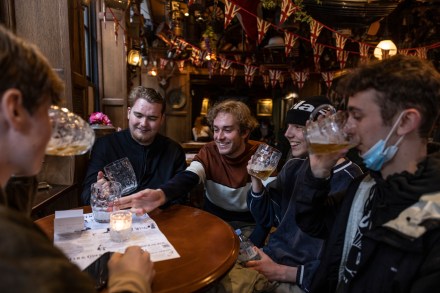
Politics is about priorities: what do we consider to be important? I worry that Britain doesn’t attach enough importance to children and their education. As the first lockdown eased in the summer of 2020, I was unhappy that pubs reopened before schools. I thought that said something about our priorities as a nation An interview by Liz Truss in New York gives me no reason to change that gloomy view. During the interview, atop the Empire State Building, the PM was naturally keen to talk up the benefits of the energy price support package to be set out on Friday. That package, she was keen to say, will cover not just households but also businesses.

The key difference between Liz Truss and Boris Johnson

'It's fair to give wealthiest more money back – Truss'. That’s the headline on a BBC News story following Liz Truss’ interview with Laura Kuenssberg today, where she was asked about the merits of cutting National Insurance. Don’t worry if you missed the headline though. You’ll get plenty more chances to see it when Labour MPs repeat it over and over again, offering it as proof that the Tories are the party of the rich, a tag that Conservative leaders have sought to drop for the last two decades. So striking is the prospect of a would-be Tory leader clearly defending a policy that benefits the rich more than the poor, it may be tempting for some to see that comment as a 'gaffe'. It’s not, though.

Sunak and Truss are wrong about solar

Rishi Sunak has joined Liz Truss in grumbling about solar panels in fields. This is all rather dismaying, and revealing. It suggests that Conservative leadership contenders – and the party faithful they’re appealing to – lack faith in the transformative power of markets and free enterprise. Those solar panels that Sunak and Truss deplore are nothing less than an economic miracle, delivered by private companies seeking profit. Anyone who proclaims themselves supporters of markets should be shouting from the rooftops about this miracle, since it shows how people and organisations freely allocating capital makes our world better, fast.

The case for an October election

Neither Liz Truss nor Rishi Sunak would name Gordon Brown as an inspiration, but I wonder if whoever becomes PM next month might take a lesson from Brown’s premiership and call a snap general election. This might sound like a frankly mad idea. Inflation is soaring and dreadful energy bills are about to hit. The Conservatives are behind Labour in the polls, demoralised and divided. Surely a new prime minister going to the country would be committing spectacular electoral suicide? Maybe. But politics is all about making the least bad choice, and I can’t help wondering if an immediate election wouldn’t be the least bad option for that new PM.  Back to Brown.

Why the Tavistock clinic had to be shut down

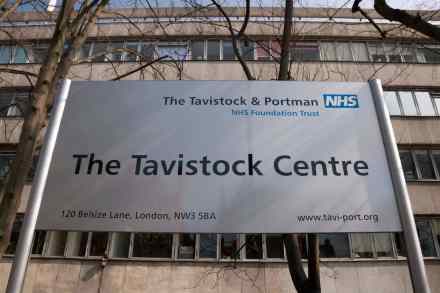
There are many reasons why what is sometimes crudely called ‘the trans issue’ is important. One is the political failure that left the legitimate views of many women (and men) ignored by decision-making individuals and bodies, who instead prioritised the views of interest groups and campaigners. Another is the multiple failures of governance that have seen numerous public bodies fail to deal properly and responsibly with questions of real public interest, because of their enthusiasm to follow the subjective agenda of interest groups rather than amass and act on objective evidence. Simply put, organisations that are supposed to make decisions on the basis of facts have sometimes chosen to proceed on the basis of feelings and claims.

The bravery of Allison Bailey

Allison Bailey is a criminal defence barrister at Garden Court chambers in London, a large and important group of lawyers with a reputation as a human rights 'set' supporting trans rights. In December 2018, she complained to her colleagues about Garden Court becoming a Stonewall 'Diversity Champion'. She said that Stonewall advocated 'trans extremism' and was complicit in a campaign of intimidation of those who questioned gender self-identity, a claim the charity denies. In October 2019, she was involved in setting up the Lesbian Gay Alliance, a charity to resist 'gender extremism'. She tweeted about these matters. That led to complaints to her chambers, accusing her of transphobia and other hateful conduct.

The Conservative party has ceased to be serious

I’m not sure that the Conservative party wants to win elections. Tom Tugendhat was knocked out of the leadership contest on Monday, and Liz Truss is now the bookies’ favourite to be the next Prime Minister. Any party that thinks the latter beats the former cannot say it is serious. There are several reasons for Conservatives to ignore me on this topic. First, I’m not a Conservative. Second, Tugendhat and I are friends. Third, I take a view of party politics that seems to be utterly out of fashion these days. That view is that politics works better when parties try to win the other side’s votes. When Conservatives pursue Labour voters, the worst bits of right-wing conservatism are muted. When Labour woos Tory supporters, the worst bits of the left are sidelined.

Is Labour changing its mind on trans issues?

Amid the noise of the Tory leadership fight, some significant comments in the papers could be missed today. Here’s the quote, from a Sunday Times interview with an intelligent, ambitious female politician in her forties: Biology is important. A woman is somebody with a biology that is different from a man’s biology. We’re seeing in sport sensible decisions being made about who cannot compete in certain cases. Could it reflect a new approach to trans issues from the Labour leadership? She says she would ‘have a problem’ with someone with male genitals identifying as a woman and using a female changing space, and isn’t entirely sold on the use of gender pronouns.

A storm is coming – and none of the leadership candidates are ready

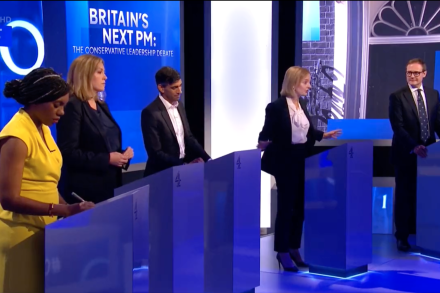
You’ve probably heard the joke about the two hikers facing an angry bear. One changes into his running shoes, telling his confused friend: ‘I don’t need to outrun the bear, I just need to outrun you.’ The gag captures the importance of differentiating between the relative and the absolute. Knowing that a tree is taller than the other trees in the forest doesn’t tell you how tall that tree is – or how big the forest is. Learning that a company is more profitable than others in its market doesn’t tell you if that company is actually doing well – they could all be failing. This is largely how I view the first prime ministerial candidates’ debate on Channel Four on the key issue of the day: energy bills and the cost of living.

The case for Tom Tugendhat

When the editor of The Spectator asked me to write about Tom Tugendhat, I initially declined, explaining that doing so would put me in a slightly difficult position. Tom and I have been friends for 20-something years since we met as young journalists via the Scotsman and then Bloomberg’s City of London newsroom. So I can’t claim much objectivity here. Nor can I position myself as an insider-savant of the Tory leadership race. I’m not a Conservative, though I have spent a lot of my professional life talking to and writing about Conservatives. I first started writing about the Tories when William Hague was leader; the first leadership contest I covered was the one that Iain Duncan Smith won in September 2001.

Boris didn’t break the system

Britain’s Donald Trump. A constitutional vandal. A grave and potentially even systemic threat to the rule of law and representative democracy. Boris Johnson has been called all of those things in the last few years. Most of that criticism was cobblers, and we reached peak cobblers earlier this week when he hunkered down in No. 10 muttering inanely about blood and fighting to the death. Those few hours saw many people who really should know better comparing Johnson’s last chapter to Donald Trump’s insurrection. Those comparisons were ridiculous and wrong. As prime minister and leader of the governing party, Johnson retained the right to occupy the office and use its powers (including patronage) as he saw fit.

History won’t look kindly on Boris

'Them’s the breaks'. Those three words speak volumes about Boris Johnson’s ability, his character and his fears. The words show Johnson retains the talents that made him a successful columnist. I know a lot of people don’t like this, but he was a good columnist, in the sense that he consistently said things that people were interested in hearing and talking about. Amid the eternal babble of the media, being able to find a phrase, a word, a sentence or a paragraph that captures attention and captures ideas – consistently – is no small skill. 'Them’s the breaks' is already doing exactly what its author intended. It’s becoming the headline on stories about Johnson’s departure from No. 10.

Pity the doctors fighting for their £1 million pensions

As inflation rips into living standards, everyone is feeling the pinch and many are looking for help. Some people are asking for more from the state. That really means help from their fellow taxpayers, because sooner or later, that’s where public money comes from. We all have our own views about which groups merit that help: working-age parents in the lowest income bracket are at the top of my list. Readers will doubtless have their own thoughts on which marginalised and disadvantaged people are most deserving. Amid the tumultuous national conversation about the cost of living, there’s always a danger that some unfortunate souls might be overlooked.

The night that David Cameron sealed Britain’s Brexit fate

Friday 29 June 2012 isn’t a famous date in British history, but it deserves at least a footnote. Because I reckon it’s the day the Brexit referendum became inevitable – largely thanks to David Cameron’s inability to stop talking. What follows is my argument, based on personal involvement, that Cameron set the referendum process in motion at least partly by accident. It’s a bit long and possibly even self-indulgent, but I hope it might also be useful to people writing the second draft of history. A decade ago today, Cameron was prime minister and attending an EU summit in Brussels. Unlike some summits of the period, this one had ended in reasonable time, allowing leaders to do their post-match press-conferences and fly home late on Friday night.

Are we heading towards a British Donald Trump?

The Tiverton and Wakefield by-elections are, of course, shatteringly bad for the Conservatives and Boris Johnson. They should finally destroy any illusions Conservatives hold about the PM’s electoral appeal. As I and several others have often pointed out, Boris is not a Heineken politician and hasn’t been one since the middle of the last decade. Analysis of by-election results is often bad. In the minutes and hours after the result, commentators scramble to explain what local results mean for national politics, in a crowded field where political actors are doing their best to skew the narrative in their own interests. That being so, I’m not going to try to tell you what Tiverton and Wakefield mean for Johnson’s future or the next general election.