James Kirkup

James Kirkup

James Kirkup is a partner at Apella Advisors and a senior fellow at the Social Market Foundation.

What Rishi Sunak can learn from Gordon Brown’s golden mistake

Gordon Brown is a historian by education, so he might just appreciate the fickleness of posterity. Over a decade at the Treasury from 1997 to 2007, he did many things that he might believe should be widely remembered. Yet few, if any, of his decisions live as clearly in memory as 'Gordon Brown sold the gold'. Brown sold the gold. He raided pensions. He put 75p on pensions Exactly 25 years ago, Brown’s Treasury stunned the gold markets by starting to sell of much of the UK’s gold reserves. In total, 395 tonnes of gold were sold over three years, yielding $3.5 billion (£2.8 billion) in revenues. That’s a big number, but far smaller than the current value of 395 tonnes of gold, which would be somewhere north of $25 billion (£19.9 billion).

Why are police officers slow to respond to domestic abuse call-outs?

Popping out to buy milk the other night, I saw how women die. My nearest local shop in south-west London, the place I go for last-minute and forgotten groceries, is an M&S at a petrol station. It sells fuel, overpriced food and coffee. It’s open late. As I queued to pay for my semi-skimmed just before 7 p.m., I noticed a couple of police constables – one male, one female – waiting for coffee. Their marked car was parked outside, though not at a pump; they’d evidently stopped just for the coffee. Did the time it takes to get a coffee, pick a snack, and pay for it cost a woman a beating? As we waited, there was an electrical squawk from one of the officers’ radios. A dispatcher read over details of an emergency call with an address in London SW11.

How to defuse the pension timebomb

Another day, another smart report arguing for higher payments into our pensions. Standard Life and WPI Economics have published a paper saying that minimum contribution rates into workplace pensions must rise. Today, workers contribute a minimum of 5 per cent of their salary to their pensions while their employer pays in 3 per cent. Not enough, the report says. Both rates should rise immediately to 6 per cent. Otherwise, it is said, millions of today’s workers will face poverty in retirement. Pension contributions should rise. They should already have risen, in fact This is entirely sensible and right and in line with the consensus among pensions experts and pensions industry people.

A pension crisis is brewing

Ten years ago, George Osborne blew up the British private pension system. Because pensions are boring and complicated and move slowly, a lot of people didn’t really notice. But the shrapnel from the blast continues to ricochet today and is starting to hit.  Chancellor Osborne’s Budget on 19 March 2014 contained the surprise announcement of ‘pension freedoms’. Previously, people retiring with a Defined Contribution pension (a pot of money and very different to a Defined Benefit pension that is an entitlement to a certain income) effectively had to take their pension savings and use them to buy an annuity, a financial product  delivering an income for life.

Britain is too sick

Britain is running out of workers. The UK population may be growing, but the share of that population that is economically active is falling. More than 9.2 million working-age adults are out of the labour market today, and the number is growing.  This might be the biggest story in today’s Budget, and certainly one that deserves more attention from politicians and businesses alike.  The Office for Budget Responsibilty’s fiscal analysis accompanying the Budget contains some pretty bleak data and projections on economic inactivity and participation the workforce.  In headline terms, the OBR has abandoned its previous optimism that the spike in economic inactivity that followed the pandemic would be temporary.

Does Labour want an anti-CV revolution?

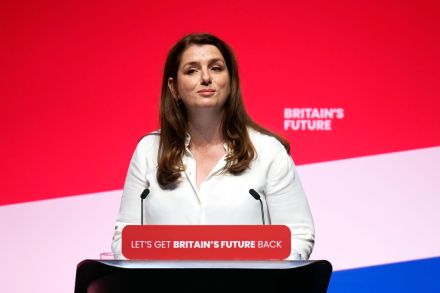
Alison McGovern, Labour’s shadow employment minister is one of those politicians  who are always worth watching. She combines the ability to look and speak like a normal human being – a rare thing at Westminster – with a genuine policy wonk’s fascination for data and trends and ideas.   She also has fans at the top of the Labour party. While other shadow ministers are rendered almost mute by the message discipline of Team Starmer, McGovern has the confidence and license to think out loud.  This week she was at the Social Market Foundation to talk about social mobility, which covers a lot of ground.  There were several significant takeaways from that event, some of which I’ll try to capture briefly here. • The Labour war on ‘social mobility’ is over.

The pension bomb facing Generation X

Happy birthday to me. Today I turn 48. I’m celebrating in an age-appropriate way: a trip to the physio for a stiff shoulder, then publishing some gloomy words about pensions. Being born in 1976 makes me part of what marketers called Generation X. Arguably though, the 1965 to 1980 cohort should be tagged the 'Forgotten Generation'. We talk and write a lot about generations and their supposed differences, in terms of attitudes and economic experiences. I’ve done my fair share of generation-journalism, but I’m not blind to its failings. I think a lot of those differences are overstated: culturally we all have more in common than the hot tales suggest. And generational commentary often compares the old – baby boomers – and the young – millennials and Gen Z.

The surprising truth about ‘Nanny State’ Britain

This week, a Conservative Prime Minister announced he was banning something – disposable vapes. The reaction to that ban – or rather, the lack of reaction – is a signpost to future UK health policy, which will lean towards interventionism in the years ahead. Companies making and selling food and drink should pay close attention. Over the last quarter-century around Westminster, I've watched many political debates about intervening to make it harder or more expensive for people to buy and consume things that are, in general, bad for them. There was Labour's ban on smoking indoors, then Gordon Brown's attempt to deter buy-one get-one free food deals.

I voted Remain, but there should be more pro-Brexit lords

Liz Truss has sent Matthew Elliott to the House of Lords in her resignation honours list. There are some obvious and predictable reactions to this.   First, the sheer effrontery of our least successful PM in exercising her traditional right to an honours list. She lasted less time than that lettuce. She was awful. How dare she? Etc etc.  To which I can only say this: Yes, it’s appalling, but don’t be surprised. Truss is incapable of self-doubt or reflection. She can’t imagine that she did anything wrong so why shouldn’t she have a list, just like any other former PM? Don’t waste pixels on indignation.   Second, sending the sinister dark money Brexit boss to the Lords is surely the latest sign of corruption on high.

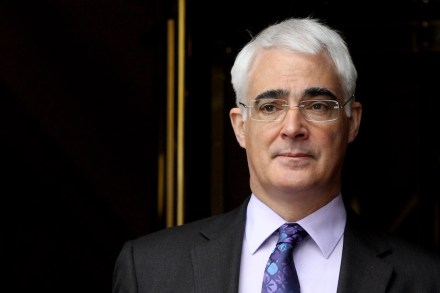
Alistair Darling was a great man

The death of Alistair Darling is a grievous loss. British politics has lost a man of decency, character, integrity and humour. He was a good man, in a world where good men are scarce. Darling’s most prominent role in politics was as chancellor to prime minister Gordon Brown from 2007 until 2010, a turbulent period defined by a global financial crisis and the related economic slump.

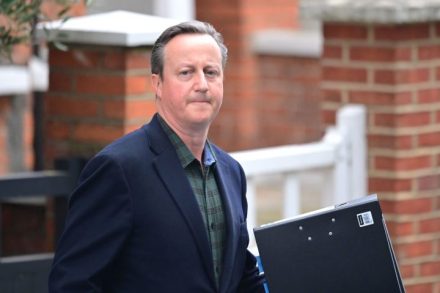
In defence of David Cameron’s comeback

David Cameron is back. This will make some people unhappy, because they dislike the man. Common reasons for disliking Dave include Brexit and austerity. But there’s also the Greensill lobbying and just the general, all-pervading shiny-faced smugness of a man who, one suspects, never really gave a toss about any of it and was just playing at politics to show how clever he is. You might infer from the words above that I am one of those who dislike Cameron. I certainly have reasons to do so, and reasons that are a little more personal than the ones I’ve listed above. My feelings about David Cameron have informed a great many columns that I’ve written about the man in the years since he left No.

Are we diluting the meaning of ‘mental health’?

What does ‘mental health’ mean? Is the answer to that question undergoing a generational change, as younger people become more aware of – and likely to talk about – their mental state and to discuss it in terms of ‘mental health’? And will that cultural change have economic effects? These are some of the questions I’ve explored in a Radio 4 Analysis show that’s broadcast on Monday night.  There might be a generation of workers who are inclined to take a day off work because they’re feeling a bit worried about a big meeting and so on It includes the voices of several fascinating people, but in particular I’d draw readers’ attention to the psychologist Dr Lucy Foulkes of Oxford University.

The truth about Rachel Reeves’ ‘plagiarism’

With all due respect to the diligent journalists who revealed it, I don’t think it’s a big deal that some bits of Rachel Reeves’ book about women in economics were copied from Wikipedia.  The book, The Women Who Made Modern Economics, was launched at an Institute for Government event in Westminster on Wednesday evening. An examination by the FT of the book found more than 20 examples of passages from other sources that appeared to be either lifted wholesale, or reworked with minor changes, without acknowledgment. Some biographical text about women economists spotlighted by Reeves, who hopes to become Britain’s first female chancellor if Labour wins the next election, was lifted wholesale from Wikipedia. Cue 'controversy'.

How Brits turned soft on crime

It is almost exactly 30 years since a young Labour politician told his party’s annual conference in Brighton that as home secretary, he would be ‘tough on crime and tough on the causes of crime’. That line helped make Tony Blair a star, since it allowed a left-wing party to grab an issue where its right-wing opponents traditionally held sway. That was the era of Michael Howard as home secretary, when the public and the people who helped set the political agenda were largely in favour of a tough, punitive approach to crime. Howard’s famously harsh Criminal Justice Act 1994 was a sign of those times.   Yet things change. The recent Conservative conference was heavy on speeches and events that allowed some commentators to allege a Tory slide towards the hard right.

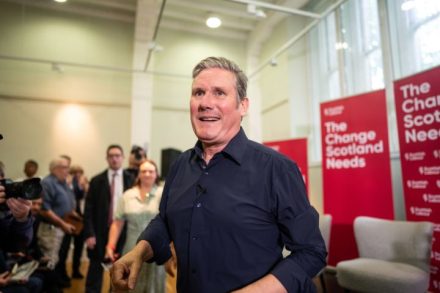
Would a young Starmer really not be able to afford university today?  

Keir Starmer reckons that under today’s economic conditions and policy framework, he would not have gone to Leeds University when he left school in the early 1980s: 'It was a financial stretch then; if I were a student today, I wouldn’t be able to go.' I’m not completely convinced this is true, but I have a lot of empathy for what he says about university access. I also think it’s a politically interesting and astute comment.  Let's start with the politics. Compared to the population as a whole, Starmer is a very rich man who lives in a big house in London. He’s a KC and a knight.

I dislike David Cameron, but he was right on gay marriage

The other day, I found myself at a large event in a posh garden where David Cameron was present. Being a polite sort of person, he smiled and mouthed some sort of greeting as we passed. And being an impolite sort of person, I ignored him and walked on. When someone asked me why I’d been so rude, I explained that I was just being consistent. I’ve been very rude about Cameron in print over several years, so wouldn’t it be a bit hypocritical – craven, even – to be all smiley and polite in person? My rudeness has taken many forms and has several causes.

Rowing back on his climate plan, Starmer is in it to win it

Over almost 30 years in and around Westminster, I’ve noted some persistent and essential differences in the culture and mindset of our two big political parties. Tories generally want to win elections, and are prepared to subordinate pretty much all else to that objective. How else to explain their regular mutation into a new form of political life every few years? Today’s hybrid with a right-populist body and a technocrat-centrist head is just the latest example. Labour, by contrast, always has an ambivalent attitude to winning. Buried in the party’s soul is the fear that winning means compromising on principles, and is therefore to be avoided. How else to explain those Labour people who still celebrate Jeremy Corbyn’s disastrous leadership as a golden age for the party?

What the campaign to abolish inheritance tax tells us about British politics

The Daily Telegraph, where I worked for a decade, has launched a campaign for the abolition of inheritance tax (IHT). It’s backed by at least 50 Conservative MPs, including one former prime minister, Liz Truss. That campaign, and its likely impact, reveal some noteworthy things about British politics, media and society. The influence of experts is often very limited This observation won’t surprise most readers here, but I think it’s still worth making. I like IHT and so do a lot of people like me: professional policy wonks and economists, who proliferate at Westminster and often get a lot of prominence in political debate – especially on Twitter.  My technocratic tribe largely regards inherited wealth as harmful to social mobility and economic efficiency.

What’s wrong with lots of immigration?

18 min listen

This week's net migration figures were lower than expected, but still far higher than the 'tens of thousands' first promised by David Cameron. What's gone so wrong, and what's the downside of using immigration to boost economic growth? Fraser Nelson speaks to Damian Green, the Conservative MP and former immigration minister, and James Kirkup, a Spectator regular who runs the Social Market Foundation.

The trouble with Britain’s net migration figure

Where to start with the net migration figures? As someone who has generally defended liberal immigration policies, I could just shout, yet again, about the economic benefits. That would no doubt annoy a few readers, get some angry clicks, and add precisely nothing to the conversation.   Or I could point out that this is what Britain voted for in 2016. The migration described in today’s figures is the result of the UK government implementing migration policies entirely of its own choosing. We took back control and this is what we did with it. This outcome is wholly legitimate: it was chosen by our democratically elected government.