James Kirkup

James Kirkup

James Kirkup is a partner at Apella Advisors and a senior fellow at the Social Market Foundation.

The NHS should be Farage’s next hobby horse

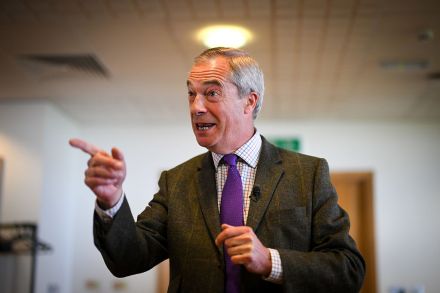
Nigel Farage’s march to the left continues. Reform is now committed not just to reinstating winter fuel payments for all pensioners but also, more significantly, to scrapping the two-child benefit cap.   This is striking but shouldn’t be a surprise. Reform’s move to the left on economic questions has been arguably the most important political trend of the year.  It’s a big part of the reason that Labour now considers Reform, not the Conservatives, to be the main opposition party. It also shows that Farage is properly serious about winning seats and winning power.

Nigel Farage’s left-wing turn looks like a triumph

Nigel Farage declared earlier this year that 'economics might be bigger than immigration for us at the next election'. Most people at Westminster didn’t take him particularly seriously. After all, Reform UK is all about immigration, right? Westminster didn’t take Farage seriously. After all, Reform UK is all about immigration, right? When Farage based his local election campaign on an overt pitch to working-class Labour voters by talking about trade unions and reindustrialisation, some parts of the political village were still dismissive. How could a Thatcherite public schoolboy and former City trader ever sell left-wing economics to the electorate?

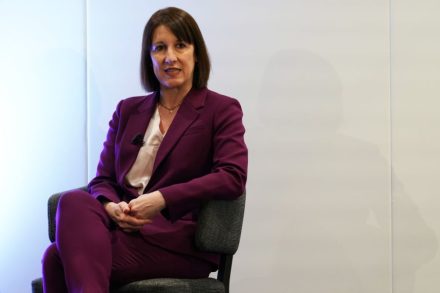
Reeves had a good day, but she’s hardly in the clear

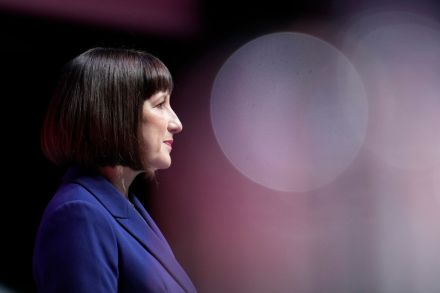
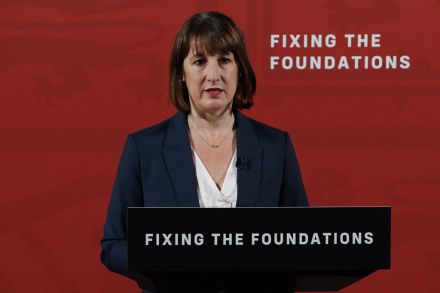
Rachel Reeves’ Treasury team and the No. 10 communications staff should enjoy a drink tonight. The Spring Statement is a success, at least in the terms that matter most to the Chancellor. That statement is probably most important for what it tells us about Reeves’ priorities. She’s more worried about the gilt markets than about Labour backbenchers. That’s sensible, but also quite revealing about the condition of Britain in the 2020s. Britannia, which once ruled the waves, is now ruled by the markets. Reeves had to cut spending to do two things: maintain the projected gap between spending and revenue (the ‘fiscal headroom’), and meet her own fiscal rules, thus demonstrating to bond markets the government’s fiscal discipline.

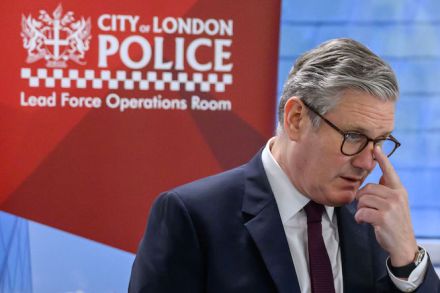
Why Keir Starmer must cut disability benefits

Keir Starmer’s imminent attempt to curb Britain’s spending on welfare is a more serious and important bid to curb the growth of government than Elon Musk’s theatrical Doge performance. That is because the UK’s Labour government is at least engaging with the fundamental driver of higher public spending – the demographic shift towards an older and, perhaps, sicker population that absorbs an ever-larger share of national wealth.  Musk, meanwhile, is nibbling at the second-order costs of the US federal government. Public sector employees are, in the context of government spending, cheap. Fiscal transfers are expensive: follow the money, not the people.

Labour needs lots more special advisers

Labour ministers’ frustration at what they see as a sclerotic civil service is finally boiling over. Most people familiar with the machinery of government would accept that Labour’s Pat McFadden has a point when he says the civil service needs to change so that elected ministers – of whatever party – can do the things they were elected to do. And the fact that it’s McFadden who is driving this agenda means it’s worth taking seriously, since he’s one of Labour’s most effective operators. But – so far, at least – one thing appears to be missing from the Labour civil service plan. The Whitehall reform the government really needs actually involves hiring more of a certain type of civil servant. Labour should hire more special advisers. Lots of them.

Southport and the problem with judge-led inquiries

Sir Keir Starmer has promised an inquiry into the events around the Southport murders committed by Axel Rudakubana, saying there are questions about the ‘Westminster system’. ‘I’m angry about it,’ the Prime Minister says. ‘Nothing will be off the table in this inquiry.’ It is not yet clear who will run that inquiry, or how. There will no doubt be an assumption that the inquiry must be on a statutory footing and led by a judge. Such inquiries are generally seen as the gold standard; anything that isn’t a statutory inquiry led by a judge will likely lead to political trouble for the Prime Minister. But is appointing a judge the best way to unravel complicated problems of public administration and policy?

Why Westminster is wrong about gilt yields

It’s gilts season at Westminster. This is one of those unpredictable events, like the passing of a comet, that sees the residents of the political village staring at the skies and imputing all sorts of divine causes to the curious flashing lights they see there.   Because of the ongoing excitement in the markets, a lot of political folk have, in the last few days, become authoritative commentators on yield curves. Welcome to the party, guys. A very long time ago, I covered bond markets for a City newswire, and hated pretty much every minute of it. I claim no particular expertise as a result, but I am still confident in saying two things about Westminster’s current excitement over gilt yields.

Starmer’s grooming gang stance might not last the weekend

From the start of Elon Musk’s onslaught, Sir Keir Starmer’s position in refusing a new national inquiry into the grooming and rape of girls across England has looked fragile. This weekend that position – and Labour’s parliamentary discipline – will be tested further. That’s because Labour are now away from the Commons, back among their voters. Labour MPs who find themselves being harangued by angry voters might not be keen to stand up for the PM One of the defining features of the new intake of Labour MPs is their localism. Most were selected by constituency Labour parties demanding total commitment to the local area and, where possible, a personal connection to the patch.

Why won’t the jokes about Rachel Reeves’s CV go away?

Why do jokes about Rachel Reeves’s CV persist? One explanation is simple: it’s funny. The Chancellor’s public persona is strait-laced and orderly; the idea of her doing something slightly naughty and gilding her CV is good material for comedy. But is that all? Reeves’s tweaks to her LinkedIn profile are, bluntly, trivial. They’re also minor compared to the airbrushing some politicians carry out on their personal histories. You might have forgotten a man called Rishi Sunak, but when he became Chancellor then PM, how much fuss was made of the fact that he had deleted whole jobs from his CV? Sunak vanished several years at Goldman Sachs and the TCI hedge fund from his history.

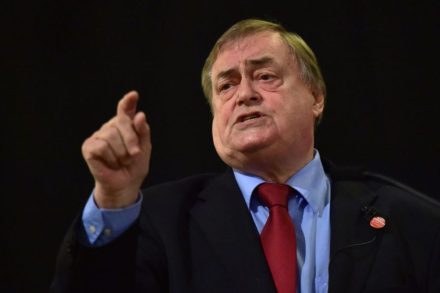
There was more to John Prescott than his working class roots

John Prescott has died, leading to a flood of tributes and comments about the working class hero of the New Labour project. That framing of Prescott is good for headlines but the reality was inevitably more complicated than that. It’s too shallow and narrow to describe Prescott as the lone working class voice in an essentially middle class political enterprise.  Was Prescott really working class? Not in his own words. As early as 1996, before he became deputy prime minister, he said he no longer regarded himself as working class: 'I was once, but by being a Member of Parliament, I can tell you, I'm pretty middle class.' The idea that your origins should define you forever is deep-rooted in Britain He was quite right in that, of course.

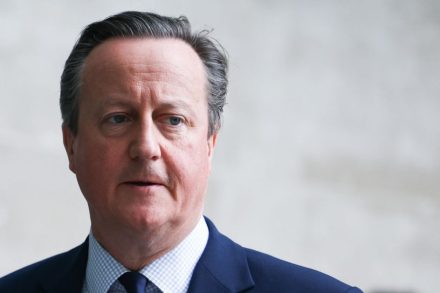
The humiliating emptiness of David Cameron’s legacy

The humiliating post-premiership of David Cameron is the gift that keeps on giving. He might have been gone from No. 10 for more than eight years, but pretty much everything involving him that’s happened in British national life since his departure has been a reminder of the awful emptiness of his time in office.   At most, the Big Society was a woolly phrase – and the NCS The list of Cameron embarrassments is as long as the list of his accomplishments is short. There was Dave’s time as a spiv lobbyist, failing to charm former colleagues in government for Lex Greensill. There was a cameo appearance as foreign secretary, a spell distinguished by precisely zero foreign policy successes.

Should GPs make a profit?

The Budget has started a fight between the government and GPs. As is often the case with doctors, that fight is about money, but there is also something even more valuable at stake: the proper public understanding of general practice and the NHS. When I ran a thinktank, I kept a list of things I wished the public understood about government and public policy. Top of the list was: ‘No, your state pension isn’t funded by your own National Insurance payments – it’s funded from the taxes of today’s workers.’ Health got lots of entries on the list too: ‘The NHS’ isn’t one big organisation; it’s lots of small and medium ones.

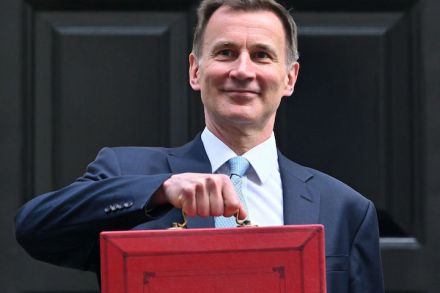
Jeremy Hunt’s fantasy Budget

As Rachel Reeves prepares what is potentially the most difficult Budget in a generation, a question occurs: what if the Conservatives had, somehow, won the election? Historians hate counterfactuals, considering them unhelpful parlour-games. Personally, I enjoy a good ‘what if’ – not least because they can help put current political events in context. In that spirit, I’m pleased to present here the October 2024 Budget speech that Chancellor Jeremy Hunt might give in a parallel universe where the Conservatives remained in office after the election. As well a Budget address, this is also my resignation speech ‘Madam Deputy Speaker, it gives me no great pleasure to present this Budget statement to the House today. To be frank, it’s awful and I wish I wasn’t doing it.

The state pension system is unfair. Reeves is right to change it

Rachel Reeves is cutting £1.4 billion of pensioner welfare payments with her winter fuel payment means-test. It sounds like a big number, but it’s not. £152 billion is a big number. That’s the total value of welfare payments to pensioners in 2024/25. It’s more than we spend on the NHS. Taking the £1.4 billion annual cut into account, by 2027, that total bill will be around £166 billion. Relative to the wider economy, pensioner benefits are currently around 5.4 per cent of GDP. That will rise next year to an all-time high of 5.6 per cent, before dropping back to 5.4 per cent in 2027/28 – unless policies like the triple lock drive up state pension costs more than forecast. There are perfectly good reasons for spending so much money on pensioners.

Is this Westminster’s coolest MP?

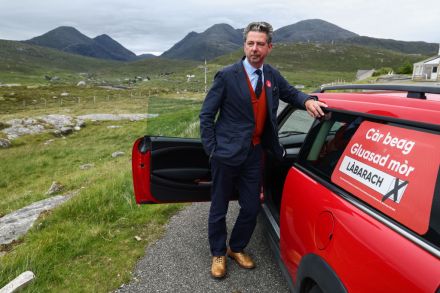
Parliamentary oath-taking rarely causes excitement. MPs swearing the oath of allegiance to the Crown after an election is an archaic yet prosaic sight: line up, shuffle in, say the words, shuffle off. Repeat 600-odd times. It’s a bit different this time, because so many of the MPs are first-timers. Nonetheless most of their swearing-in moments go unnoticed to all but friends and family.  Yet one swearing-in has caused a minor ripple, because it wasn’t in English. Torcuil Crichton, newly-elected MP for the constituency of Na h-Eileanan an Iar, formerly the Western Isles, swore his oath in Scots Gaelic and in the Scottish manner – right hand raised, not resting on a holy book.

David Cameron has quit. Is anyone surprised?

The Conservative party is in disarray. What the party does next matters for the whole of Britain and maybe even for all of liberal democracy. For the British centre-Right to follow its American and French counterparts into nativist populism would be a shift of global and historical significance. Such serious times call for serious people. So, naturally, David Cameron has quit.  Not for the first time, Cameron is waddling off into the emptiness of early retirement when the alternative was sticking around to do something difficult. Last time the difficult thing was 'offer stable governance to the country you just broke'. Now it’s 'help stop your party dragging the country’s politics towards all the things you said you stood against'.

Starmer’s ruthless efficiency has risks

A couple of years ago, an anecdote about Keir Starmer did the rounds at Westminster. The story was that when asked about his time leading the Crown Prosecution Service (CPS), he said that his proudest achievements involved overhauling IT systems, or procurement rules, or some other highly procedural aspect of the organisation’s bureaucracy. The story was generally told with a mildly mocking tone, proof that Starmer was a bit of a plodder, not the sort of glibly agile PPE debater that generally dominates Westminster life. In essence, Starmer was seen by much of the political village as a manager, not a leader – and the village always prizes dashing leadership over efficient management. What will happen when Labour’s national-level priorities threaten local preferences?

J.K. Rowling’s glorious refusal to be kind 

‘Spread happiness, peace and calm.’ That’s the slogan on a T-shirt you can buy at M&S. It’s pink, has frilly sleeves and is decorated with flowers and a unicorn. It is, of course, listed under ‘girls’ clothing’. There’s nothing unusual about that T-shirt. You can buy similar items for girls in most fashion retailers. ‘Be kind’ is practically society’s mantra for a generation of girls. Pretty much everyone else in the country is currently sucking up to Keir Starmer because he’s about to have power. Not JKR though Another staple of childhood for those girls is Harry Potter. On the same page of the M&S site you can find a Hogwarts T-shirt, for girls between six and 16.

A Danish lesson for Labour in how to revive Britain’s economy

The coincidence of the 2024 general election and the Euro 2024 football tournament is a great lesson in the myopia of Westminster and its creatures. Somewhere, deep in our hearts, we do know that the vast majority of people in Britain (OK, England and Scotland) are far more interested in the football than in the ups and downs of the campaign. But does that stop us fixating on the minutiae of that campaign? Not at all: for political nerds, this is our championship, after all, one of those (quite) rare moments when all the stars, all the heroes and villains, are on the pitch together, generally kicking lumps out of each other. So of course we’d rather watch paint-drying political debates than half-a-billion quid of sporting talent burning up the German turf.

Labour MPs need to grow up

Westminster is full of clever people who spend a lot of time stupidly making simple things complicated. The story of Nathalie Elphicke’s defection to Labour is a case in point. This is a simple story, or should be. Someone who used to tell voters to vote Conservative is now telling voters to vote Labour. It’s more proof that the Tories are finished and Labour is the party that represents the biggest share of the electorate. End of story.