James Heale

James Heale

James Heale is The Spectator’s deputy political editor.

The gloves are off in the Labour party

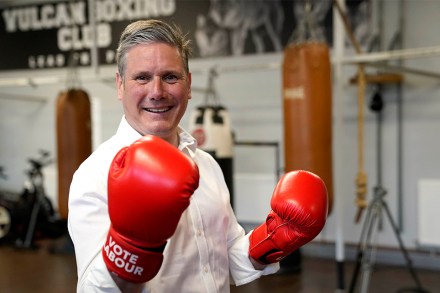
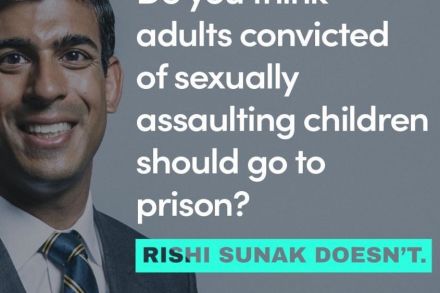
When Rishi Sunak became Tory leader, the party was 30 points behind Labour: that kind of deficit has historically been terminal for a political party. But since then, inflation has slowed, the Northern Ireland Protocol has been resolved and a deportation deal with Albania meant small boat arrivals fell for the first time on record. That Labour lead has fallen closer to 15 points; one poll last weekend put it as low as 11. A Keir Starmer defeat is now at least conceivable. As one Labour party insider says: ‘Nice doesn’t win elections’ This is the context in which Labour has tried a new tactic: attacking the Prime Minister personally. ‘He is the Tories’ greatest single weapon,’ says one shadow cabinet member.
Is Labour using Dominic Cummings’s tactics?

10 min listen

Today Keir Starmer has doubled down on Labour Party adverts attacking the Conservative's record on crime, and which seemingly accuse Rishi Sunak of not caring about child sex abuse. But is everyone in the party willing to play hardball? Or have the adverts highlighted divisions between senior Labour MPs?  Also on the podcast, after Peter Murrell was arrested in connection with an investigation into the SNP's finances, why has a luxury motorhome now been seized by police? James Heale speaks to Fraser Nelson and Michael Simmons.  Produced by Oscar Edmondson.

Why don’t Brits love Starmer?

11 min listen

Rishi Sunak’s personal poll ratings are on the up, by why don't the public love Keir Starmer? We talk through the latest polling. And Mark Spencer, now the farming minister, has been cleared by an investigation into whether he made Islamophobic investigations to fellow Tory MP Nus Ghani. Is the row over?  Max Jeffery is joined by James Heale and James Johnson, the co-founder of polling firm JL Partners. Produced by Max Jeffery.

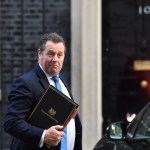
Tory MP Mark Spencer spared over Islamophobia claims

Sir Laurie Magnus, Rishi Sunak’s ethics adviser, has delivered his long-awaited report into Mark Spencer’s alleged Islamophobic comments. Spencer, the farming minister, faced claims from fellow Tory MP Nus Ghani that he had told her that her dismissal as a minister in 2020 was partly due to concerns about her ‘Muslimness’. But Sir Laurie has concluded that it is not possible to determine what the then-chief whip said, and criticised ‘shortcomings’ in Spencer’s response. Sir Laurie said: Despite a review of considerable evidence, it has not been possible to draw a clear picture of what was discussed between Mr Spencer and Ms Ghani during two meetings which both agree took place on 4 and 23 March 2020.

Can Mark Rowley clean up the Met police?

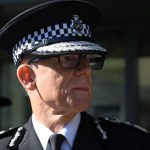
Mark Rowley, the Commissioner of the Metropolitan Police, faced a media grilling this morning as he championed his plans to clean up the force. It comes a fortnight after Louise Casey’s damning report into the Met, which branded it ‘institutionally racist, sexist and homophobic’. A YouGov poll out today shows that public confidence in the Met has been shattered, with 42 per cent of Londoners saying they ‘totally distrusted’ it following recent scandals. Some 700 officers are currently on restricted duties, with hundreds more facing re-vetting or ‘risk management measures’. Rowley has pledged to ‘remove the cancer from the bone’ as he seeks to root out hundreds of officers found guilty of wrongdoing. Rowley has won plaudits for talking a good game.

The arrest of Peter Murrell

16 min listen

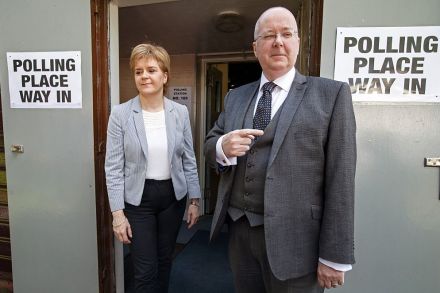
Nicola Sturgeon's husband, Peter Murrell, has been arrested today in connection with an investigation into the SNP’s finances. James Heale talks to Fraser Nelson and Conservative Home editor Paul Goodman on the episode. They also discuss Trump's arrest and ask whether Suella Braverman might need a new seat. Produced by Cindy Yu.

What can we learn from Nigel Lawson?

16 min listen

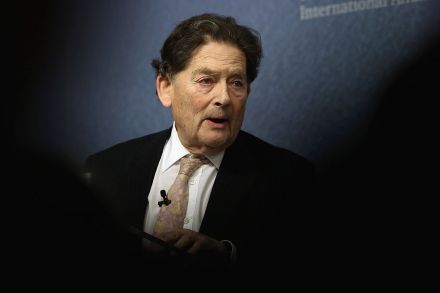
Nigel Lawson, former chancellor and Spectator editor, passed away yesterday aged 91. How did he affect conservative economic thinking? And have the lessons from his time in the Treasury been properly learnt? James Heale speaks to Fraser Nelson and Lucy Fisher. Produced by Max Jeffery.

Does CPTPP make it harder to reverse Brexit?

16 min listen

Britain has agreed to join the Comprehensive and Progressive Agreement for Trans-Pacific Partnership (CPTPP), a £9 trillion trade bloc with 11 members. James Heale, speaks to Katy Balls and a special guest, Alexander Downer about whether this is a win for the government. And what it could mean for those looking to reverse Brexit.

Britain joining CPTPP is a triumph for the Tories

This morning ministers have confirmed that Britain has joined the Comprehensive and Progressive Trans-Pacific Partnership (CPTPP) – the first new nation to do so since it was set up in 2018. It comes after nearly two years of intense negotiation and secures access for British exporters to 500 million people. Spanning Canada, Mexico, Japan, Australia, Vietnam and Malaysia, the deal is expected to be ratified by parliament and those of the other 11 member states later this year. Rishi Sunak claims that 'this deal demonstrates the real economic benefits of our post-Brexit freedoms'; Kemi Badenoch, the Trade Secretary, says it 'sends a powerful signal that the UK is open for business.' Ministers expect CPTPP membership to generate £1.

Are MPs doing the ‘chicken run?’

It’s a sign of the tensions within the parliamentary Conservative party that talk of colleagues swapping constituencies is currently a major talking point in the Commons tea rooms. This week two more members of the 2019 Tory intake announced that they would not be seeking re-election in their constituencies. Both Nicola Richards and Stuart Anderson released lengthy statements explaining their decision – but neither MP explicitly ruled out standing again in another seat. Keiran Mullan has meanwhile declined to comment on claims that he will switch from Crewe and Nantwich to the new Chester South and Eddisbury seat.

Will the locals be a horror show for Rishi?

11 min listen

The first day of Easter recess is a chance to reflect on the last couple of months in politics and look at the challenges that lie ahead. As Keir Starmer launches his local election campaign in Swindon today, how are the parties going to position themselves for their largest reckoning this year? The polls predict a hammering for Rishi Sunak, and could this be a good result for the Lib Dems? Natasha Feroze speaks to James Heale and Katy Balls.

Was Yousaf wrong to snub Forbes?

11 min listen

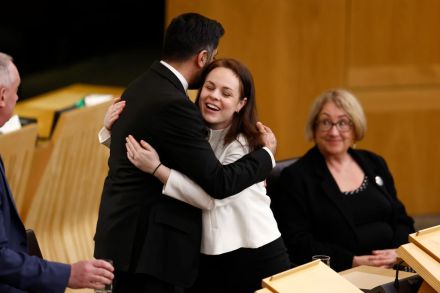
Kate Forbes has quit the government after turning down an offer to be rural affairs minister in Humza Yousaf's cabinet. With some suggesting the new First Minister of Scotland should keep his friends close as his enemies closer – was this offer wise? Also on the podcast, James Heale speaks to Katy Balls and Fraser Nelson about asylum hotels, a topic that is becoming increasingly contentious as the government explores new ways to house migrants.

Will cruise ships solve the migrant housing crisis?

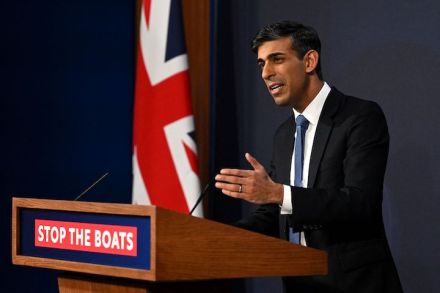
In an ironic twist, cruise ships are being hailed as the latest measure to help ‘stop the boats’. Most Fleet Street newspapers have today splashed on briefings that Channel migrants will be housed on ex-military bases, disused ships and barges, under plans that are expected to be announced later today. The aim is twofold: to act as a deterrent for future migrants and to cut the £6 million-a-day hotel bill to house the 50,000 people who are already here.  The Times reports that ministers have procured an ‘accommodation barge’ capable of holding hundreds of migrants, which is being refitted. It will probably be moored in port rather than at sea, with the location yet to be decided. Former military bases include RAF Wethersfield in Essex and RAF Scampton in Lincolnshire.

Four things we learned from the PM’s Liaison Committee meeting

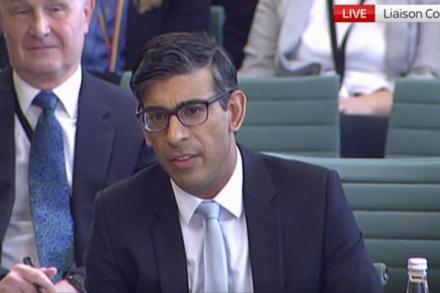
The remarkable thing about today’s Liaison Committee is how unremarkable it was. During the ninety-minute session with the chairmen of the House of Commons' select committees, the contrast with Boris Johnson’s box office battles could not have been clearer. Sunak sought to conciliate, downplay and comfort at every turn, seeking to offer warm words and switching his focus between the macro and the micro: matching MPs on specifics to assure them he was across the detail while taking difficult questions back to his first principles. Child refugees? We have to stop the boats. If Northern Ireland is in the single market, why not Scotland? The 2014 vote remains in force. NHS pay? There will be funds – but we must halve inflation.

How are Tories split on small boats?

9 min listen

Tory party divisions over the small boats policy are starting to appear. Although the bill sailed through its second reading in parliament, now Rishi Sunak is facing amendments to the legislation. Where are the dividing lines? Cindy Yu speaks to Katy Balls and James Heale.

What’s behind Sunak’s latest crime crackdown?

The Prime Minister was in Essex this morning, unveiling his much-briefed antisocial behaviour plan. In recent weeks he and Keir Starmer have been giving a foretaste of what is to come in next year's general election by trading blows on a range of policy areas. Last week Starmer gave a big speech on law and order; today it was Sunak's turn to respond. The Tory leader said his plan – with its headline-grabbing plan to ban nitrous oxide – can be summed up in three 'buckets': more policing powers, a zero-tolerance approach to drugs and a focus on urgency that will require offenders to repair the damage they have done more quicker.

Is it time to stop changing the clocks?

15 min listen

On this special Saturday edition of Coffee House Shots, The Spectator's James Heale, journalist Peter Hitchens and the IEA's Christopher Snowdon argue the cases for and against daylight saving time. Are we all being needlessly robbed of an hour in bed? Or should we lighten up and embrace the longer days?  Produced by Natasha Feroze and Oscar Edmondson.

What’s going on in France?

16 min listen

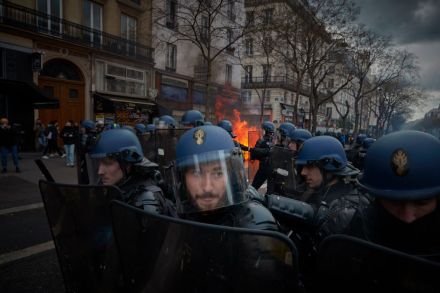
This morning Buckingham Palace has announced that King Charles's State visit to France has been cancelled as the country struggles with nationwide strikes against the government's pension reform. The King was due to visit Paris and Bordeaux, two of the cities which have been hit by the most extreme violence. Will his trip to Germany go ahead as planned?  Also on the podcast, Rishi Sunak has been buoyed by a successful week in which he pulled off his Brexit plan. Will he be able to weather the storm next week when small boats are back on the agenda? Is there a world in which Sunak could pull off an election victory? James Heale speaks to Katy Balls and Fraser Nelson.  Produced by Oscar Edmondson.

Five things we learned from Boris’s Privileges Committee grilling

Boris Johnson has just finished a mammoth three hour evidence session in front of the Privileges Committee inquiry into whether he misled the House about Covid guidance being broken in No. 10. It was a combative affair at times with Johnson displaying flashes of anger and irritation – understandable given it was twice as long as the Liaison Committee grillings he was used to as PM. If this were a boxing match, it would appear to be decided on a points decision, with neither side being able to land a killer blow: Johnson looked on the ropes at times but the committee were unable to conclusively prove that the ex-premier had knowingly misled the House. Still despite all the heat, there was some light in the proceedings, ahead of the committee's forthcoming report.

Johnson makes his partygate defence

Boris Johnson has today published his long-awaited ‘partygate’ defence, ahead of his appearance before the Privileges Committee tomorrow afternoon. In the 52-page submission, Johnson accepts that he did mislead the House of Commons when he said that ‘the rules and guidance had been followed at all times’ during Covid. But he insists he made his statements ‘in good faith’ and that he ‘would never have dreamed’ of doing so intentionally. The committee claims that his submission ‘contains no new documentary evidence'; sources close to Johnson dispute this. Johnson’s defence broadly relies on three familiar arguments. The first is the absence of any smoking gun which proves that he definitely knew that the rules had been broken.