James Heale

James Heale

James Heale is The Spectator’s deputy political editor.

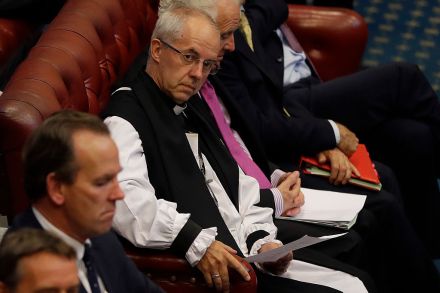
Welby leads the Lords against Braverman’s boats bill

Today in parliament has been dominated by the Upper House, where peers are scrutinising the Illegal Migration Bill at its second reading. The debate is only halfway through but the legislation has been subject to something resembling a turkey shoot as noble lord after noble lord has queued up to attack the government's proposals. The Archbishop of Canterbury made perhaps the day's most memorable speech when he told his fellow peers that it was: Morally unacceptable and politically impractical to let the poorest countries deal with it alone and cut our international aid. This is an attempt at a short-term fix.

Starmer struggles on the coalition question

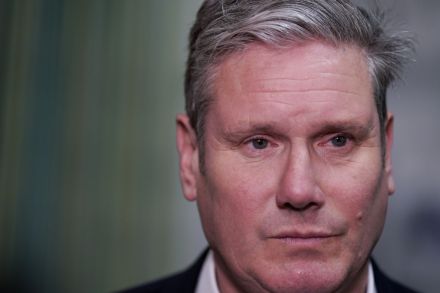
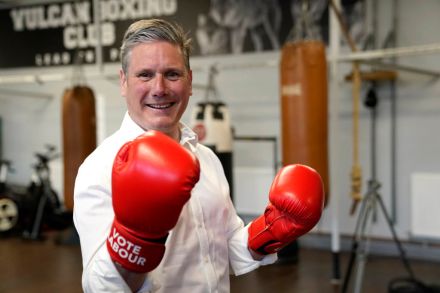
With gains of 643 councillors and 22 authorities, Labour clearly had a good result in Thursday's local elections. Yet with the BBC and Sky both publishing vote share projections which show the party falling short of an overall majority – winning just shy of 300 seats rather than the necessary 326 – the spectre of a hung parliament looms large over British politics once more. It was that subject which dominated Sir Keir Starmer's broadcast round this afternoon. The Labour leader refused seven times in an interview with Sky to rule out a deal with the Liberal Democrats if his party found themselves short of a majority, insisting that he is 'not answering hypotheticals.

Inside the clash between Boris and Charles

Conversations between the Prime Minister and the monarchy are, by convention, kept strictly confidential - and taken to the grave. But Boris Johnson has always been someone who thinks rules are there to be broken. His former spin chief, Guto Harri, has just confirmed something that they tried to cover up at the time: the extent of the clash between Johnson and now-King Charles. They squared off against each other at a Commonwealth summit, apparently, after Charles described the government’s Rwanda deportation policy as ‘appalling’ within political earshot. At the time, word of Charles's disapproval leaked out suspiciously quickly – and via Westminster channels.

Local elections 2023: Tories lose 1,000 councillors

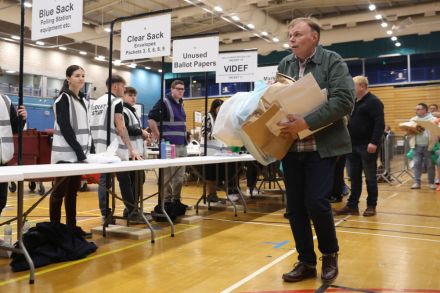
Labour leader Sir Keir Starmer says his party is on track to win the next general election after the Tories were hammered in local polls across England. The story of these local elections however appear to be Tory disaster rather than Labour triumph. The BBC's Projected National Share (PNS) of the vote – based on key wards – suggests that Labour would struggle to win a majority at a general election on the basis of last night's performance. The BBC's PNS gives Labour 35 per cent, Conservatives on 26 per cent, the Liberal Democrats 20 per cent and others 19 per cent. It is the biggest Labour lead over the Conservatives at the local elections since 1997 – but it's also the same vote share which the party won last year.

Tory big beasts at risk in 2024

Results are still coming in fast but one of the big stories of this local election night has been the Tories' southern discomfort. Onetime safe seats in the once-impregnable 'Blue Wall' have fallen overnight to the Liberal Democrats and to a lesser extent, the Greens and Labour too. The leaders of Windsor and Mid Suffolk council lost their seats to Lib Dem and Green challengers respectively; the regions where the Tory vote share has fallen most is by 5.7 per cent in the south west and 3.7 per cent in the south east. Conversely, CCHQ is keen to talk up the areas where the party performed best: this occurred in the north where the swing to Labour was 4 per cent, less than the national average.

What does success look like in the local elections?

It's local election week which means all parties are engaged in the great game of expectation management. Just over 8,000 seats in 230 unitary, metropolitan and district councils are up for grabs this time, with seven in ten voters in England able to cast their votes on Thursday. The last time these seats were contested was May 2019 – when Labour and the Tories both did poorly, polling just 28 per cent each. Jeremy Corbyn actually lost dozens of seats, becoming the least successful Opposition leader in 40 years. Theresa May was forced to quit three weeks later, having shed 1,300 councillors. This time, the picture looks similarly bleak for the Tories – but much better for Labour.

Could nurses still back Barclay’s pay offer?

11 min listen

A judge has ruled that strikes by the Royal College of Nursing be cut short by a day, because the six-month mandate for strike action will have passed. Two more unions are still to vote on Health Secretary Steve Barclay’s pay offer. If they support it, could the RCN change their mind on the deal?  James Heale speaks to Katy Balls and Isabel Hardman. Produced by Max Jeffery.

Tories gear up for London’s mayoral race

For the next ten days, the local elections remain the focus of Tories across the country. But already attention in CCHQ is turning towards the next big contest facing the Conservatives: the London mayoralty in May 2024. The London party board met on Monday to fast-track the candidate selection process, with formal applications now expected to open in the next fortnight. Party members based in the capital will get to choose from a shortlist of candidates after a series of hustings over the summer, with roughly half the party’s overall membership eligible to vote. A final candidate is expected to be chosen by late July, well before the party conference season to give the Conservative nominee ten months to campaign and raise their profile. So, who will it be?

How did Beattie miss a £100,000 motorhome?

10 min listen

Colin Beattie, the SNP’s former treasurer, said today that he ‘didn't know’ about the party’s purchase of a motorhome worth £100,000, the vehicle at the centre of an ongoing police probe into SNP finances. What’s going on? And as the military begins to evacuate British citizens from Sudan, did the Foreign Office react fast enough?  James Heale speaks to Fraser Nelson and Katy Balls.

Sunak names Alex Chalk as Justice Secretary

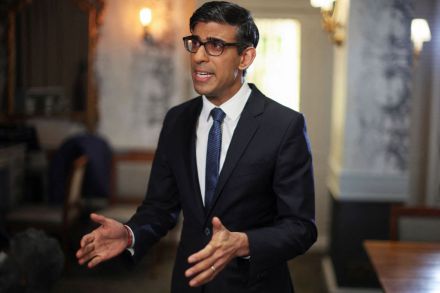
One man's loss is another's gain. Rishi Sunak has acted swiftly to fill the gap left by Dominic Raab's resignation, appointing 46-year old barrister Alex Chalk as his new Justice Secretary. Like Sunak, he is a Wykehamist who quit Boris Johnson's cabinet back in July, citing the Paterson, Partygate and Pincher scandals. The appointment flies in the face of reports which suggested that Sunak would appoint a woman to the post, with men occupying three times as many cabinet posts as women. Awaiting Chalk is an in-tray full of problems. He is the tenth Lord Chancellor in eleven years and inherits a ministry widely regarded as a troubled department, even by Whitehall standards.

Does Raab have to go?

11 min listen

Today was meant to be judgement day for Dominic Raab as we learnt the outcome of Adam Tolley's investigation into historic bullying claims made against the deputy PM. His fate now rests squarely in Rishi Sunak's hands. Will he resign?  Also on the podcast, there have been a couple of amendments tabled today on the Conservative's Illegal Migration Bill, will these changes placate the rebels? Oscar Edmondson speaks to Katy Balls and James Heale.  Produced by Oscar Edmondson.

Sunak has Raab’s fate in his hands

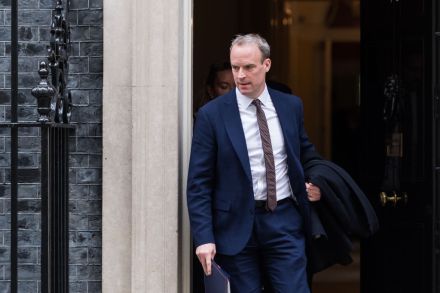
After a five-month investigation Adam Tolley KC has today given Downing Street his report into the bullying claims against Dominic Raab. Rishi Sunak is now considering its findings before deciding whether Raab broke ministerial rules. However, Raab has some time to wait - with a Downing Street source suggesting that there will be no further developments tonight. It comes after Raab received eight formal complaints about his behaviour as a minister in several government departments; Tolley's report is based on evidence he took from dozens of officials involved in these. The Justice Secretary continues to deny that he has bullied staff, insisting that he always 'behaved professionally.' A difficult decision now awaits Sunak.

Tory rebels win concessions on judges blocking flights

Ministers have agreed to back two amendments to its flagship Illegal Migration Bill as part of No. 10's attempt to ward off the latest Tory rebellion. The first is an agreement to change the law so that judges can no longer block migrant deportations. An amendment will give the Home Secretary the power to 'disregard' interim 'Rule 39' orders from the European Court of Human Rights – the so-called 'pyjama injunctions' suspended the first scheduled Rwanda deportation flight last June late at night. Previously, ministers were only willing to introduce this power to ignore last-minute injunctions if ministers failed to persuade the Strasbourg court to reform its Rule 39 orders.

How much does the investigation into Sunak matter?

14 min listen

The investigation into Rishi Sunak leads several papers today, but how much does it really matter? On the episode, James Heale talks to Katy Balls and Conservative Home editor Paul Goodman about why the episode is unlikely to hurt Sunak in the long run. They also discuss the coming report on Dominic Raab's alleged workplace bullying and the centenary of the 1922 committee. Produced by Cindy Yu.

James Heale, Mary Wakefield and Gus Carter

15 min listen

This week: James Heale says the gloves are off as Labour campaigning takes a bitter turn (00:54), Mary Wakefield worries that she’s raising a snowflake (17:47), and Gus Carter tells us about the colourful history of the green man (31:34).  Produced and presented by Oscar Edmondson.

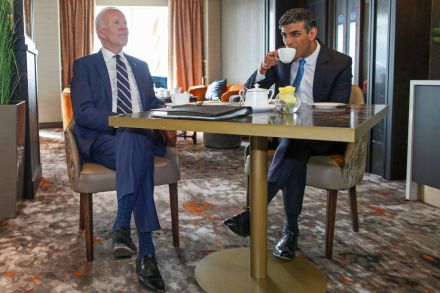
Rishi meets Biden: bi-latte or bi-lateral?

15 min listen

James Heale is joined by Katy Balls and Talk Radio political editor, Peter Cardwell who has been in Belfast for Biden's state visit. A symbolic time as Northern Ireland marks the 25th anniversary of the Good Friday Agreement. Given the President's proud Irish roots and vocal criticism of former Prime Ministers, was Rishi Sunak able to thaw the special relationship?

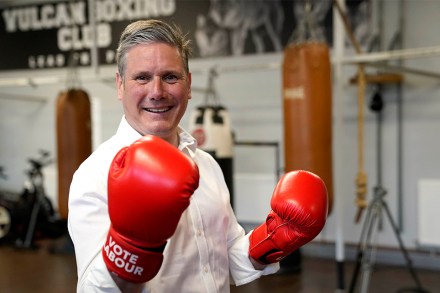
The gloves are off in the Labour party

When Rishi Sunak became Tory leader, the party was 30 points behind Labour: that kind of deficit has historically been terminal for a political party. But since then, inflation has slowed, the Northern Ireland Protocol has been resolved and a deportation deal with Albania meant small boat arrivals fell for the first time on record. That Labour lead has fallen closer to 15 points; one poll last weekend put it as low as 11. A Keir Starmer defeat is now at least conceivable. As one Labour party insider says: ‘Nice doesn’t win elections’ This is the context in which Labour has tried a new tactic: attacking the Prime Minister personally. ‘He is the Tories’ greatest single weapon,’ says one shadow cabinet member.