James Heale

James Heale

James Heale is The Spectator’s deputy political editor.

Cold War

From our UK edition

41 min listen

In this week’s episode:Can Russia turn off Germany’s gas?Wolfgang Münchau and Katja Hoyer discuss Germany’s looming energy crisis (0.51).Also this week:What are relations like between Boris Johnson and Prince Charles? The Spectator’s diary editor, James Heale joins Camilla Tominey from the Telegraph talk about the growing tensions between the Prime Minister and future King (19.56).And finally: Are sex parties becoming a cliché?Emma Sayle, CEO of Killing Kittens and James Innes-Smith, talk about the rise of sex parties and why they’ve become an open secret. (27.48)Hosted by Lara Prendergast & William MooreProduced by Natasha FerozeSubscribe to The Spectator today and get a £20 Amazon gift voucher: spectator.

Inside the clash between Boris and Charles

From our UK edition

Boris Johnson is the kind of prime minister who believes that rules are there to be broken. This certainly seems to apply to his relations with the Crown. Conversation between the government and the monarchy is, by convention, kept strictly confidential. But when Prince Charles privately described the government’s Rwanda deportation policy as ‘appalling’ within political earshot, word leaked out suspiciously quickly – via Westminster channels. Johnson then chose to fuel the story at the Commonwealth summit in Kigali by telling broadcasters that Charles should keep ‘an open mind’.

Tory MPs split on Johnson’s absence

From our UK edition

Boris Johnson has left the country - but that hasn’t stopped him from annoying his backbenchers. The Prime Minister is visiting Ukraine today to meet with President Zelensky. He’s announced that the UK will expand its training capacity for Ukrainian forces to process up to 10,000 soldiers every 120 days. That ought to be a visit that wins universal applause within the Tory party. Yet while there is near-unanimity across the Conservative parliamentary party at the need to support Kyiv’s struggle against Russia, some are unhappy with the timing of Johnson’s announcement and sudden trip abroad. The Prime Minister was due to speak today at the Northern Research Group of Tory MPs.

Katy Balls, James Heale and Melissa Kite

From our UK edition

16 min listen

On this week’s episode, we’ll hear from Katy Balls on Boris Johnson’s plans to divide and conquer (0.33).After that, James Heale on the broadcast battle obsessing British media (6.20).And to finish, Melissa Kite on the politics of horse muck (11.16).Produced by Natasha FerozeEntries for this year's Innovator Awards, sponsored by Investec, are now open. To apply, go to: spectator.

Changing channels: the new war for political broadcasting

From our UK edition

It’s hard to step outside nowadays without being confronted with a massive picture of Piers Morgan. In the adverts for his new TalkTV show he can be seen crushing the House of Commons in his hands or pointing to an address for the channel’s complaints department. ‘Love him or hate him,’ the adverts declare, ‘you won’t want to miss him.’ Actually, it seems, people don’t mind if they do. At the last count, barely 40,000 tuned in. In contrast, Morgan’s final appearance on Good Morning Britain drew almost two million viewers. So what’s going on? One answer is that TalkTV, like any new channel, will take a while to establish itself.

Tory MP arrested for rape

From our UK edition

A Conservative MP has been arrested on suspicion of rape and sexual assault offences. According to the Sun, which broke the story today, the unnamed male Tory currently remains in custody, after being arrested for alleged sexual offences committed between 2002 and 2009 in London. Police first received a report of the allegations in January 2020 and have conducted a two-year investigation into the claims. The unnamed MP faces suspension from the party while detectives from the Central Specialist Crime unit investigate. The Chief Whip, Chris Heaton Harris, has already asked the MP to stay away from the House of Commons while an investigation is being carried out.

Melissa Kite, Mary Wakefield and James Heale

From our UK edition

24 min listen

On this week's episode, we’ll hear from Melissa Kite on the ambitions of Ben Wallace. (00:48) After, Mary Wakefield on our misplaced faith in forensics. (09:35) And, to finish, and James Heale on Eton’s great ‘awokening’. (16:33)Produced and Presented by Sam HolmesEntries for this year's Innovator Awards, sponsored by Investec, are now open. To apply, go to: spectator.

Boris’s plans for a new Brexit clash

From our UK edition

40 min listen

In this week’s episode: Is Boris Johnson planning to tear up Britain’s deal with the EU?James Forsyth says in his Spectator cover story this week that Boris Johnson plans to reignite the Brexit voter base by taking on the EU again over Northern Ireland. He joins the podcast along with Denis Staunton, the London editor of the Irish Times, who writes in this week’s magazine about how Sein Finn has benefited from the DUP’s collapsing support. (00:50)Also this week: Does overturning Roe V. Wade stand up to constitutional scrutiny? Douglas Murray has written in his column this week about America’s abortion debate, in the wake of the leaked draft of a Supreme Court opinion set to overturn the 1973 decision in Roe V Wade.

Eton mess: inside the battle to run Britain’s top public school

From our UK edition

Speak to Tory ministers of a certain background and the question of succession soon arises. But the position they’re talking about is in Windsor, not Westminster – and it has nothing to do with skipping a generation of the monarchy. Pretty soon there will be a new Provost of Eton and, thanks to a quirk of history, it’s a Crown appointment. With so many Old Etonians in this government, including the Business Secretary, Brexit Opportunities Minister and the Prime Minister himself, there’s no shortage of opinions. The incumbent, Lord Waldegrave, is expected to leave his post shortly, after 13 years – and at a time when a battle is being waged for Eton’s soul.

Seven key battlegrounds at the 2022 local elections

From our UK edition

It's polling day across the United Kingdom. Elections are being held for all London borough councils and every local authority in Wales and Scotland. Most seats in England were last up for election in 2018 and in Scotland and Wales in 2017. Elsewhere in Northern Ireland, there are assembly elections, with Sinn Féin poised to become the largest party at Stormont. This year's contests may lack the prestige of last year's mayoral races but they will nevertheless serve as a useful indicator of the public's mood towards Boris Johnson's government. Questions about Covid parties and the cost of living have dominated the campaigns in England.

Your guide to the 2021 election results

From our UK edition

This week will see the biggest set of polls in UK history outside of a general election. Contests are under way in Wales, Scotland, London and in the various mayoral, local and PCC elections across Britain as part of a so-called ‘Super Thursday.’ But while past election nights have been met with the chimes of the BBC’s Arthur theme and a Dimbleby fronting hours of programmes, Covid means there will be no all-night television special. Whereas normally all results are in by midday Friday, this year it will take longer to verify and count the votes than it has done in previous elections. This is due to both reduced staff numbers to allow for social distancing and the high number of polls taking place in some areas.

The missing mandarins: why won’t civil servants go back to work?

From our UK edition

‘Mother nature,’ says Boris Johnson, ‘does not like working from home.’ The Prime Minister wants workers to return to offices so they can have the ‘stimulus of exchange and competition’. His ministers are just as evangelical. Kwasi Kwarteng, the Business Secretary, says he favours ‘being able to interact directly’ with colleagues and Rishi Sunak has spoken about how young people need the office space to learn. The nation’s employers should, they say, get their staff back to their desks. Yet nine months since the end of lockdown and tumbleweed is still blowing through the corridors of power.

The fightback against Sturgeon’s secret state

From our UK edition

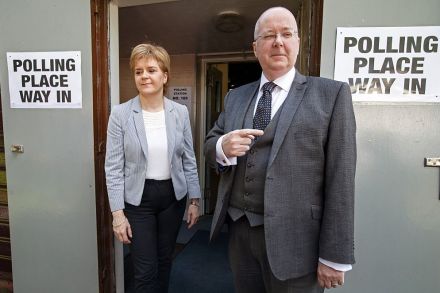
Few of Nicola Sturgeon's promises have aged worse than her pledge to be ‘the most accessible First Minister ever’. The SNP launched its council elections campaign yesterday but refused to invite any print journalists: an effective press blackout designed to shield the party’s leader from questions on policy. Some newspapers declined to cover the event; others denounced it as a sham. As Conor Matchett of the Scotsman points out, the move is in keeping with the party’s long-term media strategy: a broad distrust of the print press and a belief that independence and SNP support will be won online and on TV and not through legacy media.

Five things we learnt from Johnson’s evidence to MPs

From our UK edition

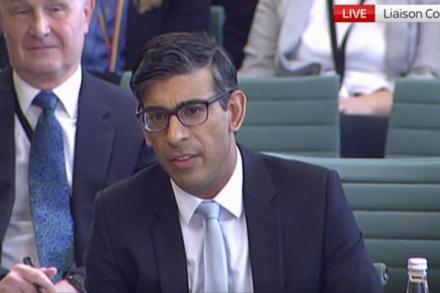
Boris Johnson rocked up at the Liaison Committee today, fresh from last night’s bonding dinner with 250 Tory MPs. And the Prime Minister displayed no trace of a hangover as he produced a competent performance during his largely uneventful ninety-minute grilling. Select committee chairs are generally a fairly hostile bunch: because they’re elected by the whole House, Tory critics of the PM tend to be more successful than his defenders. Today’s session was a much more muted affair than last year’s outing, with Johnson’s interrogators mainly choosing to focus on Ukraine and the cost-of-living crisis. Even so, some news lines did emerge from Boris Johnson’s appearance.

James Heale, Leah McLaren, Nicholas Farrell

From our UK edition

22 min listen

On this week's episode, we’ll hear from James Heale on the Zac Goldsmiths’ secret shadow cabinet. (00:49)Next, Leah McLaren on Covid in Canada. (07:20)And finally, Nicholas Farrell on the march of the Italian Wolves. (13:58)Produced and presented by Sam HolmesSubscribe to The Spectator today and get a £20 Amazon gift voucher:spectator.

Frozen: can China escape its zero-Covid trap?

From our UK edition

40 min listen

In this week’s episode: Is China stuck in a zero-Covid trap?For this week’s cover story, Cindy Yu looks at Xi Jinping’s attempt to grapple with Covid. She joins the podcast, along with Ben Cowling, Chair Professor of Epidemiology, School of Public Health, The University of Hong Kong. (01:42)Also this week: Whose in The Zac Pack? And what is their influence in No.10?James Heale, The Spectator’s diary editor has written in this week’s magazine about The Zac Pack. A group made up of Carrie Johnson, Lord Goldsmith and some highly influential figures in the Westminster corridors. James is joined by Christian Calgie, a senior reporter at Guido Fawkes to discuss the power this group have in No.10.

The Zac Pack: the well-connected group quietly shaping Tory policy

From our UK edition

Who let the dogs out? That’s the subject of a Whitehall probe into the recent Afghanistan debacle. When the Taliban took Kabul, an estimated 1,200 people who qualified for evacuation to the UK had to be left behind. But on 28 August, waiting Afghan families were left helpless on the ground as 173 cats and dogs were escorted past them into the airport and off to safety. The big question: on whose authority were animals put ahead of humans? And did any of this have the Prime Minister’s backing? As ever with Johnsonian drama, the truth is elusive, but one minister seems closer to it than others.

Road to Reform: is Richard Tice’s party a threat to the Tories?

From our UK edition

When I meet Richard Tice, the leader of the Reform party, in St Ermin’s Hotel in Westminster, he is sporting an upside-down Union Jack lapel badge on an otherwise immaculate navy suit, looking like the quintessential Tory he hopes to displace. There was a time when the Tories were complacent about challengers on their right. When David Cameron became Tory leader, he dismissed complaints that he was not Conservative enough. Who else would his critics vote for? Would they really join the ‘fruitcakes, loonies and closet racists’ of Ukip? In the end, Nigel Farage was an opponent supremely capable of stealing his voters and turning British politics upside down. Is Tice the next threat? It doesn’t take long for him to start holding forth about the shenanigans at No. 10.