Isabel Hardman

Isabel Hardman

Isabel Hardman is assistant editor of The Spectator and author of Why We Get the Wrong Politicians. She also presents Radio 4’s Week in Westminster.

Brexit row: Remainers point the finger at David Davis

How did the government manage to engineer a 'compromise' amendment to the EU Withdrawal Bill that's left it in greater danger of a defeat? On Tuesday, Theresa May gave the pro-Remain rebels assurances that there would be an amendment that they could support in order to avoid defeat on that day, but the amendment published by the government clearly hasn't met those assurances. It also initially seems bafflingly clumsy that the key figure on the Remain side, Dominic Grieve, was not consulted about the final wording of the government's amendment. Why drop something on the chief rebel when you want to avoid a rebellion?

Change to visa rules shows May has learned from her recent immigration messes

The government has finally climbed down on visa restrictions for foreign doctors and nurses, scrapping the cap on numbers who can be employed using the tier 2 visa route. This was costing NHS trusts shocking amounts of money in processing applications from overseas medical professionals which were in large part turned down by the Home Office. It is striking that the government decided this week to relax these restrictions, given they are part of the tough immigration policy introduced by Theresa May. Time was when the then Home Secretary would repeatedly upbraid David Cameron for handing her a net migration target to deliver which her Cabinet colleagues were frequently trying to flout.

Government avoids defeat on ‘meaningful vote’ – but is this a win?

Given this morning's ministerial resignation, all looked set fair for an afternoon of high drama in the Commons over the EU Withdrawal Bill. In the end, though, the drama was rather quieter, with the government managing to persuade the Remainer rebels to stand down - temporarily - on the matter of a 'meaningful vote'. Chief Whip Julian Smith spent the majority of the debate buzzing about the Chamber, consulting with ministers and backbenchers and also beckoning MPs out of the room in little groups. It is since clear that Smith was negotiating the compromise that Solicitor General Robert Buckland started offering during the debate. Initially, Buckland offered the rebels 'structured discussions' on the matter.

Phillip Lee explains why he resigned over Brexit

Phillip Lee struck a sorrowful tone when he spoke in the Commons this afternoon, explaining why he had felt it was necessary to resign over Brexit. The Bracknell MP was congratulated for his “courage” as he spoke by his two vocally pro-Remain colleagues, Anna Soubry and Sarah Wollaston. He also received some applause as he sat down. Lee took care as he spoke to argue that this resignation was not about a plan to destabilise the government or Theresa May, but because he could not abide by collective responsibility given his disquiet about the direction in which Brexit is heading. “I fully support Theresa May,” he insisted, but said that the current proposals from the government would represent a “breach of human rights and parliamentary sovereignty”.

How long before Tory backbenchers turn off Theresa May’s life support machine?

Tomorrow marks a year since Theresa May sat her dejected parliamentary party down and promised that 'I got us into this mess and I'll get us out of it'. She was speaking amid the chaos of the snap election that she'd called, and it wasn't clear whether the Prime Minister was going to be able to form a government, let alone survive as leader for very long. Tonight, she's still here but still appealing to Conservative MPs for unity as the 'crunch stage' of the EU withdrawal bill arrives in the Commons. The briefing over the weekend did suggest that the Prime Minister was probably going to be ok, though in reality there are still a couple of votes that are going to be, at the very least, rather tight.

The greenhouse effect

The glasshouses at Kew Gardens are so popular that they can be quite unbearably busy at weekends. And why shouldn’t they be? They’re beautiful structures and the plants they shelter are so marvellous that they deserve the attention they get, whether from botany nerds, schoolchildren, or millennials dressed for Instagram and posing for selfies in the steamy leafy heat. But for the past five years, the biggest member of the Kew family has been closed to the public. Hidden under an enormous awning that the botanic gardens boasts could have covered three Boeing 747s (one of those area-the-size-of-Wales facts that mean very little), the Temperate House has been undergoing a lengthy restoration.

MPs in mess over new data protection laws

MPs are frantically deleting casework emails after being mistakenly advised that new regulations mean they have to clear the data that they hold on constituents. The General Data Protection Regulation comes into effect on 25 May, and is the reason your own inbox will be flooded by companies who've been sending you unsolicited emails for years who are now asking if you want them to stay in touch. It also has an impact on parliamentarians, who retain years' worth of correspondence about constituency matters. Recent briefings from the Commons authorities and political parties have left office staff and MPs confused about what they are allowed to keep, with one briefing suggesting that all data from before the snap election had to be deleted.

Theresa May’s tricky Turkish diplomacy dilemma

Turkey's President Erdogan is in London this week, having tea with the Queen and praising Britain as a 'real friend'. As Robert Ellis says in his Coffee House piece about the way the Turkish regime is becoming increasingly brutal and censorious, a clear benefit for Britain in this friendship is post-Brexit trade with the Turks. But campaigners are asking at what cost this comes, given the human rights abuses of the current regime, and want Theresa May to condemn the practices of the Erdogan government. This presents a tricky dilemma for the Prime Minister. Turkish political culture - and that of many of the Islamic countries that Britain has strong diplomatic ties with - does not respond well to public shaming.

May briefs MPs on customs options as timetable for decision keeps slipping

Tory backbenchers have been briefed today by the Prime Minister on the different options for Britain's customs arrangements with the EU after Brexit. There was a presentation on the two different plans, and a summary which one MP who attended described as 'everything is just going terribly well'. The expression on this MP's face suggested that he didn't necessarily agree with that assessment. These briefings are taking place as the two working groups in Cabinet meet to discuss the two options set before MPs today: the 'max fac' solution or the new customs partnership.

Tim Farron just can’t escape gay sex

What does Tim Farron think about gay sex? Like Ken Livingstone's repeated reluctance to discuss Hitler, the former Lib Dem leader has never really offered his views on the subject. This time a year ago, for instance, he was so busy talking about all the things his party was putting into its general election manifesto that there was just never time for the matter to creep into interviews. He's never avoided questions on gay sex, or changed his views on gay sex, or offered formulations which sound as though he loves gay people (just not in The Way) but actually mean he doesn't think they should be having gay sex. So what a surprise that gay sex has cropped up as a problem for Farron this week. It's not like it's ever been in an issue before.

Corbyn exposes May’s Brexit mess at PMQs

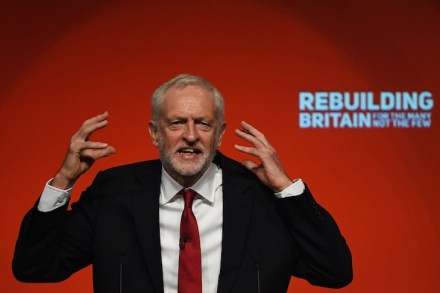
Given the deep Cabinet splits over Theresa May's plans for Britain's customs arrangements with the EU after Brexit, there was a very clear line of attack for Jeremy Corbyn to lead with at today's Prime Minister's Questions. The Labour leader doesn't always take the most obvious line, but he did today, first asking May about Boris Johnson's description of the new customs partnership as 'crazy'. This elicited a rather robotic response from the Prime Minister, who helpfully chanted to the Commons that 'we are leaving the European Union, we are leaving the customs union'. Corbyn made things still more awkward for his opponent by then switching to quoting Greg Clark's warning that jobs would be at risk without frictionless trade with the EU.

No, Oxford students haven’t removed Theresa May’s portrait

From the dreaming spires of Oxford this afternoon comes a potent combination of student censorship and fake news. A group of geographers had claimed victory on Twitter in a campaign to remove the portrait of Theresa May from the School of Geography and the Environment. May is an alumnus of that school, but the Not All Geographers campaign wanted to challenge this, and did so by sticking drawings and messages about the hostile environment around the picture until it was removed. 'We are pleased to announce that the @theresa_may portrait has been removed from @oxfordgeography!' the geographers announced.

Theresa May is making Cabinet unrest on the customs partnership worse

Boris Johnson's rather bold move on the customs partnership hasn't yet landed him in trouble, even though it has enraged some of his pro-Remain colleagues. At the Number 10 lobby briefing today, the Prime Minister's spokesman avoided giving the Foreign Secretary a slap down when asked whether Theresa May was happy that he had told the Mail that the customs partnership plan was 'crazy'. Instead, the spokesman used the sort of formula of words that declines to offer any sort of comment on anything at all: 'There are two customs models that were first put forward by the government last August, and most recently they were outlined in the Prime Minister's Mansion House speech, which the entire cabinet was signed up to.

Jeremy Corbyn attacks Tory local election spin

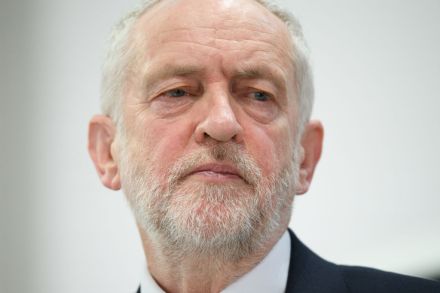
If you want to know how last night was for the Labour Party, you need to look no further than the statement that Jeremy Corbyn has just released on the results. It is not a celebratory comment on Labour’s spectacular night, but a defensive one, describing the local elections as a ‘solid set of results’. He adds: ‘In a sign of how worried they are about Labour’s advance, the Tories talked up our chances to unrealistic levels, especially in London. The results show they're right to be worried - we came within a whisker of winning Wandsworth for the first time in over 40 years.’ Corbyn is right, by the way: the Tories spent months telling anyone who was half listening that they were going to get trounced in these elections.

What’s the point of the women and equalities Minister, anyway?

Lucky Penny Mordaunt. She’s the latest minister to find themselves the holder of the women and equalities brief in the great pass-the-parcel of this role. It was created for Harriet Harman under the Labour government, and she knew exactly what she wanted to do with it. Since then, though the Tories have never quite understood what this Minister should do, other than chivvy other departments, they daren’t abolish it, lest they seem to be anti women and equalities.  The women and equalities pass the parcel has been incredibly awkward at times, with the job skipping Nicky Morgan, for instance, because of her opposition (at the time) to gay marriage. It has had to move around departments to prevent any embarrassment over certain ministers’ voting records.

Can James Brokenshire fix the Tories’ housing woes?

James Brokenshire is back in government after his illness. He is the new housing secretary, which marks quite a change from Sajid Javid. Brokenshire is one of those ministers May trusts deeply: he worked with her in the Home Office where she found him to be a quietly loyal colleague. What does this mean for housing policy? It means May has now got one of her people overseeing this crucial policy area: Javid is not known for his quiet loyalty, as yesterday’s Sunday Telegraph interview showed. He is also known for his desire to push May to back radical ideas to get housebuilding going.

New leak suggests Amber Rudd’s grip on the Home Office is even weaker than first thought

When the Windrush scandal broke, it was largely seen as Theresa May's fault, given the Prime Minister had introduced the hostile environment policy when she was Home Secretary. But this week, the focus has shifted to Amber Rudd, and whether she knew what was going on once she took over the role. This afternoon the Guardian has a leak which suggests Rudd's grip on her department is even weaker than we'd previously thought. Following a chaotic 24 hours in which the Home Secretary told MPs on the Home Affairs Committee that there were no Home Office targets for immigration removals and then corrected herself in the Commons the following day, the newspaper has now published a secret memo which suggests Rudd was wrong to say she did not know about these targets.

Amber Rudd is reminded of the Home Office’s reputation as a political graveyard

Amber Rudd must, privately, be hopping mad about the Windrush row. Not only is she having to defend policies that her predecessor and now boss introduced when she was Home Secretary, she is also having to try to resolve the mess that was exacerbated by Number 10 in initially refusing a meeting with Commonwealth leaders about the matter, and then made worse still by Caroline Nokes' interview suggesting that people had been wrongly deported when there was no such evidence of this happening. That's not to say that Rudd doesn't have her own questions to answer: as she argued herself this afternoon when before the Home Affairs Committee, while the principle of the hostile environment immigration policy may well be right, the practice has been wrong. Her session was not a comfortable one.

The Maybot returns at PMQs

Today's Prime Minister's Questions saw the Maybot reactivated. Jeremy Corbyn decided to lead the session on the fallout from the Windrush row, widening out his questions to the flaws in the hostile environment policy on illegal immigration, and on who was to blame for these flaws being apparent but not fixed for so long. The exchanges very swiftly became a ding-dong between May and Corbyn as to whose fault the creation of a hostile environment policy actually was. Corbyn wanted to pin the policy on May, but also demanded that Amber Rudd resign for aiming to harden the policy. His questions were decent, but it was May herself who created the Labour win today, as her answers were terrible.

Theresa May’s Windrush woes continue at PMQs

The government has got at least two colossal messes to deal with, and yet Theresa May managed to survive today’s Prime Minister’s Questions. This was all the more surprising given the topic of PMQs was on a mess created as a result of one of May’s own policies.  Jeremy Corbyn chose, rightly, to lead on the treatment of the Windrush generation, and had a decent series of questions for the Prime Minister. These ranged from a case he had previously raised of a man called Albert Thompson who had been denied NHS treatment, to highlighting Amber Rudd’s comment about the Home Office being too concerned with policy and strategy to attacking May’s own ‘hostile environment’ policy on immigration.