Isabel Hardman

Isabel Hardman

Isabel Hardman is assistant editor of The Spectator and author of Why We Get the Wrong Politicians. She also presents Radio 4’s Week in Westminster.

Why Philip Hammond could just be making things easier for Boris Johnson

Is Philip Hammond's intervention today really a problem for Boris Johnson? The former Chancellor comment piece in the Times declares that he's kept quiet for all of three weeks, but that 'now it is time' to speak out and warn the new Prime Minister that he risks betraying the British people if he goes for a no-deal Brexit. There has been a sufficiently energetic response from Number 10 sources to suggest that they are rattled by Hammond. But those sources insist that everyone in Westminster had already priced in such a complaint, and that the public will see Hammond and his acolytes bickering over process and trying to stop Brexit, which will just make voters more enraged with the Remainers in parliament.

Could we be heading for a Coupon election?

He might be the only MP to have accidentally posted a screenshot of emails about 'GE2019' on Instagram, but Damian Hinds is far from the only one spending their summer planning to fight in a poll later this year. All the parties are gearing up for a campaign. We've even had glimpses of how Boris Johnson would fight such an election, with today's ComRes poll for the Telegraph suggesting that 44 per cent of voters would back Boris Johnson if he suspended parliament to get Brexit done. There are quibbles about the way the questions were asked in this poll, but it's an important one because it chimes with the thinking in Downing Street about how to win a 2019 snap poll. Johnson will pitch himself as the man of the people fighting a recalcitrant parliament that's actively blocking Brexit.

Can the Gaukeward Squad overcome its inner turmoil?

Usually after a big government reshuffle, the happiest-looking people are the ministers, whether they’ve survived the axe or are celebrating a promotion. But at the end of this week, the most cheerful MPs appear to be the ones who left government, whether of their own volition or after being sacked by Boris Johnson. They’ve been spotted at the cricket and are happily announcing their holiday plans with their family on social media in a way that most politicians shy away from, for fear of appearing to have too much fun. But who is really in the best situation: those in the government, or those now on the outside? In my column in today’s Guardian, I examine the emotional turmoil that many MPs on both sides are going through.

Will Ben Wallace be allowed to turn on the defence spending taps?

Ben Wallace also has an Iran-shaped problem in his Defence in-tray. One of the complaints about the British government's handling of the tanker crisis is that the Navy's capacity is too thin. It is a long-established complaint from defence chiefs that there isn't enough money for the Armed Forces, and they are now expecting Johnson to show his true blue Tory credentials by turning on the spending taps. Jeremy Hunt pledged during the leadership contest to double defence spending, and there has been a regular drumbeat from Tory backbenchers on the need to push spending up. The Joint Committee on the National Security has warned that 'the cornerstones of UK national security are being undermined' and that the Nato target of spending two per cent of GDP on defence might not be enough.

What’s waiting in Priti Patel’s new Home Office in-tray?

Priti Patel is the new Home Secretary. This is likely to attract a fair bit of opprobrium from Boris Johnson's critics, given she is a supporter of the death penalty. Whether or not she has been given any remit to examine that particular policy issue, she has a big job on her hands. The Home Office is one of the hardest departments to run. Theresa May managed to survive it, largely by micromanaging everyone else into the dust. Her successor Amber Rudd did not, finding that obeying her boss too well led to her being implicated in the Windrush scandal. Nick Timothy and Fiona Hill, May's aides in the Home Office and then in Number 10, would constantly tell friends that they were always trying to avert disaster in the department or one of its agencies.

‘Never mind the backstop, the buck stops here’: Boris launches his premiership with domestic focus

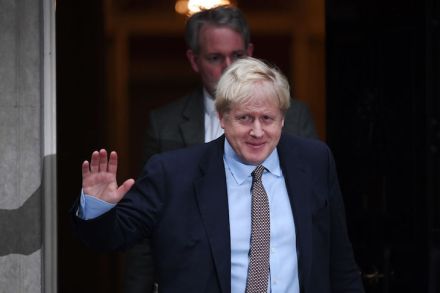
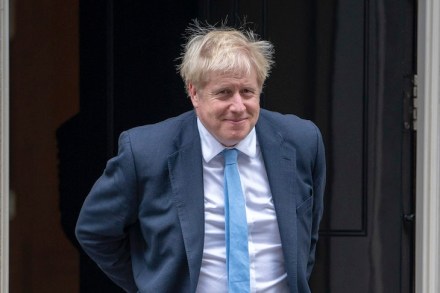
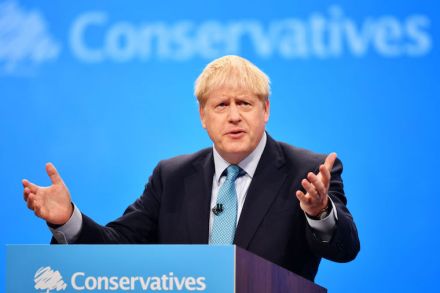
Boris Johnson has just given a rather urgent-sounding, fast-paced speech in Downing Street. So fast-paced, in fact, that it almost appeared he was in a hurry to catch a train. He of course promised to deliver Brexit by 31 October, but the bulk of his statement was in fact focused on what he wanted to do on domestic policy. He did so using typically tangible promises, telling voters that 'my job is to make your street safer', that 'my job is to make sure that you don't have to wait three weeks to see your GP' and 'my job is to make sure your kids get a superb education'. He also promised that his government would 'fix the crisis in social care one and for all with a clear plan we have prepared'.

Theresa May leaves Downing Street with best wishes for Boris

Theresa May's final statement in Downing Street before she left for Buckingham Palace was very dignified and generous to her successor. She offered her 'warm congratulations' to Boris Johnson and wished him 'every good fortune in the months and years ahead'. As with her performance at Prime Minister's Questions, May was keen to emphasise her commitment to continuing in public service, saying: 'I am about to leave Downing Street but I am proud to continue as the Member of Parliament for Maidenhead. I will continue to do all I can to serve the national interest.

Theresa May looks back in anger at her final PMQs

Theresa May's final Prime Minister's Questions had all the tributes you’d expect for an outgoing leader. Members from across the House praised her commitment to public service and the way in which she has made tackling mental illness, modern slavery and domestic abuse her priority throughout her time in government. She received a standing ovation from her party at the end, with the Liberal Democrats and the DUP joining in from the opposition benches. A few female Labour MPs clapped too. Her final remarks made a dignified end to a premiership beset by failure and procrastination. She told MPs that the Commons was ‘rightly at the centre’ of ‘extraordinary times’ and that her greatest motivation would always remain her constituents.

Forget Brexit: Boris’s toughest task will be energising his exhausted party

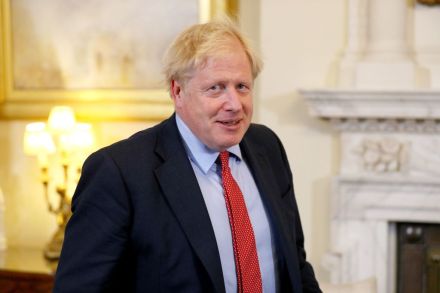
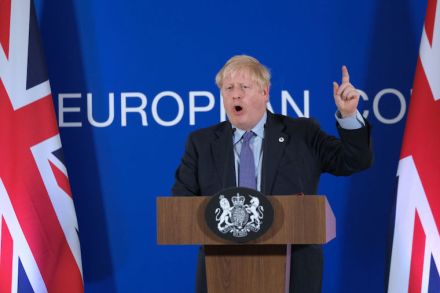
Boris Johnson will now be receiving plenty of unsolicited advice about how to be Prime Minister. As his victory speech a few minutes ago showed, though, he's not planning to ditch one of the qualities that got him into this job in the first place. Brand Boris isn't about the typical prime ministerial behaviour, stood squarely behind a lectern and trying to offer gravitas. To try to squeeze Johnson into this mould would be about as successful as Gordon Brown's attempts to look cheerful. That's why his speech was based around the acronym 'DUDE' - Deliver Brexit, Unite our Country, Defeat Jeremy Corbyn and Energise.

Ministerial resignations could set the tone of Johnson’s premiership

The trickle of ministers resigning before they are pushed by Boris Johnson continues this morning, with Anne Milton stepping down as an Education Minister. In her resignation letter to Theresa May, Milton cites ‘grave concerns about leaving the EU without a deal’. These resignations could set the tone for the start of Johnson’s premiership. Certainly Sir Alan Duncan hoped that his departure yesterday would start a narrative about a lack of confidence in the soon-to-be-elected Tory leader. They are in many ways reminiscent of the Labour frontbenchers who stepped down at the start of Jeremy Corbyn’s leadership in 2015. One, Jamie Reed, resigned while Corbyn was accepting his win.

Alan Duncan’s resignation just adds to the chaos in the Foreign Office

Sir Alan Duncan's resignation will only leave a hole in the Foreign Office for a couple of days before the new prime minister replaces him. But he's not the only missing minister in that department: Mark Field is suspended while the incident at Mansion House is investigated. Duncan had been covering some of Field's responsibilities over the past few weeks, and now he is off too, just as the crisis in relations with Iran deepens. Jeremy Hunt, meanwhile, has been busy conducting a leadership campaign, all of which gives the Foreign Office, normally the most composed and regal part of Whitehall, a slightly chaotic, neglected feel.

How Tom Watson reinvented himself to become the new challenger to Corbyn

Tom Watson has had more reinventions than Kylie Minogue has had mid-performance outfit changes. His performances over the years have ranged from baronial backroom fixer loathed by Blairites to scourge of Fleet Street when he took on Rupert Murdoch. There was a brief counter-culture period when he went around wearing a beret, a foray into hunting down alleged paedophiles, and a mysterious vanishing act when he realised that Jeremy Corbyn's fans were out to get him. In the magazine this week, I look at where Watson's latest incarnation is taking him: he's the key figure in the latest attempt to save the Labour Party from Jeremy Corbyn and his hard left allies. As I say in that piece, Watson these days is a kindly man who many MPs - to their own great surprise - look to for help and support.

The Lib Dems could soon become important power brokers: here’s what they want

An old joke among political journalists is that you know a writer has run out of topics when they start producing columns either on their children or the Liberal Democrats. With so many other things going on, perhaps this is why Westminster has been oddly indifferent to the leadership contest taking place between Jo Swinson and Ed Davey over the past couple of months. We should have been paying more attention, as the winner may well have an important role to play in the political turmoil over the next few months. Last night, the BBC held its hustings with the two candidates, and I was one of the journalists invited to ask questions.

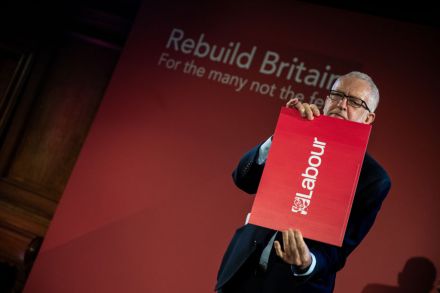
Watson’s new plot

Ever since Jeremy Corbyn was elected as leader of the Labour party, many of his MPs have dreamed of deposing him. They’ve tried mass shadow ministerial resignations, a no-confidence motion, even a formal leadership contest — but to no avail. Some, like Chuka Umunna, left the party, hoping (in vain) that others would join their breakaway group. Other MPs gave up hope, resigned and found jobs outside of politics — concluding no plot would ever work. But that might now be changing. The Corbynites, who have stuck together for so long, are fighting with each other. Party members, once the human shield who protected their leader, are beginning to doubt him.

Corbyn and May argue over whose party is more racist

Today's Prime Minister's Questions provided a rather dispiriting summary of the current political scene. The two leaders of the main political parties ended up having a fight on whose party had the bigger racism problem, sparked by tweets from the US president telling black and minority ethnic Congresswomen to 'go back'. Jeremy Corbyn tried to open the session on climate change, but Theresa May had, unsurprisingly, turned up clutching the advert placed by Labour peers in today's Times, which said Corbyn had 'failed the test of leadership' because of his attitude to anti-Semitism. And so the exchanges moved to a predictable format.

Johnson and Hunt try to unite the Tory party in final leadership debate

Tonight's Sun debate between Boris Johnson and Jeremy Hunt was far more relaxed than last week's head-to-head clash. But it was also stuffed with news lines, as both men prepared for the final few days of voting in the Tory leadership contest. Both declared the Northern Irish backstop dead, Johnson ruled out an election before Brexit happens, and they both attacked Donald Trump for telling black and minority ethnic congresswomen to 'go back'. On Brexit, the answer that Johnson gave about the backstop showed how likely it is that he might pursue a no-deal Brexit: he rejected a time limit or unilateral exit clause.

Ministers to rush out domestic abuse bill – but will Boris back it?

The Home Office has confirmed that it will publish the Domestic Abuse Bill tomorrow as Theresa May tries to secure her legacy at the very end of her premiership. Victims' Minister Vicky Atkins told Home Office questions this afternoon that the legislation will move from draft form to legislation for scrutiny on the floor of the Commons. The reason there is this rush is that May fears her successor wouldn't pick up the Bill of their own accord. As I've blogged before, this is partly her fault because she delayed publication of the draft document for so long. But it is also because the legislation as proposed isn't to everyone's taste. It includes the first statutory definition of domestic abuse, and this goes far beyond the stereotype of a man beating his wife.

Exclusive: How MPs could have averted Parliament’s harassment crisis

MPs tried to set up an independent complaints process into sexual harassment and bullying as far back as 2016, but their efforts were blocked, I have learned. Anne Milton, who was the Conservative Deputy Chief Whip between 2015 and 2017, told Coffee House that she became increasingly concerned that the political parties' own complaints processes were insufficiently independent, and convened a meeting of whips and Commons clerks to try to get Parliament to set up its own process. She had received a number of complaints from staff who had been bullied by MPs or other employees, and was concerned that there was often no proper recourse for these complainants.

Will the House of Commons really change after the latest bullying report?

Gemma White QC clearly heard many shocking individual cases as she was working on her report into bullying and harassment of MPs' staff. There are tales of sexual assault - 'breasts being grabbed, buttocks being slapped, thighs being stroked and crotches being pressed/rubbed against bodies' - and MPs demeaning and belittling their staff so much that their mental health collapsed. But what is most shocking is the way that this behaviour from members was regarded as a 'necessary' evil. White found that there was a culture where victims of bullying or harassment felt there was no point in complaining, either because it would be 'career suicide' or because they felt nothing would be done.