Isabel Hardman

Isabel Hardman

Isabel Hardman is assistant editor of The Spectator and author of Why We Get the Wrong Politicians. She also presents Radio 4’s Week in Westminster.

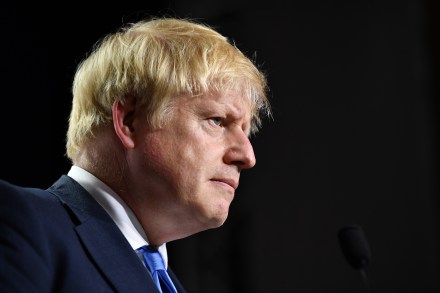
Boris Johnson’s opponents have been too easy on him

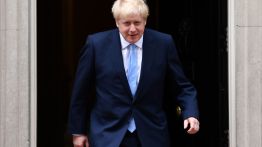
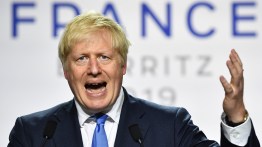
Boris Johnson is currently the quiet man of the Tory leadership contest, lurking in the shadows rather than courting media attention as he usually does. His campaign team has deliberately held him back from touring the studios to avoid gaffes or rows. They're even nervous about the limited exposure he has, joking that he is 'always one Monday column away from disaster'. Of course, it's easier to do this when your candidate has as high a profile as Johnson: he doesn't really need any more attention than he's already got. It is, though, not the greatest of compliments from those members of his campaign team that they seem to feel Johnson cannot be trusted not to cause a career-damaging row when the stakes are so high.

Michael Gove tries to come out fighting after cocaine row

Michael Gove is one of those people who enjoys finding themselves with their back against the wall, fighting. His leadership launch this afternoon was mired in questions about his past drug use, but the Environment Secretary looked totally unruffled by the rows of the past few days and the questions from journalists after his speech. His was a typical Gove offering, in that it was a beautifully-written and well-structured speech. He started with his back story of being adopted and never knowing his birth mother. He set out all he has achieved so far in government, running from his passion for improving all children's life chances through education reform, his approach to justice, and his current brief at the Environment department.

Dominic Raab’s brazen Brexit pitch

Dominic Raab's launch was just downstairs from the event that Matt Hancock held, and rather more serious, too. He was able to underline his parliamentary support, filling the front row of his audience with MPs who cheered loudly at appropriate moments. He was introduced by Maria Miller, who joked that she hoped to persuade him to become a feminist and claimed that both had come from relatively humble backgrounds. Raab's campaign team had clearly decided that it was best to be brazen about something that is considered by some as a weakness. The candidate's pitch was as someone who is sufficiently brazen to achieve the kind of Brexit he and the Conservative party want, and then make Britain fairer for ordinary people.

Can Matt Hancock be trusted on Brexit?

What does Matt Hancock offer the Conservative party? He’s a former Remainer who has stayed loyal in Theresa May’s Cabinet and so has a bit of a tricky pitch to make to a party furious about the outgoing Prime Minister’s failure to deliver Brexit. He also hasn’t got an eye-catching drugs story to get attention, for better or worse.  His solution this morning was to offer a slightly trippy leadership launch at which he went entirely overboard on the optimism, energy and bizarre motivational aphorisms. He told a slightly bewildered and haggard-looking press pack that “you are the future of Britain!”, gesticulated at the view behind him and declared “I look at the world around me and I think wow!

The in-tray of horrors

‘Dear Chief Secretary, I’m afraid there is no money. Kind regards — and good luck!’ Liam Byrne will forever be haunted by the note he left on his desk for his successor in 2010. Both coalition parties made much of what was supposed to be a joke about the difficulties of keeping Whitehall spending in check. David Cameron waved the note around in his victorious 2015 election campaign. Byrne later said he was so embarrassed by his mistake that he considered throwing himself off a cliff. There’s nothing funny about what Theresa May leaves on her desk for the next prime minister. Rather than just one pithy note, there’s a teetering, disorganised in-tray of decisions the Tory leader has been putting off.

Tory leadership candidates start frenzied final push for support

With just a few days to go until nominations close in the Tory leadership contest, candidates are busy trying to shore up support in the parliamentary party. There are five - Sam Gyimah, Andrea Leadsom, Rory Stewart, Mark Harper and Esther McVey - who currently don't have sufficient nominations to make it onto the ballot paper. Harper tried to get some attention by asking a question about the Peterborough by-election at today's Prime Minister's Questions, while Gyimah has been doing the rounds in Portcullis House as MPs have trundled through. Meanwhile I understand that Rory Stewart has cancelled all his media appearances in order to hold as many meetings as possible with MPs. Stewart's predicament is an interesting one.

Tory party changes rules to stop candidate chaos

The Tory leadership contest rules are to change in order to whittle down the number of candidates, the party board confirmed this evening. After it became clear that the contest was going to be rather chaotic with more than a dozen candidates, the party agreed to raise the threshold for nominations to make it harder for contenders to get onto the ballot paper. Each would-be leader must have eight nominations to get onto the ballot, and then win the support of at least 17 MPs in the first round. Then at the second ballot, any candidate receiving 32 votes or fewer will be eliminated, with rounds continuing until only two remain. The first round will take place on 13 June, and further ballots are scheduled for 18 June, 19 June and 20 June.

The biggest mistake Change UK made was to become Change UK

Why did Change UK end up splitting? Well, there were the personality clashes. And then there was the failure to attract more MPs who were supposed to break off from their existing parties to join the quest to change politics. But the biggest reason the party ended up in this mess was that simply it became a party. When it started off as the Independent Group, its members seemed keen to cast their new caucus as something loose and exploratory, rather than a formal political party. In fact, I understand that three of the MPs - Gavin Shuker, Angela Smith and Luciana Berger - who announced they were leaving today were very resistant to the idea that the group should register as a political party. But in the end they were overruled, particularly by Chris Leslie.

Change UK splits after disastrous European elections

Just a few months after becoming a political party, Change UK has announced it is splitting. Six of its MPs, including its leader Heidi Allen, have quit, with Anna Soubry now taking the crown. The party confirmed the split with a press release typical of its odd behaviour throughout its existence, focusing on Soubry's election before casually mentioning that more than half the party had left. Allen has left, along with Chuka Umunna, Sarah Wollaston, Gavin Shuker, Luciana Berger and Sarah Wollaston. They are returning to working as an 'independent grouping' and leave behind Soubry, Chris Leslie, Joan Ryan, Mike Gapes and Ann Coffey.

Why standing for Tory leader could hinder Tory MPs’ careers

Why would you stand for the Tory leadership? If you're someone like Dominic Raab, Boris Johnson or Jeremy Hunt, you've been planning this for months, with a team in place since at least the start of the year because you really think you can win this. But there are other entrants who are highly unlikely to get anywhere near the final two but are still standing. Some of these MPs may think they genuinely have an outside chance, but others have made a variety of calculations. Rory Stewart, for instance, is building a proper profile for himself as someone unafraid to walk around in public asking people what they think (which is rare for politicians today). This will set him in good stead for another leadership contest.

Change UK holds post mortem after EU election humiliation

Change UK has been holding post-mortem meetings about its failure to win any seats in last week’s European elections, I understand. Members of the newly-formed party met up this week to discuss what to do next after it only secured 3 per cent of the vote overall.  Critics have suggested that it’s already all over for Change UK, and even its optimistic members accept that the party is going through a very difficult phase. There is talk in some quarters of a merger with the Liberal Democrats- and it was notable that both Mike Gapes and Anna Soubry praised Jo Swinson, who is standing to lead that party.

Tory leadership row brewing over CCHQ ‘stitch-up’

Inevitably, the Tory leadership contest is developing a row about process and possible stitch-ups. Party grandees have been suggesting limiting the number of candidates to prevent ‘chaos’ (which suggests an interesting reading of the current political turmoil as not being chaotic). Iain Duncan Smith thinks there should be a higher threshold for nominations and more candidates knocked out at each round, while members of the 1922 Executive committee are also proposing limiting the numbers of candidates to around a dozen. There is a split though on whether this would be fair or whether the ‘widest debate possible’ is more important.

The Boris Brexit court case isn’t as bad for his leadership bid as some hope

Will Boris Johnson being told to answer to allegations of misconduct in a public office derail his leadership campaign? The former foreign secretary has been told he must appear in court to answer the claims, brought in a private prosecution by campaigner Marcus Ball, who objects to his claim during the referendum that the UK sends £350 million a week to the EU. Today a district judge ruled that there was sufficient evidence to proceed with a trial. This prosecution will naturally be seen by someone of Johnson's enemies as a chance to undermine him while he's the frontrunner in the Conservative leadership contest. But this isn't likely to have the effect they hope.

How councils in crisis could open up an important Tory leadership battleground

One of the issues that should crop up in this Tory leadership contest is local government funding. True, it's not a particularly enticing matter, but Conservative MPs are generally very worried about the state of their local councils. Today's BBC story on 11 authorities which could exhaust their reserves within four years underlines this worry. The Beeb used analysis by the Chartered Institute of Public Finance to work out which councils the organisation had listed - anonymously - as being most at risk. The Local Government Association is warning that councils will have to further cut back services and that 'ongoing funding gaps are simply too big to be plugged by reserves'. Of course, this also affects the debate about social care, with councils already struggling to fund its provision.

Ministers take advantage of power vacuum left by May resignation

Parliament is in recess at the moment, though the difference between a House of Commons Chamber that is sitting and one that isn't is scarcely noticeable at present, given how few votes MPs are being required to attend. There is a similarly thin distinction between a government led by Theresa May as she insists she's not going anywhere, and one led by the Theresa May who, last week, finally conceded that she was going. Not much is happening, as per usual. In fact, there will be even less happening as a result of May's resignation announcement. Today at the Number 10 lobby briefing, the Prime Minister's official spokesman was asked whether the Withdrawal Agreement Bill was really going to return to the Commons next week as planned.

Tory leadership candidates avoid the C-word

Kit Malthouse's entry into the Conservative leadership contest has created quite a problem for the other candidates, not so much because he appears to offer a serious threat to the more established campaigns, but because he is the architect of the 'Malthouse Compromise', which once promised to solve all of Theresa May's Brexit problems. The trouble with the Malthouse Compromise is that its name includes a now highly-toxic C-word. Theresa May used 'compromise' so much in the weeks before she finally gave up and announced she was resigning that no leadership candidate worth their salt wants to drop it into conversation now. Even those who think that the best way through the Brexit deadlock really will involve a lot of compromise know they can't use that word.

Does Theresa May have a domestic legacy?

Theresa May isn’t leaving at a time of her choosing, nor has she been able to focus on the domestic policies she listed in her inaugural speech on the steps of Downing Street. But today, as she announced she was resigning, she still tried to set out what she believed was her legacy in tackling the ‘burning injustices’ in Britain.  It wasn’t a long list, and the achievements on that list were in themselves rather small. She said she had committed more funding to mental health in the NHS long-term plan, which is true. This funding increase was greater than those in NHS England had initially hoped for.

What the government needs to do if it really wants to end the domestic abuse ‘postcode lottery’

Unusually, the government made an announcement today on domestic policy, with Theresa May promising to end the ‘postcode lottery’ for domestic abuse victims by forcing English councils. Still more unusually, this announcement has been welcomed with sincerity by the sector it is aimed at. It must be an unusual feeling for ministers, even on a matter such as domestic abuse that May and her junior colleagues have poured more effort into than many other issues. Yes, the Domestic Abuse Bill is still in draft form and realistically unlikely to become statute under the current Prime Minister, but the non-legislative aspects of the government’s drive to tackle this crime are still going ahead.

Ministers shouldn’t be able to escape their mistakes

There is little doubt that Rory Stewart is amply-qualified for his belated promotion to the cabinet. The new International Development Secretary also has a background that means he understands what his brief actually does, and its value. But his move from the Ministry of Justice has also prompted a round of complaining that Stewart will not be held accountable for a pledge that he made.  When he became prisons minister, Stewart set himself a deadline of 12 months in which to reduce levels of drug use and violence in 10 struggling prisons. If he failed, he promised, he would resign.  At the time, it seemed rather obvious that Stewart would most likely not have to face the consequences of this pledge: he would either get promoted or there would be another general election.

Pointless PMQs shows up the government’s powerlessness

Most MPs' minds are elsewhere at the moment, with the local elections on Thursday and the European elections looming at the end of the month. Many of them were physically elsewhere at today's Prime Minister's Questions, which took place in a sparsely-populated Chamber with little atmosphere. A low rumble of bored chattering accompanied Theresa May and Jeremy Corbyn's exchanges, which lacked the usual political fire and fury of sessions held right before a poll. Neither of them really bothered to engage in exchanges, instead reeling off poorly-planned lines about social mobility, life expectancy and social care. The Prime Minister produced one of the worst jokes of her premiership when she told Corbyn that he should have welcomed the anniversary of the union between England and Scotland.