Isabel Hardman

Isabel Hardman

Isabel Hardman is assistant editor of The Spectator and author of Why We Get the Wrong Politicians. She also presents Radio 4’s Week in Westminster.

Has Boris Johnson ruined his chances of passing a Brexit deal?

Boris Johnson’s behaviour in the Commons last night was clearly part of his strategy to set up a ‘people vs parliament' narrative ahead of an election. We can debate the rights and wrongs of telling MPs that the best way to honour Jo Cox would be to get Brexit done, but there are also political implications of this. The Prime Minister’s team has, over the past few weeks, been making contact with Labour MPs to try to persuade them of the merits of supporting a Brexit deal should one come before the Commons. Many of them have been sympathetic: they regret not supporting Theresa May’s deal and are fearful of a no-deal exit. Tories involved in this operation have been careful to mollify and woo the Labourites they’re talking to.

Boris Johnson has shown a worrying lack of emotional intelligence

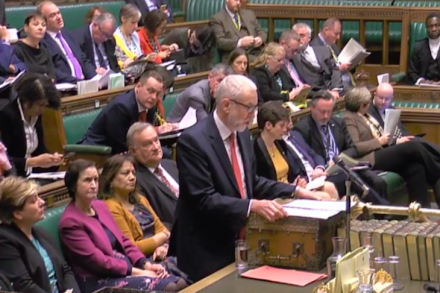
The House of Commons has just turned very ugly indeed, after Boris Johnson dismissed a Labour MP who was complaining about the abuse and threats she and other colleagues are receiving as 'humbug'. Paula Sherriff – who has had a particularly sustained campaign of abuse against her, including swastikas being left at her office – made an angry appeal to the Prime Minister to consider his language, and referred to the murder of her colleague Jo Cox as she did.

Corbyn takes aim at Labour’s favourite bogeymen in conference speech

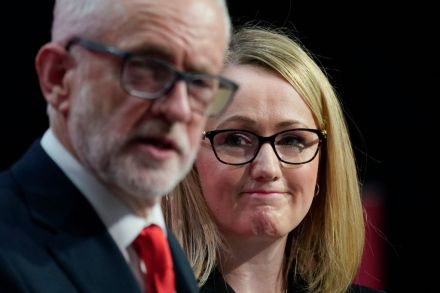
Jeremy Corbyn has just delivered one of his better party conference speeches. It wasn't just because it was much shorter than the average political address, but also because it made clear that Labour knows what it wants to do when it gets into power. There were a lot of policies in there. Some had popped up in other speeches this week, like the plan for free personal care. Others were new and very significant indeed, like the plan to take on pharmaceutical companies. This is Labour's 'Medicines for Many' programme which will make government funding for medical research conditional on the drugs being offered at an affordable price to the NHS, and set up a state generic drugs manufacturer of patent medicines so they can be supplied at a much lower cost to the health service.

Corbyn to address Labour conference this afternoon

Time was when the box office attraction at Labour conference was going to be Tom Watson's speech this afternoon. The biggest drama would be activists who planned to walk out in protest at the deputy leader's constant undermining of Jeremy Corbyn. That was before the Supreme Court verdict, of course, and now Corbyn will be speaking at 4pm, having moved his speech forward from tomorrow so that he can head back to Westminster in time for parliament returning. But there's still some internal drama playing out: Labour's press team said Tom Watson would be speaking tomorrow afternoon to close conference, but Watson almost immediately said he wouldn't do this as he also wanted to be back in parliament. 'I'll have to save the speech until the next conference,' he said.

Keir Starmer prepares for life after Jeremy Corbyn

If you're a pro-Remain Labour member angry that the conference yesterday voted narrowly – and chaotically – to maintain the party's ambiguity on Brexit, where do you go? A number of shadow cabinet members are hoping they can be the answer to that question. Emily Thornberry has perhaps been the most obvious candidate to take over from Jeremy Corbyn, particularly when dressed as an EU flag, but she's got competition. Last night at a fringe meeting organised by Politico, shadow Brexit secretary Sir Keir Starmer also made a rather obvious pitch of his own.

Fury at Labour conference over Brexit votes

On paper, Labour's conference has managed to unite around the Brexit position set out by the leadership. Delegates this afternoon overwhelmingly approved the NEC statement endorsing Jeremy Corbyn's plan to decide how the party will campaign in a referendum at a special conference after a general election. They then voted down the rebel composite motion which called for the party to campaign unequivocally for Remain from now on. But what happened in the conference hall was chaotic and means the issue is unlikely to feel resolved for a lot of party members. The NEC vote was overwhelming, but the vote on composite 13 was much closer. So close, in fact, that there was a disagreement between those on the stage about which way it had gone.

John McDonnell’s radical conference speech

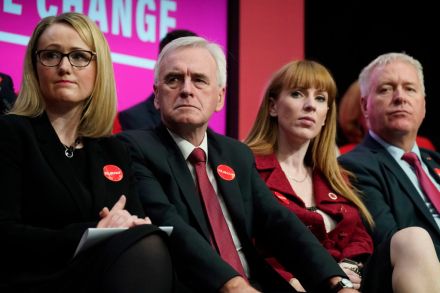
John McDonnell's speech showed what Labour's aim for this conference – were it going smoothly – is. The party wants to present a domestic policy agenda so radical that it drowns out discussion of Brexit. As the progress of this conference shows, though, that's going to be very difficult. The shadow chancellor announced plenty of attention-grabbing policies: Labour will reduce the average working week to just 32 hours without cutting pay, it will end in-work poverty, restore full trade union rights, introduce free personal care, and even commit to 'reparations' to developing countries for climate change.  He only spoke briefly on Brexit, but even in this short section, he differed from the leadership line by saying once again that he would campaign for Remain.

Will Labour conference defy Jeremy Corbyn and back Remain?

Labour conference will this afternoon vote on three different motions on its Brexit position. There are two – one from the NEC, and one from delegates – which endorse the leadership's plan to put this decision off until after the next general election, and then to hold a special one-day conference to decide instead. Then there's an unambiguously pro-Remain motion. It's going to be tight. Those around Jeremy Corbyn are anxious that conference doesn't back the Remain stance, seeing it not just as a debate about policy, but as a move that could seriously undermine the Labour leader's own position.

Labour shouts down its own message

Labour was supposed to be having only one big row this week at conference - on Brexit. Instead, it's ended up having two: one about how the party will campaign on Britain's future relationship with Europe and the second on Jeremy Corbyn's leadership. Today has not seen a good recovery from the Labour leader after yesterday's attempt to oust Tom Watson. Corbyn appeared to save the day by refusing to allow the motion to go ahead at the NEC meeting, but is much wounded by the fact that the putsch was attempted at all. That there are suspicions one of his own aides, Karie Murphy, was part of this plot, hasn't helped. But far more damaging is the resignation of Andrew Fisher, which I covered this morning.

As top aide quits, is Corbyn’s leadership now sinking?

The best way to understand the chaos engulfing the start of the Labour party conference is by looking at the instability of Jeremy Corbyn’s leadership. Even if this is not immediately obvious from the outside (which, with such terrible personal poll ratings for Corbyn, it should be), it is the underlying factor in yesterday’s attempt to abolish Tom Watson, and in the resignation of Andrew Fisher, the leader’s policy chief. Fisher isn’t a Labour man through and through: he endorsed a  Class War candidate standing against Labour in the 2015 election. But he is - or was - a Corbyn man through and through. He was involved in the first leadership campaign that sent the obscure backbencher rocketing into power.

Labour’s NEC in plot to oust Tom Watson

This evening, Labour's ruling National Executive Committee has started to discuss a motion which would oust Tom Watson as deputy leader. There is expected to be a vote on this plan, which abolishes the role altogether, tomorrow, and there is a strong chance that it will pass. It was tabled by Momentum founder Jon Lansman, and was narrowly ruled out of order because Watson wasn't present at tonight's meeting. Tomorrow it will be in order. Why is Labour having this battle on the eve of its autumn conference? It is potentially weeks away from an election, and instead of facing outwards to voters, it is engaged in an internecine battle over internal positions. And not just small roles, but the separately-elected role of the party's deputy leader.

Jo Swinson is enjoying herself. But how long will it last?

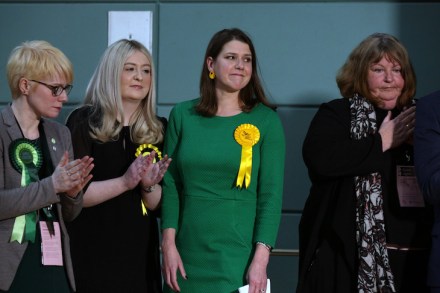
Jo Swinson is quite obviously the only party leader enjoying what’s going on right now. This is, of course, partly because what’s going on for her is that she is regularly welcoming MPs from other parties into the Liberal Democrats. As she said in her speech to the party’s conference this afternoon, ‘I can’t be the only one losing count of our many newly-elected representatives’.  There are plenty of questions about some of those new MPs. Are they really Lib Dems, or are they just seeking refuge in the party because they have nowhere else to go and need funding in order to survive the next general election? Has the party welcomed any old waif and stray, regardless of their views on matters such as gay marriage?

Can the next Speaker put parliament back together again?

MPs who aren’t in the process of defecting to the Liberal Democrats are using their conference recess to phone around their colleagues canvassing for the next Commons Speaker. Lindsay Hoyle is, according to YouGov, the favourite to win, but Harriet Harman and Chris Bryant are also running strong campaigns, along with Meg Hillier. Then there are the Tory candidates: Eleanor Laing, Sir Henry Bellingham, Shailesh Vara and Sir Edward Leigh. All of them are promising to stand up for parliament, albeit in rather different ways.

Boris has more in common with Corbyn than he thinks

Boris Johnson’s opponents love to accuse him of using the ‘Trump playbook’. Some on the left have become so obsessed with this comparison that they’ve even demanded that the Prime Minister be impeached. But over the past few weeks, Johnson’s behaviour has borne a far closer resemblance to a man he claims to look down on: Jeremy Corbyn. Both men stand on an anti-politics, anti-establishment platform. When Corbyn became leader he promised a ‘kinder, gentler politics’, and eschewed many of the traditions of the Commons. His advisers still believe that he is going to be the man-of-the-people candidate in the looming election, arguing that attacks from the media only bolster his anti-establishment credentials.

Why Tom Watson is battling to change Labour’s Brexit policy

Why has Tom Watson given a speech about what his party leadership should do on Brexit? The party's deputy leader has urged Labour to 'unambiguously and unequivocally back Remain' and to campaign for a referendum ahead of an election. This is contrary to the current frontbench position that a referendum should contain a 'credible Leave option'. So why, given Watson sits with Jeremy Corbyn in private shadow cabinet meetings each week, has he gone public with this? The speech is a symptom of how bad relations are between Watson and the leader's office. As I wrote in the Spectator recently, the two men at the top of the party have only had two private meetings together since 2016, and memos from the deputy leader to the leader have gone without reply.

How much collateral damage can the Tory party take?

Amber Rudd’s resignation has clearly been a blow to the government, but it wasn’t a huge surprise that she went after a week in which many of her closest political allies were booted out of the Tory party. What is more of a surprise is that she accepted a cabinet job with Boris Johnson in the first place. MPs who were being offered jobs when the Prime Minister took over had conversations with Johnson’s top aide Dominic Cummings in which he warned that there would be what he termed ‘collateral damage’ to the Conservative party as a result of his efforts to get Brexit sorted. They can’t believe Rudd didn’t take a step back and think about what that damage would entail. That said, there are nerves about how much more damage the party can take.

Ex-Tory rebels plot to reintroduce Theresa May’s Brexit deal

The rebel MPs kicked out of the Tory party held a phone conference last night to plot their next move, I understand. The group, now numbering 22 after Amber Rudd’s resignation, is keen to work across the Commons to get a deal past MPs that the European Union would accept, and it wouldn’t be a million miles away from what Theresa May tried – and failed – to get MPs to approve. There’s another meeting today, this time of the group ‘MPs for a Deal’, which is being led by Rory Stewart from the ex-Tory side, and Labour’s Caroline Flint and Stephen Kinnock.

Theresa May’s Brexit deal is accidentally revived

As an illustration of how chaotic things are in Parliament right now, the Commons has just accidentally revived Theresa May’s Brexit deal. An administrative problem meant the amendment tabled by Stephen Kinnock and others to bring the deal back to the Commons, in order to prevent a no-deal exit, went through. The Tories didn’t put in tellers to count the votes, which means the division was cancelled. There is, though, a chance that the government whips may have done this deliberately in order to make the bill itself toxic to MPs and therefore try to kill it off. In which case they are having to rely on chaos to get their way. Those behind the bill though say the amendment is merely an irritant that doesn’t change the bill's substance.

Ex-Tory rebels threaten to stand as Conservatives in election

Rebel ex-Tory MPs are complaining of 'unconstitutional' treatment by their party and are planning to stand at the next election as Conservatives, I have learned. The MPs who lost the whip last night when they backed a motion to take control of the Order Paper were this morning told all their constituency data had been taken away from them, and that they must remove the Conservative logo from their websites, correspondence and so on. But despite this, a number of them want to say that they are Conservatives at the election, and are preparing for a dramatic legal battle with the party.

Caroline Spelman joins the Tory rebels on anti-no-deal bill

The government’s majority this evening fell just a little more, as Caroline Spelman joined the rebels to vote in favour of legislation forcing an extension to the Brexit deadline. This latest defeat, 329 in favour of the bill and 300 against, was not a surprise in itself. But it is interesting that Spelman, who backed the government last night, has decided that she should turn against it today. However, government sources are saying that she will not lose the party whip like her colleagues who rebelled yesterday. The vote on taking control of the Order Paper last night was treated as a confidence issue, hence the round of expulsions.