Isabel Hardman

Isabel Hardman

Isabel Hardman is assistant editor of The Spectator and author of Why We Get the Wrong Politicians. She also presents Radio 4’s Week in Westminster.

Barack Obama and public opinion on Syria

There are a number of obvious differences between last week's vote in Parliament and the forthcoming Congressional vote on Syria. But today when he gave his closing statement at the end of the G20 summit, Barack Obama highlighted another very interesting divergence in the way he is approaching the vote. Asked whether he understood the concerns of members of Congress who will have to vote against the will of their constituents, Obama replied: 'Now with respect to Congress and how they should respond to constituency concerns, I do consider part of my job to help make the case and to explain to the American people exactly why I think this is the right thing to do.

Builders promise HS2 ‘on time and on budget’ – if backbenchers don’t kill it first

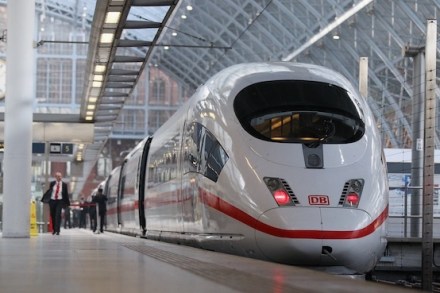
Another day, another promise that a government project will be in time and on budget. Yesterday it was universal credit, today it's High Speed Rail, with a letter from the construction companies behind the project in the Telegraph. The letter, signed by chief executives and chairmen of Arup Group, Atkins UK, Balfour Beatty, Kier Group, Laing O'Rourke, Moot MacDonald Group and Skanska UK, dismisses 'artificially inflated figures' on the project's cost. It says: 'We gladly accept the challenge of completing Phase One of HS2 on schedule - and for less than the Government's target of £17.16 billion. 'We applaud the Government's support for investment in infrastructure and in particular HS2, which addresses a looming capacity crunch on rail and road networks.

Fixing the civil service

Universal credit is having a bumpy ride: but whose fault is it? Yesterday's Commons urgent question on the National Audit Office report turned into a bit of a blame game, with Iain Duncan Smith saying rather bitterly that he had expected his department to meet the challenge of delivering this big reform. His response to Bernard Jenkin on the importance of a good civil service was one of the most telling of the whole session: Bernard Jenkin: Is my right hon. Friend aware that the Public Administration Committee will produce an important report tomorrow about civil service reform?

Small island will need to talk big on Syrian aid

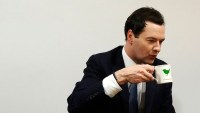
Even though Vladimir Putin slotted Syria into the G20 agenda last night, no-one seriously thought that this meant the world leaders would come to a proper agreement on what to do about the conflict. In the last few minutes, David Cameron has told journalists covering the summit that 'divisions are too great' for a deal, and that Russia wants further evidence that the Assad regime was behind the terrible attack in August. George Osborne was on the Today programme earlier discussing the summit. He said: 'We've set out what we think is the right response, obviously President Obama has set out what he wants to do and there is a disagreement around the table, I don't think there's any secret about that.

G20 summit gets small-minded with ‘small island’ gibe

What a nice host Vladimir Putin is. Shortly after world leaders gathered in his country for the G20 summit in St Petersburg, a briefing from the President's official spokesman that Britain is 'just a small island no-one pays any attention to' made its way into the media. Nothing like rubbing the nose of one of your guests in the dirt as politicians in this country work out where Britain now stands in the world after rejecting intervention in Syria (more on this in James's column this week).

Liam Byrne’s vulture strategy

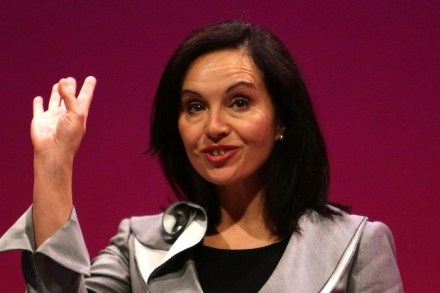
David Aaronovitch's furious Times column this morning described Ed Miliband as a vulture, swooping down on problems caused by this government rather than leading. If he wanted another example of how this leadership style has affected the rest of the Labour party, he could have done worse than to attend the Commons urgent question on universal credit this morning. There, Liam Byrne attacked Iain Duncan Smith's handling of the project, saying: 'What I want to say to the Secretary of State, however, is this: he has let this House form a picture of universal credit, which the nation's auditor's say is wrong. The most charitable explanation is that he has lost control of the programme and lost control of the department. He must now correct the record.

Iain Duncan Smith turns up the jargon on universal credit

Iain Duncan Smith was in an aggressive mood when he appeared before MPs this morning to explain the latest awkward report on universal credit to the Commons. He combined his anger with a plethora of jargon. This made for an interesting debate, as it's very difficult to sound punchy and angry while talking about 'agile processes', 'roll-outs' and 'pathfinders' (although mercifully he didn't use 'pathfinder as a verb', as he and other colleagues have in the past). listen to ‘Iain Duncan Smith defends his welfare reforms in the Commons.

PMQs: does David Cameron have any idea of MPs’ real concerns with the Lobbying Bill?

There's nothing wrong with the Prime Minister turning up to PMQs with a snappy line that he wants those watching to remember. But sometimes as the exchanges wear on, the risk grows that the clever line isn't going to get a showing because the questions haven't been quite right. And so the line gets shoehorned into an answer that isn't quite relevant. Take today's question from Margaret Beckett on the lobbying bill that last night some Tory MPs decided to vote against. Beckett asked: 'Why does the PM believe that his plans to restrict lobbying are opposed by organisations from the Salvation Army, Countryside Alliance, Oxfam, the British Legion and so on, right through to ConservativeHome?

Exclusive: Jesse Norman to leave No.10 policy board after Syria vote

Jesse Norman is to leave the Number 10 policy board after abstaining in last week's vote on Syria, I have learned. It was made clear to the Tory MP, who is known to have disagreed with the government's position on Syria, that this was an inevitable consequence of avoiding a three-line whip vote. But I understand that the decision was made more in sorrow than in anger, and sources hope the path back for Norman will be a quick one. An announcement on his replacement will be made shortly. The policy board hasn't, as I revealed in the politics column last week, gelled brilliantly yet, but colleagues found Norman impressive to work with. He is unlikely to be on the backbenches for long. P.S. Norman is sixth on the Order Paper for today's PMQs. Which will be interesting.

Tom Watson: the Labour man with a plan

Ed Miliband needs to reassure his backbenchers that he does indeed have a good plan after the GMB union announced it was cutting its affiliation funds to the party by 90 per cent. But someone else already has a plan: and it looks strangely like one that will cause the Labour leader a bit of grief. Tom Watson has this morning written a blog in which he suggests that ending the link between the party and the unions 'is a very serious development that threatens a pillar of our democracy that has endured for over one hundred years'.  He writes: 'Over the next year we have been asked to consider a change to the constitution of the Labour party, though no detailed proposals have been revealed.

GMB funding blow for Labour shows need for a clear plan from Miliband

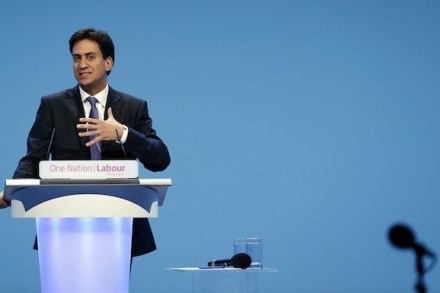
Has Labour got a plan? If it does, the GMB doesn't like it, announcing this morning that it will cut its affiliation funds from £1.2 million to £150,000, effective from january 2014. The cut is to reflect the number of the union's members who it estimates would choose to affiliate to the Labour party under the new reforms announced by Ed Miliband. In a statement this morning, the union said: 'GMB CEC expressed considerable regret about the apparent lack of understanding the proposal mooted by Ed Miliband will have on the collective nature of trade union engagement with the Labour Party.

Will Tories rebel again over the lobbying bill?

MPs will vote on the second reading of the unpopular lobbying bill at around 7pm. It has not had a particularly enjoyable introduction to the Commons this afternoon, with attacks from Labour and nervous questions from Coalition MPs worried about its effect on innocent charities. Some Tory MPs - including Douglas Carswell - intend to vote against the second reading, but from conversations I've had with backbenchers this afternoon, it looks as though a bigger rebellion will come on the programme motion, which puts the bill into a committee of the whole house (good) but with a guillotine - or time limit - for debate (bad). The reason the guillotine is bad is that it stops proper consideration of the bill, cutting the number of opportunities to iron out flaws.

No-one has any plans for a second vote on Syria, part II

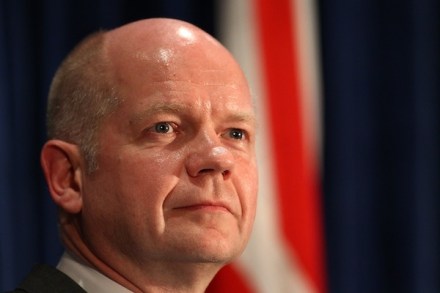
Today's Foreign Office Questions was a far classier affair than yesterday's rather snippy session with Philip Hammond on Defence. William Hague chose not to tell Labour that they had no authority when talking about Syria, instead choosing to focus on the humanitarian situation that Britain can still do something about. His first answer was as follows: 'The United Nations has announced that there are now 2 million Syrian refugees in the region. The United Kingdom is already the second largest donor, supporting more than 900,000 Syrians, and we will do more. The president of the Syrian National Coalition will visit London on Thursday, when we will discuss further support to save lives, promote political dialogue in Syria, and advance the holding of a second Geneva conference.

Andrew Lansley: we can’t afford to delay the Lobbying Bill

For a bill purportedly about transparency, the Transparency of Lobbying, Non-Party Campaigning and Trade Union Administration Bill has quite a lot of muddied water swirling around it at the moment. Leader of the House Andrew Lansley is currently giving evidence to the Political and Constitutional Reform Committee on the legislation, which many fear has all sorts of unintended consequences (it's worth reading Mark Wallace on ConHome for more detail on the potential problems). But the chair of the Committee, Graham Allen, is an outspoken critic of the Bill.

CCHQ is already carrying out Andy Coulson’s GQ advice on Ukip

The Conservative party may have lost its summer momentum, but at least it isn't worrying about Ukip at the moment. Former spin chief Andy Coulson is doing some worrying in this month's GQ on the Tory party's behalf, warning that the party needs an even stronger message on Europe to counter the threat of Nigel Farage's party. But some of his advice will hearten CCHQ, as spinners and researchers are already ahead of Coulson. The article says: 'UKIP must be taken seriously so as to expose just how empty-headed it really is. Every utterance must be recorded and analysed, every speech given proper attention by some of the bigger, more ambitious young brains in CCHQ, every tweet matched where appropriate by a sensible question applying targeted pressure to UKIP policy.

Philip Hammond: No 2nd Syria vote ‘unless the circumstances change very significantly’

Defence Questions this afternoon was, as you might expect, a rather chippy affair. It seemed that whenever Philip Hammond rose to answer a question, he answered it by reminding the Labour MP asking it of their party's decision to oppose the government's motion on Syria. Nowhere was this more the case than in the Defence Secretary's exchange with Jim Murphy, where both men set out some interesting wriggle room in their party positions on a second vote.

No 10: Absolutely no plans for a second vote on Syria. Labour: We could consider it

Will there be a second vote on Syria? As you might expect, that question dominated today's lobby briefing with the Prime Minister's official spokesman. He told journalists that 'there has been no change' in the Prime Minister's view since Thursday's vote and that 'parliament has spoken: that's why the government has absolutely no plans to go back to Parliament'. As I said this morning, the only way in which you'd be at all safe putting money on another vote on this matter would be if Ed Miliband came back to Cameron and pledged his support. And on this, Labour is being rather less equivocal than the government.

Nick Clegg: We won’t ask Parliament the same question on Syria

Nick Clegg has this morning added his own voice to those at the top of the Coalition saying they won't go back to Parliament for another vote on Syria. The Deputy Prime Minister was careful to be clear that he and his colleagues respected parliament's verdict, and didn't want to push MPs when they had already made their views clear: 'We're not going to keep asking the same question of Parliament again and again. We live in a democracy, the executive cannot act in a way which clearly is not welcome to Parliament or the British people, so we're not proposing to do so... I can't foresee any circumstances where we would go back to Parliament on the same question, on the same issue.' Coincidentally, it is Defence Questions in the House of Commons this afternoon.