Isabel Hardman

Isabel Hardman

Isabel Hardman is assistant editor of The Spectator and author of Why We Get the Wrong Politicians. She also presents Radio 4’s Week in Westminster.

One Nation vaccination

Congratulations to Jon Cruddas, Labour's policy review chief, for managing to produce a front page headline. Cruddas is famed for holding lengthy fringe events and interviews where he manages either to say nothing of interest or else says something that needs translating several times before it makes sense - one special adviser recently told me that he'd found, on the sixth time of reading, that a speech by this guru on 'statecraft' actually contained some very good ideas - and so the Times front page story that he wants parents to lose their child benefit if they refuse to give their child the MMR vaccine is unusual. Monday's Times front page - "Labour 'will stop benefits if parents refuse MMR'" #tomorrowspaperstoday #lab13 pic.twitter.

Labour conference: Ed Balls to ask OBR to audit Labour spending plans

The cost of living may well appear to be a rich seam for the Labour party to mine, but it isn't entirely risk-free. As shadow ministers talk about Expensive Things in their speeches and fringe discussions this week in Brighton, they will be aware that voters might sympathise with their theme without fully trusting that their party can fix the problem. The polls still show that voters believe the Tories are the most competent on the economy, and an easy riposte from government ministers could be 'you stuck by us when we fixed the economy, now let us fix living standards'. The risk is that Labour appears to jump the question of the economy and go straight to living standards without gaining voters' trust on the former. Why should they therefore trust them to fix the latter?

Ukip conference: Paul Nuttall, a very different Ukipper, appeals to the Labour vote

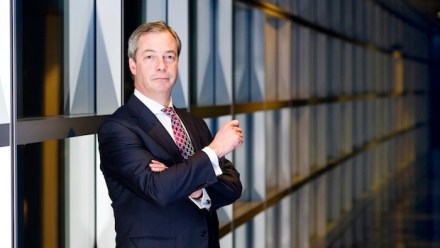
Even if Nigel Farage's speech was, as Fraser blogged earlier, a wasted opportunity for the Ukip leader to impress the voters that he really needs to attract, it still pleased the members in the hall. In fact, there was more of an excited, energetic atmosphere at this conference than at any party political conference I've ever attended. When I interviewed Nadine Dorries for the magazine earlier this year, she recalled the dying Tory government in 1997, saying that '[Voters] hated us because the Labour party promise, the vision, the song "Things Can Only Get Better" had a purchase on people's imagination, and in their hearts that I see being replicated by Ukip today.' You can see that start-up excitement in the delegates thronging around Westminster Central Hall today.

Damian McBride and today’s Downing Street spin operation

Damian McBride's memoirs will naturally make uncomfortable reading for the Labour party, but the current occupants of Downing Street will also be feasting on his lesson in the dark arts, and wondering if there is anything they can take from it too. This sounds like an odd thing to say when so much condemnation for the poisoned operation of the Brownites (and, as Peter Oborne points out, the operation around Blair too) is flying about today. But the question of whether the current government needs its own Damian McBride is one that has occupied Tory MPs who like to think about these things for a while.

Damian McBride’s confessions part I

Ever since the publication date of Damian McBride's book was set for the week of the Labour autumn conference, it was clear that the party would find itself lugging a bit of the past around as it tries to talk about what it wants to do in the future. But perhaps it wasn't clear quite what a festival of letting skeletons wander out of closets this week would be. There isn't one particularly horrifying skeleton, but the effect both of McBride's book, serialised in the Mail, and the cache of emails released by Benjamin Wegg-Prosser, former Number 10 strategic communications director, is to trawl up a row that had lain quiet.

Lib Dem conference: Five takeaway lessons

1. The Lib Dems think they will be in power again after 2015 This whole conference was aimed at making that easy by encouraging activists to back grown-up policies rather than argue about goldfish. The Lib Dem leader placed great emphasis in his speech on his party's ability to work with any party, arguing that it didn't matter who he got on with better personally. As James writes, the Lib Dems had a good conference because they think there will be another hung parliament. 2. The Lib Dems believe in coalition more than they believe in anything else. Clegg's 'this-is-who-I-am' passages in his speech explained his frustration with two-party politics, not his convictions about the size of the state or anything specific.

Lib Dem conference: Why Nick Clegg gave a personal speech

Why did Nick Clegg choose to give 'his most personal speech so far' at this year's autumn conference? Ed Miliband, after all, has been giving these speeches for three years now, each apparently more personal than the last. And Clegg doesn't really have any more compelling a story than anyone else in Westminster: like Miliband, his parents have a fascinating story to tell, but his own upbringing has been pretty standard for a politician. But this conference was the first opportunity Clegg has really had to market himself because for a few years his reputation was so toxic in the country, and the decision he had taken to go into coalition such an emotional shock for his party that it was best to stick to the issues, not the man.

Free school meals plan shows Lib Dems have a tortured view of the state

There's plenty of fun to be had with the Lib Dems' decision to give all infant school children free school meals. Firstly there are the letters from MPs like Simon Hughes slating the policy (the Southwark MP told constituents that his local council was 'spending £15 million giving free school meals, some of this going to the borough's richest families, irrespective of whether they can afford to pay for them already'). And then there's the fact that the party has attacked universalism on a number of other fronts, most notably the winter fuel payment, which Nick Clegg and colleagues say is a waste of money as it goes to rich pensioners who don't need it, and child benefit for higher earners.

Nick Clegg: Only the Lib Dems can finish the recovery properly

Nick Clegg will be closing the Lib Dem conference today with what is being billed as one of his most personal speeches yet. It has echoes of a Miliband 'this is who I am' offering, with the Lib Dem leader trying to explain the personal experiences that shape his thinking today. He will say: 'My upbringing was privileged: home counties; private school; Cambridge University. I had a lot of opportunities. But I also had two parents who were determined that my brothers, my sister and I knew how lucky we were. On both sides, their families had experienced huge upheavals. 'My Dutch mother had spent much of her childhood in a prisoner of war camp. My dad's Russian mother had come to England after her family lost everything in the Russian revolution.

Lib Dem conference: Nick Clegg to announce free school meals for all infant school pupils

Nick Clegg has had a good party conference, and wants to round it off with an announcement that will leave a warm glow in delegates' tummies. So he's announcing free school meals for all children in infant school from next September. This will be a key feature in the Deputy Prime Minister's speech tomorrow afternoon, and also represents the key trade between the two coalition parties over tax breaks for married couples. The latter is likely to appear in a conference speech or two when the Tories meet in Manchester the week after next, and the Lib Dems have a provision in the Coalition Agreement that they will abstain on this policy.

Why Cable’s zero hours contracts crackdown won’t ruffle Tory feathers

What do the Tories make of Vince Cable's crackdown on zero hours contracts? The Business Secretary's review has been long-known, but yesterday he announced that he would 'act against abusive practices in zero hours contracts, like exclusivity arrangements which prevent workers seeking alternatives'. Some read this as an overture to Labour, but from conversations that I've had recently with senior Conservatives, I'm not so sure. The Tories haven't given us many clues on what they do make of zero hours contracts, largely allowing the debate to be framed by Labour, and then leaving Cable to talk about them.

Lib Dem conference: The subtle clear yellow water between the coalition parties

Aside from the usual outright bashing of the Conservative party, the Liberal Democrats do want to put some clear yellow water between their party and their coalition partners on subtler issues. They don't just want to talk about the 'Tea Party Tories', as Vince Cable did yesterday, but also about some of the different decisions they would like to take after the 2015 election, if they have their way.

Lib Dem conference: Vince Cable says Coalition could end before 2015

Cabinet colleagues' concerns over the housing bubble and immigration was only one facet of Vince Cable's fringe interview this evening. What he told Steve Richards about the Coalition was also highly significant, and the biggest example of his freelancing to date. Where Cabinet colleagues have previously insisted that this Coalition is built to last, Cable said it was 'certainly possible' that it could end before the general election, although he wouldn't be drawn on the circumstances in which that would happen, or which issues could cause him to leave the Cabinet. 'I think President Obama has illustrated very clearly in recent weeks the dangers of parading your red lines,' he said, adding that clear read lines were already laid out in the Coalition agreement.

Lib Dem conference: Nick Clegg narrowly wins 45p/50p tax vote

It was so close that they had to count the votes in the conference hall, and even then, the Liberal Democrats only backed Nick Clegg on retaining the 45p tax above a return to the 50p rate by four little votes - 224 in favour of the 45p, and 220 in favour of the 50p. It's difficult to bill this narrow result as a real victory for the Lib Dem leadership, but at least it means that Clegg has won all four of his confrontations so far with his party - and this tax vote was expected to be a loss. It was interesting how many of the speakers in favour of retaining 45p encouraged the conference to support it on the grounds that supporting the 50p rate would play into the hands of the Labour party. Lorely Burt, Stephen Williams and Simon Hughes spoke in the debate, and all made this point.

Lib Dem conference: Clegg’s confident Q&A

Nick Clegg was in a jolly good mood this afternoon when he strode into the conference hall for his question-and-answer session. His success (which may be halted shortly when conference votes on tax) in three votes over the last two days n nuclear power, tuition fees and the economy meant that he could be confident when taking questions from activists that they were largely for, not against, his vision. He took the opportunity to remind activists that the Lib Dems hardly campaigned on an anti-austerity platform in 2010, saying: 'It's not a thing that's been imposed on us by the Conservatives, we went in with our eyes wide open to the last general election that whoever was in power next would have to deal with this huge black hole that had opened up in our public finances.

Lib Dem conference: Vince Cable undermines Clegg’s ‘reasonable party’ strategy

Another year, another speech by Vince Cable attacking those nasty Tories. After his rather undignified to-ing and fro-ing over the economy vote that left him looking confused and selfish while Clegg emerged looking rather bold and statesmanlike, the Business Secretary had just half an hour before he returned to the conference hall to speak again. The consensus seems to be that he made a fool of himself by not deciding what it was he should do. And given that even Tim Farron rallied behind the leadership, delivering an impressive speech in favour of Clegg's position when he's often more than happy to brief against his colleague, Cable hardly looked collegiate.