Isabel Hardman

Isabel Hardman

Isabel Hardman is assistant editor of The Spectator and author of Why We Get the Wrong Politicians. She also presents Radio 4’s Week in Westminster.

Number 10: Government is ‘active in engagement’ over Pfizer bid

What is the government's stance on Pfizer's takeover bid of AstraZeneca? Today the Prime Minister's official spokesman was asked this - and his answer didn't shed a great deal of light on the situation. He said the position was 'active in engagement, with both companies in terms of the importance to the UK of R&D and the science base, with regard to the decision as to whether or not going ahead is the right thing to do for either company and their shareholders, is entirely a matter for the companies, their boards and their shareholders'. But what if the takeover does turn out to damage jobs and the science base in this country?

Labour market flexibility and dignity

Two front pages today report what they see as bad news, and both stories are certainly ones politicians need to worry about. The Guardian reveals a leaked letter showing jobseekers will face sanctions if they do not apply for or accept 'certain zero hours jobs under the new universal credit system', while the Indy splashes on research by the Resolution Foundation which found that self-employed workers are earning 40 per cent less than a typical employee. The paper says these workers are the 'hidden victims of the recession struggling by on low pay'. Saying that either of these stories represent 'good news' sounds far too flippant - but they do reflect the flexibility of Britain's labour market which has enabled many people to remain in employment and off the dole during the downturn.

Why policy wonks love Milton Keynes

How can political parties solve the housing crisis? The vogue a few years ago was to talk about garden cities, although once it became clear that the National Planning Policy Framework had upset a lot of Conservative voters, politicians started to prevaricate over plans for more garden cities, and then eventually published a 'prospectus' asking for locally-led ideas. I spent this morning exploring Milton Keynes, which was a New Town, rather than one of the original garden cities, but which planning policy wonks, including Number 10's Alex Morton, hold up as an example of a new development built from scratch which has become hugely successful, with high rates of private sector job creation.

There’s cause to worry about our sons as well as our daughters

The graph below shows one of the most unsettling trends I've come across. It's the female and male suicide rates, and while the former has halved since the 1980s, the latter has fallen by just 8 per cent. Men account for 77 per cent of all suicides, and the group now most likely to take their lives are men aged 40-44. [datawrapper chart="http://static.spectator.co.uk/flzpM/index.html"] These are the starkest statistics in what I argue in this week's magazine is a 'crisis of masculinity' in our country. There are male-specific problems ranging from catastrophic mental health conditions to boys falling behind girls at every stage of their education. Men get ahead in the workplace only because women are forced by high childcare costs to leave. That's not true equality, is it?

The Coalition letter war steps up a notch

Coalition relations are growing more fractious and sour. Even departments where the rapport between the Conservatives and the Lib Dems had been respectful, such as Justice, are starting to bicker publicly. Today the Mail splashes on a row between the two parties over knife crime, in the week of the stabbing of teacher Ann Maguire. Nick Clegg has refused to support mandatory minimum sentences for repeat knife offences, and the normally secret letters discussing the measures have made their way into the pages of a newspaper.

Ed Miliband’s price control pattern

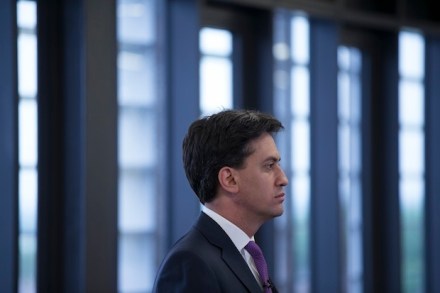
Ed Miliband has got the reaction he wanted to his speech on the private rented sector, which he used today to launch Labour's local election campaign. Landlords and nasty right-wingers hate this latest stage in his 'cost-of-living contract'. The Residential Landlords Association said rent controls 'would critically undermine investment in new homes to rent and are not needed' and the National Landlords Association said 'the proposal for a three-year default tenancy is unnecessary, poorly thought-through and likely to be completely unworkable'. On Coffee House, Policy Exchange's Chris Walker says 'rent controls are at best misguided and at worst could be counterproductive, longer-term'. Grant Shapps suggested that these were 'Venezuelan-style rent controls'.

Save the male! Britain’s crisis of masculinity

[audioplayer src="http://traffic.libsyn.com/spectator/TheViewFrom22_1_May_2014_v4.mp3" title="Diane Abbott and Isabel Hardman discuss the crisis of the British male" startat=48] Listen [/audioplayer]Last week saw another victory in the battle for equal pay. Workers in Swansea are now looking forward to receiving around £750,000 in back pay after the university that employs them decided to close the gender pay gap. Vive la révolution! The only unusual thing about this case was that the workers in question were men, not women. The male cleaners, plumbers and carpenters at the University of Wales, Trinity St David, had discovered that they earned around £4,000 less than female colleagues.

Theresa May wins battle with Number 10 over stop-and-search reform

So Theresa May has won her battle with Number 10 on stop-and-search reform, sort of. She announced a number of changes this afternoon to the power for police - but they're all voluntary. That the Home Secretary has managed to get any of these changes into a state where she can announce them is a victory - but the initial voluntary nature of the reforms was the compromise necessary to make this announcement happen. The changes are as follows: The Police and Criminal Evidence Act Code of Practice A will clarify what constitutes the 'reasonably grounds for suspicion' on which the police carry out the vast majority of stop-and-searches. If officers do not use their powers properly, they will be disciplined.

David Cameron is linking Ed Miliband to Labour’s past mistakes

What a very long PMQs today, presided over by a very bumptious John Bercow. The Speaker let the exchanges run into what he called 'injury time', made a rather poisonous jibe at Labour MP Fiona Mactaggart over her private schooling, and told the Prime Minister that as far as he was concerned, he had finished an answer when the PM didn't believe he had.

Farage (wisely) bottles the Newark by-election: ‘I’m a fighter, I’m a warrior’

Much relief in Downing Street this morning as Nigel Farage announces that he's not standing in the Newark by-election. Coffee House readers had the best insight into the Ukip leader's thinking when James posted the details of a conversation he'd had with Farage about the constituency. And his prediction that Farage may well decide to not stand was right. listen to ‘Nigel Farage says he's not standing in Newark: 'You have to pick your battles'’ on Audioboo Farage has bottled it, he's frit. That's what every relieved Conservative MP is saying this morning. It's true: Farage got to the cliff edge, looked down, and edged away from what he saw. He didn't fancy the battle and didn't think that he could beat the Conservatives.

The Mercer mess

Patrick Mercer has gone out in style. One Tory MP, hearing that the whips had tried to dissuade him from triggering a by-election fight with Ukip at an extremely inconvenient time for David Cameron, told me: 'It's a waste of time. He's determined to damage Dave. He's Colonel Nicholson in Bridge on the River Kwai!' Mercer has left Cameron a little present in the form of this by-election. Even if Nigel Farage announces today that he won't stand in the contest (and James's post from last night on the Ukip leader's thinking is a must-read), Ukip can still repeat its success in Eastleigh by fielding an impressive formerly unknown candidate.

Patrick Mercer quits as MP and triggers awkward by-election in Newark

Patrick Mercer has quit as an MP. The Sun has the story, with the former Conservative saying: 'It is clear to me that the constituency of Newark needs to be represented properly. I will not argue will the findings of the committee and I can only humbly apologise. “My military background has taught me that you must never let down the people who depend on you, and those people are my constituents of Newark. If that becomes the case, you must go without any argument.' listen to ‘Patrick Mercer resigns as the MP for Newark’ on Audioboo Now the question is when the Newark by-election will take place.

Patrick Mercer banned from Parliament for six months

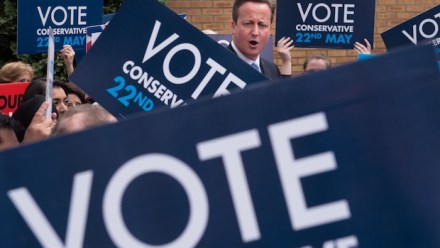
Patrick Mercer has been banned from Parliament for six months, the Standards Committee has confirmed, following revelations by the Telegraph and BBC Panorama that he agreed to table questions in return for cash. He had already resigned the Conservative whip. The question now is whether Mercer resigns as an MP, triggering a by-election in Newark which the Tories could try to hold on 22 May? Nigel Farage today said he would consider standing in a by-election this year. In 2010, Mercer won a 16,152 majority, with Ukip coming fourth with 3.81 per cent of the vote.

George Osborne: Britain is coming back (alright)

Treasury Questions today was rather formulaic. George Osborne spent a little while congratulating himself on today's growth figures (only to be cut off by Bercow, who complained his answer was 'far too long'), and loyal Tory MPs congratulated him too. Many of them chanted the phrase 'long-term economic plan'. Some Labour MPs helped out by saying it too, which Osborne thanked them for. He has his own new phrase, which sounds a bit like a Backstreet Boys single: 'Britain is coming back'. 'Britain is coming back, alright,' he (nearly) told MPs, before demanding that Labour congratulate him on the GDP figures.

Labour goes after Cameron over TV debates

A smart move by Ed Miliband today to put pressure on David Cameron over the televised leaders' debates next year. Every time the Prime Minister is asked about these debates, he makes supportive noises while muttering about the 'right formula', but doesn't commit to anything. He has also said that he felt the debates 'dominated' the coverage of the 2010 election, which is as close as he'll come to saying that Nick Clegg's shiny new qualities at the time rather detracted from Cameron's own appeal which his strategists had been setting so much store by. But as the Prime Minister hasn't agreed to anything, Labour's trying to get ahead of the game and appear to drag Cameron into a studio.

50 MPs make biggest rebellion on HS2 Bill

As expected, the High Speed Rail (London - West Midlands) Bill 2013-14 has passed its second reading in the House of Commons by 452 votes to 41. Cheryl Gillan's amendment calling on the House to decline to give the legislation its second reading failed 451 votes to 50. The breakdown of who voted (and, more interestingly in this vote when some ministers have opted for a disappearing act, who didn't vote) will take a little while to come through. What will prevent ministerial resignations will be how the Bill progresses in the Committee stage, which will chug slower than a toy steam train. David Lidington wants further mitigation for his constituents, including the longer Chiltern tunnel that Cheryl Gillan has worked on.

David Cameron’s mile-high fight

How does a Prime Minister get a recalcitrant minister to agree to something? Well, if it's not going to make any difference to whether some legislation passes and the minister isn't directly responsible for the policy, then he can always let them avoid a vote, as he seems to be doing on HS2 today. But what if the minister is the one who needs to sign off on a policy change? I hear that David Cameron found himself in this situation late last year when trying to make some changes to the government's counter-extremism strategy. Baroness Warsi (not his favourite minister) was refusing to accept the changes, which the Prime Minister ambushed her over.

Exclusive: Under-fire minister explains to local party why he’s missing HS2 vote

While some ministers have mysteriously disappeared today so that they don't have to vote in favour of the high-speed rail line that will cut through their constituencies, Minister for Civil Society Nick Hurd is busy explaining to his disgruntled local party why he isn't turning up to vote on legislation which affects his constituency of Ruislip, Northwood and Pinner but which he supports. I understand that Hurd has told local party members that though he thinks HS2 may be in the national interest, he understands their concerns about the link, and wants to try to get the very best deal for his constituents on compensation and the environmental impact of the line.

Tory HS2 rebel: We need a plan in case Labour drops support

Whether or not key ministers whose constituencies are affected by HS2 turn out to vote at today's second reading of the legislation introducing it, the bill will pass this stage with a big majority thanks to cross-party support. Between 20 and 30 MPs are expected to defy the whip and either vote for a motion declining to give the Bill a second reading, or against the second reading itself. What will be interesting over the next few months is how many concessions critics of the Bill are able to eke out of the government, and whether this buys them off or not. When I spoke to Cheryl Gillan about her proposals for a longer tunnel under the Chiltern area of outstanding natural beauty, she told me that 'I'm not changing my position on the basis of that in any way, shape or form.

Is it fair that anti-HS2 ministers could disappear for key votes?

Where will the ministers whose constituencies will be affected by HS2 be when the legislation reaches its key votes in the Commons? As I said on Friday, the chances are that some of them might suddenly find they need to travel overseas quite urgently when MPs vote at second reading on Monday, and again at report stage and third reading later on. The ministers in question are as follows: David Lidington – Con – Aylesbury and Buckinghamshire. Minister of State for Europe. Dominic Grieve – Con – Beaconsfield. Attorney General. Jeremy Wright – Con – Kenilworth and Southam. Minister for Prisons and Rehabilitation. Nick Hurd – Con – Ruislip, Northwood and Pinner. Minister for Civil Society. Andrea Leadsom – Con – South Northamptonshire.