Isabel Hardman

Isabel Hardman

Isabel Hardman is assistant editor of The Spectator and author of Why We Get the Wrong Politicians. She also presents Radio 4’s Week in Westminster.

MPs on holiday: the truth about what they really get up to

MPs are now in recess. Again. Cue plenty of moans about them escaping the zombie parliament and jetting off on holiday. There's not much you can do about the former, but the latter is not, as any MP will angrily remind you, quite true. If you're a type with a big majority who is a bit fonder of the Westminster game than you are of your constituents, then a holiday might be an option. But at this time of year, MPs are more likely to be found canvassing for the European and local elections, or holding extra constituency surgeries to catch up on time lost to Parliament. The Conservative whips have told MPs, via one of their many text messages that they send throughout each day, that they are expected to visit Newark three times before the by-election, and that few exemptions will be allowed.

Pfizer boss Ian Read introduces MPs to his ’empowerment coin’

Who gets the best deal from Pfizer's proposed takeover of AstraZeneca? On the basis of today's Business, Innovation and Skills select committee hearing with some of the key players, the answer is probably Conservative MP Brian Binley. He was very much enjoying his role in the hearing as he interrogated the boss of Pfizer, Ian Read, and his colleagues Frank D'Amelio and Jonathan Emms. Binley managed to get the best one-liners out of the session (he's got form: this is the MP who has in the past few years managed to describe his Prime Minister as a 'chambermaid' and a 'janitor'), telling the panel that they offered 'a lot of sales talk, but short on facts', and accusing Read of being a 'salesman'.

Whitehall is falling in on Nick Clegg

The Cold War that everyone in Westminster thought would never kick off is well and truly under way. Time was when ministers and advisers imagined that the letters and internal briefing documents detailing the dirty laundry of this government would stay firmly locked in Whitehall desks. But in the past few weeks, the leaks have increased, and they seem to be spreading around the village. Nick Clegg was confronted with the latest on the World at One this afternoon: a document showing that the Cabinet Office has given the Deputy Prime Minister's favourite free school meals policy a red rating, meaning it is at risk of failing.

Labour poll blow: party anger could focus on shadow cabinet

What will the Labour fallout, if any, from today's polls, be? Generally when this sort of bad news befalls to the Conservative party, the gossip turns quickly to David Cameron's standing as leader. But in the Labour case, it's a bit more complicated. This is partly because the party tends to feel far more loyal to Miliband than Conservative MPs do. They feel as though he tends to invest in them personally - even those who didn't support his leadership or are unhappy with his policies. And so they're less likely to turn on him. The knives have already been out for Douglas Alexander for some time, with shadow cabinet members talking more and more about their frustration with key aspects of the party's campaign for the European elections and for the general election.

Second poll lead is perfectly- timed gift for Tories

The inconvenience of the Newark by-election notwithstanding, the Tories have had the perfect preparation for a drubbing in next week's European elections. They've told everyone who even stops for a second on the pavement next to them that they're expecting a difficult time and thus have managed the expectations of the party both at a parliamentary and grassroots level. They've seen the increased media scrutiny of Ukip as a sign it is ok to attack the party, albeit not using insulting language. They've tried to keep MPs busy with campaign days, rather than plotting in Portcullis House. And now they've reached the point Labourites feared, when the two parties have crossed over in the polls.

Knives still out in Coalition sentencing fight

What will become of the other big coalition row that's burning away alongside free schools? David Cameron was asked today about the plans to introduce mandatory sentences for repeat knife offences, and made some very supportive noises again, which the Tories signed up to Nick de Bois' amendment to the Criminal Justice and Courts Bill think is a sign that they've made the right decision. He suggested that Nick Clegg could change his mind about it - and some have taken this as a sign that there's a compromise on the cards. The Conservatives tell me they are 'looking carefully' at de Bois' amendments, but the Lib Dems say they haven't heard of any compromise being offered and they will only accept a deal that has evidence behind it that it would cut knife crime.

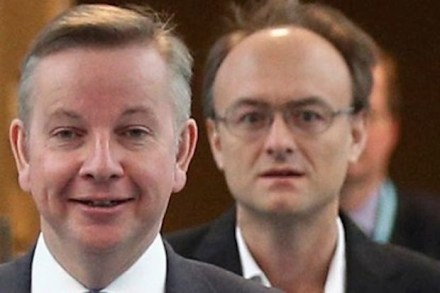
Gove uses urgent question on free schools to trumpet his achievements

Even though the row over free schools has nothing to do with the Labour party, it took a reasonable bet that it would benefit from joining the fray by asking an urgent question on the allegation that Michael Gove diverted £400 million from basic need funding to the free schools project. In the Commons this afternoon, Tristram Hunt accused the Education Secretary of lacking 'self-control and focus' and paying for 'pet political projects in expensive, half-empty, underperforming free schools'.

The Lib Dems no longer support school choice

Throughout this latest, blazing Coalition row over Michael Gove - which is spreading like fire over dry heath and has now ignited the normally harmonious Treasury - the Liberal Democrats have insisted that they support free schools. They argue that it is simply Gove's 'zealotry' in transferring £400 million from the basic need allocation to the free schools project, not the principle of free schools. They are indeed mostly needled by years of working with a man who they find difficult to work with, and whose enthusiasm for certain aspects of education, whether it be free schools or the history curriculum, irritates them.

Will voters feel Cameron’s confidence about European reform?

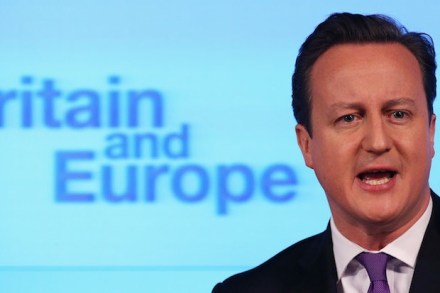
Why is David Cameron so confident that he'll get what he wants from his renegotiation of Britain's relationship with Europe? Today on the Andrew Marr Show he managed to advocate Britain voting 'yes' in the 2017 referendum before he's even started changing the terms of the membership voters would be backing. His reasoning for this was firstly that 'I'm someone who has a very positive, optimistic plan for this country' (a convenient contrast with Ukip), and secondly because he has a good track record of getting what he wants in Europe.

Where is Labour’s intellectual self-confidence?

What a funny, contradictory week it has been for Labour's campaign machine. First Ed Miliband told the Evening Standard that he had greater intellectual self-confidence than the Prime Minister - and won praise in the Spectator's leading article for being someone who does indeed have the courage of their political convictions these days. Then he seemed so confident of his policies that he chose to needle David Cameron with one of them at Prime Minister's Questions. But then he seemed to have a crisis of confidence and decided to produce a party-political broadcast that, er, didn't mention anything Labour is up to at all. When I blogged about this latest offering from Labour on Wednesday, I said it was an example of class war with wit and panache.

Tories and Lib Dems will want to break the rules if there’s another Coalition

The Coalition has been much more of a success than anyone could have predicted when it formed in 2010. It hasn't just held together for spending cuts, but has passed important reforms to welfare and education. It's important to repeat that now, when the partnership is growing increasingly tired and snappy. The parties spent yesterday pecking at one another over whether or not to introduce tougher mandatory sentences for repeat knife offences. They won't produce a Queen's Speech bursting with legislative excitements, either. But one of the things that this Coalition has shown us is that it's not just the policy red lines that make a difference to whether a government of more than one party can be radical: it's the plumbing too.

David Cameron gets bullish on European elections: but what’s his clean-up plan?

David Cameron has now decided that rather than pretend Ukip don't exist, he's going to attack them, and do so repeatedly. This morning on BBC Breakfast, the Prime Minister remarked that 'we've seen some extraordinary statements from Ukip financial backers and candidates and I think it does go to the issue of the competence of the party: what on earth are they doing selecting people and allowing people like this to be in their party'.

It’s not up to Cameron whether he survives a ‘Yes’ vote in Scotland

David Cameron may well have privately resolved that there is no cause for him to step down if Scotland votes for independence in a few months' time, as per James Chapman's scoop today. But the problem is that it is not in the Prime Minister's gift to make that decision. He may well say that he isn't going to resign, but that would have no effect on the number of letters that would be sent to 1922 Committee chairman Graham Brady demanding a leadership contest. It's not as though the Tory party will reel from the shock of Scotland leaving, then wait to see what the Prime Minister says and then if he says he's staying, they all get back to their day jobs.

Exclusive: Leaked Lib Dem letter reveals changes to controversial ‘stateless’ plan

The debate on the Immigration Bill has just begun in the Commons. Many MPs are still trying to decide how to vote on the proposal to render foreign-born terror suspects 'stateless'. In an attempt to persuade his party to vote with the government, Lib Dem Home Office minister Norman Baker has sent out a 'dear colleague' letter to MPs, leaked to Coffee House, in which he says he has amended the legislation to the extent that there is a 'major shift' from the Home Secretary. This 'major shift' means the Home Secretary must believe the suspect being deprived of their citizenship will be able to secure alternative citizenship from another country, and that the process can be examined by an independent reviewer.

PMQs: Miliband and Cameron attack on each other’s weaknesses, not the issues

Both Ed Miliband and David Cameron turned up to PMQs today wanting to expose the flaws in their opponent's character. First, Ed Miliband taunted the Prime Minister about Labour's new private rented sector policy. Now that Labour is producing policies which seem to have purchase with voters, the Labour leader has what some might describe as the 'intellectual self-confidence' to kick off PMQs not just with a Labour policy rather than a government cock-up, but also predict that the government will eventually concede that Labour has a point.

Busy afternoon for whips as would-be rebels mull controversial stateless plan

The Immigration Bill pops back up in the Commons today and MPs will have a second chance to scrutinise the government's plans to deprive foreign-born terror suspects of their citizenship. In reality, it's their first chance as these proposals were slapped into the legislation by ministers at report stage, and no-one really understood what they meant. Tory MPs were promised a briefing on it after the vote, so they trooped through the lobbies hoping for the best. Now they've had a few months to mull what the plans mean, they get a chance to vote again after the Lords amended the bill to make the stateless proposals subject to a committee. It looks as though the Liberal Democrat rebellion, which numbered seven at report stage, will be a similar size.

With one year to go, Cameron has won over his internal swing voters – for now

It's a year to go until the longest election campaign finally finishes. Ed Miliband thinks he has more intellectual self-confidence than David Cameron, which since his 2013 autumn conference speech where the Labour leader finally found the courage of his convictions. But David Cameron has more confidence about his own party sticking by him for the campaign at least. The Prime Minister has mended some relationships, and others are more cordial and banging the Tory drum simply because they want their party to win next year. But it's fair to say that for the time being the PM has got the contingent of swing voters amongst his own MPs - those who are not his loyal servants but who also don't hate his guts - working on his side.

Roger Helmer is a gift to CCHQ, so the Tories need to do really well in Newark

Well, the Ukip constituency association in Newark has certainly considered Nigel Farage's musings on the success of appointing an unknown local candidate in a pivotal by-election… and completely ignored it. They've picked Roger Helmer, who, as Seb says, is not known for his mollifying centre-ground views. His selection as the party's candidate for the Newark by-election is a gift for CCHQ, which now needs a teaspoon rather than a spade to dig out awkward comments the MEP has made. Perhaps it also suggests that Ukip have decided there's not much hope of winning so why bother to field a good candidate who the party's opponents would lay into. Or perhaps that's reading too much into it: decisions that look baffling from the outside tend to be down to complex internal party politics.

Conservatives and ethnic minority voters: how the Immigration Bill might not help

Policy Exchange's report on the face of modern Britain this morning is fascinating reading for anyone interested in the way this country has changed and will change in years to come. But it is especially fascinating reading for those wondering how on earth the Conservative party can appeal to ethnic minority voters. This is partly because it makes quite clear that the party is currently not appealing to those voters: indeed, while politicians have a bad habit of lumping 'ethnic minority' voters together without good cause, the one thing that does lump these groups together is a reluctance to vote Conservative.