Isabel Hardman

Isabel Hardman

Isabel Hardman is assistant editor of The Spectator and author of Why We Get the Wrong Politicians. She also presents Radio 4’s Week in Westminster.

The legacy of the Wolfson Prize could be development by consent and not by diktat

The Wolfson Economics Prize has unveiled its shortlist today of plans for a new garden city that is both economically viable and popular. There are five shortlisted entrants, listed below, which will develop their plans for a new settlement between now and August. The winner will receive a £250,000 prize, while all finalists have £10,000 to develop their ideas further. Barton Willmore, led by James Gross. Barton Willmore is the UK’s largest independent planning led town-planning and design consultancy. Barton Willmore's entry sets out a ten-point plan for the delivery of a new garden city, arguing for the development of a cross-party consensus and the production of a National Spatial Plan to identify suitable locations for new garden cities.

The motherhood-and-apple pie Queen’s Speech

There are three main aims for today's Queen's Speech in the mind's eyes of the two Coalition parties. The first is not to rock the boat at all, introducing pro-nice and anti-bad policies on motherhood, apple pie, childcare, 'heroism' and growth. In their joint statement on the Speech, which you can read below, David Cameron and Nick Clegg describe it as 'unashamedly pro-work, pro-business and pro-aspiration'. Cabinet ministers with bills that are ready to go, quite important but likely to cause a fuss have been told to keep them in their drawers for the next year at least, while strategists cast around for other non-controversial ideas from MPs and aides.

Has Merkel blinked in Juncker row?

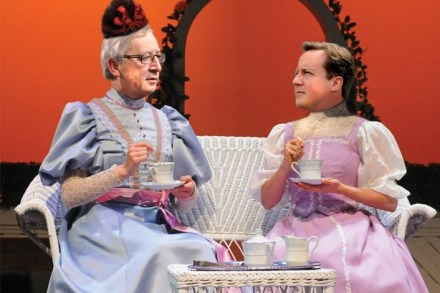
Angela Merkel has reportedly blinked in the row over Jean-Claude Juncker's candidacy for president of the European Commission and is now mooting IMF boss Christine Lagarde. The Reuters report cites two French sources who say the German Chancellor has asked France whether it could put forward Lagarde. If this is true, then it does explain or at least justify the very bullish tone that government sources took this morning when briefing Coffee House about the prospect of Juncker being blocked. And it would be a good sign that David Cameron is indeed getting his way if Merkel was prepared to raise the idea with François Hollande. But it would be odd if Hollande were enthusiastic about this.

The Lib Dems must start to claim credit for the Coalition’s economic successes

Jokes about their lock-in aside, today's re-launch by Nick Clegg and Vince Cable apparently heralds the Deputy Prime Minister's attempt to get the Lib Dems to take credit for policies announced in tomorrow's Queen's Speech. Reform of the pub sector is one of those policies - although wooing CAMRA members is a rather Lib Demmish thing to do (HQ sources tell me that they've never polled Lib Dem support among CAMRA members, though. Perhaps they should). Beyond pubs, what the Lib Dems really need to do is to claim or at least share credit for the Coalition's economic successes.

UK govt still confident of success in junking Juncker

Government sources are very keen to dispel the impression in Westminster that David Cameron's tough guy act over the candidacy of Jean-Claude Juncker is a last-minute thing, insisting that the Prime Minister has been involved in behind-the-scenes negotiations for months. Interestingly, they're still very bullish about the UK's chances of getting its way, with one government source telling me: 'We are confident we can stop him, we are confident we can stop this process.' The expectation is that a package deal will be agreed that involves a figure other than Juncker being appointed president.

George Osborne vs eurocrats

Improving the supply of new housing, adjusting the Help to Buy scheme if necessary, revaluing council tax bands and accepting that universal credit won't solve all of Britain' welfare ills: all ideas batted around in domestic political debate in this country by politicians and commentators who manage to secure a reasonable hearing each time they suggest them. But the problem with this latest list is that it comes from the European Commission: poorly supported by last week's European elections and not preaching from a position of runaway economic success. The EC has published recommendations for each EU member state which are 'designed to strengthen their growth potential, increase competitiveness and create jobs'.

Newark campaigning strategy cheers up Tory activists

One of the spin-offs of Grant Shapps' cheesy-sounding yet quite impressive 'Team 2015' strategy for campaigning in the local elections and now in Newark is that the energetic campaigning atmosphere seems to be making activists and MPs very happy. This sounds like a minor consideration when by-election campaigns are for winning seats, not counselling party members. But given the rather fractious few years that the Tory party has had, this is rather important. Activists and MPs need to feel  they're sailing with the wind behind them as they approach the election, and so gathering large numbers of campaigners together at once, rather than leaving them to canvass and deliver in little motley groups, is a good way of creating the impression of momentum.

Exclusive: Eurosceptic plotters mull Queen’s Speech revolt

David Cameron managed to extract promises from some of the more troublesome backbench MPs that they wouldn't get up to any monkey business around this year's Queen's Speech. Last year's motion of regret tabled by John Baron and Peter Bone caused all sorts of trouble, but it did lead to the Conservatives publishing their own EU referendum bill, which was taken up by James Wharton and provoked #LetBritainDecide fever. I have learned that the thinking in some Eurosceptic circles is that someone should table another similar amendment to the vote on this year's Speech which similarly expresses regret for the absence of an EU referendum bill.

European Commission president row is example of PM’s ‘essay crisis’ strategy, MPs grumble

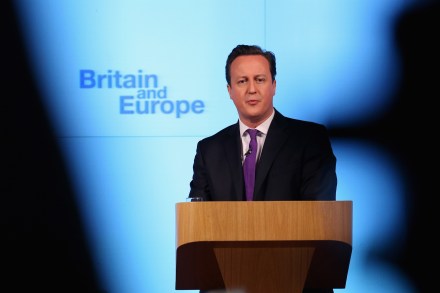
David Cameron might be hoping that the eurosceptics in his party are chuffed with his tough guy stance on Jean-Claude Juncker. And by and large, they are. But they're not wholly impressed. One eurosceptic remarks that this intervention is simply about the Newark by-election, given its timing. Another, who is minded to at least believe that the Prime Minister is thinking about European reform, rather than Patrick Mercer's old seat, says: 'This is no way to do diplomacy. Cameron has left this to the last minute yet again and it could be too late to do anything. He has had months to express a view yet is only engaging now.' Indeed, discussions about the next president have been taking place in Europe for months.

Campaign to junk Juncker continues

The campaign against Jean-Claude Juncker becoming President of the European Commission continues, with Martin Callanan (who might hope to benefit from another campaign against someone getting a job, namely Andrew Lansley becoming the UK's European Commissioner), telling the Today programme that the former Prime Minister of Luxembourg is the 'business-as-usual candidate' who is not the 'reformer who will institute bold and radical change'. Callanan argues that members of the European People's Party are not bound to support Juncker, because 'less than 10 per cent of the electorate in any of the countries that the EPP are now saying they have the votes from actually knew they were voting for anybody at all, never mind Jean-Claude Juncker'.

Osborne admits net migration target is impossible without EU reform

George Osborne's interview today with the Sun on Sunday does show the Conservatives are starting to see a little bit of sense about their net migration target. They're starting to realise that they aren't going to meet it when they can only control non-EU migration. It's surprising, really, that it's taken them so long to realise that the target was going to be a bit tricky to meet. In this week's magazine, Douglas Murray argues that Cameron will need to listen - really listen - to voters' concerns about immigration if he is to have a hope of winning next year: 'Because the deep, underlying story of last week is clear: the British public have made the connection between the EU and mass immigration. They do not like the latter and they blame it on the former.

Chris Leslie: Labour cannot afford to reverse the Coalition’s cuts

Chris Leslie's speech today is intended to show that Labour is very fiscally responsible. It's a noble task, and one the party knows it needs to hammer away at as much as it does on the cost-of-living, otherwise voters may not see that Labour is the trustworthy solution to the problem the party is highlighting. That said, the meat of this speech is very technical, and given it was delivered to the Institute of Chartered Accountants, perhaps not quite aimed at swing voters. Leslie is shouldering a big burden here, because the main thrust of his speech is that his party could not get elected in 2015 and promise unicorns and rainbows: it cannot reverse the Coalition's cuts because it cannot afford to do so (neither financially nor politically).

Sir John Major: EU election results make renegotiation easier

Sir John Major isn't a fan of Ukip and thinks it will fade away from its current position on the political scene. He's not the only one who thinks that: one of the problems that all three main parties have face is that they have continually assumed that Ukip is about to lose its head of steam, and have therefore made precious few preparations for the party getting bigger and stealing more of their voters. But there was one very interesting remark that Major made in his interview on the Today programme. He said: 'The circumstances between the 1990s and now are very different in many ways, and in a very curious way the recent European elections have emphasised that very clear. I think the results of these elections right across Europe have made a renegotiation much easier.

Ed Miliband must be careful when he talks about suicide

Jim Waterson's BuzzFeed interview with Ed Miliband is well worth a read. But the opening paragraph stands out in particular: 'Ed Miliband was in Nottingham last Tuesday when a man approached him to say that his part-time job at a petrol station wasn’t paying enough to take care of two children. This is an anecdote of the sort Miliband is always telling in his campaign to lower Britain’s cost of living, but what the man said next was “chilling.” '“He was really, really desperate because he felt couldn’t properly provide for his family,” Miliband recalls. “He was thinking of ending it all because he just couldn’t make ends meet.” '“Suddenly bacon sandwiches look slightly beside the point,” Miliband says.

Will Oakeshott’s demise kill off Lib Dem revolt?

Nick Clegg said this morning that 'appropriate steps' will be taken to deal with Lord Oakeshott after the peer was outed as the 'Lib Dem supporter' who had commissioned uncomfortable polling about the Lib Dems' chances in 2015. As with other difficult situations with Lib Dem peers, though, Clegg doesn't have that much power to remove the whip from Oakeshott, even if he'd like to.

Vince Cable names Lord Oakeshott as source of polling – and slaps him down

In the past few minutes, Vince Cable has issued this statement on the leaked ICM polling: 'Lord Oakeshott's actions are totally inexcusable and unacceptable. I have made it very clear repeatedly that he does not speak or act for me. 'Commissioning and publishing polls without the consent of the Member of Parliament, as in the case of Sheffield Hallam, is utterly reprehensible. 'There are undoubtedly raw feelings in the wake of poor local and European election results. We need to respond in a measured way. Public speculation about the leadership is an unwelcome distraction and as I made absolutely clear yesterday there is no leadership issue as far as I'm concerned.' Oakeshott has not responded to requests for comment all day.

Miliband’s sense of humour failure over relatively helpful question

Ed Miliband has just delivered his post-European and local elections comeback speech in Thurrock, to show that he's not afraid to confront the challenges that Labour still faces in the run-up to 2015. I'll post on the details of the speech and what it means shortly, but one exchange in the Q&A told us quite a lot not just about Miliband but politicians in general. Here is a video clip: And here is the transcript: Journalist: 'Peter Dominiczak from the Telegraph. You've been attacked in your party for being too wordy and too academic. I wondered if you could give us here today just one word that defines your leadership and tells voters what makes you different and sets you apart from the other party leaders?

Polling council investigates anonymous Lib Dem seats survey

Who is the mysterious 'Lib Dem supporter' behind the ICM poll showing that the Lib Dems would fare very badly next year if Nick Clegg remains leader? ICM have published the poll tables, saying only that the commissioning client is a 'member of the Liberal Democrats'. The British Polling Council rules state that its members must refer to the 'client commissioning the survey', and there is some suggestion that simply saying the client is a Lib Dem member isn't quite sufficient. I've spoken to the BPC's Secretary Nick Moon, who says the Council is examining ICM's disclosure to see whether it complies with the rules. He says: 'It is a little unclear, we are looking at it, but we've never had a case quite like this. It's not clear whether the rule includes the actual individual.