Isabel Hardman

Isabel Hardman

Isabel Hardman is assistant editor of The Spectator and author of Why We Get the Wrong Politicians. She also presents Radio 4’s Week in Westminster.

What the trouser row really tells us about Theresa May

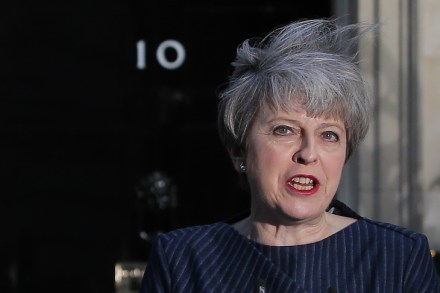
It would be extraordinary if a row about a pair of trousers had continued into a second week - if the row were just about a pair of trousers. As I wrote last week (when I thought the fight over Nicky Morgan’s comments about Theresa May owning a pair of £995 leather trousers was starting to fade), it was a curious intervention for a female politician to make about one of her sisters, especially when Morgan is an MP on a salary three times the national average anyway. But what this row is really about, as well as an ill-judged act of personal revenge from Morgan for being dispatched from the Cabinet by May, is about the way Number 10 and the Conservative Party is now being run.

Labour remembers what it’s like to be an effective opposition

Is Labour actually managing to do its job as a decent opposition? Yesterday, the party forced the government into a U-turn over whether the Prime Minister must reveal her plan for Brexit negotiations before triggering Article 50. This was over an Opposition Day debate, which leads to a vote that is not binding on the government, and is therefore normally safe to ignore. Ministers have been even more relaxed about these debates over the past few months given Labour has little political heft at the moment, and has on occasion used its Opposition Day slots as a means of internal party management, such as the debate on Yemen.

Nicky Morgan’s wrong trousers

Does Theresa May understand what life is like for the just-managing families she purports to stand for? The Tory party has seen a fair bit of snipping over the past few days over whether the Prime Minister’s £995 Amanda Wakeley trousers, which she wore for a newspaper interview and was then ridiculed about by one of the Cabinet ministers she sacked. Nicky Morgan told the Times that ‘I don’t think I’ve ever spent that much on anything apart from my wedding dress’ and that the pricey garb had been ‘noticed and discussed’ in party circles. You might expect that in order to look the part on the world stage, a leader would want to ensure his clothes were well-tailored and impressive.

Immigration reaches record high – but what does that really tell us about Brexit Britain?

How much do the net migration figures mean these days? The Office for National Statistics released its latest migration estimates today, which put immigration to the UK in the year to June 2016 at a record high of 650,000 - up 11,000 on the previous year. Net migration was at 335,000. That figure comprises 189,000 EU citizens and 196,000 non-EU citizens who came to Britain, and 49,000 Brits who left this country. But these figures mostly cover the period before the EU referendum. The ONS includes three months of data following June’s vote in today’s release. And the estimates for the year that follows will also reflect Britain’s current immigration arrangements, not the ones that Britons voted for in the referendum, whatever those arrangements may be.

Labour’s Matt Damon problem

One of the crueller caricatures in the 2004 satirical film ‘Team America: World Police’ is a little puppet of Matt Damon who is only able to say ‘Matt Damon’ in a rather feeble and pointless fashion. The actor himself felt he was being cruelly parodied because of his opposition to the Iraq War, and was ‘bewildered’ by the suggestion that he was barely able to say his own name when he was able to learn entire scripts. But the point from the screenwriters seemed to be that beyond his own name, Damon wasn’t really offering anything to the debate about the war. Labour has a Matt Damon problem on immigration at the moment.

John McDonnell’s response showed how irrelevant Labour has become

No-one envies the person whose job it is to respond for the Opposition to an economic statement that has just been made to the House of Commons. But perhaps John McDonnell’s job today was rather less terrifying given few people were seriously worrying about what he had to say.  The House of Commons was rather quiet as the shadow chancellor spoke. There was no obvious organised heckling of McDonnell from the Tory benches. Previously George Osborne’s Treasury Support Group of dozens of backbenchers would arm themselves with special insults to fling at Labour to wrong-foot the frontbencher responding to an autumn statement or budget.

Philip Hammond delivers a politically placid autumn statement

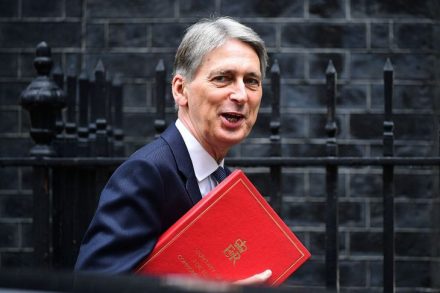
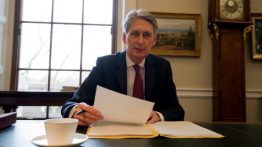
Philip Hammond started his autumn statement to the House of Commons by saying his style would be rather different to George Osborne’s. Yet the Chancellor still had a rabbit to pull out of his hat at the end -- albeit one designed to show he wasn’t a political meddler like previous holders of his job by saying there would no longer be two economic statements involving changes to fiscal policy ‘for the sake of it’ -- and even continued Osborne’s practice of announcing money to restore a historic building.

Poor mental health care is a ‘stain’ on our country. But whose fault is that?

Today’s warning from every former Health Secretary from the past 20 years about inadequate mental health provision raises a number of questions. The first is whether the government really is serious about its pledge to make parity of esteem between physical and mental health a priority. Mental health has become more of a political issue in recent years, which is a good thing: parties now worry about their standing on the issue because society has become better at talking about mental illness, and therefore more people are aware of the shockingly inadequate treatment that their friends and family are receiving when they fall ill. The Tories became anxious in 2015 that the Lib Dems had owned mental health as an issue.

Liam Fox looks towards the sunny world of Brexit Britain

This afternoon’s session of speeches at the Tory conference might best be described as the ‘Why My Department Exists’ section. The ministers who spoke - Culture Secretary Karen Bradley, Environment Secretary Andrea Leadsom and International Trade Secretary Liam Fox - all reeled off statistics about sport, the countryside, exports and so on to show that their portfolios really matter. Every year, we hear about the countries whose national products we are selling back to them, and how many trees ministers are planting (not personally, sadly). But this year, we had a new job description: that of the Secretary of State for International Trade. And as well as offering ripostes to jokes cracked by Nick Clegg several weeks ago, Liam Fox did need to explain what he was doing.

Philip Hammond’s ‘sombre’ speech acknowledges the impact of Brexit on businesses

Philip Hammond's speech has had a mixed reaction from his MP colleagues, it is fair to say. A number have run up to me and rolled their eyes at how terrible his jokes were, or at his skill in managing to make one of the most important jobs in government sound boring, even telling delegates at one point not to switch off before talking about the very interesting productivity puzzle. One minister mutters that the speech was 'classic Hammond', which was more of a reference to his lack of charisma than his rather downbeat assessment of everything, from how interesting his job is to the consequences of Brexit. It was indeed striking that his assessment of the consequences of Brexit was quite so different to the rather glib picture painted by Boris Johnson yesterday.

Theresa May’s honeymoon isn’t over yet

This Tory conference is making clear quite how topsy-turvy politics has become over the past few months. David Davis is sweeping around with a ministerial entourage. The Cameroons are largely absent. Nicky Morgan, who started the year as an ultra-loyal Cabinet minister prepared to help the Prime Minister out and soothe any row, has become a vociferous critic of the government, the new Peter Bone of the Tory party (without the luminous green tie). Meanwhile, the former rebels on the eurosceptic right of the party such as Steve Baker and Bernard Jenkin are walking around in a sunny state of happiness. So the rebels are now happy. And the loyalists are now grumpy.

Theresa May’s ‘hard Brexit’ hint

We had heard a great deal of Theresa May’s Brexit speech to the Conservative party conference before - to the word, in fact, with the Prime Minister using the same scripted soundbites that she’s deployed as a shield against having to answer questions about Brexit directly. ‘We will not be able to give a running commentary or a blow-by-blow account of the negotiations,’ she told the hall, warning that ‘history is littered with negotiations that failed when the interlocutors predicted the outcome in detail and in advance’. It was difficult not to think of the most recent negotiation where this has happened: David Cameron’s attempt to change Britain’s relationship with Brussels and keep the country in the EU.

Theresa May: Brexit will begin in March 2017

As Conservative conference begins, we are finally starting to find out a little more about what Brexit means. But only a little. In her interview on Marr this morning, Theresa May confirmed that she would trigger Article 50, which starts the process of taking Britain out of the European Union, before the end of March 2017. She said: 'I’ve been saying that we wouldn’t trigger it before the end of the year so that we get some preparation in place. But yes, I will be saying in my speech today that we will trigger before the end of the March next year.' But when it came to hard vs soft Brexit, the Prime Minister was rather more coy, merely repeating what she had said on the British people voting for controls on immigration in the referendum.

What is Theresa May’s greatest weakness?

What is Theresa May’s greatest weakness as she goes into conference season? The Prime Minister had such a good start to the job that it’s easy to forget that she has the same problems that David Cameron did in terms of parliamentary arithmetic and fractures in her party over Europe. For Cameron, the parliamentary arithmetic was most difficult because there was a hardened core of eurosceptics who distrusted him, and because he and George Osborne had a habit of trying to sneak half-baked policies such as huge cuts to tax credits past MPs and hope that they wouldn’t notice (which they nearly didn’t).

In search of Mayism

What does Theresa May believe? The new Prime Minister has had the summer to settle into her job and has a chance next week to tell us more about her plans for government. Had she come to power after a general election, or even a proper leadership race, we’d know more about her. Instead, she has the Tory party conference to introduce voters to their new government. We know already that her focus is on those who are ‘just managing’, a phrase that trips off the tongue far more lightly than ‘the squeezed middle’ (Ed Miliband) or ‘alarm-clock Britain’ (Nick Clegg).

Jeremy Corbyn could have given this speech 20 years ago

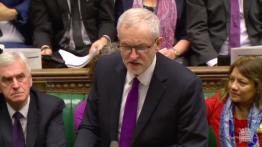
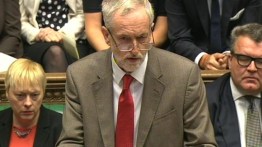
Jeremy Corbyn’s speech to Labour conference was rather good. It was clear, it was reasonably neatly-delivered, and it covered all the bases that the Labour leader needed to cover in order to solidify his position following his re-election. Of course, to a certain extent, it wouldn’t have mattered if he’d given the worst speech in the history of Labour conference speeches, given he has performed terribly in Parliament over the past year yet has been returned with a bigger mandate than before. But this was a much better speech than his rambling ‘strong message here’ address to conference last year. This year, Corbyn wanted to set out two messages: I’m still here, so my critics need to shut up, and I think I can win an election in my own left-wing way.

There will be nothing normal about Jeremy Corbyn’s conference speech

Jeremy Corbyn will shortly address the Labour conference with what is officially known as the ‘parliamentary report’. An accurate ‘parliamentary report’ would include an in-depth discussion about relations between the parliamentary party and its leader, who has gone from being one of the most rebellious backbenchers to demanding loyalty from his colleagues. Normally before a leader’s speech, pundits pick over what it is that the leader needs to cover. Normally, this involves variations of rousing the party faithful, announcing a policy or two that give us an idea of who the leader is and their vision for the coming year, and facing down any critics, whether in rival parties or their own.

Man bites dog as Corbyn tells Labour members: I want to win an election

Jeremy Corbyn’s conference speech includes the normally unremarkable but currently remarkable assertion that he wants Labour to win the next election. Given the debate that has raged within the Labour party over the past few months about purity vs power, that the re-elected Labour leader is saying this at all is significant. He will say tomorrow that he expects a general election next year and that ‘we expect all our members to support that effort, and we will be ready whenever it comes’. Some Labour MPs will point out that this will require a dramatic shift from some members who haven’t yet delivered any party leaflets but are still threatening to de-select them.

Labour moderates split over whether to serve on Corbyn’s frontbench

Whether or not to serve on Labour’s frontbench is a question of the same order of asking whether the deck chairs on the Titanic should face north or south. But Labour MPs do have to work out what’s best to do while their ship is being captained by Jeremy Corbyn - and we’re starting to see signs of splits within the moderate camp on how best to do this. This evening, centrist MP Johnny Reynolds is reported to be returning to the Labour frontbench as City Minister, which may mean Labour actually holds meetings with people in the City as opposed to ignoring them. But it is also a completely different approach to that being mooted by a number of his like-minded colleagues.

Labour members’ stand-off with MPs shows things can only get more bitter

Jeremy Corbyn might have wanted to wipe the slate clean and start over with his MPs after the summer’s leadership contest. But the mood on the Labour conference fringe shows that this is going to be extremely difficult in practice, even if the Labour leader does everything that his MPs ask of him (which he won’t). Many members are furious with the MPs for orchestrating a coup against their leader and forcing a leadership contest; many MPs are utterly defiant about the importance of said coup, even though it failed, and aren’t prepared to fall meekly behind the leader, no matter how much members tell them to.