Isabel Hardman

Isabel Hardman

Isabel Hardman is assistant editor of The Spectator and author of Why We Get the Wrong Politicians. She also presents Radio 4’s Week in Westminster.

Labour finds a security firm for its ‘excellent’ conference

Today, in a highly unprecedented move, the Labour party actually managed to achieve something. It has just signed a deal with a security firm, OCS, for its autumn conference in Liverpool. This is a huge relief to those in the party with a sense of professionalism, like its General Secretary Iain McNicol, who had feared that the whole conference might have to be cancelled, which would be yet another illustration of the terrible, potentially terminal, mess that the party is in. But McNicol was able to say this afternoon that ‘We look forward to working together on what will be an excellent event’.

Frankenstein’s Westmonster

All political parties are a mess: coalitions of people with different beliefs, stitched together — like Frankenstein’s monster — into a body that can grunt coherently, and perhaps even achieve something. Most of the time, these bodies lumber about reasonably effectively, if a little clumsily. But every so often, as now, when the political system is in turmoil, the suturing starts to bulge and everything seems at risk of coming apart. Such is the case with the Labour party which may soon be torn asunder — or give way to a new grouping called the Co-operative party. There’s a certain degree of logic to this.

How useful is Sadiq Khan’s endorsement of Owen Smith?

Sadiq Khan’s endorsement of Owen Smith is rather handy for the ailing Labour leadership contender, given Khan is one of the few Labour politicians who has actually won something: that something being the largest personal mandate of any politician. This enormous mandate is rather handy when Jeremy Corbyn starts waving his own huge mandate about, but it may not be attractive enough for Labour members, who largely seem besotted by the idea of Corbyn as leader.

Owen Smith: We should get Isis round the table for peace talks

Victoria Derbyshire seemed very anxious as Labour’s two-hour-long hustings between Owen Smith and Jeremy Corbyn wore on this morning to move the debate away from the many internal messes that the party is in (Jewish members not feeling safe any more, online abuse, the chasm between the PLP and the membership: you name it, they covered it) and onto policy. At first, it wasn’t entirely clear why the programme’s producers had been so worried about covering policy: there is barely a cigarette paper between Corbyn and Smith, and that’s exactly how the challenging candidate wants it. The only big points of disagreement are on Trident renewal and the odd £0.5bn of spending pledges for building this and that.

Court of Appeal rules in favour of Labour party in latest leadership contest twist

In the past few minutes, the Court of Appeal has ruled in favour of the Labour Party’s block on anyone who joined after 12 January 2016 from voting in the party’s leadership election. This means - until there is an appeal to the Supreme Court - that around 130,000 members, most of whom are believed to be sympathetic to Jeremy Corbyn, will not be able to vote. As I explained earlier this week when the High Court ruled in this matter, the impact of this may merely be the size of the victory that Jeremy Corbyn wins against Owen Smith. But it does also make the Labour party more divided and the contest still more bitter.

Why does no-one think of the Lib Dems?

Talking to Labour MP these days is a pretty miserable business, to the extent that many journalists are starting to wonder if they should charge by the hour for counselling. Among their many moans is that there no longer seems to be a centre-left, pro-European force in British politics any more. But when I try to cheer them up by pointing out that the Lib Dems surely fulfil that description, those miserable MPs shrug their shoulders. None are considering defecting to Tim Farron’s party. While many moderate Labour MPs are asked the whole time why they don’t ‘f*** off and join the Tories’, no-one makes the same suggestion about their suitability for joining the Lib Dems. Why is this?

Remind you of anyone? How Theresa May is morphing into Gordon Brown

Standing outside No. 10, our newly chosen — though not elected — Prime Minister decided to address the country directly. It was finally time, we learned, for a government dedicated to those who had been left out. ‘To those who feel the political system doesn’t listen and doesn’t care; to those who feel powerless and have lost faith; to those who feel Westminster is a distant place and politics simply a spectator sport: I will strive to earn your trust.’ These words — and other lines about parents juggling work and childcare — were perfect for Theresa May’s pitch of one nation Toryism. But they had been uttered before: by Gordon Brown in 2007, as he accepted his Labour leadership nomination.

Labour’s moderates are stuck until they can solve their membership problem

We are still not entirely sure when the Labour leadership contest will end, but in these dusty days of recess, it is certainly keeping everyone nicely busy. Today Owen Smith received a boost from trade union GMB, which decided to endorse his bid to take over from Jeremy Corbyn. Its members voted 60-40 to endorse Smith, and General Secretary Tim Roache said ‘GMB members cannot afford for Labour to be talking to itself in a bubble for the next five years while the Tories run riot through out rights at work, our public services and our communities’. This drew yet another combative - and slightly curious - response from Team Corbyn after yesterday’s conspiracy theories fun.

Labour’s leadership eats itself in row over ‘Trotsky entryists’

Is anyone in Labour getting along? Currently the party is trying to appeal against a High Court decision in favour of its own members, and its own grassroots campaign group Momentum is sending a petition to the party to tell it not to appeal that decision. Today the Deputy Leader and the Leader had a row, with Jeremy Corbyn of all people accusing Tom Watson of ‘peddling baseless conspiracy theories’. Baseless conspiracy theories are indeed one of the hobbies that Watson should, if he hasn’t already, list in Who’s Who, but Coffee House readers can judge for themselves whether his comments to the Guardian fall into that category.

Why would Theresa May want to clamp down on special advisers?

Theresa May’s plans to limit both the number of special advisers and the way in which they are appointed are rather curious, given how influential and essential her own advisers were when she ran the Home Office. As I explained in the magazine recently, Nick Timothy and Fiona Hill held a great deal of power in that department, and not just when it came to briefing the media. They were an essential part of the running of the Home Office and its many arms-length bodies such as the Border Force.

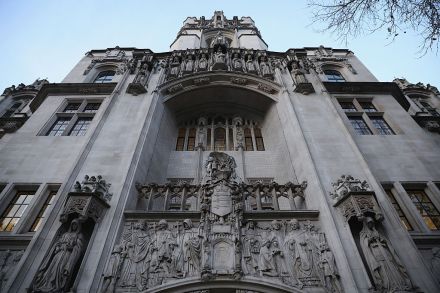
Labour members win court case on leadership contest

Isabel Hardman and Lara Prendergast discuss what's next for Labour: Could Labour hold its autumn conference without a confirmed leader? The party’s QC is to appeal this morning’s High Court decision that it cannot have a six month freeze date for members voting in the leadership contest, and this could delay the contest between Jeremy Corbyn and Owen Smith. Five new Labour members won their case against the party’s application of a six month freeze on eligibility to vote. If the election is delayed, and Labour has no leader in the autumn, which is when political parties and leaders traditionally fire up their grassroots and show how strong their authority is, then the party will appear weaker than ever.

What matters in Labour’s leadership contest is what works

Jeremy Corbyn’s attempt to strike a contrast between his beliefs and those of his Labour leadership rival Owen Smith would have rather big implications or medical research in this country. The Labour leader told the launch of his campaign to hold on to his job that pharmaceutical companies like Pfizer shouldn’t take on medical research: ‘I hope Owen will fully agree with me that our NHS should be free at the point of use, should be run by publicly employed workers working for the NHS not for private contractors, and medical research shouldn’t be farmed out to big pharmaceutical companies like Pfizer and others but should be funded through the Medical Research Council.

Liz Truss attracts far more vitriol than her male non-lawyer predecessors. Why could that be?

A politician with no legal training and limited experience of the legal world becomes Justice Secretary and Lord Chancellor. The legal world is offended and fellow politicians speak out against this unwise appointment. Some resign in protest, or refuse to work under the new minister. ‘I fear this could be damaging to the justice system,’ warns one peer, as he walks away from his ministerial portfolio. Three politicians who fit that description of no legal training or experience in the legal world have been appointed Justice Secretary and Lord Chancellor in the past four years. Chris Grayling was the first, taking on the job in 2012, followed by Michael Gove who took over in 2015. Gove was then sacked from the government and succeeded by Liz Truss.

The net migration reckoning draws nearer

Is the new government under Theresa May going to ditch the target to drive net migration into the tens of thousands? Amber Rudd and Boris Johnson signalled a change of policy from the back-of-a-fag-packet plan yesterday by saying the aim was to ‘bring migration down to sustainable levels’, though Downing Street insisted that this was not an end to the target, saying ‘the Prime Minister does see sustainable levels as down to the tens of thousands’. It would be odd, given May’s personal commitment to the net migration target, and her personal frustration (and that of her aide Nick Timothy) that it wasn’t met as a result - in her view at least - of special pleading from other ministers, especially George Osborne and ministers in the Business department.

Angela Eagle pulls out of Labour leadership contest

In the past few minutes, Angela Eagle has pulled out of the Labour leadership contest, citing insufficient nominations in the race with Owen Smith. ‘I’m withdrawing from this race and supporting Owen with all of my enthusiasm and might,’ she told reporters in Parliament’s Central Lobby. This means that Labour now has its unity candidate to fight Jeremy Corbyn, and even those MPs who feel rather politically distant from Owen Smith will have to pull behind him in the name of dislodging Jeremy Corbyn.

Theresa May’s first Cabinet meeting gives us a glimpse of her leadership style

Theresa May’s first Cabinet meeting wasn’t accompanied by the kind of eye-catching announcement you would have expected from Tony Blair or David Cameron. Instead, the big news is that the new Prime Minister will chair three Cabinet committees on the economy and industrial strategy, exiting the European Union, international trade and social reform. This does rather underline her reputation for being someone who doesn’t like delegating, as well as her interest in the serious machinery of government, rather than media gimmicks. She then underlined her serious reputation further by welcoming colleagues to the coffin-shaped table in Downing Street by saying the following: ‘When I launched my leadership campaign, I said that politics is not a game.

The Labour leadership contest looks set to be savage

Labour MPs are currently nominating candidates in the party’s leadership contest to replace Jeremy Corbyn. The current Labour leader does not need any nominations, but as the challengers, Angela Eagle and Owen Smith do. A deal has been done between the candidates for the one with the least support to step aside from the contest so that the membership has to chose between just Corbyn and one challenger and the moderate anti-Corbyn vote is not split. Owen Smith has enjoyed some good attention and momentum in the past few days, with MPs who had previously supported Eagle bleeding off to his campaign instead.

Corbyn savaged by his own MPs as he refuses to read out Labour policy on Trident

If you wanted evidence to support the repeated assertion from Labour MPs that Jeremy Corbyn cannot continue as Labour leader, today’s Trident debate offered it in cartloads. The vote, which had been promised in 2007 by a Labour defence secretary, is supposed to be about the renewal of the submarines that carry the nuclear warheads. But today’s debate was more about the deep split within the Labour party over the matter, and the contempt with which so many Labour backbenchers view their leadership. In most parliamentary debates led by the leaders of the two main parties, what normally happens is that backbenchers intervene on their respective leaders to offer supportive statements that, as much as anything else, allow them to catch their breath and refine their argument.

Is Owen Smith the answer to Labour’s Corbyn problem?

As Katy reports, Labour appeared rather divided at its leadership hustings today. Behind the scenes, Owen Smith does seem to be attracting the greater support, including defectors from Angela Eagle's camp. Some of those around Eagle are upset that their party may be about to elect yet another man when a woman has had the bravery to start the leadership contest and to take a great deal of abuse for doing it too (her office had a brick thrown through its window last week). But they accept that even their party's rather embarrassing failure to get anywhere close to the Tories in terms of female leaders is a second order problem compared to getting rid of Jeremy Corbyn.

Labour’s dismal showing gives Sajid Javid a gentler first day in the job

Theresa May's new government gets to work today, and first to face the heat of the Chamber was the Communities and Local Government frontbench. Unfortunately, the Chamber turned out to be rather cool, as very few Labour MPs had managed to turn up, giving Sajid Javid and his team a rather gentler introduction to their new jobs. One of them, Andrew Percy, told the Chamber that 'I share the House's surprise!' on this appointment as he rose to take his first question. But largely the questions that were asked were not a surprise for the frontbench. Some Tory MPs were anxious for a renewed commitment from the new ministers to the sanctity of the Green Belt, as even a perceived threat to those doughnuts of protected land around cities can send Tory voters into a wild panic.