Isabel Hardman

Isabel Hardman

Isabel Hardman is assistant editor of The Spectator and author of Why We Get the Wrong Politicians. She also presents Radio 4’s Week in Westminster.

Shami Chakrabarti and Peter Whittle play the by-election blame game

Shami Chakrabarti and Peter Whittle would probably furiously deny playing by the same political rules. But this morning on the Andrew Marr Show, the Labour peer and Ukip politician were both using suspiciously similar scripts to try to excuse poor performances by their party leaders in Thursday's by-elections. First up, Peter Whittle on how Paul Nuttall managed to squander a golden opportunity in Stoke Central. Nuttall was on a trip, of the kind that apparently often happens after a by-election, so he couldn't explain for himself. Whittle referred to personal attacks on Nuttall.

Will the Labour membership ever change its mind about its leader?

Labour's famously vocal moderates have been awfully quiet today, given one of their number – Jamie Reed – has just been replaced by a Tory in a hugely embarrassing by-election defeat for the party. The centrist wing of the party, now almost exclusively a backbench club, has taken a vow of silence because it doesn't want to be accused of salivating at the loss of a seat or of conforming to the 'Bitterite' stereotype of MPs undermining the Labour brand. This is particularly important given some Corbynites are still blaming last summer's attempted coup by the Parliamentary Labour Party for any catastrophe it encounters, including losing Copeland. That coup didn't remove Corbyn. But what it did do was remove the ability of the moderates to speak out with much authority.

Labour’s defeat in Copeland shows the party is losing its heartlands

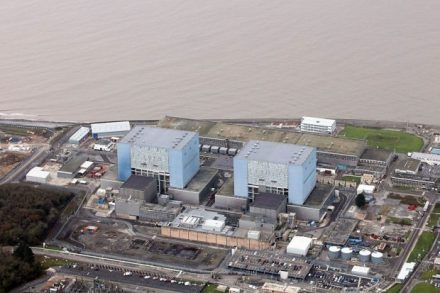
So what went wrong for the Labour Party in Copeland last night? There’s no understating the scale of the defeat – the worst by-election performance by an opposition since 1878 by some measures. It lost a seat it has held since 1935 to the Conservatives because the local MP, Jamie Reed, quit politics for a job in the nuclear industry. It’s threatening to become a trend: last night another by-election replaced Tristram Hunt, who also quit as MP for Stoke Central to run the Victoria & Albert Museum. His party held the seat last night, seeing off a noisy but shambolic Ukip campaign but let’s not pretend there’s much for Labour to cheer.

Labour has just suffered its worst defeat for decades

Isabel Hardman discusses the by-election results with Fraser Nelson and James Forsyth: The Tories have won the Copeland by-election with 13,748 votes - a clear 2,107 votes ahead of Labour. The Tories needed a 3.3pc swing to win: they got double that, making this the best by-election performance by a governing party since 1966. And the first gain by a governing party since 1982. So quite a result. Copeland is not a safe Labour seat. But it has been a Labour seat since the 1930s and this is the worst by-election defeat for an Opposition party since 1945. (Matt Singh, from Number Cruncher Politics, says he'd raise that to 1878). Oppositions, as a rule, do not lose by-elections to the governing party in the midterm of a Parliament. The party had a strong campaign in the seat.

Cabinet wastes time with discussion on something it already agrees on

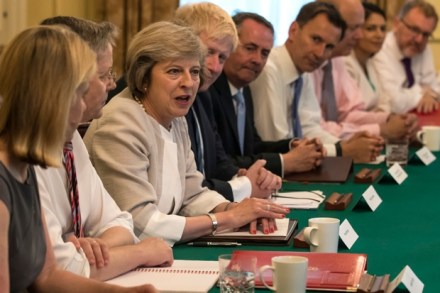
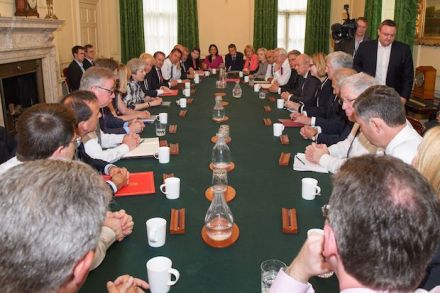
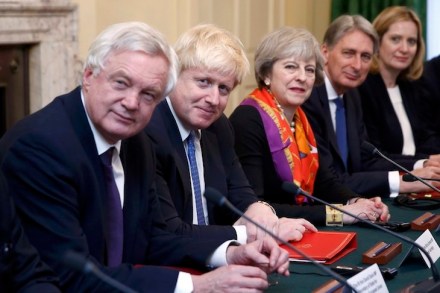
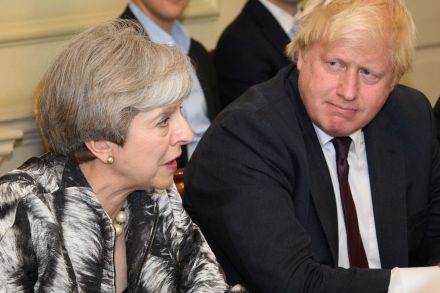
If ever you wanted to understand what Theresa May’s relationship with her top ministers is like, today’s Cabinet meeting provides some insight. The ‘majority’ of the session, which lasted more than an hour, was taken up with a discussion about the importance of the Union. Not a discussion in which any of the problems raised by Brexit for the Union, such as the problems with the land border between Northern Ireland and Ireland, were addressed, but a general discussion on how everyone present supported the “most successful political union of countries that has been seen”.

The one consolation for Labour? Ukip aren’t a slick fighting force

Theresa May has been visiting Stoke-on-Trent today ahead of the ‘really important’ by-election in the city on Thursday. That the Prime Minister is bothering to pitch up to a campaign in a Labour heartland suggests that the Tories at least think they are in with a fighting chance of winning the seat - otherwise it would be not just a waste of May’s time but also a bit embarrassing if they were seen to have thrown not just the kitchen sink but also the PM at the fight. Labour, meanwhile, is throwing kitchen sinks wildly and at great expense in the two by-elections due this week, including buying the front page of the local newspaper in Copeland on a number of occasions to make stark warnings about the threats it claims the Tories pose to the local NHS in Cumbria.

Government defeats all amendments in first Brexit Bill Committee fight

MPs are finally making their way out of Parliament - or staying for Ed Miliband’s late night adjournment debate - after the first day of Committee Stage of the Article 50 Bill. As explained earlier, the real fireworks are expected tomorrow, and any flashes of drama today came from MPs complaining about the lack of time available for scrutiny. This ended rather noisily in a roaring match between Alex Salmond and Deputy Speaker Lindsay Hoyle over the amount of time allocated to the SNP for speeches in the extended session. Earlier, MPs had chastised Natascha Engel when she was in the Chair for not allowing a number of amendments to proceed to a vote. The Deputy Speakers were getting it in the neck when the fault for the lack of time available for scrutiny lies with the Government.

May’s message to MPs: don’t obstruct the Article 50 Bill

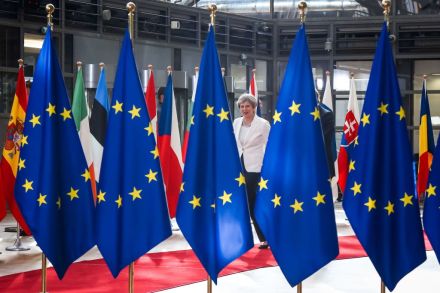
MPs will shortly begin their Committee stage of the Article 50 Bill in the Commons. Before that begins, Theresa May had one more chance to try to reassure colleagues who are considering voting for amendments to that Bill by giving a statement to the House on the informal EU summit in Malta that took place last week.  She repeatedly told MPs, both in her statement and in her answers to questions afterwards, that reaching an agreement on the status of EU citizens in the UK was a priority and that it needed to be a ‘reciprocal’ agreement. She also warned the Commons not to obstruct the Article 50 Bill.

Ministers take the politically safe route on housing

If a home was built for every new initiative, speech or newspaper article about "fixing the housing crisis", our housing stock would be in much better shape than it is as a result of the past few decades of political failure on the matter. This week, there's another attempt - the first from Theresa May's government.  The Prime Minister made housing one of her key social justice issues when she came into Downing Street, which means that she and her advisers have taken a very close interest in the policies in the White Paper that is due this week.

Is the government trying to avoid scrutiny of its Brexit policy?

Is the government trying to avoid scrutiny of its Brexit policy? That’s the charge that MPs on the Labour and SNP benches are levelling at ministers today as the White Paper on leaving the European Union is published. Keir Starmer told the Commons this afternoon that he and his colleagues were being hampered in their attempts to ask decent questions and properly scrutinise the government’s approach because they had been handed the document just minutes before David Davis gave his statement on the publication. The SNP’s Stephen Gethins complained that the whole situation was a ‘mess’ and that Parliament was being mistreated. These complaints were echoed from the benches behind them.

Brexit Bill debate: MPs are confused about their job description

The debate over the Bill allowing the government to trigger Article 50 has been surprisingly good-natured, so far, given the stakes. There have been some impressive speeches from all sides, and even some humour. We have learned very little about what the Bill entails and have been largely unsurprised by what each MP has said: Labour is in a very miserable place and shadow Brexit secretary Keir Starmer laboured this point with great feeling. Ken Clarke opposed the referendum, opposes leaving and isn’t going to change his mind.

Today’s Brexit debate is likely to be a tame affair

MPs are now debating the government’s European Union (notification of withdrawal) Bill, with a warning from Theresa May and Brexit Secretary David Davis that to try to block the legislation would be to thwart the will of the British people. The Prime Minister said last night that ‘I hope when people look at the Article 50 bill they will recognise that it is a very simple decision - do they support the will of the British people or not’, while Davis will ask MPs whether they ‘trust the people or not’ as he opens the Second Reading stage of the Bill. There is a funny symmetry here between the bill that enabled the referendum in the first place, and this legislation which starts to enact the result of that referendum.

Theresa May’s failure to stand up to Trump will undermine her whole strategy

Theresa May’s visit to Washington to meet President Trump last week was seen, before it happened, as being beneficial to both sides. The Prime Minister’s allies in government thought this was an excellent opportunity for May to show the new President how it was done - and to send a message to the world that Britain really matters. But today things look a little less advantageous for the Prime Minister. That her visit was swiftly followed by Trump signing an executive order which halts all refugee admissions and temporarily bans people from seven countries has put the Prime Minister under pressure to criticise the man whose hand she ended up holding. Initially she didn’t - and was heckled by the press when dodging their questions on the matter.

Should the government publish a Brexit White Paper?

Just a year ago, the phrase ‘Brexit rebels’ denoted Tory MPs like Peter Bone who had a distinguished pedigree of pushing the government to be as Eurosceptic as possible, with the odd eccentric comment along the way. Today, it means former Cabinet ministers such as Nicky Morgan, who are trying to push the government away from a ‘Hard Brexit’ - also with the odd eccentric comment about trousers. Those new Brexit rebels are now demanding that the government publish a White Paper on Brexit. Morgan, Dominic Grieve and Anna Soubry want the government to ‘formalise the government strategy in a “reasoned fashion”’, as Grieve put it. This really isn’t the most difficult demand that the government has faced on Brexit.

How ‘straightforward’ can the Government’s Brexit bill actually be?

The Government may be accepting its defeat in the Supreme Court graciously overall, but David Davis was in a rather dismissive mood when he responded to Labour’s questions about the ruling in the House of Commons this afternoon. The Brexit Secretary gave a statement to the House explaining that ministers would publish ‘within days’ a bill that would give the Government the legal power to trigger Article 50. Both in the statement and in his responses to questions about it, he repeatedly told the Chamber that it would be a 'straightforward’ bill. Meanwhile the Government had already offered MPs plenty of scrutiny of the Brexit negotiations, and the Prime Minister had given the clearest speech on her negotiating position that Davis could think of.

The mental gymnastics of the Brexit debate

What a lot of contortions we are seeing this morning from so many quarters about the Article 50 ruling. Brexiteers such as Iain Duncan Smith are cross with the Supreme Court for ruling that Parliament must have a say on triggering the process for Brexit, with the former Tory leader telling the BBC this morning that the judgement raised ‘real constitutional issues’: ‘They have stepped into new territory here, where they have actually told parliament not just that they should do something, but actually what they should do. I think that leads further down the road to real constitutional issues about who is supreme in this role.

Breaking: Government loses Article 50 case

Isabel Hardman is joined by Fraser Nelson and James Forsyth to discuss the ruling: In the past few minutes, the Supreme Court has delivered its ruling in the Article 50 case on taking Britain out of the European Union. The Government has lost. It had argued that it did not need an Act of Parliament before triggering the mechanism. The Court ruled by eight judges to three that the Government did need the authority of Parliament in order to start the process. You can read the full judgement here. But the Court also ruled unanimously that Brexit is a matter for the Westminster parliament and not the devolved assemblies. This means that the government will have to put a bill through Parliament on triggering Article 50 to take the UK out of the European Union.

Theresa May’s ‘industrial’ rebrand

Theresa May’s industrial strategy, launched today at a special Cabinet meeting just outside Warrington, is part of the Prime Minister’s efforts to show that she is doing interesting and original things on the domestic front while also working on the Brexit negotiations. It is also part of her attempt to show that she is different from her predecessors in government. But how different? The 132-page consultation document, Building Our Industrial Strategy, focuses on ‘creating the right conditions for new and growing enterprises to thrive, not protecting the position of incumbents,’ according to Business Secretary Greg Clark. But this is a contrast with the ‘fatally flawed’ plans of the 1970s, rather than the approach of the previous government.

The irony of Corbyn’s three-line whip

Jeremy Corbyn is a famous rebel, so famous that when he was elected, many in his party wondered how he might tell MPs to vote the way he wanted them to when he himself had refused to listen to the whips throughout his backbench career. When he was still a backbencher, he enjoyed telling a tale about Sadiq Khan, then his whip, ringing him up to check he would definitely be rebelling on a certain vote, and not bothering to waste his energy trying to get him to abstain instead. Now the Labour leader is faced with one of those awkward moments that involve him telling his MPs to vote a certain way on a controversial issue, and those MPs rightly being a bit miffed.

The love Labour’s losing

Stoke-on-Trent is an unsettled place, figuratively and literally. The ground under the city is riddled with shafts from coal and ironstone mining. Some of its most beautiful buildings are propped up by metal supports to prevent subsidence and the council once worried that homes earmarked for demolition would instead demolish themselves, collapsing into the mines below. The ceramics industry has retreated, leaving a moonscape where pottery kilns used to fill the city with smoke and glow. When I visited Stoke as a housing reporter in 2011, shortly after the demise of the housing market renewal programme, it was clear that the city felt abandoned by all politicians.