Harry Mount

Harry Mount is a barrister, editor of The Oldie and author of How England Made the English (Penguin) and Et Tu, Brute? The Best Latin Lines Ever (Bloomsbury).

Dressing down

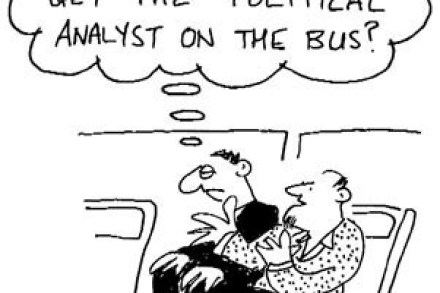
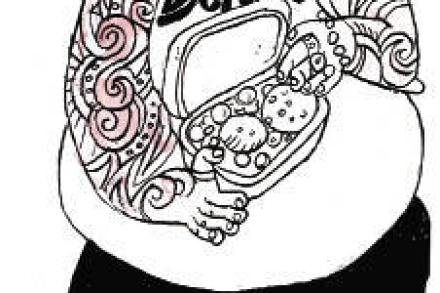
Mad dogs and Englishmen go out in the continental midday sun. But at least the mad dogs don’t dress in vests, belly-hugging T-shirts or those cut-off trousers that make short men shorter and fat men fatter. Why do they do it? How has it happened that you can spot Holidaymakerus britannicus in an instant, from the other side of the piazza — from the far end of the tapas bar? The romantic legend that the British provide a model of good dress still lingers on. The British invented the modern suit, so the myth goes, Savile Row stands for the best tailoring in the world, so those sartorial standards must be written into our dressing DNA. Well, it just goes to show how difficult it is to dislodge a national stereotype.
Classic treasure

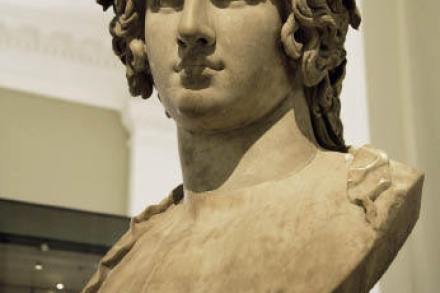
The Greek and Roman Collections Sculpture Promenade 2010 Fitzwilliam Museum, Cambridge, until 28 January 2011 Virgil was wrong — don’t be afraid of Greeks bearing gifts, particularly if you’re a British regional museum. While our government has cut its grant to the Fitzwilliam by two per cent, Greek zillionaires have stepped admirably into the breach to subsidise the renovation of Cambridge’s heart-stopping Greek and Roman gallery, untouched since the Sixties. The Greek Ministry of Culture has chipped in, too; it may want the Elgin Marbles back but it’s happy to pay for Cambridge’s classical treasures to stay put, even while the Greek economy is on the skids. Its prized euros have been well spent.

Barking mad — a day out with the BNP

Harry Mount watches Nick Griffin try to win round the disgruntled former Labour voters of Dagenham and Barking — if he wasn’t so ridiculous, he might be dangerous As always, P.G. Wodehouse got it right. Far-right groups are unlikely to take off in Britain because, for all their nastiness, they always come across as just a little too ridiculous. That’s certainly the impression I got after spending last Saturday in Barking, east London, at the BNP campaign launch. In The Code of the Woosters (1938), Wodehouse neatly took care of Sir Oswald Mosley and his Blackshirts, by casting him as Sir Roderick Spode in his black shorts; by the time Spode had set up his fascist group, there were no shirts left, according to Gussie Fink-Nottle.

‘I went into the war as a student and came out as an artist’

Ronald Searle, who turned 90 this month, talks to Harry Mount about being captured by the Japanese, chronicling the 1950s and inventing both St Trinian’s and Molesworth High in the mountains of Provence, in a low-ceilinged studio at the top of his teetering tower house, Ronald Searle is showing me the simple child’s pen he uses. As he draws the pen down the page, the ink thickens and swerves; a few sideways strokes, a little cross-hatching, and suddenly the famous Searle line comes to life: part Gothic, part anarchic, part comic. The girls of St Trinian’s, Nigel Molesworth, Adolf Eichmann, thousands of Punch caricatures, the Goya-like pictures of dying prisoners of war... all utterly different, all enclosed by that distinctive Ronald Searle line.

Confessions of a middle-class anarchist

If Gordon Brown really wants to start appealing to the middle-class vote, he could start by picking up my rubbish. The bin bags outside my flat in Kentish Town, north London, weren’t collected for four weeks over Christmas because of the snow. When the foxes started to rip them apart and left a trail of chicken carcasses and half-chewed bread across my front garden, I cracked. Patching up the most damaged bag and strapping it to my handlebars, I pedalled along the snowy roads — if my bike could negotiate the streets, so could a rubbish truck, by the way — to my local park. There, I poured the rubbish into a large, metal-mesh bin.

The death of ‘shabby chic’

After more than 200 years, a uniquely British taste is on the way out. Shabby chic has been vacuumed, whitewashed and dry-cleaned out of existence. Frayed shirt collars, egg yolk on the tie, soup stain on the crotch, roses rambling out of control over the crumbling terrace flagstones, walls cluttered with pictures, tables covered with teetering piles of books. The quintessentially British air of decayed gentility has been destroyed by a combination of minimalism, modernism and nihilism. For the first time in history we live in a civilisation where, the richer you are, the fewer things you have, and the newer, cleaner and more stripped-down those things must be. Shabby chic meant the opposite.

The ominous creep of Baby Chic

How can we expect our children to grow up, asks Harry Mount, when British culture is becoming increasingly babyish — full of primary colours and little letters It first struck me how babyish modern Britain has become when I got a flyer through my door about a new doctors’ surgery in Kentish Town, my patch of north London. I’d bicycled past it as it was being built — it’s your usual faceless ziggurat of undecorated, angular white concrete, with spindly, metal-framed windows half-blocked by lime-green steel grilles. No worse than the usual publicly funded horrors dumped on London’s pretty terraced streets; no better.

Wales and the Welsh are no longer a dismal joke

In the hall at Aberglasney — a fine, classical country house, built in 1720, 20 miles north-west of Swansea — high up by the cornice, an elaborate chunk of plasterwork is missing. To give the full catalogue entry, it is a rococo console, carved with twirling honeysuckles, a motif dear to the ancient Greeks. I know, to my deep and lasting shame, where to find it. In fact I can see it now, on a mahogany stand next to my desk. Its protuberant plaster leaves provide a nice perch for my keys where I don’t forget them. For all its usefulness as a key perch, the console would look better glued back to the cornice in Aberglasney’s drawing room. And so I am returning it.

I half expected to see Welles run towards me

Harry Mount celebrates the 60th anniversary of Carol Reed’s masterly film The Third Man with a tour of Harry Lime’s postwar Vienna — the true star of the movie Vienna Six times a week, the Burg Kino cinema in Vienna shows The Third Man in its small Studio Theatre. ‘It’s best that you book,’ said the polite young man behind the counter in perfect English, when I came along in the morning to see if there were any tickets for the 10.45 p.m. show on Friday night. ‘We sometimes get tour parties and the place is packed out.’ I needn’t have booked after all.

Finding Pooter’s house

These days, Charles Pooter, the City clerk and narrator of George and Weedon Grossmith’s The Diary of a Nobody (1892) — the enduring comedy of hum-drum middle-class, late-19th-century life — could never afford to rent (or buy) his six-bedroom house, The Laurels, in Brickfield Terrace, Holloway. The Pooters of this world fled north London a long time ago, driven to the commuter belt by soaring property prices. However big the collapse of the housing market, the Pooters could not possibly buy their way back to those comfortable years of meat teas, live-in maids, and champagne from Jackson Frères at three and six a bottle.

State education has outlawed difficulty

But private schools, private tutors and bestselling books are filling the vacuum, says Harry Mount. Larkin was right: there is a hunger in us all ‘to be more serious’ The decline of the British education system has been my gain, I’m only partly ashamed to confess. As somebody who has published a jokey book about a highbrow subject, I have profited from the proceeds of writing for a market that simply didn’t exist half a century ago. In 1958, the sort of people who are buying books about Latin today were learning Latin in school. I’ve lost count of the people in their forties who’ve told me, ‘I never learnt Latin, but my parents did. I wish my children did, too.

Fighting the bulldozer

Fifty years ago, when the Irish Georgian Society was founded, the bulldozer was a familiar sight in Ireland, trundling along elegant urban terraces and drawing up at the gates of country houses. One of the bulldozer’s prominent Dublin victims half a century ago was No. 2 Kildare Place. This 1751 gem, just next to the Dail, was in excellent condition; the house was only destroyed because the state, which owned the building, had no desire to maintain it. One government minister even said of the Kildare Place demolitions, ‘I was glad to see them go. They stand for everything I hate.’ Fifty years on, and things are a lot better.

Oxford treasures

Beyond the Work of One — Oxford College Libraries and their Benefactors  The Bodleian Library, Oxford, until 1 November, admission free A few years ago, my old tutor, the much- missed Angus Macintyre of Magdalen College, gave me a letter that meant I could get into the Codrington Library — Nicholas Hawksmoor’s 1716 gem at All Souls: Gothic on the outside, classical on the inside. At the end of the letter, he wrote, ‘Welcome to the loveliest room in Europe!’ He was quite right; although other Oxford libraries run the Codrington a close joint second. The only problem is, it’s tricky getting inside them to have a gawp at their treasures without one of these letters.

Last farewells

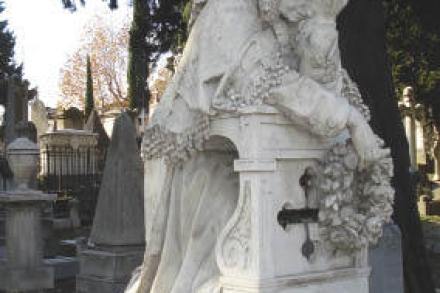
Just outside Florence’s city walls, marooned in the middle of a huge great ring road, lies a foreign field that is for ever England. Well, it’s really for ever Switzerland. The English Cemetery of Florence is owned by the Swiss Reformed Evangelical Church and is officially called the Protestant Cemetery of Florence. But, because the English presence looms so large in Florence, the Florentines call it the Cimitero degli Inglesi. Certainly, most of the 1,700 dead interred since the cemetery’s foundation in 1827 are British, with many fewer Swiss, Americans, Russians and Protestant Italians. There are still 70 x 70 cm plots for urns available, now open to anyone of any religious persuasion. Most of the epitaphs, too, are in English.

Better always to be late than selectively so

‘Mr White Man’s Time’ would be a pretty racist nickname if it hadn’t been invented by black Africans. In Ivory Coast, though, it’s a term of some distinction. The nickname belongs to Narcisse Aka, a legal adviser aged 40, who has just won the country’s hallowed Punctuality Night competition — and a £30,000 villa — after he consistently turned up for work on time while his compatriots took a more relaxed attitude to punctuality. As the slogan of the competition goes, ‘African time is killing Africa; let’s fight it.’ Mr White Man’s Time might be a little surprised, then, if he came over to Britain for an urgent appointment — British time, white or black, is not so great any more.

The irony and the ecstasy of Lady Mary Clive

Deep in a remote valley on the edge of the Black Mountains sits one of the last great witnesses of the 20th century. Lady Mary Clive, who turns 100 on 23 August, shook Kitchener’s hand before the first world war, and heard first-hand accounts of the 1916 Dublin Easter Uprising hours after it happened. During the 1926 General Strike she served tea to lorry drivers in the same year that she was presented to George V as a debutante. In the 1930s she was a denizen of Fleet Street, one of Lord Beaverbrook’s favourite journalists. Memoirs and biographies streamed from her pen throughout the century. Last December her children’s book, Christmas with the Savages, was Radio 4’s Book of the Week.

‘Turkish students smell less than British ones’

It’s four in the afternoon in the Garrick Club and Norman Stone is steaming with rage. The steam is not alcohol-fuelled. Professor Stone — historically no flincher from the glass — is on the wagon at the moment but is feeling no undue withdrawal pangs. He is, though, longing for a cigarette, and his beloved Garrick has just outlawed smoking, in line with the new legislation. It’s four in the afternoon in the Garrick Club and Norman Stone is steaming with rage. The steam is not alcohol-fuelled. Professor Stone — historically no flincher from the glass — is on the wagon at the moment but is feeling no undue withdrawal pangs. He is, though, longing for a cigarette, and his beloved Garrick has just outlawed smoking, in line with the new legislation.

Up close and personal

My apologies to the young, attractive couple in Perry Street in Greenwich Village, whose love-making I’ve been keeping a close eye on over the last year and a half. I can’t really help it. My eighth-floor flat is on exactly the same level as theirs, and their window is only 20 yards from mine across a tiny strip of garden. If it’s any consolation to the young couple, I haven’t seen much — they always drop down on the sofa out of my line of sight before the good bits. That’s the thing about New York — it’s a cheek-by-jowl place, and you can’t help getting a close-up on a lot of jowls and cheeks, upper and lower. This is the New York Alfred Hitchcock caught in Rear Window, filmed only a few streets from my flat.

House of misery

You won’t find a grander monument to failed marriage than the Mount, the New England picture-book palace built by Edith Wharton a century ago. Wharton was a house and garden designer first, a novelist second. She wrote The Decoration of Houses in 1897, almost a decade before she embarked on the novels. Belton House in Lincolnshire, a Christopher Wrenesque gem built in about 1685, was Wharton’s model for the Mount. With its accentuated centre bays and wings, dormer windows and cupola, Belton is the inspiration for the brown country-house symbol on motorway signs. Wharton kitted out this distinctly English house with French shutters and awnings to keep the Massachusetts sun — stronger than Lincolnshire’s — at bay.

Sex and Society: Ruth and consequences

One of America’s most celebrated ‘sexologists’ tells Harry Mount that there are some problems she will not advise on New York ‘I tell them about pressure, foreplay ...I introduce them to a vibrator but I tell them never to get too used to it. The penis can never duplicate the vibrations of a vibrator.’ At 77, Dr Ruth Westheimer has still got the old magic. It remains as odd as ever to be taught orgasm lessons by a 4ft 6in grandmother who speaks with the seductive rolling ‘r’s and the guttural ‘achs’ of Marlene Dietrich.