Harry Mount

Harry Mount is a barrister, editor of The Oldie and author of How England Made the English (Penguin) and Et Tu, Brute? The Best Latin Lines Ever (Bloomsbury).

Fighting the bulldozer

From our UK edition

Fifty years ago, when the Irish Georgian Society was founded, the bulldozer was a familiar sight in Ireland, trundling along elegant urban terraces and drawing up at the gates of country houses. One of the bulldozer’s prominent Dublin victims half a century ago was No. 2 Kildare Place. This 1751 gem, just next to the Dail, was in excellent condition; the house was only destroyed because the state, which owned the building, had no desire to maintain it. One government minister even said of the Kildare Place demolitions, ‘I was glad to see them go. They stand for everything I hate.’ Fifty years on, and things are a lot better.

Oxford treasures

From our UK edition

Beyond the Work of One — Oxford College Libraries and their Benefactors  The Bodleian Library, Oxford, until 1 November, admission free A few years ago, my old tutor, the much- missed Angus Macintyre of Magdalen College, gave me a letter that meant I could get into the Codrington Library — Nicholas Hawksmoor’s 1716 gem at All Souls: Gothic on the outside, classical on the inside. At the end of the letter, he wrote, ‘Welcome to the loveliest room in Europe!’ He was quite right; although other Oxford libraries run the Codrington a close joint second. The only problem is, it’s tricky getting inside them to have a gawp at their treasures without one of these letters.

Last farewells

From our UK edition

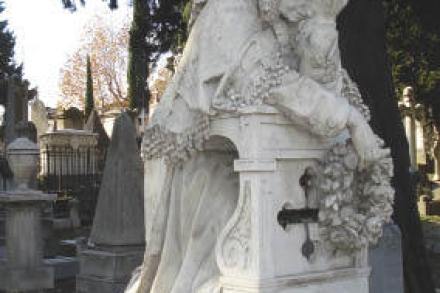
Just outside Florence’s city walls, marooned in the middle of a huge great ring road, lies a foreign field that is for ever England. Well, it’s really for ever Switzerland. The English Cemetery of Florence is owned by the Swiss Reformed Evangelical Church and is officially called the Protestant Cemetery of Florence. But, because the English presence looms so large in Florence, the Florentines call it the Cimitero degli Inglesi. Certainly, most of the 1,700 dead interred since the cemetery’s foundation in 1827 are British, with many fewer Swiss, Americans, Russians and Protestant Italians. There are still 70 x 70 cm plots for urns available, now open to anyone of any religious persuasion. Most of the epitaphs, too, are in English.

Better always to be late than selectively so

From our UK edition

‘Mr White Man’s Time’ would be a pretty racist nickname if it hadn’t been invented by black Africans. In Ivory Coast, though, it’s a term of some distinction. The nickname belongs to Narcisse Aka, a legal adviser aged 40, who has just won the country’s hallowed Punctuality Night competition — and a £30,000 villa — after he consistently turned up for work on time while his compatriots took a more relaxed attitude to punctuality. As the slogan of the competition goes, ‘African time is killing Africa; let’s fight it.’ Mr White Man’s Time might be a little surprised, then, if he came over to Britain for an urgent appointment — British time, white or black, is not so great any more.

The irony and the ecstasy of Lady Mary Clive

From our UK edition

Deep in a remote valley on the edge of the Black Mountains sits one of the last great witnesses of the 20th century. Lady Mary Clive, who turns 100 on 23 August, shook Kitchener’s hand before the first world war, and heard first-hand accounts of the 1916 Dublin Easter Uprising hours after it happened. During the 1926 General Strike she served tea to lorry drivers in the same year that she was presented to George V as a debutante. In the 1930s she was a denizen of Fleet Street, one of Lord Beaverbrook’s favourite journalists. Memoirs and biographies streamed from her pen throughout the century. Last December her children’s book, Christmas with the Savages, was Radio 4’s Book of the Week.

‘Turkish students smell less than British ones’

From our UK edition

It’s four in the afternoon in the Garrick Club and Norman Stone is steaming with rage. The steam is not alcohol-fuelled. Professor Stone — historically no flincher from the glass — is on the wagon at the moment but is feeling no undue withdrawal pangs. He is, though, longing for a cigarette, and his beloved Garrick has just outlawed smoking, in line with the new legislation. It’s four in the afternoon in the Garrick Club and Norman Stone is steaming with rage. The steam is not alcohol-fuelled. Professor Stone — historically no flincher from the glass — is on the wagon at the moment but is feeling no undue withdrawal pangs. He is, though, longing for a cigarette, and his beloved Garrick has just outlawed smoking, in line with the new legislation.

Up close and personal

From our UK edition

My apologies to the young, attractive couple in Perry Street in Greenwich Village, whose love-making I’ve been keeping a close eye on over the last year and a half. I can’t really help it. My eighth-floor flat is on exactly the same level as theirs, and their window is only 20 yards from mine across a tiny strip of garden. If it’s any consolation to the young couple, I haven’t seen much — they always drop down on the sofa out of my line of sight before the good bits. That’s the thing about New York — it’s a cheek-by-jowl place, and you can’t help getting a close-up on a lot of jowls and cheeks, upper and lower. This is the New York Alfred Hitchcock caught in Rear Window, filmed only a few streets from my flat.

House of misery

From our UK edition

You won’t find a grander monument to failed marriage than the Mount, the New England picture-book palace built by Edith Wharton a century ago. Wharton was a house and garden designer first, a novelist second. She wrote The Decoration of Houses in 1897, almost a decade before she embarked on the novels. Belton House in Lincolnshire, a Christopher Wrenesque gem built in about 1685, was Wharton’s model for the Mount. With its accentuated centre bays and wings, dormer windows and cupola, Belton is the inspiration for the brown country-house symbol on motorway signs. Wharton kitted out this distinctly English house with French shutters and awnings to keep the Massachusetts sun — stronger than Lincolnshire’s — at bay.

Sex and Society: Ruth and consequences

From our UK edition

One of America’s most celebrated ‘sexologists’ tells Harry Mount that there are some problems she will not advise on New York ‘I tell them about pressure, foreplay ...I introduce them to a vibrator but I tell them never to get too used to it. The penis can never duplicate the vibrations of a vibrator.’ At 77, Dr Ruth Westheimer has still got the old magic. It remains as odd as ever to be taught orgasm lessons by a 4ft 6in grandmother who speaks with the seductive rolling ‘r’s and the guttural ‘achs’ of Marlene Dietrich.

New squawk

From our UK edition

While Rudy Giuliani’s zero tolerance policy took care of crime, the Audubon Society, America’s RSPB, which celebrates its centenary this year, has been taking care of the birds. After decades when the only bird life that flourished in Manhattan was of the Bianca Jagger/Jerry Hall variety — and even they came close to starvation — New York has become one of the greatest bird-watching sites in the world. Within sight of the Empire State Building you can see 500-strong flocks of great egrets, snowy egrets, glossy ibises, cormorants and night herons, emigrés from southern climates nesting in colonies on the islands of New York harbour.

Great wheezes of the world

From our UK edition

Coleridge was supposed to have been the last person ever to have read everything, and that was in 1834. So Peter Watson, a Cam- bridge archaeology don, is up against it when he tries to squeeze the history of all the clever things that mankind has ever thought into 822 pages. He makes a pretty good fist of it, though, even if he has to rattle through it at 1066 and All That speed. In the space of one page, he jumps from man getting up from all-fours — about 6,000,000 BC — to man making stone tools (2,500,000 BC). Still, as he whips along, Watson gives attractive thumbnail sketches of developing ancient man.

What makes a hero?

From our UK edition

‘Flashman’s just a monster,’ says George MacDonald Fraser. ‘He’s extremely unpleasant but he knows how to present a front to the world, and at least he’s honest about himself. But that was because he assumed that his memoirs would never be published.’ I’d just been putting to the author of the Flashman novels the theory of this magazine’s editor: that far from being a scoundrel, Flashman — the fag-roasting rotter thrown out of Rugby in Tom Brown’s Schooldays only to pop up in the great historic moments of the Victorian age — was in fact the toppest of eggs; an accidental hero who’s actually the genuine article because he at least admits to his flaws.

The great and the grumpy

From our UK edition

Denis Healey will never be the same, once you discover, as you do in this fizzing collection of mini-biographies, that his favour- ite question is, ‘Do you have sexual fantasies when you smoke cigars?’ Peregrine Wors- thorne is now forever fixed in my mind exchanging shirts with the first Mrs Nigel Lawson in a crowded Wheeler’s restaurant during a Brighton party conference. And the dynamics of Private Eye fall into place when you know that, in the 1950 scholarship list for Shrewsbury, Richard Ingrams came first, Christopher Booker third and the late Paul Foot fifth. Alan Watkins, the eminent political columnist, now for the Independent on Sunday and for many years in these pages, is the master of the well-deployed fact, and, more importantly, the personal fact.

When ’Omer smote ’is bloomin’ lyre

From our UK edition

The scriptwriter behind Troy, Brad Pitt’s new muscle and breastplate epic, sounds like an alpha-plus idiot. Commenting on his decision to leave the gods out of the film because he thought they wouldn’t impress audiences, David Benioff said, ‘I think that, if Homer was looking down on us, he would smile and say, “Take the gods out.” ’ More likely, the gods would say, ‘Ouch, what a rubbish film.’ But they couldn’t attack Mr Benioff for playing around with the plot. That’s been going on ever since the Iliad was written in around 700 BC.

From Wickquasgeck to Broadway

From our UK edition

I have a fantasy of returning to ancient London and finding the way to my Camden home, just using the Thames and various hills and hollows for navigation. What fun it would be to track down the hunting grounds of Wardour Street ringing to the cry of ‘Soho!’, the exclamation used by hare coursers that lent its name to the area. How moving to dip your feet in the river Fleet, now running under Fleet Street, or swim in the Westbourne along West- bourne Grove. You get the same sort of kick out of Russell Shorto’s heavy-going but authoritative account of the Dutch discovery of Manhattan (from the Indian word, mannahata — ‘hilly island’). Well, not entirely Dutch.

Sexing up American history

From our UK edition

This lovely little bluffers’ guide to the founders of the American Republic came out of a chat Gore Vidal had in 1961 with his old friend, John F. Kennedy. There they were, Jack, Bobby and Gore, lounging around the Kennedy holiday compound in Hyannis Port after a vigorous game of backgammon — Gore won. Jack — ‘dear Jack’ — and Gore fell into conversation, although it was less of a conversation than a question-and-answer session. Need you ask who was doing the questioning and who was giving the answers? The President of the United States was the pupil, Vidal his master.

Hobbling the sacred cows

From our UK edition

Here’s a real cure for anyone with a bad case of things-are-getting-worse-itis. Written in 1962 principally for the American market, London Perceived has now been republished over here for the first time in 40 years, which seems staggering. I’ve never read a better summary of London or Londoners. And it has hardly dated at all. The sombre — and beautiful — black and white photographs are so elegiac that you’re conned into thinking that here is a sombre — and beautiful — but long-vanished city. The differences between London then and London now, though, are surprisingly few.

The Young Fogey: an elegy

From our UK edition

They’re playing rap music in the jewellery department at Christie’s South Kensington. In T.M. Lewin, the Jermyn Street shirtmakers, you can dip into a fridge by the cufflinks counter and have a frozen mini-Mars while you are leafing through the chocolate corduroy jackets. But who is left to mourn these things? In the old days, the Young Fogey, the character invented by Alan Watkins on these pages in 1984, would have been in the vanguard of the protesters, shrieking and whinnying away about the desecration of his haunts. He is silent ...because he is no more.

A one-man Dad’s army

From our UK edition

It isn’t good manners for somebody to criticise a great-uncle after his death, but I know from first-hand experience that my great-uncle, Lord Longford, either didn’t mind criticism or at least grew so used to it that he looked like he didn’t mind. After he appeared in an Oxford Union debate in the early 1990s attacking the porn industry, I asked him whether he minded the tactics of his opponent, a porn-film director. The director had tried to ridicule him by offering him a part in a film. ‘Oh, I rather enjoyed that,’ he said, ‘Anyway, you must be here because you’re interested in politics. Would you like to be a Tory prime minister or a Labour one?