Graeme Thomson

Why supergroups nearly always suck

Recently in these pages, ruminating on the ghastly Rock and Roll Hall of Fame, I wrote that music does not conform to any equation. I should have added: except, of course, for the occasions when it does. One tried-and-true formulation is that ‘super-groups’, those bespoke vehicles bringing together artists best known either for working alone or within other bands, tend to add up to considerably less than the sum of their parts. Supergroups are in thrall to the idea of their own existence; the music trails sluggishly behind We could blame Eric Clapton. Indeed, it seems remiss not to. Blind Faith – a fatally untidy union of Clapton (ex-Cream), Steve Winwood (ex-Traffic) and Ginger Baker (exhausting) – started the whole thing off in 1968, and not in a good way.

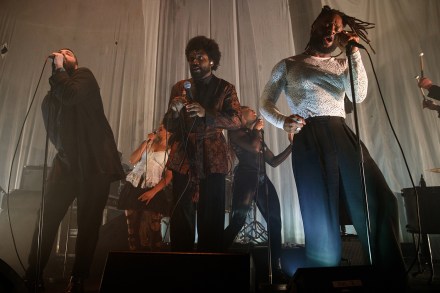
The most exciting live band in Britain right now: Young Fathers, at the O2 Academy, reviewed

There are several reasons why Young Fathers currently feel like the most exciting live band in Britain, but for now let’s concentrate on effect rather than cause. The Edinburgh trio have somehow managed to dispense with all the froth and blather of concert-making – gratuitous chat; choreographed audience interaction; the fat and gristle – to deliver a show that is all attack. Every minute is a prime lean cut, direct and thrilling. They don’t mess about during the first of two sold-out Glasgow shows, but then brevity appears to be a kind of manifesto. The new album, Heavy Heavy, their fourth and not quite their best, lasts barely 30 minutes. Tonight, they perform 17 songs in an hour. The set is similarly minimalist.

His nasal American-Yorkshire voice struggles to convince: Yungblud, at OVO Hydro, reviewed

Even before albums became bloated, thanks to the largesse offered by CDs and streaming, most contained filler: those so-so songs merely passing needle time, weak aural bridges between the big hits and superior deep cuts. Bubblegum-punk and Auto-Tuned pop, sung in a distinctly nasal American-Yorkshire hybrid Increasingly, live concerts have filler, too. With the collapse of record sales, young pop performers feel compelled to jump into huge arenas more quickly than might be wise. It’s not always as easy as it looks. A massive social media profile doesn’t always translate into having sufficient willing bodies to fill these vast spaces, and while you can ship in pyrotechnic back-up, fancy sets and snazzy screens, one thing you can’t subcontract out are the songs.

Down with the Rock and Roll Hall of Fame!

There is footage on the internet of Robert Smith, lead singer in the Cure, being interviewed on the occasion of his band being inducted into the Rock and Roll Hall of Fame in 2019. At high pitch and tremendous volume, the host yells up a storm about the incredible honour being bestowed upon the group, while Smith claws at his face, grimaces, and rolls his eyes. ‘Are you as excited as I am?’ she shouts. ‘By the sounds of it, no,’ Smith mutters – speaking, surely, for all of us. Of all the many reasons to dislike the RRHOF – some of which we’ll get to shortly; and yes, the acronym is one of them – it is the jarring mix of shrieking self-love and august earnestness which rankles most.

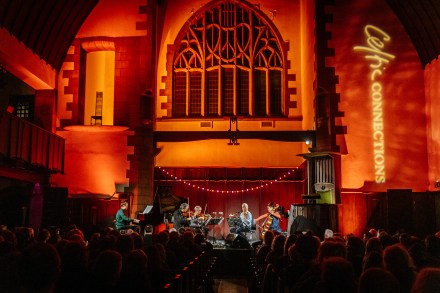
Two of Scotland’s most inventive solo musicians: Fergus McCreadie, Maeve Gilchrist + Mr McFall’s Quartet reviewed

Folk is the Schiphol of Scottish music. Eventually, every curious traveller passes through. From arena rockers to rappers, traditional music remains an undeniable source. Which is why the second word in ‘Celtic Connections’ is at least as significant as the first. Now in its 30th year, lighting up the otherwise unpromising prospect of a Glasgow January, this year’s instalment of the roots festival features artists from all corners of the globe. Many of them would regard folk only as their second or third musical language, rather than the mother tongue. One of the early highlights makes the point rather beautifully. It’s a homegrown affair, showcasing pianist Fergus McCreadie and harpist Maeve Gilchrist, two of Scotland’s most inventive solo musicians.

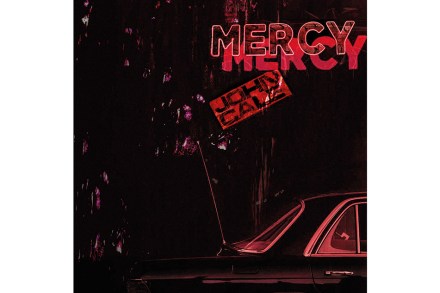
Beautiful bleakness crowned with slivers of hope: John Cale’s Mercy reviewed

There’s a case to be made for John Cale being the most daring ex-member of the Velvet Underground. Lou Reed redefined the transgressive possibilities of literate three-chord rock’n’roll. Cale, arguably, has travelled even further. A Welsh miner’s son who won a scholarship to Goldsmiths, Cale engaged with the early flowerings of Fluxus before mixing with John Cage and La Monte Young’s Theatre of Eternal Music in New York’s downtown avant-garde scene. His droning viola, hammering piano and relentless bass brought the serrated edge to the Velvet Underground’s art music. More than anyone in the band, he rendered Reed’s whiplash words in sound.

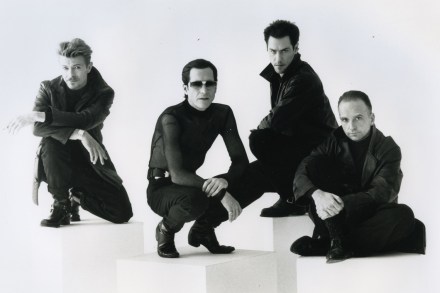
Not everything Bowie did was genius – he was more interesting than that

I’m generally not a fan of New Year’s resolutions, but one occurred to me recently as the younger members of my family were blasting out a patchy David Bowie playlist: Stand Up Against Revisionism. It’s harder than ever these days not to succumb to printing the myth – reality can be so so-so – but critics have a duty to keep a clear head while others are losing theirs. Even around the dinner table on New Year’s Day. Bowie would have been 76 this week; he was born on 8 January 1947, and died two days after his 69th birthday in 2016. He’s not getting any less popular in posthumous old age. In fact, business is booming. At the end of last year, the latest hefty Bowie box set arrived, titled Divine Symmetry and covering the Hunky Dory era.

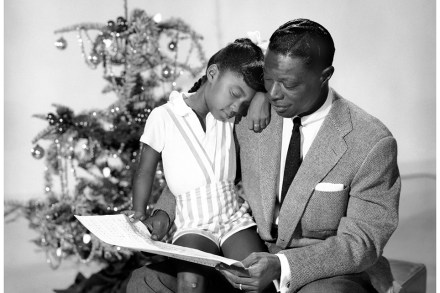
Christmas songs that will reduce your gas bills

It’s unlikely that Irving Berlin was pondering the energy price cap when he composed the seasonal standard ‘I’ve Got My Love To Keep Me Warm’ in 1937. ‘I can’t remember a worse December, just watch those icicles form,’ he wrote, a sentiment many of us can surely relate to right now – but wait! ‘What do I care if icicles form,’ he continues. ‘I’ve got my love to keep me warm.’ Good for you, sir. Meanwhile, the rest of us are watching the digits ticking incessantly upward on our smart meter with the murderous fascination of a gun dog fixated on a fox hole. For the first time in my life, I’m actually hoping to get socks from Santa – and perhaps one of those natty woollen jumpers Shakin’ Stevens wore in the video for ‘Merry Christmas Everyone’.

Spectator Out Loud: Jade McGlynn, Lucy Dunn and Graeme Thomson

20 min listen

On this week's episode, Jade McGlynn reads her article on the Russian mothers and wives turning against Putin, because of their sons and husbands missing in the war (00:55). Lucy Dunn, a former junior doctor, asks whether pharmacists aren't part of the solution to the crisis in the NHS (09:45). And Graeme Thompson reads his Notes On protest songs (15:50). Presented and produced by Cindy Yu.

The art of protest songs

The extraordinarily brave anti-CCP protestors have been striking up ‘Do You Hear the People Sing?’ from Les Misérables in the streets of many cities. A song written in 1980 for a musical adaptation of Victor Hugo’s 1862 novel has become an unlikely rallying cry in present-day China.  Like all the most effective protest songs, ‘Do You Hear…?’ has transcended its origins. In 2014, it was picked up during the Maidan revolution in Ukraine. There are now several ad hoc translations in Cantonese and Taiwanese.

Like A-ha after an extensive rewilding process: Sigur Ros, at Usher Hall, reviewed

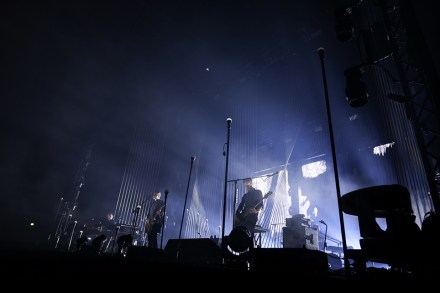
Plus: it's quite clear that MUNA are going to be huge What is it with Icelanders and mushrooms? Just weeks after Bjork releases a fungal-themed album, Fossora, Sigur Ros appear on stage with dozens of sporey lights illuminating the gloom. It’s boom time for mycophiles, but with Sigur Ros the link makes a certain kind of sense. Their aesthetic is not so much post-rock as glacial. For almost three decades the Icelandic quartet have been making large-screen, epically elemental music: celestial choral pieces, art-house concert films, ambient soundscapes and the occasional relatively conventional rock and pop song. Whether aware of it or not, you will have heard ‘Hoppipolla’ on numerous BBC nature documentaries. We won’t hear it tonight, though.

Isabel Hardman, Matthew Parris, Graeme Thomson and Caroline Moore

21 min listen

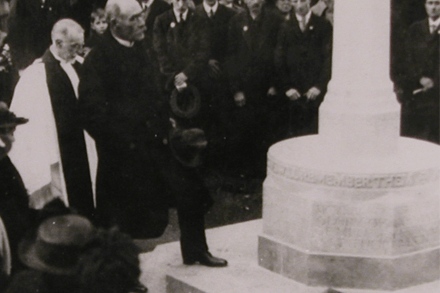
This week: Isabel Hardman asks how Ed Miliband is the power behind Kier Starmer's Labour (00:57), Matthew Parris says we've lost interest in our dependencies (05:03), Graeme Thomson mourns the loss of the B-side (11:57), and Caroline Moore reads her Notes on... war memorials (16:51).  Produced and presented by Oscar Edmondson.

The joy of B-sides

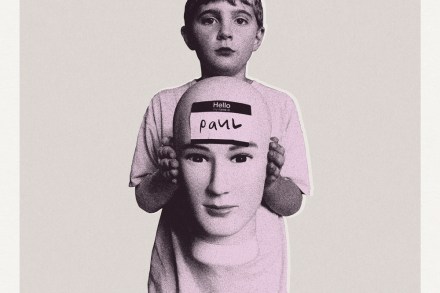
Paul Weller releasing a collection of solo B-sides is cause for mild celebration. After all, the Jam were one of the great B-side bands. ‘Tales From The Riverbank’, ‘The Butterfly Collector’, ‘Liza Radley’ – all A-list songs, relegated to the subs’ bench. Remember the B-side? That bijou, creative safe space which didn’t merely permit but positively encouraged artists to write parallel narratives of exploration, experimentation and extemporisation. I still remember the first B-side I fell in fascination with. It was called ‘Christ Versus Warhol’, a queasily psychedelic, wilfully odd indulgence on the wrong side of the Teardrop Explodes’ determinedly poppy ‘Passionate Friend’. I felt like the protagonist in Gregory’s Girl.

Compellingly personal arena experience: Bon Iver, at Ovo Hydro, reviewed

A reliable metric for measuring pop success is hard to find these days, as Michael Hann noted in these pages recently. Massaged figures for sales and streams are so opaque as to be almost meaningless. The charts are old news; social media reach wildly distorting. Bon Iver have won Grammys and released platinum-selling albums, but that was a decade ago. Such accolades feel oddly old--fashioned now. Perhaps the most assured barometer is the traditional one of bums on seats – by which gauge Bon Iver appear to be doing just fine. Yes, they are a band lacking any semblance of a song your postman could whistle. And yes, they are fronted by Justin Vernon, a doggedly unstarry fortysomething in a rumpled T-shirt and headband.

Simple songs; voice like the grand canyon: George Ezra, at OVO Hydra, reviewed

It would be easy to be a little dismissive of George Ezra. A wholesome late twentysomething hailing from the rock and roll badlands of Hertfordshire, Ezra is the kind of pop star you could happily take home to meet your grandparents. A graduate of the British and Irish Modern Music Institute, good-looking in that long, toothy Prince William way, he seems to be laboratory designed not to offend or challenge even the most prickly sensibilities. His music is harder to pin down. With its repeated calls and refrains, it blends folk, pop, soul, blues and calypso styles into an uncomplicated feelgood mix that is both old-fashioned and summer-fresh. The melodies are bright crayon drawings; immediate and insistent.

The new master of the American Whine: Ezra Furman, at Edinburgh Festival, reviewed

The American Whine is one of the key vocal registers in rock and roll. You can trace that thin disaffected quaver through the decades from the Shangri-Las to Lou Reed, from Jonathan Richman to Neil Young. Inveigling, needy, smart-assed, it’s as vital a part of the DNA of the medium as a black leather jacket and a souped-up Chevrolet. Ezra Furman, I’m pleased to report, is in possession of a vintage whine. Furman is a Jewish transgender woman who composes with compassion, wit, empathy and anger from those particular personal viewpoints. She wrote the soundtrack to Netflix blockbuster Sex Education and has just released an eloquent sixth solo album, All Of Us Flames.

‘Ray of Light made me, and I didn’t know what I was doing’: William Orbit on Madonna, being sectioned and resurrection

William Orbit is an electronic musician living a jazz life. ‘I like to make it up as I go along,’ he says. ‘It’s one long improv session.’ For most of his 65 years, the music skipped along well enough. In the late Nineties, Orbit was the man with lightning at his fingertips. He co-produced (and co-wrote) Madonna’s best album, Ray of Light, followed in 1999 by Blur’s best album, 13. He created big hits for big movies, including The Beach, which featured his song ‘Pure Shores’. Recorded by All Saints, it became the second most successful British single of 2000.

Sensational: Herbie Hancock, at the Edinburgh Festival, reviewed

‘Human beings are in trouble these days,’ says Herbie Hancock, chatting to us between songs. ‘And do you know who can fix it?’ ‘Herbie!’ comes the instant reply, shouted from somewhere in the stalls. Hancock might be a jazz legend, but he’s not quite the Saviour. Kicking off this year’s excellent contemporary music programme at the Edinburgh International Festival, he’s a hit from the moment he strolls into view. In his long black frockcoat, Hancock has come tonight as the High Priest of Cool. When he straps on a keytar, he’s a funky gunslinger. When one of his outstanding trio takes a particularly inventive solo, he cracks up with undisguised glee at the sheer showdown-slaying audacity of their playing.

She’s pop’s Damien Hirst: Beyoncé’s Renaissance reviewed

You feel a little sorry for Renaissance, the first solo album by Beyoncé in more than six years. It just wants to dance, but will anybody let it? Such are the claims made for the singer as a cultural figure – superwoman, warrior queen, saviour of Black America – that everything she does carries a weight of expectation which would crush granite, let alone a pop record. The songs on her last album, Lemonade, released in 2016, spun out from the infidelity of her husband, Jay-Z, linking a personal breach of trust to fissures in her family history and racial divides in the United States, past and present. It was impressive but stern.

Only traces of their eerie early spirit remain: Kings of Leon, at OVO Hydro, reviewed

A few years ago, I spoke to Mick Jagger and asked him which of the (relatively) new crop of rock groups he rated. It was a short list, I recall, and not hugely inspiring, but Kings of Leon made the cut. ‘They have a kind of Texas weirdness that you don’t find in a lot of modern rock bands,’ he reckoned. ‘I like their quirkiness, and the fact that you can hear the countryish and blues thing behind them, but it’s not that obvious.’ Aside from the fact that they are from Tennessee, not Texas, it felt like a reasonably astute summation of Kings of Leon’s appeal when they first broke through in the mid-2000s.