Graeme Thomson

The power of cultural reclamation

‘Version’ is an old reggae term I’ve always loved. It refers to a stripped-down, rhythm-heavy instrumental mix of a song, traditionally dubbed onto the B-side of a single. On paper the concept sounds throwaway, and often it was. Over time, however, using reverb and a fair degree of ingrained madness, pioneering Jamaican producers such as Lee ‘Scratch’ Perry, King Tubby and U-Roy twisted ‘versions’ into mind-bending shapes. Time-stretched DJs toasted new rhymes over the top, and dub was born, an art form built from borrowed parts and hair-brained ingenuity. The notion that popular music is now obsessed with recycling old content is not necessarily fanciful, but it can be reductive.

A joy – mostly: Nick Mason’s Saucerful of Secrets, at Usher Hall, reviewed

Drummers are patient chaps, in the main. Think of Ringo in Peter Jackson’s recent Beatles docuseries, Get Back. Lolling around peaceably for days on end as Lennon and McCartney bash about, looking for clues. Drummers twiddle their thumbs behind their kit while the musos fret over chords and key changes, waiting for the moment when they will be called upon to hit skins with sticks and make a song worth hearing. In 2018, admirably urbane Pink Floyd drummer Nick Mason finally lost patience. The band has effectively been finished since 1994, and following the death of keyboardist Rick Wright in 2008, Mason was caught between Roger Waters and David Gilmour, the two rutting stags of the group’s legacy.

‘I came, I saw, I scribbled’: Shane MacGowan on Bob Dylan, angels and his lifelong love of art

We join Shane MacGowan, much like a character from one of his songs, in a world where prosaic, often harsh realities vie with feverish flights of fancy. The former Pogue conducts this interview remotely, ‘sitting on a vastly uncomfortable lime green leather chair, within reach of a grey bucket, in a small but surprisingly unspeakable room. In a corner, Jimi Hendrix is repairing some broken guitar strings, while in the kitchen behind me, Bono is loading the dishwasher and a leprechaun with a gold earring is rolling what he says is a cigarette. On the walls are a selection of my wife’s multidimensional angel paintings and one or two of my drawings. Clint Eastwood is on the telly and Maggie Barry is on the record player.

The awfulness of the Red Hot Chili Peppers has always felt weirdly personal

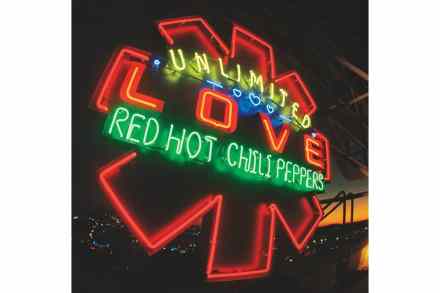
Squaring up to the prospect of a new Red Hot Chili Peppers album, I’m reminded of a vintage quote by Nick Cave: ‘I’m forever near a stereo saying, “What… is this garbage?” And the answer is always the Red Hot Chili Peppers.’ I can empathise. I don’t habitually harbour animus against artists I dislike, but something about the sheer scale of the Red Hot Chili Peppers’ awfulness has always felt weirdly personal. Despite the kind of success that looks mightily impressive in a Wikipedia stat dump – 100 million record sales, multiple Grammy wins, numerous number ones – the Californian rock band have always been tricky to tolerate, let alone love. The reasons for this are manifold.

Expectations were met and then exceeded: Arooj Aftab, at Celtic Connections, reviewed

We gathered on a freezing Sunday night, inside a barrel-vaulted church designed in the 1890s by Charles Rennie Mackintosh, to witness a cresting wave. Vulture Prince, the third album by the Brooklyn-based Pakistani singer, composer and producer Arooj Aftab, was one of the most accomplished and interesting records of last year. A keening song of loss, dedicated to her late brother, Vulture Prince is almost impossible to pin down. It’s a flood plain of merging musical streams, a genre-phobic blend of jazz, minimalism, Sufi devotional music, acoustic textures and torch song. Sung almost entirely in Urdu, its beauty and import are immediate, its emotional pull universal. Following two Grammy nominations and a fat wodge of critical acclaim, Aftab’s stock is in the ascendant.

A story of reflection and self-discovery: Anaïs Mitchell’s new album reviewed

Any artist who has habitually written or performed in character — from David Bowie to Lady Gaga — eventually arrives at their Mike Yarwood moment: ‘And this is me!’ With the release of her sixth solo record, Anaïs Mitchell has reached the point of personal revelation. ‘I’ve spent a lot of time trying to write in the voice of other characters,’ she says. ‘It felt like after so many years of working on telling other stories — now here are some of mine.’ In 2020 Mitchell was named one of Time magazine’s 100 most influential people. Nevertheless, she requires an introduction.

In praise of seasonal chart fodder

Christmas: the most vulnerable time of the year. I heard ‘A Winter’s Tale’ by David Essex on the radio the other day and, oh boy. It was Noël Coward who wrote, in Private Lives, that smart little line about the strange potency of cheap music. It is a truism never more apparent than at Christmas, when we allow the gaudy and sentimental access to our hearts with only the most cursory of security checks. Songs that would never make it past the bouncers in May are whisked directly into the VIP area come December. A quick google confirms that ‘A Winter’s Tale’ was released in the run-up to Christmas 1982, which means I was nine years old when it was first released.

The quiet radicalism of the Chieftains

Pop quiz time: which act was named Melody Maker Group of the Year in 1975? The answer is not, as you might expect, some testosterone-fuelled blues-rock outfit or a hip gang of proto-punk gunslingers, but a gaggle of semi-professional Irish musicians who performed trad tunes sitting down, dressed for church in cardigans, sensible shoes, shirts and ties. The Chieftains were so far from rock and roll they met it coming back the other way. On the cover of Irish Heartbeat, a later collaboration with Van Morrison, they could be mistaken for a loose affiliation of farmers, minor office clerks and earnest ornithologists waiting for a bus outside the town hall. It was a brilliant disguise. The Chieftains wore their radicalism lightly, but radical they were.

The sound of a hunch coming good

Joan Wasser is New York loud. Her resting register is CAPS LOCK, rising to flashing neon when roused to laughter or, occasionally, indignation. ‘I was born a very expressive person,’ says the singer. ‘I was always talking to people in the street that I didn’t know. I’m not super afraid of expressing how I feel, and I take chances very quickly.’ Bold spontaneity has served her well. The Solution is Restless, Wasser’s latest album as her artistic alter ego, Joan As Policewoman, is the sound of a hunch coming good. The record stems from a single day spent extemporising with her friend David Okumu and the late and legendary Afrobeat drummer Tony Allen.

The death of the live album

Next week The The release The Comeback Special, a 24-track live album documenting the band’s concert at the Royal Albert Hall in June 2018. Meanwhile, Steely Dan’s last man standing, Donald Fagen, has just released two live albums recorded in 2019. Their musical qualities notwithstanding, these releases feel like relics from a lost world. Much like the fondue set, the live album is much reduced from its 1970s and 1980s heyday, when a pretty blonde sideman-turned-solo artist called Peter Frampton could somehow shift eight million copies of the anodyne Frampton Comes Alive! The stand-alone contemporary live album is now an endangered species; MTV’s Unplugged series in the 1990s offered a final down-home twist on the format.

Banal and profound, bent and beautiful: Nick Cave & Warren Ellis at Edinburgh Playhouse reviewed

Nick Cave has always been drawn to parable and fable, but more than ever these days he is engaged in the necessary work of mining magic from the base metal of day-to-day existence. The key lines in this show came early, during ‘Bright Horses’: ‘We’re all so sick and tired of seeing things as they are,’ Cave sang in that hollow, sorrowful baritone. ‘This world is plain to see/ It don’t mean we can’t believe in something.’ Cave’s recent songs have a terrible and powerful context: the death of his teenage son, Arthur, in 2015. As an artist he has confronted this personal tragedy side on, acknowledging its profound impact without letting it overwhelm his writing.

Cast a spell, clear and sharp as frost: The Unthanks reviewed

As August unwound, the EIF settled into the cavernous gazebo that is Edinburgh Park, and things began to loosen up. First there was an outbreak of vigorous clog dancing — more on which later. This escalated within 48 hours to a polite mini stampede from our designated seats towards the front of the stage at the start of Damon Albarn’s show, instigated at the artist’s request. ‘I’ve checked and we’re allowed,’ said Albarn sensibly. In 2021 we must take rebellion as we find it. When he lit a cigarette near the end it felt like civilisation was teetering on the very brink. As it transpired, this wasn’t really music designed for rushing the stage.

Good noisy fun: black midi, at the Edinburgh International Festival, reviewed

This year we must love Edinburgh for her soul rather than her looks. The EIF should be commended for making the best of a tricky hand, but the lodgings for its music programme bring to mind a fallen society beauty forced from her New Town villa into a rented bedsit. Edinburgh Park is a cathedral-sized tent in a business park, wedged between the city bypass and a shopping mall. The wooden floor planks buck and roll like a galleon deck. There is a roof but no sides and the Covid-quelling ventilation is, shall we say, robust. So yes, forget the optics. In 2021, content is everything. As it transpires, it proved a fitting spot in which to experience three artists engaged in similar quests to remould the traditional and familiar.

When musical collaborations go right – and when they go horribly wrong

Big Red Machine release their second album later this month. It’s a fine name for ten tonnes of agricultural apparatus but perhaps not quite so persuasive for a pop group, particularly one with a considerably lower profile than most of its members. A collective formed by the National’s Aaron Dessner and Bon Iver’s Justin Vernon, Big Red Machine has corralled the likes of Robin Pecknold (Fleet Foxes), Sharon Van Etten and Taylor Swift into making a collaborative record called How Long Do You Think It’s Gonna Last?. It sounds intriguing on paper, but the quality of musical collaborations is notoriously hard to gauge from the cast list.

When family viewing was full of creeping menace

Strange, really, that the scheduled output of traditional broadcasters became known as ‘terrestrial’ television, given that TV is an etheric medium and nowadays exclusively a digital one. Or perhaps it’s not so strange at all. Television is ‘bonded to the earth’, writes Rob Young, whose roving survey of small and silver screen creativity between the 1950s and 1980s seeks to connect those airborne signals to the soil beneath our shoes. Young’s first book, the excellent Electric Eden, rummaged around the untrimmed hedgerows of the British psyche via the medium of folk-related music. The Magic Box has a similar aim.

How Trojan Records conquered the world

When Trojan Records attempted to break into the United States music market in the early 1970s, it hit an insurmountable barrier: the company shared its name with America’s most popular brand of condom. ‘It was a case of commercial coitus interruptus,’ says Rob Bell, at the time the label’s production manager. In America, Trojan signified rubber, not vinyl. The label proved to have greater staying power in the UK, where it was at the forefront of popularising Jamaican music.

‘Germans thought we couldn’t play’: Irmin Schmidt, of musical pioneers Can, interviewed

‘The records are only half of the picture,’ says Irmin Schmidt, founder member of the great German experimental collective Can. ‘Live [performance] is the side of ours which actually has still to be discovered. For many of the people who came to our concerts, it was much more important in building up the legend than the records, because it was something extraordinary.’ Rock music is neck deep in retrospection these days, but the release of a ‘new’ Can album, Live in Stuttgart 1975, can’t be dismissed as just one more trawl through the floor sweepings. Instead, as Schmidt suggests, it reshapes what we know about one of the most influential bands of the 20th century.

The foghorn’s haunting hoot is a sad loss

Halfway through what must count as one of the more esoteric quests, Jennifer Lucy Allan finds herself on a hill near Birkenhead, in a cottage which houses the archive of the Association of Lighthouse Keepers. In a small bedroom long since surrendered to the past, she is handed a homemade CD of 90 foghorn recordings of ‘uncertain provenance’. Let’s call them Bootleg Blasts. She sits on the end of the single bed, craning her neck, ‘listening for more than what is there, listening for answers, listening for meaning’. Allan is a British writer, journalist and broadcaster with a passion for experimental music: I have had a long affair with ‘weird’ sounds and music.

The sermons poked out of the songs like busted bed springs: Van Morrison livestream reviewed

Over the decades, Van Morrison’s role within the tower of song has shifted from chief visionary officer to head of complaints. It’s not a promotion. The title track of his new album, Latest Record Project, Volume 1, is a rebuke to those who insist on living in an artist’s past rather than his present. A laudable sentiment, perhaps, but one less easy to put into practice when Morrison’s present consists of 28 tracks which hone an already ornery world view to a paranoic peak. When he isn’t griping about his divorce he’s peddling half-baked conspiracy theories, sneering at internet users and ‘media junk’, and bitching about modern music, crooked politicians and false prophets.

A redemption song, conventionally sung: Sky’s Tina reviewed

It has never been easy for women in the music industry. Once upon a time the evidence was largely anecdotal. Now it’s being recorded for posterity, frame by frame. Recent documentaries about Britney Spears and Demi Lovato exposed the trauma inflicted on post-millennial pop stars. Two new portraits of Anna Mae Bullock and Marianne Elliott-Said, better known as Tina Turner and Poly Styrene from punk group X-Ray Spex, ponder the price paid by their forebears. Turner’s story feels archetypal, a tale extracted from deep within the DNA of showbusiness. An abandoned child — ‘my mother didn’t like me’ — from a poor Tennessee background, the opportunity to fulfil her gifts came with the classic caveat: subjugation by an older, controlling man.