Graeme Thomson

Albums should be forced by law to reveal where each song was written

Bob Dylan is heading into the new year with a reduced property portfolio, having sold his Scottish bolthole, Aultmore House in Speyside, for a shade over four million quid. Though the spec looks grand – 16 bedrooms, 11 bathrooms, a folly (to complement his Christmas album, presumably) – only one aspect interests me: did Dylan ever write anything notable there? Is some piece of the Cairngorms National Park forever preserved in a line – perhaps the one he cribbed from Robbie Burns about his heart being in the Highlands – that came to him while gazing out enigmatically over the croquet lawn?

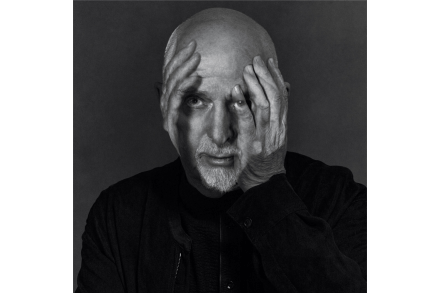
Small moments vs Big Ideas: Peter Gabriel’s i/o reviewed

Peter Gabriel is terribly fond of a Big Idea. With Genesis he would sing in character as a lawnmower, a fox and as ‘Slipperman’. His final work with the band, in 1974, was The Lamb Lies Down on Broadway, a double album driven by what we might kindly describe as a ‘kaleidoscopic’ narrative involving a Puerto-Rican protagonist on a voyage of self-discovery in New York City. Since going solo there has always been plenty of stuff whirling around each new Gabriel project. His Real World HQ in the West Country is part recording studio, part hi-tech hippie lab, encompassing conceptual technological probing, multimedia collaborations, NGOs and various foundations.

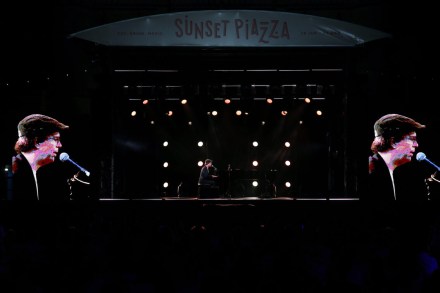
Melodic elegance and literate sass: Ben Folds, at Usher Hall, reviewed

Choose your weapon. Artists are closely defined in the public imagination by their instrument of choice. Though the most untamed and transgressive progenitors of rock’n’roll – Jerry Lee Lewis and Little Richard – were piano pounders, and despite the later efforts of Elton John, over time the instrument has come to be associated with restraint and politesse; the straight second cousin to rock’s clichéd wild child, the electric guitar. He strolled on stage like a stranger and left 100 minutes later as an old friend I hadn’t realised I’d missed American singer-songwriter Ben Folds has been playing with these expectations for the best part of 30 years, first in Ben Folds Five, then as a solo artist.

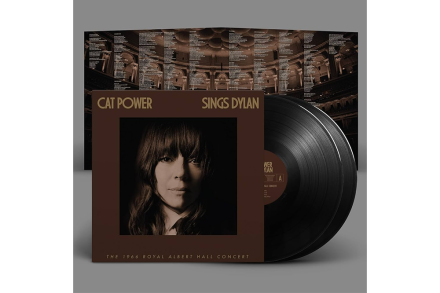
This recreation of Dylan’s Free Trade Hall concert is supremely good

In May 1966, Bob Dylan toured the UK with The Band, minus drummer Levon Helm, and abrasively pulled the plug on any lingering notions of his being a mere folk singer. Playing two sets every night – the first acoustic, the second electric – even the solo numbers were wild, lysergic, unravelled. The electric ones whipped through the tweed and tradition like the howl of a strange new language. The crowds booed and one chap famously cried ‘Judas!’ (though presumably many of those present also enjoyed it). Dylan muttered and swore and was unbowed. The fast-moving currents of pop culture changed course almost perceptibly.

The case against re-recording albums 

In 2012, Jeff Lynne released Mr Blue Sky: The Very Best of Electric Light Orchestra. Except it wasn’t. It was 11 new re-recordings of classic ELO songs – which isn’t the same thing at all. Lynne, bless him, believed that having gained more experience as a producer, he could now improve the songs that made him famous. ‘You know how to make it sound better than it did before,’ he said, ‘Because I have more knowledge… and technology.’ Sheesh. How wrong can one man be? Pop music is all about the definitivearticle. Not only the bold prefix attached to its greatest practitioners – Beatles, Byrds, Wailers, Temptations, Fall, et al – but the notion of a defining recording of a song. The stage is the place for revision: to jam, change the words, the rhythm, the feel.

New Order’s oldies still sound like the future

The intimate acoustic show can denote many things for an established artist. One is that, in the infamous euphemism coined by Spinal Tap, their audience has become more ‘selective’. Attempting to make the best of a bad job, the artist shifts down a gear while aiming upmarket, much in the manner of a balding man cultivating a fancy moustache. The cosy concert is also favoured by pop stars craving some old fashioned string-and-wire authenticity. Occasionally, the urge is a creative one, propelled by the sense that the material being promoted lends itself to a less triumphalist approach.

In praise of the Festival Song – the four-minute wonder that can sustain a career for decades

As the sun sets on another too-long summer festival season, let us take a moment to reflect on the Festival Song. This is the one tune by a band that even the most reluctant festival attendee will know. It is the song producers stick on the TV highlights package for bored insomniacs surfing the red button. It can save a set, turn grey skies blue and get old bones shaking. The Festival Song survives the artist’s critical nadir; it is the musical cockroach that emerges unscathed from a commercial apocalypse. It is the cast-iron guarantee to every festival booker in the land that an act can still bring something to the party.

Invention and irreverence: Lankum, at The Queen’s Hall, reviewed

In a few days, Lankum will most likely win the 2023 Mercury Music Prize for their fourth album False Lankum – but don’t let that put you off. Increasingly, the Irish quartet feel like they belong to the lineage of artists who have wreaked radical and lasting change upon British and Irish folk traditions, from Davey Graham, Fairport Convention and Pentangle to Steeleye Span, the Pogues and Lau. The kind of artists who burrow deep into the forest of tradition in order to plant dynamite within the heartwood. At times, we might have been below deck on a ship heading for Ellis Island Appearing at the Edinburgh International Festival (EIF), Lankum played a set spilling over with invention, irreverence and attrition.

Uneasy listening: Kathryn Joseph, at Summerhall, reviewed

I have always been fascinated by artists who bounce between tonal extremes when performing, particularly the ones who serve their songs sad and their stagecraft salty. Adele, for example, fills the space between each plushily upholstered soul-baring ballad by transforming into a saucy end-of-pier variety act, coo-cooing at the crowd and cursing like a squaddie. John Lennon gurned and clowned his way through the Beatles’ concerts, subverting the naked suicidal plea of ‘Help!’ in the process. John Martyn would belch and joust in mock-Cockney at the conclusion of a particularly sensitive piece. Jackie Leven punctuated songs of immense pain and sadness with eye-watering stories of defecating in alleyways and getting blootered with the Dalai Lama’s bodyguard.

The problem with pop-literary collaborations

‘We all secretly want to be rock stars,’ the 2022 Booker Prize-winning author Shehan Karunatilaka said recently. By ‘we’ he meant novelists, and he was more or less right. Most authors want to be rock stars, just as many rock stars aspire to bookish credibility. The former crave a whiff of glamour and instant gratification; writing offers precious little of either. Musicians seek gravitas and some wider recognition that they possess the tools to extend their literary genius beyond three verses and a killer chorus. Both parties tend to discover that they do what they do as a day job for a good reason.

An album of not terribly happy ballads: Blur’s The Ballad of Darren reviewed

Bands that have hung around, or gone away and come back again, occupy an increasingly sizeable percentage of pop’s bandwidth. When it comes to making new music, many are happy not to rock the boat, scraping by on the goodwill accumulated from past endeavours. Others strive to present a moving target, enjoying a more evolved, even argumentative, relationship with the sounds of their glory days. Two new albums tackle this dilemma, with varying degrees of success. Together for the first time since 2015, Blur do a fine job of straddling past and present.

Still one of the great vocalists: Peter Gabriel, at OVO Hydro Glasgow, reviewed

Most artists begin an arena show with a bang: emerging from the floor, the gods, on a hoist, everything short of being sprung headfirst from a cannon. Touring for the first time in seven years, Peter Gabriel shrugged off such rote conventions. At 8 p.m. on the dot, he shuffled on alone in a flat cap, for all the world a man with nothing more on his mind than inspecting his spuds down at the allotment. He offered a few words, some avuncular jokes, a self-deprecating jibe at his appearance. I found myself bracing for a PowerPoint presentation, but the message was simple enough not to need one: there are no stars here.

Is Richard Thompson Britain’s Bob Dylan?

There are artists you go to see expecting to be challenged, surprised, even let down. And there are artists you can rely on to deliver more or less the same experience every time. Each approach has its merits. Richard Thompson is a ‘death and taxes’ kind of guy. The fact that his excellence feels inevitable can make it seem less excellent somehow, which doesn’t entirely seem fair. Richard Thompson’s greatest songs drink deeply of the dark stuff A founding member of folk-rock pioneers Fairport Convention, Thompson has been described as the British Bob Dylan. This makes sense in some ways.

Let’s hear it for the lesser-spotted nepo daddy

Rob Grant releases his debut album, Lost at Sea, this week. A 69-year-old millionaire and former ad man, furniture exec and domain developer, Grant has made a record of ambient, ocean-themed piano doodles glorying in titles such as ‘In the Dying Light of Day: Requiem for Mother Earth’, ‘A Delicate Mist Surrounds Me’ and ‘The Mermaids’ Lullaby’. Not incidentally, he is also the father of one of the world’s biggest (and best) alt-pop stars, Lana Del Rey. The title track features his daughter’s unmistakeable contralto, while her name is emblazoned on the front cover. Father’s Day is just around the corner, and Ms Del Rey has delivered a pearl of a present for Pappy: his very own album.

Niru Ratnam, Gus Carter and Graeme Thomson

20 min listen

This week: Niru Ratnam argues that teachers are putting principles before children (00:59), Gus Carter discusses the curious business of fertility (08:14), and Graeme Thomson reviews Beyonce at Murrayfield Stadium (14:24).  Produced and presented by Oscar Edmondson.

Dazzling – if you ignore the music: Beyoncé, at Murrayfield Stadium, reviewed

Scheduling open-air concerts in mid-May in northern Europe is a triumph of hope over experience. I last spent time with Beyoncé – I’m sure she remembers it fondly and well – in 2016, in a football stadium in Sunderland on a damp, drizzly, early-summer English evening of the type that even strutting soul divas struggle to enliven. I don’t think it was merely the weather which left me underwhelmed by her brutalist attack, the sheer choreographed drill of the show, the lack of engagement, of spontaneity, of joy. By then, Beyoncé was no longer seeking to be regarded as a mere pop star. She had recently taken on the unearthly qualities of an alien presence, entirely unrelatable, tilting for something far more culturally significant than a spot in the charts.

Heartfelt but bland: Ed Sheeran’s – (Subtract) reviewed

Whether by accident or design, the mathematical theme of Ed Sheeran’s previous album titles (+, ×, ÷ and = respectively) resolves rather neatly with – (Subtract). I interviewed Sheeran around the time of × and found him likeable enough but a bit out of reach. Multiplication did indeed seem to be foremost on his mind. Perched on the edge of a bed in a room above RAK studios in central London, he came across as a man obsessed with sales figures and chart placings, a coolly pragmatic mix of talent and ambition. (You don’t think Sheeran is talented? I watched him entertain 60,000 people in a football stadium for two hours with just a guitar, loop pedals and a lot of chutzpah. He’s got talent, all right.

Americana Coldplay: The National’s First Two Pages of Frankenstein reviewed

Once upon a time, rock bands wished for nothing more than to look as though they posed a clear and present danger to your children. Though a few true believers still hold to this honourable creed, nowadays most groups are comprised of the kind of people one might expect to be grading your offspring’s dissertation at a respected Russell Group institution. If the National were an author, they might be Anne Tyler The National exemplify rock’s professorial bent: bespectacled academic types, bearded, literate, wry and congenitally suspicious of happiness. Relatability sells, apparently.

Why can’t I let go of my records?

I’m not a natural lender. I’m a reasonably soft touch when it comes to money, but regarding the important things in life – books, music, pens – I loan with a gently thrumming underscore of anxiety. While I’ve weaned myself off my mother’s habit of writing her name in every book she buys, I still tend to keep an internal inventory of where each one has gone, and when I’d like it back. Add in the fact that I’ve never possessed the zealot’s desire to convert others to my enthusiasms, and I’m forced to concede that I make a poor practitioner of the art of lending. Leonard Cohen was the same, apparently. As he confessed in ‘The Land of Plenty’: ‘Don’t really have the temperament to lend…’ In his case, it was a helping hand. In mine, it is mainly records.

Katy Balls, Lisa Haseldine and Graeme Thomson

20 min listen

This week: Katy Balls discusses why Humza Yousaf is the Union's best hope (01:00), Lisa Haseldine reads her interview with former Georgian defence minister David Kezerashvili (07:00), and Graeme Thomson asks whether supergroups are really that super (13:54).  Produced and presented by Oscar Edmondson.