Graeme Thomson

The mystery and romance of the cassette tape

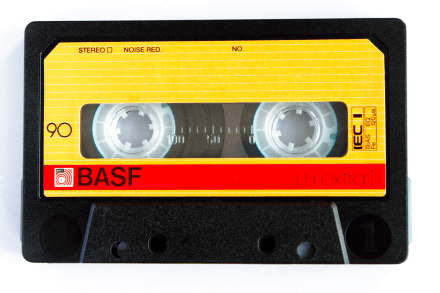
May the gods of Hiss and Compression bless Lou Ottens. As head of new product development at Phillips, the Dutch engineer invented the compact cassette in 1963 and changed music for ever. Ottens died last week at 94. A good age, and a good number. You could get a full album on each side. For many of us born in the 1970s, who came of age musically in the 1980s and 1990s, the blank cassette has an unkillable romance. We measured our lives in spools of magnetic tape: C60, C90, the occasional C46. Inside those hard plastic shells we surfed the thin end of the aural wedge, composing scrappy love letters in the medium’s notoriously tinny register — no bass, all treble. Tapes were desirable not for their audio quality, which was sub-prime, or aesthetic appeal.

In Chet Baker’s albums you can hear America’s romantic self-image curdling

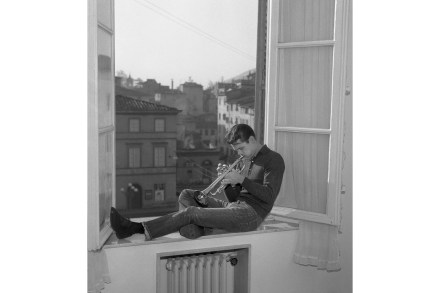
The thing to remember about Chet Baker, an old acquaintance says of the errant jazz musician in Deep In A Dream, James Gavin’s exemplary 2002 biography of Baker, is that ‘he can hurt people even after he’s dead’. Baker could be dangerous but mostly he hurt himself. He died, squalidly, in 1988, and his music, at least, can still wound. In Baker’s oeuvre the ballads are deep blue and the up-tempo tunes are somehow tinted even darker. The ‘jazz James Dean’, the ‘Prince of Cool’, Baker was extremely pretty in his younger days and made music that cast a similar enchantment. His trumpet style was lyrical, his singing voice light and seductive.

‘We knew there was greatness in these songs’: Steve Diggle of the Buzzcocks interviewed

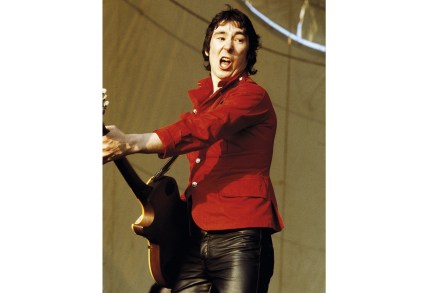
Steve Diggle hasn’t spent this long away from a stage in 40-odd years. For the Buzzcocks guitarist, like everyone else, 2020 was a year of thwarted plans. Instead of touring Britain and America, Diggle spent the year in ‘self-analysis’ and writing a new album. What else for an ageing punk to do? Except, of course, curate your legacy, grapple with the past. When Diggle joined Buzzcocks in 1976, originally as the bass player, he didn’t imagine he would still be flying the flag 45 years later. It’s both a blessing and a curse. Though his band remains a going concern, the songs that shift tickets were written half a lifetime ago. ‘Ever Fallen In Love (With Someone You Shouldn’t’ve)’, ‘What Do I Get?

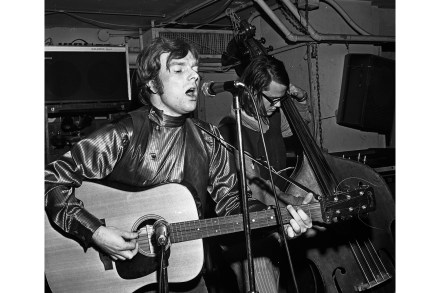
Spiky, sticky, silly: interviewing Van Morrison

Q: ‘How would you define transcendence?’ A: ‘Well, how would you define it?’ I interviewed Van Morrison last year. (I’m fine now, thanks.) While the exercise wasn’t quite the near-death experience of industry legend — he was polite and accommodating, if not always exactly forthcoming — it got sticky at times, as the above exchange illustrates. Let’s call it a solid 6.5 on the Lou Reed Scale. Morrison, who turns 75 on the last day of this month, was formed in an age when a people-pleasing public persona wasn’t essential for musical success.

The festivalisation of TV

The Glastonbury festival has undergone a series of metamorphoses in the 31 years since I first attended as a 15-year-old fence hopper (as, indeed, have I, thank heavens). One of the most significant changes, to pillage Gil Scott-Heron’s famous prophecy, is that the evolution has been televised. Back in 1989, if your boots weren’t on the ground — often a quagmire, though not that year — you missed out on all the fun. This has not been the case for aeons. Television coverage of Glastonbury began on Channel 4 in 1994, switching to the BBC three years later.

In defence of Prince’s late style

In 1992 Prince released a single called ‘My Name Is Prince’. On first hearing it seemed appropriately regal. Cocky, even. Only in hindsight did it appear somewhat needy, a litany not of what Prince was going to do, but of the things he had already done. On it, he pulled rank on his status — ‘I’ve seen the top and it’s just a dream / Big cars and women and fancy clothes’ — called out young rappers for their potty mouths, and declared himself ‘fresh and funky for the 90s’. Context is everything. By 1992, Prince was still funky – but fresh? He had been, indisputably, pop’s premier agitator throughout the previous decade; as David Bowie was to the 1970s, so Prince was to the 1980s.

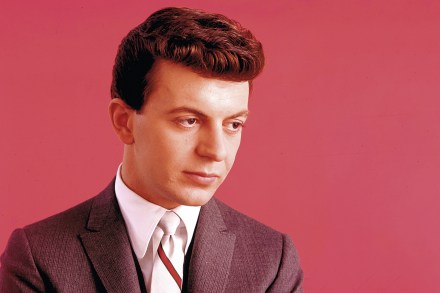
Meet Dion, one of the last living links to the earliest days of rock ’n’ roll

Only two of the Beatles’ pop contemporaries are depicted on the cover of Sgt. Pepper’s Lonely Hearts Club Band. One is Bob Dylan. The other is Dion DiMucci. In a pleasing third-act twist, Dylan contributes the liner notes to Dion’s new album Blues With Friends — an act of deference that the recipient is still processing. ‘I asked him, I didn’t know if he had the time, but he sent me back those paragraphs and said that I knew how to write a song.’ He whistles. ‘That’s from a Nobel Prize winner. I thought, I’ll take it, I’ll take it!’ So he should. Dion — like Kylie, a single moniker suffices — is one of the last living links to the early days of street-corner rock ’n’ roll.

The musical benefits of not playing live

Glenn Gould considered audiences ‘a force of evil’. ‘Not in their individual segments but en masse, I detest audiences.’ He retired from public performance on 10 April 1964, at the age of 31, having given fewer than 200 public recitals. The Canadian classical pianist had longstanding philosophical objections to the ritual of performing live. He found applause automatic and insincere, and often asked spectators not to bother. He even wrote a (partly) tongue-in-cheek manifesto, the Gould Plan for the Abolition of Applause and Demonstrations of All Kinds, in which he called for clapping to be banned. Gould believed that the most useful and honest response to music came following a period of solitary reflection, rather than as instantaneous public display.