Fraser Nelson

Fraser Nelson

Fraser Nelson is a Times columnist and a former editor of The Spectator.

Kate Barker responds to the Spectator Inquiry

So - what went wrong with the British housing market? I interviewed Kate Barker, the economist and Monetary Policy Committee member, yesterday as part of The Spectator’s ongoing inquiry into the causes of the recession. Many thanks for your questions. As she is an MPC member, her words can come out at regulated intervals – ie, we have to run it today or not at all. So here are the top half dozen points. A full transcript follows. 1. Inflation targeting is not enough. “It happens that in the early years of inflation targeting, it did produce a stable economy. But I think it’s now clear that it can’t, by itself, produce a stable economy ... Do I think we should have perhaps looked a bit more at some of the money indicators?

The fall of the masters of the political universe

Every financial collapse in the City you can normally be traced back to a testosterone-sodden trading floor where young men believed a little too much in their own hype. Britain is in the unusual position that both our economic and political collapse can be traced to the same gang – the ones that Gordon Brown assembled in the Treasury. In my cover piece for today’s magazine, I detail the damage they did: to our economy and to the Labour Party. At the heart of McBride’s fall was the hubris, the risk-taking. Imagine being so stupid as to put all those vile smears in an email sent from 10 Downing Street computer. But the risks the Brown-Balls-Whelan-McBride team took with the British economy were no less great. And far more significant.

A load of Balls

Let's rewind back to this morning, and Ed Balls' appearance on the Today progamme.  It was such a classic demonstration of distortion and buck-passing, that we've decided to give it a fisk, Coffee House style.  Here's the transcript, with our thoughts added in italics: James Naughtie: Talking about bad behaviour, there’s been a bit of it going on in government, hasn’t there? Ed Balls: Well, I’ve, um, seen the reports in the Sunday Times on Sunday and I think those emails were vile, horrible, despicable. I think there’s no place in politics for that kind of stuff. I think it’s awful. Fraser Nelson: Balls is shocked, shocked to find it going on. JN: You must feel this quite, er, personally.

Any questions for Kate Barker?

I'm interviewing Kate Barker at 4pm this afternoon as part of The Spectator's ongoing inquiry into the causes of the recession. She is a member of the Bank of England's Monetary Policy Committee, so she has to regulate what she can say and when she says it. But she's kindly agreed to be interviewed today, and we aim to publish what she says tomorrow. I hear great things about her - which makes it all the more puzzling that her 2004 review on housing concluded that supply had to be vastly increased to meet the demand. In London, sure, but in depopulating towns like Blackpool? Didn't she think there was an asset boom in place? I'd be amazed if the thought didn't cross her mind - but it wasn't anywhere in that review. Has she changed her mind in retrospect?

Special advisers do good work too

The McBride affair may have a dangerous side-effect – and that is blackening the name of special advisers. I am in the minority position of wanting to see more of them in Whitehall, and here’s why. McBride’s problem was his behaviour, not his status. The current suggestion that the real problem is his SpAd status – and not the instructions from dhis master - is a clever piece of self-exculpatory spin from Brown. We should not fall for it. And it’s also an insult to the many other SpAds who do good, honest work. I imagine many CoffeeHousers baulked at that last bit – but “good, honest spad” is not a contradiction in terms.

The McBride affair is a portent of the coming struggle for Labour’s soul

One can only imagine what went through Alistair Darling’s mind last weekend, as the scale of the McBride affair became evident. In his Budget next Wednesday, the Chancellor faces a political mission which was already next to impossible before the email story broke. Now his task has become downright laughable in its scale. To produce a budget with the economy in freefall is hard enough. But to do so with the government disintegrating all around you is scarcely worth attempting. In theory, Damian McBride’s resignation was simply the departure of a spin doctor, already relegated to a ‘back-room’ role. But nobody with the slightest knowledge of the Brown court believes that for a second. This is a moment of deadly, perhaps terminal, peril for the Labour government.

Watson denies knowledge of the smear emails

Well the "statement" is in - not so much from Tom Watson as from his lawyers, Carter-Ruck, who are complaining about Iain Dale's article in the Mail on Sunday which claimed that Watson was copied into those emails. Here is the statement: "We have today been instructed by government minister Tom Watson, MP for West Bromwich, in connection with allegations concerning him and the emails exchanged between Damian McBride and Derek Draper relating to a proposed website entitled 'Red Rag'. We have today written to the editors of the Mail on Sunday and the Daily Mail to complain about the publication of the false allegation that our client had knowledge of, and participated in, Mr McBride's actions.

BREAKING: Tom Watson to make a “personal statement”

I hear Tom Watson is about to make a "personal statement" which should clear up how much he knew about Red Rag and Damiangate. Last time I looked, Guido didn't have any crosshairs trained on him - but we'll see.  UPDATE: He isn't going to resign, I'm told. But expect a statement tonight.

Has the damage limitation worked?

So, has the spin operation worked? McBride's quick depature had three objectives. 1. Close down the story. This seems to have worked: today's news doesn't have many more developments. If tomorrow's papers have nothing new, then Damiangate may not last until Wednesday. This would be, in the circumstances, the best possible outcome for Brown as there is a far more dangerous aspect to this story as yet unwritten: how the tactics exposed by McBride's emails (ie, character assassination) were the weapon used by Team Brown to take out his potential rivals for No.10. This time, the Tories were the target - but similar tactics were used to destabilise a long line of former (and some serving) Cabinet members. 2. Position McBride for quick return.

McBride: Blame Guido, not me

McBride's resignation statement is in, and true to character he has decided not to skulk off home apologetically. It was all the wicked Guido, he says. 'All I was doing was having a bit of a laugh with my mate Derek. As an upstanding member of the community, I am morally sickened that the wretched Guido has publicised these malicious rumours about the nice Mr Cameron...’ In fact, my paraphrasing doesn't do justice to his real words. Here they are:- “I am shocked and appalled that, however they were obtained, these emails have been put into the public domain by Paul Staines.

McBride quits

So, it's happened. The News of the World has confirmed that Damian McBride has quit - and I understand that it will tomorrow publish the emails at the centre of the storm. The logic for the resignation is clear. McBride broke two cardinal rules for spin doctors: 1) Never become the story, and 2) Never, ever screw up during a bank holiday because the story just mushrooms - there's nothing else to fill the news pages*. Damiangate had, through the course of today, taken on its own, awesome momentum. The options for No10 were clear: if McBride stayed, then tomorrow's newspapers (and Monday's, and Tuesday's) would be choc full of grim stories about black arts, smear tactics, hit men - a real diet of super-ugly news.

What McBride tells us about Brown

I woke up to a text message this morning from a friend in Whitehall. “I see Mc**** is in the doodoo”. An expletive preceded by “Mc” can only refer to one person – and indeed, as James and Pete have blogged, Damian McBride is back in the news with his redoubtable emails. I said a couple of years ago that McBride should be banned from electronic communication. Email is as proving as good for McBride’s career as it was for Oliver North’s. Here are two other things that strike me about the affair. 1. Brown’s Black Arts Strategy. His skill lies is attack, not persuasion. He bullied and plotted his way into No10. No one outside Fife has ever cast a vote for him: he has become PM by destroying potential rivals.

Politics | 11 April 2009

The old wartime poster ‘Keep Calm and Carry On’ has been reprinted recently and is turning up in the strangest places around Westminster. I have seen it on an MP’s desk and emblazoned on the cufflinks of a Treasury civil servant. It certainly captures the sense that we are undergoing an economic blitz, and acknowledges implicitly the temptation to panic. But at a time when Cabinet members are describing International Monetary Fund bailouts — quite extraordinarily — as ‘a kind of spa’, the case for keeping calm looks increasingly flimsy. The main question at the heart of the Budget on 22 April is not who will receive what, but how close the nation is to bankruptcy.

Barclays’ latest big deal leaves a bad taste in the mouth

What's the difference between a banker and a pizza? A pizza can feed a family of four. So ran one of Vince Cable's jokes when he presented the British Press Awards last week - but there is a crucial flaw. He reckoned without the financiers running an exchange-traded business fund named iShares. It is a subsidiary of Barclays and is 4.5% owned by senior Barclays staff. It has today been sold to CVC Capital, a private equity firm for $4.4bn - most of this money borrowed from, erm, Barclays (no difficulty finding credit there!). Result: payday for the lucky few with equity in iShares - about £1.6 million each - and £10 million for Bob Diamond, president of Barclays (who made £21m in 2007). All this leaves a rather bad taste in my mouth.

The truth about conservatives and laissez-faire

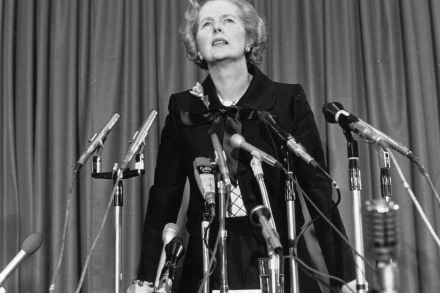
Was it remarkable that George Osborne rejected laissez-faire economics in his speech yesterday? A CoffeeHouser, Marcus Cotswell, asks why I didn't pick up on it in my summary yesterday. It is a very good point, and perhaps one worth addressing in a post rather than a comment. The Tories have never, ever believed in laissez-faire - this was a Liberal policy, a product of late Victorian politics. But the phrase is now said to caricature and attack the right (like "trickle-down economics" and "Washington consensus" etc). As Adam Smith observed, businessmen tend to collude with each other - you need laws and regulations to stop them. It's a basic tenet of functioning capitalism. And as for Conservatism? This is one of Thatcher's favourite topics, so I'll yield the floor to the Lady.

Osborne stands up for capitalism

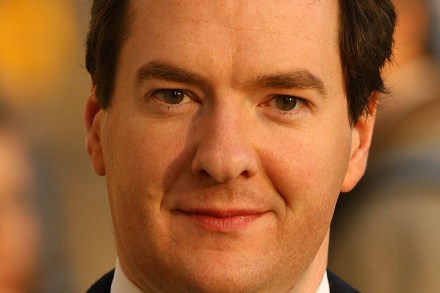
So, whither Tory economic policy? It was George Osborne's turn to discuss it today, and, overall, it’s very good news. The shadow chancellor's speech appears to be a rejection of Brownite rules-based economics. Inflation targeting was not enough to prevent the crash, and Osborne appears to say he’d empower the Bank of England governor to take a free view to regulating the City. But, as with a lot of Tory speeches at the moment, the desire to devolve power clashes with the desire to tinker. So Osborne proposes greater freedom of regulatory powers, but he’d like the banks to be smaller. Anyway, his full speech is here. My ten-point take below: 1) SMALL BANKS The headline proposal is Osborne saying he wants small banks. I’m sceptical: Canada had large banks.

Labour’s attack lines are self-defeating

Labour's agony about how to attack the Tories continues. Is Cameron a spivvy PR man? A lightweight, unqualified for the job? Or is he actually an alright bloke; the acceptable face of an unacceptable party? The problem with the latter argument is that you accept that Cameron and Osborne are good things. But it's the latter argument Labour are going for today. What I love about the Labour attacks is seeing who they wheel out - they seem to have a small number of Labour MPs who are deemed popular. Poor old Stephen Pound is made to say the most terrible things about the Tories. Now it's the turn of John Spellar to claim that the Tories have revealed a secret cuts agenda (which, as CoffeeHouses will know, I wish were true).

The debt counter is ticking

Sky News's coverage of the recession has today taken on a powerful new dimension: a " debt counter", starting today, counting in real time how much extra debt Gordon Brown is saddling the public with during the financial year 2009/10. It started at zero at 7am and it's rising at £4,800 a second as per today's report from the IFS. This will drive home - in stark, simple terms - a major facet of this recession: the deferred cost to the British public when government refuses to cut spending. I suspect that Brown will be hurling his slippers at the TV screen because he is rather depending on national debt being an abstract concept, something ending in -illion that people don't quite understand.

Pure Balls

Ed Balls isn’t quite sure how to attack the Tory 'Swedish schools' policy. But a story in today's Observer about a Tory councillor sounding off about it gives him a chance to try. The words issued are from Jim Knight, but I put them below and by thoughts interspersed. "Once they know the truth about David Cameron’s risky and divisive plan to import the Swedish schools..." Risky? The Tories would allow charities, church groups etc to set up schools if they have enough support from parents. But Balls* is right to see community-driven initiatives as a risk - a risk to the bureaucracies serving British pupils and taxpayers so badly. And "divisive"? Ahh, this is socialist-talk for "choice". Remember, Brown also said that a leadership election would be "divisive".