Eliot Wilson

Eliot Wilson

Eliot Wilson was a House of Commons clerk, including on the Defence Committee and Counter-Terrorism Sub-Committee. He is contributing editor at Defence On The Brink and senior fellow for national security at the Coalition for Global Prosperity

Labour’s £2.9bn defence boost doesn’t go nearly far enough

Anyone who is serious about the condition of the armed forces and Britain’s defence policy will not look a gift horse in the mouth. Rachel Reeves’s announcement in yesterday’s Budget that the government will spend an additional £2.9 billion on defence next year is welcome and desperately needed. But while it's headline-grabbing, in reality it will make little difference to our national security and strategic posture. It is acknowledged across the political spectrum that we need to spend more on defence It is hard to think of a time, certainly since the end of the Cold War, when the international situation was so tense and challenging in so many areas.
What’s the point of the ‘gay ban’ veteran compensation?

Veterans who were dismissed from the armed forces because of their sexuality have criticised the government for the inadequacy of its compensation scheme. With a fund capped at £50 million and potentially as many as 4,000 eligible to seek redress, the average payment would be only £12,500. Military charities have dismissed this as 'inadequate and unacceptably low', lacking 'the sense of justice these veterans deserve'. This is not an issue from the distant past. When I was young, it was taken as read that openly gay people did not serve in the military. That was not to say we thought the armed forces were 100 per cent heterosexual – the first gay kiss on British television, in BBC Two’s 1974 drama Girl, was between Alison Steadman and Myra Frances playing female soldiers.

Why do Britain and Germany need their own defence pact?

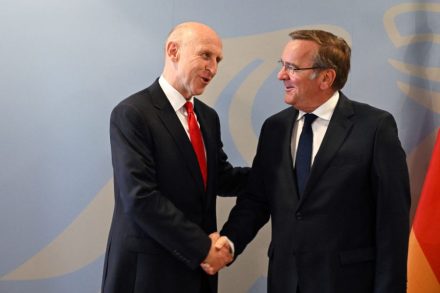
It is a standard feature of modern politics that government announcements are preceded by announcements of announcements. The ground must always be prepared. Accordingly, the media has been briefed that this week the United Kingdom and Germany will sign a defence cooperation agreement, part of the government’s stated desire to strengthen its relationship on security with the European Union. We should not expect a revolution so much as an eager scattering of glitter on what is actually relatively humdrum. John Healey, the defence secretary, visited Berlin in July and agreed a joint declaration on defence with his German counterpart Boris Pistorius.

Britain shouldn’t take part in joint EU defence missions

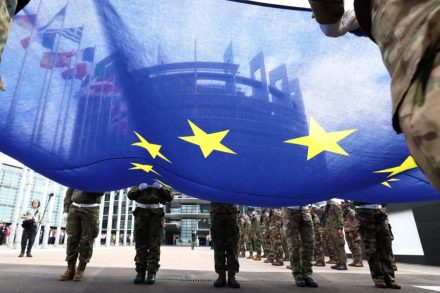
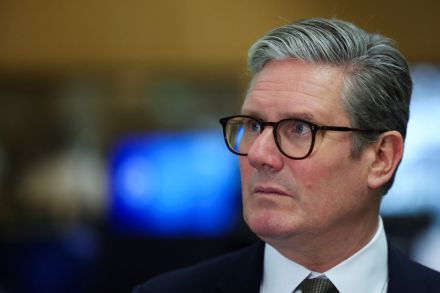
Sir Keir Starmer has vowed to 'reset' the United Kingdom’s relations with the European Union. But at what cost? The EU has reportedly set out part of the price the UK might have to pay to be allowed back into its good books: Brussels wants Britain to contribute to the EU's defence missions. Foreign Secretary David Lammy travelled to Luxembourg this week to a meeting of the EU Foreign Affairs Council to address the issue of security – an important element of Starmer's intended 'reset'. In Monday's meeting, the EU reportedly pressed the Foreign Secretary for UK participation in its peacekeeping and conflict prevention missions, of which there are currently more than a dozen.

Even the BBC’s critics should want to protect the World Service

When Tim Davie, the director-general of the BBC, addresses the Future Resilience Forum in London this afternoon, he has a clear mission: to fight for the BBC World Service's future. Davie will warn that 'when the World Service retreats, state-funded media operators move in to take advantage.' Whether you love or loathe the BBC, Davie is right: the World Service is needed more than ever. The Beeb has had a torrid few years.

Should the MoD be using AI for our defence strategy?

Eyebrows have been raised, to put it mildly, at the news that the Ministry of Defence is using an artificial intelligence programme to assess submissions to the current review of Britain’s armed forces. The Strategic Defence Review was launched in July, and the following month a call for evidence was issued, inviting ‘serving military, veterans, MPs of all parties, industry, and academia’ to submit responses to a series of propositions through an online portal. The closing date was 30 September, and the responses would ‘help’ the review team led by former Nato secretary general Lord Robertson of Port Ellen.

Labour’s House of Lords peerage reform is just hot air

Labour's crackdown on the House of Lords continues apace. In an effort to reform the upper house, parties could soon be made to provide written justification for peerage nominations they put forward. Under the proposal they would have to submit a citation explaining why the candidate is being proposed and what contribution to public life he or she has made. On its own, this idea is inoffensive. It is, admittedly, transparent in capitalising on the ongoing rumblings over Boris Johnson’s nominations in his 2023 resignation honours: 32-year-old Lord Ross Kempsell, former political director of the Conservative party, and Baroness Charlotte Owen of Alderley Edge (31), a Downing Street special adviser.

Britain’s half-hearted support for Israel helps no one

When Iran launched almost 200 ballistic missiles at targets across Israel on Tuesday, there were fears that it would ignite a wider regional conflict. That a wider war has not (yet) erupted is partly due to the fact that most of the missiles were intercepted by Israel and what the Israeli Defense Forces' (IDF) spokesman called 'a defensive coalition led by the United States'. The United Kingdom was part of that coalition. But what role did the UK really play on Tuesday night? And how does that support square with the Labour government's hostility towards Israel?

Robert Jenrick may come to regret his ECHR killing claim

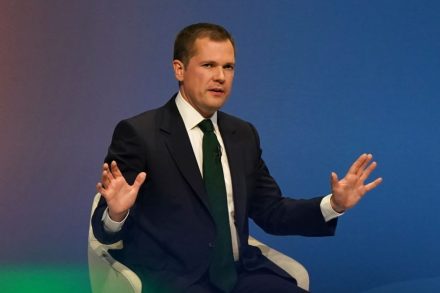
We have all found ourselves making a point and seeing the argument run away from us unexpectedly. Perhaps that was Robert Jenrick’s feeling when he was challenged on a claim that the European Convention on Human Rights (ECHR) was giving British soldiers no option but to murder terrorist suspects. 'Our special forces are killing rather than capturing terrorists because our lawyers tell us that if they’re caught, the European court will set them free,' he claimed. When asked on BBC Radio 4’s Today programme to provide evidence for this allegation, he temporised somewhat, pointing to claims former defence secretary Sir Ben Wallace had made in an interview with the Daily Telegraph last September.

Why couldn’t Labour save Harland and Wolff?

As expected, Harland and Wolff, the legendary Belfast shipyard which built the Titanic, has formally entered administration. This comes as a surprise to no-one: last year, the firm lost £43 million, on top of a £70 million loss in 2022, and it had become reliant on a high-interest loan from US investment managers Riverstone. Harland and Wolff’s management had hoped to restructure its borrowing with a loan guarantee from the government, and had spent months negotiating with UK Export Finance, which deals with export credit guarantees.

Evacuating Lebanon would test Starmer’s mettle

As the security situation in Lebanon deteriorates, the British government is accelerating plans to evacuate its civilians. The Foreign, Commonwealth and Development Office has advised British nationals in the country to leave while commercial flights were still operating. It also said that British nationals should have an evacuation plan, and warned that they should ‘not rely on FCDO being able to evacuate you in an emergency’. It is believed there may still be 10,000 British nationals in Lebanon. As things stand, most major airlines have now cancelled or suspended services to Beirut-Rafic Hariri International Airport, and many of the remaining flights have sold out. Sir Keir Starmer has said bluntly: ‘Now is the time to leave… leave immediately’.

What is the point of Sue Gray?

Keir Starmer takes centre stage at Labour's conference in Liverpool today, but whatever the Prime Minister has to say, the truth is that the event has been overshadowed. The Prime Minister must have hoped this would be a triumphant gathering bathed in the glow of a landslide election victory less than 12 weeks ago. Instead he will be disappointed: the decision to cut winter fuel payments has sparked fury and there is deep unease at the row over ministers accepting gifts from wealthy donors. The discovery that Sue Gray, the prime minister’s chief of staff, is paid more than her boss also continues to cause tension – not least because many of the missteps made by the Prime Minister should have been dealt with more effectively by a competent chief of staff.

Why shouldn’t Sue Gray earn £170,000?

We are a day short of Sir Keir Starmer marking 11 weeks as prime minister. His first 76 days have not been easy ones, and it is striking how often they have been dogged by relatively minor stories which have nonetheless contrived to make the new occupant of Downing Street look out of touch, high-handed or even slightly grasping. The most recent brickbat is a report that Starmer’s chief of staff, Sue Gray, earns more than her boss, receiving a salary of £170,000. The mechanics of this have been clumsy: shortly after Starmer took office, he signed off on a shake-up of pay scales for special advisers which was, in truth, long overdue.

Ukraine can’t wait for a decision on long-range missiles for ever

Last week was electric with anticipation. The US secretary of state, Antony Blinken, visited London for a UK-US 'strategic dialogue', then he and Foreign Secretary David Lammy both travelled to Ukraine to meet with political and military leaders and discuss the ongoing conflict. Heading in the other direction was the Prime Minister, Sir Keir Starmer, who made for Washington DC with his outgoing national security adviser, Sir Tim Barrow, to meet President Joe Biden and hold talks on the global situation. By accident or design, the government allowed speculation to grow that the United Kingdom and the United States were close to an announcement that they were lifting restrictions on Ukraine’s use of Western-supplied munitions like the Anglo-French Storm Shadow cruise missile.

Russia started the war. Don’t forget that

It is easy to become frustrated when politicians make statements that are blindingly obvious. Sometimes, however, it can be a useful corrective, a reminder of fundamental truths that commentary can obscure. Russia started this conflict. Russia illegally invaded Ukraine. Russia can end this conflict straight away. To reiterate, it was Russia who started this in the first place. They caused the conflict, they’re the ones who are acting unlawfully. These remarks to the media by Keir Starmer yesterday were prompted by Vladimir Putin.

We all know the NHS is broken – but can Labour fix it?

There are few surprises in Lord Darzi’s review of the National Health Service, not least because much of it has already leaked out. Health Secretary Wes Streeting declared immediately after Labour won the election that the NHS was 'broken'. Darzi, a surgeon and former Labour health minister whom Streeting commissioned to undertake the probe, appears to have reached a similar conclusion in today's report, though not in as few words. 'We have crumbling buildings...and parts of the NHS operating in decrepit portacabins,' Darzi says 'We have crumbling buildings, mental health patients being accommodated in Victorian-era cells . . . and parts of the NHS operating in decrepit portacabins,' Darzi says.

Ukraine should be able to use its long-range weapons as it pleases

President Joe Biden has hinted that the United States may shortly lift the restrictions it has placed on Ukraine’s use of long-range weapons. Until now, the US has forbidden the Ukrainian armed forces from using ATACMS tactical ballistic missiles to strike targets far beyond the border with Russia; this policy has been mirrored by the United Kingdom, which limits how the Storm Shadow cruise missiles it has supplied can be used. This change in policy, if it does materialise, is overdue, but welcome. ATACMS and Storm Shadow missiles give Ukraine the ability to hit targets hundreds of miles away: the former has a range of around 190 miles, the latter more like 250 miles.

Labour’s plan to abolish hereditary peers is pointless

Labour's House of Lords (Hereditary Peers) Bill to the Commons – which was presented today and will have its first substantive debate at second reading later in the autumn – is simple: it essentially ends the right of hereditary peers to sit and vote in the Lords, tying off what some will see as a loose end of Sir Tony Blair’s 'stage one' reform of the upper chamber in the House of Lords Act 1999. That legislation offered a compromise to opponents. At the end of 1998, Blair had concluded a secret deal with the leader of the Conservative peers, Viscount Cranborne, for 92 hereditary peers to remain in the Lords as an interim measure.

The truth about Jeremy Corbyn’s ‘Independent Alliance’

Jeremy Corbyn has teamed up with four other MPs elected as independents at the general election to form an 'Independent Alliance'. This, the former Labour leader was quick to point out, makes the new group the joint-fifth largest in the Commons, sharing that accolade with Reform UK and the Democratic Unionist Party. But in the battle for attention in parliament, Corbyn and his colleagues are going to be disappointed. What is the point of the Independent Alliance? Labour's majority of nearly 180 means that Corbyn's alliance won't give Keir Starmer sleepless nights, even if the group has already reached out to the seven Labour MPs who were suspended from the parliamentary party for six months after voting in favour of a abolishing the two-child benefit cap.

What’s the real reason Starmer axed his national security adviser?

Keir Starmer is making a big mistake by cancelling the appointment of one of Britain’s top generals as national security adviser. General Gwyn Jenkins, the ex-vice-chief of the armed forces, was picked for the role by Rishi Sunak in April. Jenkins is a widely-respected military man and was a perfect choice for the job. But Starmer has reportedly axed Jenkins’s appointment and opted instead to re-run the application process. We can only guess at the motivation, because Downing Street has made no official announcement Jenkins is, technically, entitled to apply a second time.