Eliot Wilson

Eliot Wilson

Eliot Wilson was a House of Commons clerk, including on the Defence Committee and Counter-Terrorism Sub-Committee. He is contributing editor at Defence On The Brink and senior fellow for national security at the Coalition for Global Prosperity

Why are the English embarrassed about St George’s Day?

How should the English celebrate St George’s Day? England is a country with plenty to boast about, but doing so is somehow not particularly English. The result is that 23 April is usually a day that passes most of us by. It's a pity. The centuries-old flag of St George was for too long the preserve of the far right Embarrassed, we often seek expressions of Englishness in the sheepish and the mimsy. Egg and chips, rain coming on, mustn’t grumble, you’ve got to laugh, fancy a cuppa, watching the footy, how we love queueing. Thirty years ago, John Major was mocked for speaking of 'the country of long shadows on cricket grounds, warm beer, invincible green suburbs, dog lovers and pools fillers'.

Is there any way back for the Met Police?

‘You are quite openly Jewish, this is a pro-Palestinian march, I'm not accusing you of anything but I'm worried about the reaction to your presence.’ These were the words of a police officer to Gideon Falter last week as he walked along Aldwych after attending synagogue. The chief executive of the Campaign Against Antisemitism was not protesting or making a public statement of any kind, yet an officer of the law warned him that his ‘presence’, wearing a yarmulke, was a ‘breach of the peace’. The Met is not improving, or at least not improving nearly quickly enough Once the first wave of open-mouthed incredulity had passed, the widespread reaction to the police’s action was, quite rightly, outrage.

It’s no surprise the SNP’s climate change law has failed

When Nicola Sturgeon unveiled the SNP's climate change pledge in 2019, the First Minister boasted that Scotland had the 'most stretching targets in the world'. The problem was that they were too stretching: five years on, the flagship goal of reducing greenhouse gas emissions by 75 per cent by 2030 has been binned. The decision to axe the climate target means that another part of Sturgeon's legacy lies in tatters. This debacle also reveals something simple: writing something into law doesn't mean it will happen.

Can Starmer be trusted with Trident?

Three weeks after the Prime Minister visited Barrow-in-Furness to pose with models of submarines, the Labour leader Sir Keir Starmer has made his way to BAE Systems in Cumbria to emphasise his support for the United Kingdom’s nuclear deterrent. He penned an accompanying manifesto for the Daily Mail, in which he said his party’s commitment to Trident was 'total' and 'unshakeable'. He also expressed a 'a cast-iron commitment' to build the four new Dreadnought-class nuclear submarines which will carry Britain’s ballistic missiles from the early 2030s onwards. This is politics. Starmer remembers that at the last election barely one in ten voters trusted the Labour party on defence and national security.

Has Iran saved Israel’s relationship with the US?

Only a few days ago, President Biden was framing remarks about Israel in tones which were astoundingly critical for an American leader. For decades it has been axiomatic that there is barely a cigarette paper between Washington and Jerusalem, but Israel’s prosecution of the war in Gaza has threatened to push them apart. Biden condemned the 'indiscriminate' bombing, and last week made his views unmistakable clear: 'Israel has not done enough to protect civilians.' Suddenly, though, without meaning to, it looks like the Islamic Republic of Iran may have saved Israel’s most important bilateral relationship.

Is Whitehall ready for war?

James Heappey, who will soon step down as Conservative MP for Wells after nearly a decade, may have won more column inches in the last fortnight than the rest of his career combined. In March, he resigned as minister for the armed forces, a post he had held since 2020, and now that he is liberated from government, he has a few things he needs to get off his chest. We have chronically underspent on defence for far too long Heappey, who served in the British Army for eight years, rising to the rank of major and serving in Afghanistan and Iraq, has penned a heartfelt plea for the Daily Telegraph, in which he warns that the United Kingdom is unprepared for war as a ‘whole nation endeavour’.

The recklessness of William Wragg

Everyone makes mistakes, but they are seldom as monumental as William Wragg's. The Tory MP has admitted handing over the phone numbers of colleagues to a man he met on Grindr, a gay dating app. The vice-chairman of the 1922 Committee said he offered up the details after sending intimate pictures of himself. Wragg deserves some credit for coming clean. 'I was scared. I’m mortified,' he has said. But there's something troubling about the speed with which Wragg's colleagues are defending him – and the insistence that he shouldn't lose the Tory party whip. Wragg must face up to the consequences Anyone who has worked in Westminster will feel a shard of sympathy for Wragg.

Nato’s unhappy birthday

Nato marks its 75th birthday today, but the alliance is in no mood for celebration.  At its foundation, and for much of its lifetime, Nato worked well. On 4 April 1949, representatives of a dozen countries signed the North Atlantic treaty in Washington DC 'to safeguard the freedom, common heritage and civilisation of their peoples, founded on the principles of democracy, individual liberty and the rule of law'. Although the Cold War was not always cold, and flared into bloodily hot conflicts in Vietnam, Cambodia and Angola among other places, there was never a face-to-face showdown between Nato and members of the Soviet Union-led Warsaw Pact, let alone a nuclear one.

Donaldson’s fall is a challenge for the future of the DUP

The news that Sir Jeffrey Donaldson, leader of Northern Ireland’s Democratic Unionist party, had been arrested and charged with rape and other historical sexual offences, was a rare moment of genuine shock in politics. Politicians on all sides have been scrabbling to respond, to understand what has happened and what it means for the DUP and Northern Ireland as a whole. Of Donaldson, little can be said until the conclusion of his criminal trial. He is scheduled to appear at Newry Magistrates’ Court on 24 April and says he will be strenuously contesting the charges against him. But it is clear that his involvement in politics is over: he resigned as leader of the DUP within hours of the story becoming public.

Can Britain afford Trident?

The prime minister is in Cumbria today, visiting Barrow-in-Furness to announce a ‘national endeavour’ to support the defence and civil nuclear industry. This includes a partnership with companies including BAE Systems, Rolls-Royce, EDF and Babcock to invest more than £760 million in skills, jobs and education over the next six years. The Barrow Transformation Fund will receive £20 million from the government immediately, then £20 million a year for the coming decade. Barrow is important because it is where the Royal Navy’s new Dreadnought-class ballistic missile nuclear submarines are being built. BAE Systems Submarines also built the Astute-class nuclear-powered attack submarines, of which four are in service with three more to come.

Nike should leave the St George’s Cross alone

England's football kit has changed dramatically over the years but one feature typically remains unchanged: the cross of St George. Nike, which is designing the England kit for this summer’s Euro 2024 tournament in Germany, has redesigned the red and white flag in navy, light blue and purple. Why did it think doing so was a good idea? The backlash has been predictably swift: Labour leader Sir Keir Starmer said the St George’s flag was a unifying symbol which should not be changed: 'We just need to be proud of it. So I think they should just reconsider this and change it back.' Rishi Sunak said the flag should not be 'messed with'. And Nigel Farage called the design 'an absolute joke'. Nike’s response was predictable Nike’s response was equally predictable.

Is this the beginning of the end for Humza Yousaf?

Humza Yousaf might have hoped for a better week. On Wednesday, the First Minister gave a speech at the European Institute of the London School of Economics, setting out why Scotland’s economic future would be brighter if it was an independent country. Some in the room were enthusiastic, but the Scotsman quietly drew attention to an LSE study from 2021 which had found that 'the economic costs of independence are two to three times greater than the impact of Brexit'. The report went on to conclude that independence would mean 'an income loss of between £2,000 and £2,800 per person every year' and that it would make little difference whether an independent Scotland was a member of the European Union or not.

What Rishi Sunak got wrong about Lee Anderson

Lee Anderson's defection from the Tories to Reform UK was hardly a surprise. In fact, it seemed almost inevitable. But that Anderson rose to the position he did within the Conservative party to become deputy chairman, before flouncing out, raises questions about Sunak's political judgement. Anderson became an emblem of the Red Wall, yet is he really representative of voters from the north? Sunak's superficial reading of Anderson led him to think that he could be a bridge to the Red Wall Anderson’s blunt language has powered his brief career as a Conservative MP. Because he said undiplomatic, unwise or unhelpful things, and because his background was unimpeachably and authentically working class, Rishi Sunak and his advisers chose him as a kind of avatar for ‘Red Wall’ voters.

Will Republican leaders apologise over ‘Stakeknife’?

'Stakeknife', a double agent who was an informant for the British Army while working within the innermost counsels of the Provisional IRA, probably cost more lives than he saved. That is the damning verdict of Operation Kenova, which has spent seven years – and £40 million – probing whether Stakeknife was effectively permitted to kill while the security forces watched on. Stakeknife’s identity has never been officially confirmed but it is accepted he was a Belfast man called Freddie Scappaticci, who died last year. Interned in 1971 along with figures like Gerry Adams and Alex Maskey, he was a member of the Provisional Irish Republican Army (PIRA) by 1974 and came to head the terrorist organisation’s Internal Security Unit (ISU).

The flaw in the SNP’s plan to ‘build a new Scotland’

The SNP seems determined not to stick to the day job of actually running the country. Scotland's government this week launched a publication called 'Building a New Scotland: an independent Scotland’s Place in the World'. It set out policies for something that doesn't exist – an independent Scotland – in areas in which the devolved administration has no responsibility. Angus Robertson, the party's constitution and external affairs secretary who launched the report, hardly seemed fazed by those facts: he spoke fluently and familiarly about 'defence, peace and security' and Scotland’s role as 'a good global citizen', even if his party's plan is unlikely to ever see the light of day.

The speech that reveals the DUP’s radical shift

The Democratic Unionist Party is nothing if not intransigent. For many years, the DUP provided a masterclass in judging the past, and tying it round the neck of the future. Its founder, Ian Paisley, was best known for uttering the same word three times: 'Never! Never! Never!'. But now that the party has once again started the hard yards of governing Northern Ireland with Emma Little-Pengelly as deputy first minister, there are signs that the DUP is radically changing. Donaldson has not gone soft on the Union It is still not quite four weeks since the Northern Ireland Executive was appointed after the devolved assembly at Stormont had sat idle for two years. Michelle O’Neill of Sinn Féin became first minister and leads a ministerial team jointly with Little-Pengelly.

Chaos in the Commons benefits the SNP

Wednesday’s chaotic procedures in the House of Commons have handed an enormous soapbox to the SNP’s Stephen Flynn. The MP for Aberdeen South, who has led the Scottish National Party’s Westminster group since December 2022, has been intoning gravely that the debate 'descended into farce' and, with suppressed fury, told the speaker that he no longer trusted him to preside impartially over the House. Flynn has tabled an early-day motion which, at time of writing, had 66 signatories, and expresses 'no confidence in Mr Speaker'. Flynn has cause to be upset. His is the third-largest party in the House, with 43 MPs. Moreover, the debate on Gaza was a day on which, rarely, the SNP had chosen the subject under discussion.

How Britain helped Robert Mugabe rise to power

A century ago today, Robert Mugabe was born. The man who would come to rule over Zimbabwe between 1980 and 2017 was a brutal and autocratic tyrant. Mugabe shattered his country’s economy, oversaw vicious human rights abuses and left public services, especially healthcare, in ruins. But while Britain would ultimately see Mugabe as an adversary, it played a key role in his rise to power. Mugabe was, of course, not any western government’s ideal candidate to lead a newly independent African nation. He was a Marxist-Leninist who believed in command economics; in his guerrilla phase in the 1970s, Mugabe had been given unconditional support by the People’s Republic of China. But Britain was not presented with an ideal choice.

Why Denmark is sending all its artillery to Ukraine

The Munich Security Conference has been nicknamed the ‘Davos of defence’. Every year, politicians, security analysts, military leaders and campaigners assemble at the five-star Hotel Bayerischer Hof in Germany’s third city for a couple days of schmoozing, networking and lecturing. When this year’s conference concluded on Sunday, the Danish prime minister Mette Frederiksen played an ace. She announced that Denmark would donate all of its artillery to Ukraine. ‘I’m sorry to say friends, there is still ammunition in stock in Europe,’ she told delegates. ‘This is not only a question about production because we have weapons, we have ammunition, we have our defences that we don’t have to use at the moment, that we should deliver to Ukraine. We have to do more.

Britain can no longer defend itself

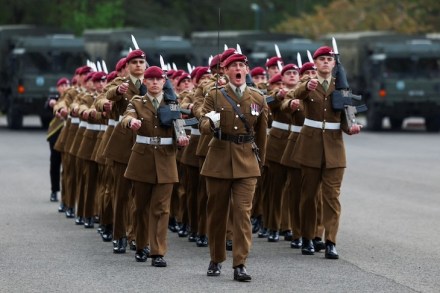
When the Berlin Wall fell, the British Army had 152,800 soldiers. Tony Blair’s government cut this to 110,000; David Cameron’s reduced it to 87,000. Plans to let that number fall to 82,000 were accelerated by the former defence secretary Ben Wallace. It’s generally accepted that by next year numbers will have dropped to 72,500. That’s a generous estimate: there are credible reports the army could soon number just 67,800. This week the British Army is playing a leading part in Operation Steadfast Defender, the largest Nato exercise in peacetime history. Yet it is smaller than it has been at any point since the 1790s. More importantly, it’s far too small and too badly equipped to deliver everything we’re promised it can do.