Eliot Wilson

Eliot Wilson

Eliot Wilson was a House of Commons clerk, including on the Defence Committee and Counter-Terrorism Sub-Committee. He is contributing editor at Defence On The Brink and senior fellow for national security at the Coalition for Global Prosperity

Does Starmer’s ‘cast-iron’ defence spending pledge mean anything?

From our UK edition

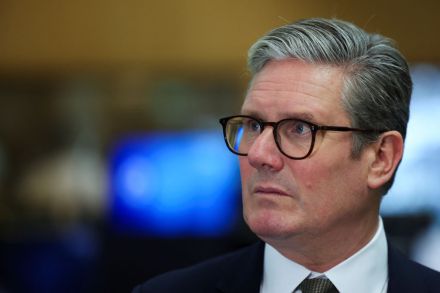
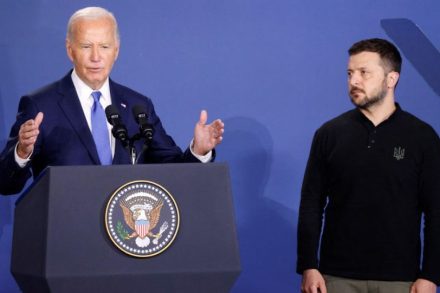
When the agenda for this week's Nato summit in Washington DC was announced, one of the items on it was funding for the alliance. This was no surprise: the need to financially supporting Ukraine since the Russian invasion in 2022 and the possibility of a second Trump presidency leading to a lower US commitment have brought the issue of money into sharp focus. It transpires that the new Prime Minister, Sir Keir Starmer, is urging his fellow Nato leaders to increase their levels of defence spending, but he may find that his moral authority is shaky. The subject of defence spending is one which has bedevilled the alliance for years.

What will Starmer’s fellow world leaders make of him at the Nato summit?

From our UK edition

In Westminster, Sir Keir Starmer is still in the honeymoon period as Prime Minister. In Washington, where Starmer heads for the start of the Nato summit today, the welcome is likely to be somewhat less warm. The new British team, made up of Starmer, foreign secretary David Lammy, defence secretary John Healey, and Nick Thomas-Symonds, now Cabinet Office minister in charge of 'European relations', will be greeted with courtesy and encouragement. But the red carpet won't be rolled out: Nato leaders liked, rather than loathed, Rishi Sunak's government. They felt him to be a man with whom they can do business. They will be eager to know if the same can be said for Starmer, a man who deliberately made his election strategy vague and anodyne.

What will David Lammy’s ‘gear shift’ mean?

From our UK edition

Next summer, David Lammy will celebrate 25 years as a Member of Parliament. At 51, he has just been appointed Foreign Secretary after three years shadowing the role. Despite rare and valuable ministerial experience, he is an unlikely candidate for Britain’s chief diplomat. His first pronouncements as foreign secretary stress change: ‘a reset on Europe, a reset on our relationships with the global south, and a reset on climate’. We will have not only resets but ‘gear shifts’, whatever that might mean: ‘gear shifts on European security and on global security, given all the problems that we’re seeing in the Middle East’. It is very Starmerist to treat change as a destination rather than a journey.

The election has left Irish unionism in crisis

From our UK edition

The voters of Northern Ireland are used to being an impenetrable afterthought to most mainstream commentators in Britain. The general election has, however, delivered a series of enormous shocks, many of which are in danger of being overlooked. One of those is that Sinn Féin has seven Members of Parliament and is, for the first time in Northern Ireland’s history, the largest party at Westminster. But that is at best nuanced, and at worst misleading. The deeper story is the crisis facing unionism. Sinn Féin, founded in 1905 when A.J. Balfour was still prime minister, and for many years the political wing of the Provisional IRA, held the seven seats it won at the last general election.

Mark Rutte can’t rescue Nato

From our UK edition

No-one really thought that Klaus Iohannis, Romania’s president since 2014, was going to be the next secretary general of Nato. Iohannis put himself forward in March as a candidate who would bring a new perspective to the leadership of the alliance, but it was never a plausible bid. When Romania’s Supreme Council of National Defence announced last week that Iohannis was withdrawing his name, it removed the last obstacle for Mark Rutte, the Dutch prime minister, to be anointed. Rutte is the ultimate technocrat. Pending formal confirmation, Rutte will take office as 14th secretary general of Nato on 1 October 2024, succeeding Jens Stoltenberg of Norway who has served for a decade.

Unionists are right to feel furious with Nigel Farage

From our UK edition

Nigel Farage likes to see himself as a reliable pal, so it was very much in that spirit that Reform UK’s new leader said that he was endorsing two Democratic Unionist Party candidates, Ian Paisley Jr in North Antrim and Sammy Wilson in East Antrim. Both are DUP stalwarts. Both are very likely to be re-elected on 4 July. Farage’s endorsement rests on their support for him during the long years of fighting to achieve and secure the UK’s departure from the European Union. The only problem is that Reform UK had previously signed a formal ‘memorandum of understanding’ to support the candidates of their rivals, Traditional Unionist Voice (TUV) – the unionist party founded by former DUP politician Jim Allister.

Sunak’s D-Day departure was extraordinarily disrespectful

From our UK edition

Rishi Sunak’s decision to leave Thursday’s 80th anniversary commemoration of D-Day in Normandy was extraordinary, stupid and disrespectful. He accompanied the King to a British ceremony at Ver-sur-Mer in the morning, at which Sir Keir Starmer, the leader of the opposition, was also present. But Sunak returned to the UK before the afternoon’s international event at Omaha Beach. It transpired that he spent the rest of the day recording an election campaign interview with ITV.

Have the Tories done enough for veterans?

From our UK edition

The Conservative party is returning to defence and security for another election pitch and has unveiled a series of measures to support armed forces veterans. The proposals include a Veterans’ Bill enshrining rights, cheaper railcards for former service personnel and tax allowances for those who employ them. Taken with a plan to introduce a form of national service and Labour’s performative commitment to renewing the UK’s independent nuclear deterrent, it is making the election campaign more defence focused than anything we have seen since the 1980s. The challenges facing veterans as a result of their service are real and substantial A few weeks after the general election, the Office for Veterans’ Affairs will celebrate its fifth anniversary.

Starmer’s ‘national security’ pitch looks insecure

From our UK edition

Still haunted by the memory of Jeremy Corbyn’s leadership, Keir Starmer has devoted today to reassuring the electorate that he is committed to maintaining nuclear weapons. The Labour leader is determined not to be seen as unreliable on defence and national security, so has announced that HIS government will introduce a ‘triple lock’ on the nuclear deterrent. A ‘triple lock’ is a tedious phrase, beloved by politicians who have been so careless with promises that they have to engage in a linguistic arms race. If they say they will do something, voters simply don’t believe them, so instead they must create the impression of an inviolable pledge, a measure that will be permanent and irreversible – something that is, happily, impossible in our system of government.

Labour’s law and order plans are pure vibes

From our UK edition

Most observers would agree that Yvette Cooper, the shadow home secretary, is a serious person. One newspaper profile last year spoke of her ‘steely determination’. Sir Keir Starmer knew what he was doing when he appointed her to the Home Office brief, the toughest and most unforgiving in Westminster. On Wednesday, while the party leadership was mired in accusations of purging its left wing, Cooper went into bat for Labour’s law and order credentials, promising to ‘take back our town centres from thugs and thieves.’ Efficiency savings are notorious in Whitehall.

Labour needs to be clearer on defence

From our UK edition

It used to be axiomatic of British politics that the Conservative party held a reputational advantage when it came to defence and security, and that Labour always had to make a greater effort to reassure the electorate. Opinion polls suggest that’s no longer true, but atavistic political instincts are resilient, and even now Sir Keir Starmer and his shadow cabinet colleagues feel a degree of pressure. Hence the deployment of Yvette Cooper.

The logic of national service

From our UK edition

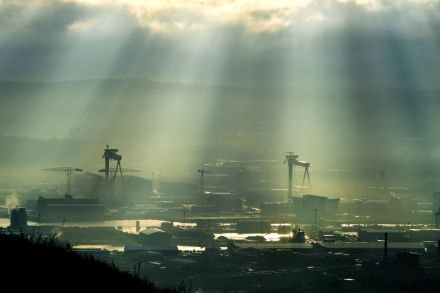
It would be hard to argue that the Conservatives have had a flawless start to the 2024 general election campaign. Rishi Sunak’s rain-drenched Downing Street announcement, the removal of a Sky News journalist from a media event, the symbolism of an inexplicable prime ministerial visit to Belfast’s Titanic Quarter – almost every move so far has required immediate damage control. The unveiling of a plan to introduce some kind of compulsory national service seems at first glance like another hasty gambit which has created its own ecosystem of problems. The idea that it is an unacceptable curtailment of personal liberty is hard to sustain ‘Bring back national service!' is a well-worn conservative trope.

Can Rishi Sunak get Britain to like him again?

From our UK edition

When Rishi Sunak stood in the rain in Downing Street to announce a general election on 4 July, he made a speech which was unusually personal. Looking back on his steep rise to power – five years ago he was not even a cabinet minister – he spoke of the challenges the country has faced and how they have affected him. Seeing how people responded to the pandemic, he said: 'I have never been prouder to be British'. The Prime Minister knows this is a weak point for him The Prime Minister knows moments like this are a weak point for him.

Zelensky’s time as president is up, but he’s right to stay put

From our UK edition

Ukraine's president Volodymyr Zelensky's five-year term is up, but he's staying put. Unsurprisingly, some of Zelensky's critics – and the Kremlin – have questioned his legitimacy. But Zelensky, who marked five years in office on 20 May, is right not to step down. The idea that, as a result, there has been some unprecedented outrage against democracy simply doesn’t stand up. It is impossible to conduct a free, fair and representative presidential election The practical problem in holding an election is obvious. Russia’s annexation of Crimea and its occupation of parts of Donetsk and Luhansk in 2014 gave it control of 16,000 square miles of Ukrainian territory.

Why can’t Starmer be honest about reforming the Lords?

From our UK edition

Sometimes life comes at you fast. Barely 18 months ago, Sir Keir Starmer, beginning to scent general election victory in his future, pledged to abolish the House of Lords and replace it with an elected chamber as part of a project to 'restore trust in politics'. By Tuesday this week, the Labour leader in the upper house, Baroness Smith of Basildon, could make no firmer a commitment than keeping an 'open mind' to the possibility of phasing out the remaining 92 hereditary peers. That seems like quite a journey. Labour’s plans have gradually diminished since 2022 House of Lords reform is in some ways the ultimate parlour game for constitutional obsessives. It has a familiar and well-worn charm: it is, after all, more than 100 years since H.H.

Sunak’s dire warning will fall on deaf ears

From our UK edition

Even on the most optimistic reading, Rishi Sunak is drinking in the last-chance saloon. Today the Prime Minister is delivering a speech which is supposed to kick-start the general election campaign. Sunak wants to demonstrate that the Conservative party has the vision and policies to guide the country through a dangerous and uncertain future. But Sunak's speech seems to be striking the wrong note: one of doom and gloom rather than optimism. Sunak's speech has been rapidly dismissed as a bungled relaunch It's no surprise that Sunak's speech has been rapidly dismissed as a bungled relaunch. The PM’s thesis is that the next few years will see more change than the preceding few decades, and that we are in a dangerous era.

Does David Lammy really expect Donald Trump to forgive and forget?

From our UK edition

David Lammy has never been much of a diplomat. The veteran Labour MP is fond of lashing out at his critics, but now, as shadow foreign secretary, he has travelled to the United States to lay the groundwork for a future Labour government’s foreign policy. He may find that some of his earlier oratorical fury comes back to haunt him. He called Trump 'a racist KKK and Nazi sympathiser' Lammy has compared Conservative MPs in the European Research Group to Nazis and supporters of apartheid South Africa.

Could Andy Street be a future Tory leader?

From our UK edition

Andy Street was a political outsider when he was chosen as the Conservative party’s candidate for mayor of the new West Midlands Combined Authority in 2016. He was 53 and had enjoyed a successful career in retail, latterly as managing director of John Lewis and Partners. This weekend, after seven years as mayor, he was narrowly defeated by Labour’s Richard Parker, the margin just 1,508 votes out of a total of 600,000. Street has become a considerable figure in Conservative politics Street has become a considerable figure in Conservative politics, seen as straightforward and practical, an effective champion for his region. Partly this has been a result of his status as an outsider, someone who is not in hock to the party machine.

Labour had a lucky escape in the North East

From our UK edition

The election for the first North East of England mayor should have been a gift to the Labour party. Its candidate Kim McGuinness has duly won the role, but her tally of 41 per cent is superficially modest. This region is one of the Labour movement’s heartlands, steeped in coal-mining, shipbuilding and steel-making. It gave birth to the Jarrow March and the Durham Miners’ Gala. Ramsay MacDonald, Hugh Dalton and Manny Shinwell all represented Durham seats. The culture of the region is steeped in working-class pride and struggle. But, last year, something odd happened. For weeks there have been anxieties in the Labour leadership that Driscoll might win Labour began the process of choosing its candidate for the mayoral election over the summer.

Why did it take Rishi Sunak so long to up defence spending?

From our UK edition

Britain is putting its defence industry on a 'war-footing', the Prime Minister has said, as he vowed to boost spending to 2.5 per cent of GDP by 2030. It was only a matter of time that Rishi Sunak made such an announcement. After all, Russia’s invasion of Ukraine illustrated a simple truth: that the world is more dangerous now than for a generation, and nations will need to increase their defence spending if they want to protect themselves and their interests. Grant Shapps, Penny Mordaunt and Tom Tugendhat had all expounded this view from within government, and now it seems the PM has given his seal of approval. The money is desperately needed Sunak's pledge, made on a European visit which takes in Poland and Germany, means tens of billions of pounds more for the armed forces.