Eliot Wilson

Eliot Wilson

Eliot Wilson was a House of Commons clerk, including on the Defence Committee and Counter-Terrorism Sub-Committee. He is contributing editor at Defence On The Brink and senior fellow for national security at the Coalition for Global Prosperity

The speech that reveals the DUP’s radical shift

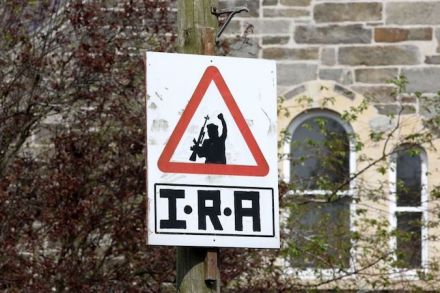
The Democratic Unionist Party is nothing if not intransigent. For many years, the DUP provided a masterclass in judging the past, and tying it round the neck of the future. Its founder, Ian Paisley, was best known for uttering the same word three times: 'Never! Never! Never!'. But now that the party has once again started the hard yards of governing Northern Ireland with Emma Little-Pengelly as deputy first minister, there are signs that the DUP is radically changing. Donaldson has not gone soft on the Union It is still not quite four weeks since the Northern Ireland Executive was appointed after the devolved assembly at Stormont had sat idle for two years. Michelle O’Neill of Sinn Féin became first minister and leads a ministerial team jointly with Little-Pengelly.

Chaos in the Commons benefits the SNP

Wednesday’s chaotic procedures in the House of Commons have handed an enormous soapbox to the SNP’s Stephen Flynn. The MP for Aberdeen South, who has led the Scottish National Party’s Westminster group since December 2022, has been intoning gravely that the debate 'descended into farce' and, with suppressed fury, told the speaker that he no longer trusted him to preside impartially over the House. Flynn has tabled an early-day motion which, at time of writing, had 66 signatories, and expresses 'no confidence in Mr Speaker'. Flynn has cause to be upset. His is the third-largest party in the House, with 43 MPs. Moreover, the debate on Gaza was a day on which, rarely, the SNP had chosen the subject under discussion.

How Britain helped Robert Mugabe rise to power

A century ago today, Robert Mugabe was born. The man who would come to rule over Zimbabwe between 1980 and 2017 was a brutal and autocratic tyrant. Mugabe shattered his country’s economy, oversaw vicious human rights abuses and left public services, especially healthcare, in ruins. But while Britain would ultimately see Mugabe as an adversary, it played a key role in his rise to power. Mugabe was, of course, not any western government’s ideal candidate to lead a newly independent African nation. He was a Marxist-Leninist who believed in command economics; in his guerrilla phase in the 1970s, Mugabe had been given unconditional support by the People’s Republic of China. But Britain was not presented with an ideal choice.

Why Denmark is sending all its artillery to Ukraine

The Munich Security Conference has been nicknamed the ‘Davos of defence’. Every year, politicians, security analysts, military leaders and campaigners assemble at the five-star Hotel Bayerischer Hof in Germany’s third city for a couple days of schmoozing, networking and lecturing. When this year’s conference concluded on Sunday, the Danish prime minister Mette Frederiksen played an ace. She announced that Denmark would donate all of its artillery to Ukraine. ‘I’m sorry to say friends, there is still ammunition in stock in Europe,’ she told delegates. ‘This is not only a question about production because we have weapons, we have ammunition, we have our defences that we don’t have to use at the moment, that we should deliver to Ukraine. We have to do more.

Britain can no longer defend itself

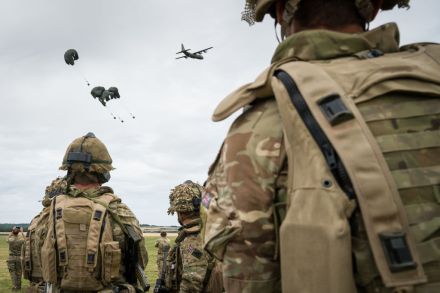
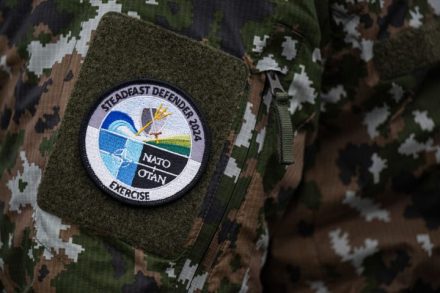
When the Berlin Wall fell, the British Army had 152,800 soldiers. Tony Blair’s government cut this to 110,000; David Cameron’s reduced it to 87,000. Plans to let that number fall to 82,000 were accelerated by the former defence secretary Ben Wallace. It’s generally accepted that by next year numbers will have dropped to 72,500. That’s a generous estimate: there are credible reports the army could soon number just 67,800. This week the British Army is playing a leading part in Operation Steadfast Defender, the largest Nato exercise in peacetime history. Yet it is smaller than it has been at any point since the 1790s. More importantly, it’s far too small and too badly equipped to deliver everything we’re promised it can do.

Can Sinn Fein’s Michelle O’Neill save Northern Ireland?

The appointment of a new executive by the Northern Ireland Assembly on Saturday was a hugely significant moment. There was no government at Stormont for exactly two years from 3 February 2022 until Michelle O’Neill of Sinn Féin accepted the assembly’s nomination to be first minister at the weekend. She is the first Republican leader of Northern Ireland since the state was created in May 1921, what its inaugural prime minister, Sir James Craig, would describe as 'a Protestant parliament and a Protestant state'. This was history being made live on television.

It is still early days for the DUP’s new power-sharing deal

It has been nearly two years since the last elections for the Northern Ireland Assembly. Sinn Féin, for the first time, emerged as the largest party, with 27 of the 90 seats, two ahead of the Democratic Unionist Party (DUP). But the assembly has only met four times since then. Business cannot proceed until a speaker is elected, and the DUP has consistently refused to take part in the cross-community process of choosing one. Now, 21 months later, the DUP has finally agreed to a deal with the UK government to restore power-sharing to Stormont.

Jacques Delors: an unlikely Brexit hero

‘Up yours, Delors!’ It was the perfect headline for the Sun: crude, defiant, unambiguous and directed at a Frenchman. The paper’s front page on 1 November 1990 called on ‘its patriotic family of readers to tell the filthy French to FROG OFF!’ The tabloid was asking its readers to turn towards France at noon the following day and shout the insult in response to the proposal by the President of the European Commission, Jacques Delors, to introduce European monetary union, setting economic convergence criteria with the objective of a single currency and a single central bank.

Why can’t the Tories come up with a good nickname for Keir Starmer?

When a nickname really hits its target, there is a satisfying beauty about it: a quippy sobriquet that catches the attention and goes to the heart of some aspect of a person’s character. It is a measure of the Conservative party’s inability to get a convincing hold on Sir Keir Starmer that they have tried tag after tag – Captain Hindsight, Sir Softy, the dismal Captain Crasheroony Snoozefest – but none has yet found its mark. To real nail Starmer and come up with a nickname that sticks, the Tories should perhaps look across the pond for inspiration. Donald Trump, for all his faults, is in a category of his own when it comes to damning an opponent with a nickname.

The truth about Ireland’s Troubles amnesty law challenge

Christmas is a time when those who are closest to each other fight most bitterly. Ireland, which is bringing a legal case against the UK under the European Convention on Human Rights (ECHR), appears to be acting in the spirit of the season. The country's deputy prime minister Micheál Martin announced yesterday that his government intended to challenge the provisions of the Northern Ireland Troubles (Legacy and Reconciliation) Act 2023 at the European court in Strasbourg. The Taoiseach, Leo Varadkar, framed his government’s intervention in particularly provocative terms. 'We did make a commitment to survivors in Northern Ireland and to the families of victims that we would stand by them,' he said.

Dominic Cummings is right about the trouble with cabinet leaks

It's a pity that Dominic Cummings's rude WhatsApp messages dominated the headlines following his appearance at the Covid inquiry this week. Boris Johnson's estranged consigliere had plenty to say about the problems with Whitehall – much of which risks getting ignored because of the focus on leaked messages. One of his targets was the cabinet, which was sidelined during the pandemic because of leaks. 'Cabinet was largely irrelevant to policy or execution in 2020,' Cummings wrote in his inquiry evidence. 'Its constant leaks meant it was seen by everyone in No. 10 as not a place for serious discussion.' Cabinet became a cipher, and 'real discussions happen(ed) elsewhere'.

Why does the BBC think we need a Today programme podcast?

Is there really room in the crowded market for a new podcast about politics, presented by two male Oxbridge graduates? The BBC thinks so: the team behind Radio 4’s Today programme is launching a new weekly podcast hosted by Nick Robinson and Amol Rajan. This is a 'bold commitment from the BBC to continue to build the Today brand’, according to the, erm, BBC.  In case you are waiting for the punchline or the big reveal, there is nothing different about The Today Podcast. Its presenters will ‘give their take on the biggest stories of the week’, though the audience is also promised a range of guests and ‘insights from behind the scenes at Radio 4’s Today’.

Is it time to admit China is a ‘threat’?

Former Tory leaders are queuing up to take a pop at the government's response to the Westminster spy story. Liz Truss has labelled China the 'largest threat' to 'democracy and freedom' after it emerged that a parliamentary researcher had been arrested on suspicion of spying for the Chinese government. Iain Duncan Smith suggested that 'the problem lies in the mess we have got into over whether we define China as a threat or not'. So far, the government is doing its best to sit on the fence. Rishi Sunak has said he 'will not accept' Chinese interference in the UK's democracy, but has refused to go much further.

Britain’s shrinking army faces an uncertain future

Old soldiers never die, the song goes, they just fade away. Next year, General Sir Patrick Sanders, Chief of the General Staff and the professional head of the British Army, will step down after less than two years in post. He is 57, and will have served for 40 years. But he is not fading away; rather he leaves under a muted storm, having clashed with the Chief of the Defence Staff, Admiral Sir Tony Radakin, and after vainly resisting cuts to the size of the Army. Under current plans, our land forces will shrink to 73,500 by 2025. We have not fielded so few soldiers since 1799. It is widely believed – and the government has done nothing to deny – that Sanders’ successor has already been chosen.