Druin Burch

Druin Burch is a consultant physician, a former junior doctor, and the author of books on history and medicine.

I work in the NHS: the government cannot accept doctors’ pay demands

From our UK edition

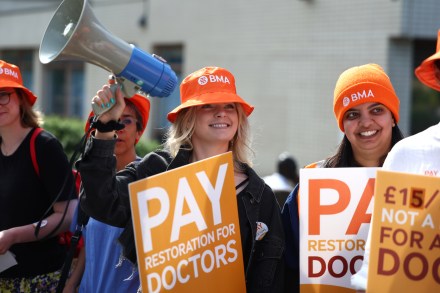
Junior doctors are set to strike this week, despite winning little public sympathy with their demand for a 29 per cent pay rise. Doctors in their self-righteous mode – as many recently have been over this row – are insufferable. I sympathise with their situation, but they should do themselves a favour – and get back to work. I will be one of the consultants covering shifts for the juniors on Friday, and I am looking forward to doing so. Never having worked in an elective speciality, weekends and public holidays, like evenings and nights, have always been part of my working life. My speciality never closes its doors or takes a break.

We should raise, not lower, the voting age

From our UK edition

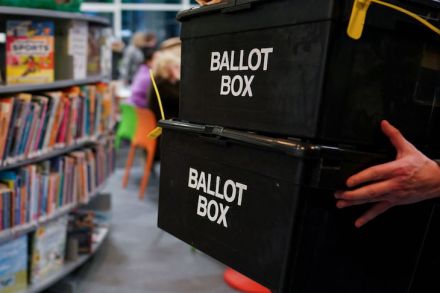
Keir Starmer's decision to lower the voting age to 16 is widely seen as a cynical attempt to secure votes, but the truth is more frightening. Politicians pursuing self-interest are merely cynical; the real menace comes from those committed to utopia, as some Labour types appear to be in their drive to make democracy 'better' by expanding the franchise. Personally, I think the voting age should rise, significantly, and we should consider – at no extra cost – removing it from those in decline. Labour say the issue is one of fairness. I believe they’re sincere, but wrong My daughter is 14. She has the makings of an unusually sensible young woman, and in two years she will not be allowed a free hand when it comes to choosing her A levels.

I’ve come to love the nudist beach

From our UK edition

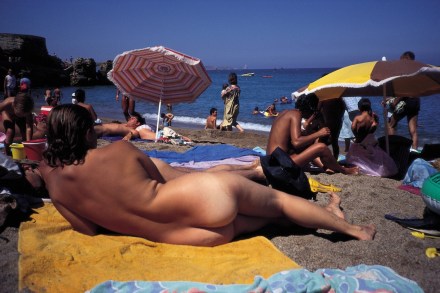
Homer is much praised, but I find him unreliable. The Mediterranean cove in which we were swimming, for example, was not in the least wine-dark. We were turning around and swimming back, the sights on display at the nudist end of the beach having startled the spluttering elegance of my head-above-water breast-stroke. ‘I wouldn't mind if it was only young women,’ I said to my wife, as we swam back. Rather than accepting my dispassionate nod toward prevailing cultural aesthetics, she replied she didn’t mind in the slightest, and couldn’t see the harm. An unspoken charge of puritanism hung in the air. ‘It was just a bit too much like an outpatient clinic,’ I said, and good-humoured sympathy swung back in my favour.

Jews are good at almost everything. Apart from food

From our UK edition

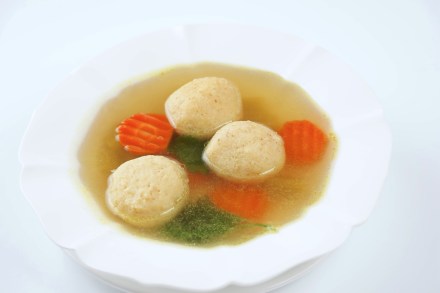
We Jews make up 0.2 per cent of the world’s population but have won 22 per cent of all the Nobel prizes ever awarded. And we have not done this with a tailwind. Mark Twain thought the reason Jews tended to do so well in business was above-average honesty. Jewish success has been so extravagantly out of proportion to their population that their finest gentile supporters have long sought reasons. Clive James, wondering about our influence in the arts, felt exclusion may have had its benefits. ‘Whole generations of Jewish literati were denied the opportunity of wasting their energies on compiling abstruse doctoral theses. They were driven instead to journalism, plain speech, direct observation and the necessity to entertain.

Wes Streeting has learnt nothing from the NHS’s past mistakes

From our UK edition

Yesterday, Wes Streeting and Keir Starmer announced a ten-year plan to save the NHS. 'There are moments in our national story when our choices define who are,' Streeting explained. 'Unless the NHS changes, the argument that it is unsustainable will grow more compelling. It really is change or bust. We choose change.' One wonders whether he was tempted otherwise. Starmer says the plan will oversee 'three fundamental shifts in how the NHS works'. First, care will move from hospitals to the community. Second, new technology will reduce admin and 'make booking appointments and managing your care as easy as online banking or shopping'. Third, the NHS will shift its focus 'from sickness to prevention', preventing ill health to begin with.

The shame of a middle-aged gym-goer

From our UK edition

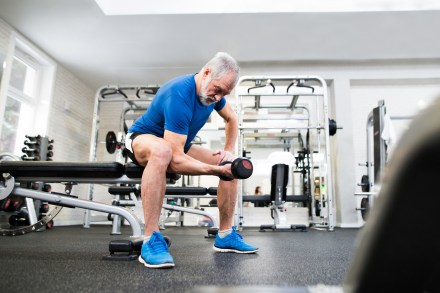
We are told being non-judgemental is a virtue, that discrimination is a vice, and that the avoidance of prejudice is not merely possible but laudable. Perhaps the quickest way to give the lie to these statements is to reveal to you that I am a 53-year-old man who regularly goes to the gym. What are we to make of someone of advanced middle age who nevertheless spends some of his few remaining hours lifting bits of metal up and putting them down again? Prejudice, I fear, suggests the worst. In the gyms I attend, the mirrors show a mix of the youthful and good-looking, the muscled and toned. Then there are the very fat, with their looks of wild hope or sinking doubt, the smattering of the ordinary and eccentric.

The flaw in Wes Streeting’s AI NHS app

From our UK edition

Speaking at Blackpool Football Club earlier this week, Wes Streeting announced his latest bid to modernise the NHS: bold new additions to the NHS app. Artificial intelligence would be used to empower people, turning them into experts on their own conditions, while another feature would 'show patients everything from their nearest pharmacy to the best hospital for heart surgery across the country, with patients able to choose based on their preference'. These features will reportedly be introduced within the next three years, with an extra £10 billion allocated by Rachel Reeves in her spending review to fund NHS technology. How exactly will NHS providers be 'inspired' by patients being offered choice?

Respect thine elders

From our UK edition

Before the arrival of strawberries, and not long after the coming of the swifts, the elder salutes the coming of summer after its own fashion: emerging from roadsides and hedgerows, gardens and wasteland, and scenting them with its blooms. Almost a century ago, Maud Grieve, in her 1931 Modern Herbal, said ‘that our English summer is not here until the elder is fully in flower, and that it ends when the berries are ripe’. At this time, when thorn blossom – which made our hedgerows look set for a wedding – has faded, the elder, like cow parsley, offers its own floral exuberance.

NHS ‘spy scales’ won’t tackle childhood obesity

From our UK edition

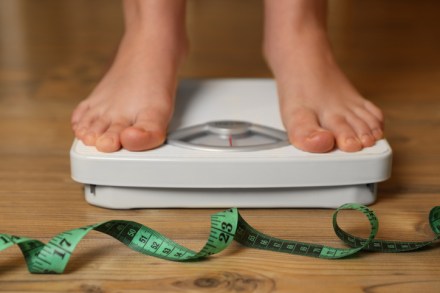
NHS England, ostensibly wishing to respond to the challenge of childhood obesity, announced yesterday the introduction of 'spy scales' to monitor children’s weight remotely. These devices, which conceal the user’s weight, transmit data to an app that praises kids when they lose weight and offers guidance when they don’t. But NHS England is missing the point. Whether the scales are justified depends entirely on how much they work to help kids lose weight, and NHS England appears to neither know nor care. That’s a pity, because knowing and caring about what works is its job.

The trouble with GPs

From our UK edition

This week, Wes Streeting – defending Labour’s rise in National Insurance contributions and seeking to fend off the surging Reform party – announced an extra £102 million to improve primary care. The money, the Health Secretary explained, would be given to a thousand surgeries that were prevented from taking on new patients by not having the building space to see them in. General Practice has collapsed. But will Streeting's funds really help fix it? Many readers will be able to recall the GPs of their youths, doctors who knew them and knew their parents.

What’s wrong with national stereotypes?

From our UK edition

Saying that national generalisations have fallen out of fashion is an understatement. Stereotypes have become less common and less tolerated. But not all is unblemished improvement, and something of value has been lost. National generalisations – often misnamed racial – now veer close to thought crimes. A pity – national generalisations are a basic tool for making sense of the world, and for understanding how people’s backgrounds shape their values, character and culture. Abusus non tollit usum – that something can be misused does not mean it should not be used. As a man with a very limited range of anecdotes and conversational gambits, I frequently repeat myself. Handily, I work as a hospital doctor, supported by an ever-shifting cast of juniors and students.

Why I’ve given up on bacon

From our UK edition

Having long been a man whose spirits wilted if meat was not the centre of his meal, I have become almost vegetarian. It’s routinely predictable for age to lead us astray from our youthful socialism, but I find my dietary change more difficult to explain. My younger self would view my politics with horror and my diet with incredulity. I remain partial to eating flesh, but the conviction that any plate without it must be a side dish has evaporated. For most of my life, meat and two veg was my credo – and if the two vegetables were ketchup and mustard, then all the better. But these days I often cook without remembering to include anything that once had blood – and am bemused to find myself content. The vegetable delivery company Natoora bears some of the blame.

Oxford is right to remember its German war dead

From our UK edition

The Queen’s College, Oxford, has put in a planning application to add the names of five alumni who died fighting for the Germans to its first world war memorial. Richard Tice, deputy leader of Reform, expressed his outrage at the plan earlier this week. 'Where will this wokery end?' he told the Telegraph. 'War memorials in the UK should be to remember those who paid the ultimate sacrifice to protect and defend the Allied nations.' The Great War hit Oxford colleges particularly hard. 20 per cent of the 15,000 who enlisted died. Officers led from the front, which was reflected in their mortality rate – almost double the overall average. 'There is some corner of a foreign field' runs in both directions William Spooner, warden of New College, took a stand.

Have we finally developed tastebuds?

From our UK edition

We British are not famed for culinary daring. An adventurous meal has traditionally been one that lacks potatoes. Nose-to-tail eating is mostly anathema to a nation that prefers the blandest part of the chicken because it’s the easiest to cut up. Poverty and shortage were not enough to spur our creativity during postwar rationing. The food writer Elizabeth David recounted a Scottish schoolmaster’s wife who recoiled in horror at her freshly gathered chanterelles. A fisherman did the same on spotting her with a crab, both reacting with the same appalled cry: ‘You’re never going to eat those dirty things?’ Few in Britain praise dishes of pig’s ears or chicken knees, but over the past 30 years our culinary character has improved.

MPs deserve more than a £2,500 pay rise

From our UK edition

It looks set to be a happy April for MPs who are in line for a 2.8 per cent pay rise, lifting their salaries to £93,904. Your reaction to that figure likely depends on how much you earn. So does mine – and since I’m about to argue that MPs are underpaid, it’s only fair I give a sense of my own finances. I’ll stay schtum about my books and biotech startup, but I’ll admit – no boasting intended – that this piece will net me, after tax, somewhere in the mid to high two figures. Can it be right that we pay our MPs significantly less than hospital consultants? As my byline makes clear, I’m also a consultant physician. Our salaries, like those of MPs, are public information.

No one is immune from a groupchat blunder

From our UK edition

On Monday, Jeffrey Goldberg, the editor of the Atlantic, told the entertaining story of being added, alongside Pete Hegseth and J. D. Vance, to America’s group-chat plans to bomb Yemen. Not the most obvious stuff of comedy, perhaps. Yet the affairs of men turn farcical precisely when they’re trying to be most serious. The cast here included the US National Security Advisor, the Secretary of Defence, the Vice President, the White House Chief of Staff, the Director of the CIA, and a handful of others holding Importantly Capitalised roles. Much is already being made of the fact that those involved have previously frothed at the mouth about their opponents’ sloppiness with classified information, but the greater point is not about Republican hypocrisy.

Have we become too reliant on antidepressants?

From our UK edition

One in seven British adults – almost nine million people – now take antidepressants. Yet a study attached to the University of California San Francisco suggests we don’t actually know if they should. The paper from the US, led by William Ward and published last month, exposes a glaring flaw: American trials test these drugs for months, while in the real world patients take them for years. In the UK, for example, just over 25 per cent of patients have been taking antidepressants for five years. This gap raises a question medicine has faced before: how do we know our treatments work? Antidepressant usage has soared but happiness has not For centuries, doctors did more harm than good.

Have you got compassion fatigue?

From our UK edition

Experts warn that doctors like me risk a condition known as ‘compassion fatigue’ – an emotional numbness that comes from too much caring for too long. But aren’t we all on the edge? Distant hardships are now visible as they happen, and the sense that victims are everywhere becomes vividly real. Newsreaders, documentary makers, editorialists, politicians and campaigners imply we’re shallow unless consumed by the wretchedness they describe. I meet the unfortunate, struggling and afflicted on my ward rounds. And I deal with those who have been made frail by age, bad luck and bad choices. Obstetricians get flowers and wine for helping bring wonder into people’s lives, orthopaedic surgeons for fixing hips and restoring freedom. I tend not to get gifts.

Sydney Smith’s love for life lives on

From our UK edition

Why should anyone care about Sydney Smith, who died on this day in 1845? 180 years have diminished the stature of his worldly achievements. He was an Anglican cleric who campaigned for an end to slavery, against the oppression of Catholics, for moral reform in the church and democratic reform in parliament. His political arguments have lost most of their interest in a world where those questions feel settled.  Smith helped found the Edinburgh Review. He suggested the motto 'tenui musam meditamur avena' – ‘we cultivate literature on a little oatmeal’ – but this was 'too near the truth to be admitted, and so we took our present grave motto from Publius Syrus, of whom none of us had, I am sure, ever read a single line', he said.

Why the NHS is failing

From our UK edition

The NHS is swallowing more money than ever, yet delivering worse results. Now its failings are not only hurting patients, but also weighing down the economy. Employment in healthcare, said the Bank of England in last week’s Monetary Policy Report, has surged since 2019, while productivity has dropped. The Bank downgraded its 2025 growth forecast for the country from 1.5 per cent to 0.75 per cent, blaming the public sector – which has ballooned in size and shrunk in effectiveness – and healthcare in particular. After thirty years working in medicine, I’m not surprised. I have seen a few genuine improvements, but I have also seen the NHS become far more bloated and less efficient. In hospitals, more doctors – and, in particular, more senior ones – look after fewer patients.