Douglas Murray

Douglas Murray

Douglas Murray is associate editor of The Spectator and author of The War on the West: How to Prevail in the Age of Unreason, among other books.

Blind, bovine hope will get us nowhere – it’s time to change our response to Islamic extremism | 4 June 2017

Last night seven people were killed and at least 48 injured in terror attacks in London Bridge and Borough. This is the country's second terrorist attack in less than two weeks, following the Manchester Arena attack last month. On Friday, Douglas Murray wrote for Coffee House about the need to change our approach to Islamic extremism. Last Sunday, I appeared on the BBC’s Sunday Politics to discuss the aftermath of the Manchester attack. I said what I thought, and various Muslim groups promptly went bananas. This was not caused by my suggestion that this country should finally crack-down on British officials who spend their retirements working as shills for the House of Saud.

Blind, bovine hope will get us nowhere – it’s time to change our response to Islamic extremism

Last Sunday, I appeared on the BBC’s Sunday Politics to discuss the aftermath of the Manchester attack. I said what I thought, and various Muslim groups promptly went bananas. This was not caused by my suggestion that this country should finally crack-down on British officials who spend their retirements working as shills for the House of Saud. Nor by my ridiculing of that modern European tradition whereby someone blows us up and we respond by singing John Lennon songs (and now Oasis too). Rather they objected to my simple two-word suggestion that we could all do with ‘less Islam’. In a short film preceding the studio discussion, I mentioned that countries like Poland, Hungary and the Czech Republic have very little Islam and very little Islamic terror.

Does Andy Burnham regret his opposition to the ‘Prevent’ strategy?

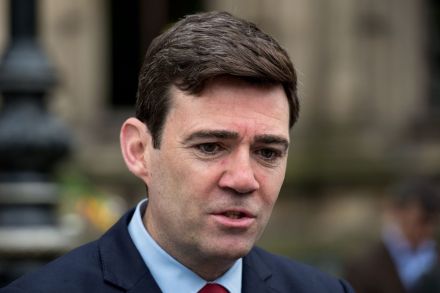
Perhaps we’re now past the moment of shock. Certainly we’ve moved fairly swiftly past the other stages of post-massacre grief. With the departure of Katie Hopkins from LBC it is good to see that Monday night’s attack in Manchester has not gone completely unpunished. The desire to point fingers and scapegoat is a perfectly normal response to an outrage of course. It’s just people’s priorities I worry about. However, since people seem willing to start pointing fingers, perhaps I can suggest some candidates. Andy Burnham. In order to get elected Mayor of Manchester, Andy Burnham made a tactical decision to cosy up to the Muslim communities of Manchester.

The known wolf

The meeting place of the two worlds could not have been more sharply defined. In Manchester Arena, thousands of young women had spent the night singing and dancing at a show in Ariana Grande’s Dangerous Woman tour. Songs such as the hit ‘Side To Side’ were performed: ‘Tonight I’m making deals with the devil/ And I know it’s gonna get me in trouble…/ Let them hoes know.’ Waiting for them in the foyer as they streamed out was Salman Ramadan Abedi, a 22-year-old whose Libyan parents settled in the UK after fleeing the Gaddafi regime. A man whose neighbours said he must have been radicalised in Manchester, ‘all those types’ having been driven out of Tripoli.

Islamists are very clear about what they want – we just aren’t listening

The meeting place of the two worlds could not have been more sharply defined. In Manchester Arena, thousands of young women had spent the night singing and dancing at a show in Ariana Grande’s Dangerous Woman tour. Songs such as the hit ‘Side To Side’ were performed: ‘Tonight I’m making deals with the devil / And I know it’s gonna get me in ­trouble... / Let them hoes know.’ Waiting for them in the foyer as they streamed out was Salman Ramadan Abedi, a 22-year-old whose Libyan parents settled in the UK after fleeing the Gaddafi regime.  A man whose neighbours said they believed must have been radicalised in Manchester, ‘all those types’ having been driven out of Tripoli.

The British broadcaster brave enough to discuss Islamic violence

Last night Channel 4 broadcast a deep and seriously important programme. ‘Isis: The Origins of Violence’ was written and presented by the historian Tom Holland and can be viewed (by British viewers) here. Five years ago, to coincide with his book ‘In The Shadow of the Sword’ about the early years of Islam, Holland presented a documentary for Channel 4 titled ‘Islam: The Untold Story’. That was something of a landmark in UK television.

Private Manning’s freedom comes at the expense of US security

Barack Obama's decision to commute the prison sentence of Private Manning was a final, disgraceful undermining of American interests by the outgoing US President. Today, Manning has been released from prison after serving seven years for leaking thousands of diplomatic cables and military files to Wikileaks. Manning's decision to dump vast swathes of stolen information with the Wikileaks organisation, which then published them, caused untold and untellable damage to America and her allies. It revealed operational details which should never have fallen into the hands of America's enemies. Manning ensured that they were available not just to such groups and nations but to the entire world. And of course leaks encourage leaks.

Is Le Pen really ‘far-right’?

What is ‘far-right’? With the progress of Marine Le Pen to France’s presidential run-off, the term has been liberally used — as it has been over recent years across the West. Golden Dawn in Greece, Jobbik in Hungary, and the Sweden Democrats are all said to be far-right, to name but three. The fact that the first two of those groups engage in intimidation, racism and overt displays of political violence would ordinarily distinguish them from a peaceful democratic party opposed to mass immigration like the Sweden Democrats. Yet everywhere there is the same name creep. The website Breitbart is frequently called far-right, as is the administration of Donald Trump.

Terrorism teaches a lesson that some still refuse to learn

Another knife-attack was thwarted yesterday in Westminster. Overnight there were anti-terror raids in Kent and London. These were unconnected, but police say that they have foiled an ‘active terror plot.’ All this will blend into the background soon, as much as last month’s attack in Westminster already has. Not because we don’t remember anything, but because we never learn anything. After last month’s attack in Westminster there seemed to be an even more concerted effort than usual to say that the perpetrator – a Muslim convert called Khalid Masood – probably suffered from some mental illness, was a mere madman, criminal or drug addict.

What does the UN think Saudi Arabia can teach us about gender equality?

In these tricky – not to say dark – times there is one place to which we can always turn for light relief: Geneva. The city itself may be unamusing. But it does play host to the world’s most hilarious organisation – the body which calls itself ‘the UN Human Rights Council’ (UNHRC). A few days ago, the Council voted to appoint members for the 2018-2022 term of its ‘Commission on the Status of Women’, a UN agency ‘exclusively dedicated to the promotion of gender equality and the empowerment of women.’ Among those appointed to the Commission was that notable supporter of gender equality – Saudi Arabia.

Turkish democracy has just died; Europe could not have saved it

Well farewell then Turkey.  Or at least, farewell the Turkey of Kemal Ataturk.  It’s a shame.  Ataturk-ism nearly made its own centenary. But the nation that he founded, which believed broadly in progressive notions such as a separation of mosque and state, has just been formally snuffed out.  President Erdogan’s success in the referendum to award himself Caliph-like powers for life finally sees the end of Turkey’s secular and democratic experiment. Perhaps the poll which gave him victory was rigged.  Perhaps it wasn’t.  In the same way that perhaps the ‘coup’ last summer was real.  Or perhaps it wasn’t.

The BBC’s adaptation of Decline and Fall was near-perfect

A politician once told me ‘You should try to remember to try to encourage us when we get things right and not just scold us when we get things wrong.’ I’m not sure anyone could keep to that civil piece of advice when it comes to politicians. But it should certainly apply to broadcasters. The BBC comes in for plenty of stick, and rightly so at times. But in recent weeks it has done something wonderful. Its adaptation of Decline and Fall – the third and last episode of which aired on Friday night – was a triumph. I had always assumed that this earliest of Evelyn Waugh’s novels was un-filmable. The plot is slightly sketchier, the characters slightly more limited than in Waugh’s later novels.

Berlin, Westminster, now Stockholm. On and on it goes

So this time it is Stockholm. And I am tempted simply to write ‘copy’, ‘paste’ and ‘repeat’ with links to my recent piece on the Westminster attack. Which in turn referenced my piece on the Brussels attack. Which itself was a re-run of my piece on one of the Paris attacks. And so on and on it goes. If there is nothing new to say it is because nobody has anything new to learn. On Wednesday of this week, two weeks to the day after Khalid Masood ploughed a car into the crowds on Westminster Bridge and stabbed PC Keith Palmer to death inside the gates of the Houses of Parliament, what was billed as a ‘Service of Hope’ took place in Westminster Abbey. One hopes that it consoled those injured and mourning.

In defence of  Ken

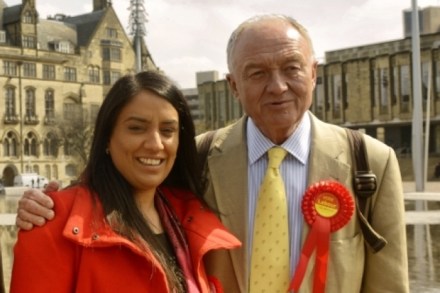
We never loved each other, Ken Livingstone and I. We first clashed in public more than a decade ago, and have enjoyed castigating each other ever since. But now that he has been suspended from the Labour party for a second year in a row, I come not to bury him but to praise him. For there is something valorous, even glorious, about his downfall. It was the MP for Bradford West who triggered his demise. In April last year Naz Shah was exposed for sharing anti--Semitic content on social media. Among these posts was a graphic advising the deportation of all Israeli Jews to the USA. Though such views are hardly a problem (can even be a boon) for a Bradford MP these days, any ambitious young politician may still find them a hurdle. Sure enough, Shah performed all the textbook PR moves.

In defence of Ken Livingstone

Listen to Douglas Murray and James Forsyth debating Ken Livingstone's non-expulsion: We never loved each other, Ken Livingstone and I. We first clashed in public more than a decade ago, and have enjoyed castigating each other ever since. But, now that he has been suspended from the Labour party for a second year in a row, I come not to bury him but to praise him. For there is something valorous, even glorious, about his downfall. It was the MP for Bradford West who triggered his demise. In April last year Naz Shah was exposed for sharing anti-Semitic content on social media. Among these posts was a graphic advising the deportation of all Israeli Jews to the USA.

The political dinosaurs aren’t helping matters

As a type of (Platonic) gerontophile, I never expected to say this, but can the dinosaurs not shut up? In recent weeks the nation has had to suffer repeat appearances on the television by Lord Heseltine.  In each interview the Remain-supporting peer appears ever more viciously angry - brimming over, indeed with a sort of concentrated, zealous fury at a nation that dared defy his imprecations on how to vote last June. Then this past weekend we had to witness the Leave-supporting Lord Howard talking up the possibility of war with Spain over Gibraltar.  This morning’s papers as a result get to talk quasi-seriously about a military confrontation over the rock.

The response to the Westminster attack has been predictably farcical

Since last week’s attack in Westminster, various readers have asked whether my list of ‘standard responses to terrorism’ has held true in the aftermath of this attack as in the aftermath of so many attacks before. And since it appears that good news must now immediately be seized from any tragedy – even within minutes of that tragedy occurring – in keeping with the times, I am happy to report that my list does indeed hold true. I had already noted last week that we were swiftly into the realm of hashtaggery with ‘Pray for London’ trending. I must say that I’m never sure how many of the people urging people to do this actually pray themselves, or think prayer works, or what it might achieve.

Pray for London, for Antwerp, for Nice: this is Europe’s new normal

The hashtag ‘PrayForLondon’ is trending on social media. But so is ‘Antwerp’. Because no sooner were we invited to pray for London than a man of ‘North African descent’ was narrowly prevented from doing something similar in the Belgian city. This is life as usual in Europe now, of course. But among the endless replays to date - and the endless replays yet to come - there are several things worth noting about Wednesday’s attack in London. The first is that the perpetrator – now identified as one Khalid Masood – was in one sense unusual. A recent comprehensive analysis published by my colleague Hannah Stuart found that among Islamist-related offences in the UK the most common age of the offender was 22.

The morally illiterate obituaries to Martin McGuinness are just what he would have wanted

Well the obituaries for Martin McGuinness are in. And many are as morally illiterate as the man himself could have wished for. For instance, various obituarists have noted that the young McGuinness’s failure as a young man to get an apprenticeship as a mechanic started him off on the road to terror. Few of these eulogists have noted the many people across continents and generations who also failed to get apprenticeships (often for even more sectarian reasons) and yet strangely refused as a consequence to pick up some pliers and an Armalite and torture and kill their way to political power. Other obsequies have been even stranger. Alex Salmond, for instance – perhaps recognising a fellow nationalist – praised Martin McGuinness as ‘a friend of Scotland’.

At least Martin McGuinness made old age. Many others didn’t

So Martin McGuinness has died. Already this is giving vent to the sort of ‘How McGuinness became a man of peace’ stories. Personally I have always thought the salient point about the man is not that he became a man of peace but that he was ever a man of violence. Over recent years a narrative has developed around the Troubles, that the people who ‘became men of peace’ are much to be admired.