Douglas Murray

Douglas Murray

Douglas Murray is associate editor of The Spectator and author of The War on the West: How to Prevail in the Age of Unreason, among other books.

A beginner’s guide to the AfD

The German public have, as predicted, kept ahold of nurse. But it is the breakthrough of the AfD into the German Parliament that is causing headlines around the world. Of course the four-year old party’s electoral success is also unsurprising. In elections last September the AfD were elected to representative roles in most of the country’s regional assemblies and beat Merkel’s party into third place in her own constituency. Nevertheless, yesterday’s electoral breakthrough is stunning and the success of this four-year-old party is among other things now causing a predictable rash of 1930s analogies.

Are refugees welcome to plant bombs on our trains?

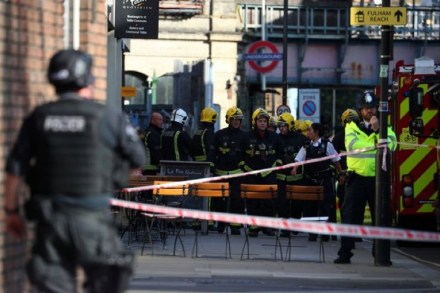
It’s all a long time ago now isn’t it?  All of three days since someone put a bomb on a London Underground train and then stepped out of the carriage.  Thankfully the detonator went off without managing to trigger the main bomb, which isn’t a mistake we can hope for every time.  30 people were injured on the District Line on Friday morning.  But if the bomb had done what it was meant to do then those 30 people wouldn’t have been treated for relatively light injuries.  Instead, bits of their remains would have been gathered together in some order and put into the dozens of body bags ordered for them and others at Parsons Green station. It remains strange how fast we pass over all of this.

The age of the unicorn question

I’ve been in Los Angeles for the last week, and it takes a special set of occurrences for someone to return to the UK from LA and think that Britain is getting a bit weird. Yet we appear to have managed it. While I was away there was the row about Jacob Rees-Mogg expressing his adherence to the Catholic church’s views on social issues (over which he has no legislative control). Then there was a row about whether it is bigoted to see any differences between boys and girls, and whether children can or should ‘choose’ which gender they are.

Political intolerance is again becoming normal in Europe

Four years ago, I pointed out here that today’s anti-fascists appeared to be getting rather fascistic. The occasion for that observation then was a group of ‘anti-fascists’ surrounding a man in Scotland and screaming at him to go back to where he came from. For some reason that action was deemed ‘anti-fascist’ rather than ‘fascist’ because the target was Nigel Farage and the mob proclaimed themselves to be ‘anti-fascists.’ To which one might add that North Korea is officially titled ‘The Democratic People’s Republic of Korea’.

Tower Hamlets is the bleak end-point of diversity

People sometimes accuse me of being an immovable pessimist about our continent’s future. And I normally reply with the simple truth that when the facts are pessimistic, I am pessimistic. Allow me to highlight three recent causes for pessimism. In my recent blog on the now routine, nay mundane, acts of terrorism occurring in Europe, I made one omission. In my defence it’s easy to do, not only because of the number of attacks, but because everyone moves on so fast. Even a few years ago, we used to linger for a little while over European citizens when they were slaughtered. Now we don’t even bother to learn much about them. The attack occurs, the good news story is searched for, and it’s all just yesterday’s news.

Islamist violence has become a normal part of European life

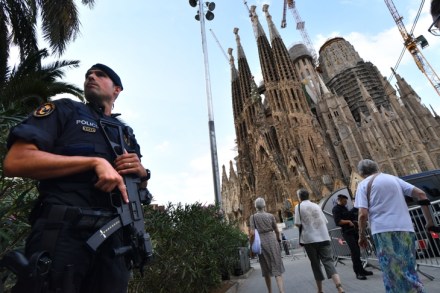
It’s just over a week since 15 people were killed in an Islamist attack in Barcelona, Spain. It appears that the person who organised the cell involved in that attack was an Imam called Abdelbaki Es Satty. In the days that have followed we have also learned that the country only narrowly avoided a far worse assault, and that the cell who were subsequently involved in a shoot-out with police had been planning to blow up a set of Spanish monuments including Antoni Gaudi’s masterpiece, the church of Sagrada Familia in Barcelona. Last night there were only two attacks in Europe. In the centre of Brussels a Somali-born man shouting ‘Allahu Akbar’ (‘Allah is Greatest’) attacked soldiers with a machete before being shot dead.

How many more times will the Eiffel Tower have to go dark?

I sometimes wonder whether news like this from last week... https://www.youtube.com/watch?v=boon6MkE7UI and news like this from this week... [caption id="attachment_9919952" align="alignnone" width="730"] The scene at Las Ramblas following the attack in Barcelona[/caption] ... will ever get joined up. Perhaps it will. Perhaps it won’t. Meantime I see that the lights were turned off on the Eiffel Tower again last night, this time to pay tribute to the dead in Barcelona. It’s the 11th time the Eiffel Tower has shut its lights down this year.

The ‘community leaders’ doing nothing to solve the grooming scandal

There are some foreign words so expressive that you long to absorb them into your own language, to add breadth, colour and depth. ‘Asshat’ (or ‘ass-hat’) for instance. This fine north-Americanism denotes a person who has their head so far up their own ass [Eng: arse] that they are literally wearing their ass as a hat. It is a term for which there is no precise equivalent in our English demotic. But it is useful, and I recommend its adoption. The specific cause of this recommendation is that I can think of almost nobody who claims to be any type of ‘community representative’ or ‘leader’ who is not a complete and utter asshat.

The reality of Europe’s migrant crisis

So here’s an interesting thing. Footage so striking that even the BBC has run with it. This is the film of a migrant boat landing on a beach in the south of Spain. In recent years for a whole variety of reasons, Spain has avoided the worst of the migrant crisis. Perhaps that’s why these images have broken through where the daily images from Italy this summer have not. Anyway, it’s hard to think of a more vivid encapsulation of the ongoing suicide of our continent than this one. If you believe Angela Merkel, the European Commission and most of our political class, the people storming that Spanish beach are doctors, engineers and physicists fleeing the terrible civil war in Morocco, and just desperate to lend their skills to our continent.

Kevin Myers’ eager critics should feel ashamed of themselves

I have been out of the country for a little while, doing my bit to support the Greek economy. I return to find a most surprising subject for the latest two minutes of hate. Lest anyone think I’m just carrying water for a friend I suppose I should say at the outset that I don’t know Kevin Myers, and don’t believe I’ve ever met him. But like many other people I have admired his writing over the years, and think that his book ‘Watching the Door: cheating death in 1970’s Belfast’ is one of the best memoirs of the Troubles that I know. Brave, funny, moving and profound, it is - as Andrew Marr said – a book that ‘stinks of the truth.

Richard Dawkins is dragged into America’s tedious free-speech war

Anyone who has followed the free-speech wars in America over recent years will know that by now, basically, nobody can speak anywhere. Especially at centres like that one-time home of free speech, Berkeley, California, you now cannot speak in public if you’re a man or a woman, if you’re gay or straight and if your skin is white or not. Now to the great list of categories of people who should not be allowed to speak in America we can add scientists. Richard Dawkins is, by any standards, one of the most famous scientists on the planet. His books have brought writing about science to a world-wide audience.

George Soros vs the nation state

Freedom House is a remarkable and largely admirable organisation. Over the years it has done some great work challenging governments with a tendency towards the authoritarian. Yet its attacks on the government of Hungary are increasingly off-kilter. Regular readers will recall that the Hungarian government differs from the German government in believing that it is not desirable to invite the entire developing world to come and live in your country. The Hungarian government – led by Prime Minister Viktor Orban – also differs from the views of Hungary’s wealthiest son, George Soros, who along with the numerous NGOs that he funds has spent recent years undermining the borders of Europe, and specifically the borders of Hungary.

Poor conduct

Last weekend Daniel Barenboim brought the Staatskapelle Berlin to perform at the BBC Proms for a cycle of Elgar’s symphonies. As Elgar only finished two of the things, it is among the easier symphonic cycles to pull off. But the Staatskapelle played beautifully over two nights at the Albert Hall, with moments of outstanding musicianship. They were let down only, at the end of the second evening, by their conductor. Turning around on the podium to face the audience, he announced that there was something he wanted to say. ‘I don’t know whether all of you will agree with me, but I would really like to share that with you.’ And then he began to spoil the evening.

Where is the angry backlash against the far-left’s G20 protests?

Imagine if some far right militia had just taken to the streets of Germany.  Imagine that the militia covered their faces with balaclavas. Imagine if they smashed up buildings, set light to cars and otherwise made the centre of a major German city resemble a war-zone. Would it not attract attention? Would it not also, quite rightly, lead to major opinion pieces and much opining elsewhere about the far right being ‘on the march'? Would it not be treated as something more than just weather by the BBC and other news organisations? Imagine the weeks of reflection if a movement of the right had just left a city like Hamburg, looking like this after it had visited: https://www.youtube.com/watch?

From Italy to Sweden, Europe is dying

In what I promise won’t become a regular feature, I thought it worth issuing an update under the heading ‘I told you so’. It relates to two recent, connected pieces of news. The first comes from Italy where the government is now threatening to close its ports. The ongoing influx of migrants from Africa is once again threatening to overwhelm the country, with almost 13,000 people arriving last weekend alone. Once again the Italians are being made to bear the burden of decisions made at EU-level and exacerbated by activist NGOs. The result is a country once again approaching breaking-point.

The public vs the politicians

These are difficult times across Europe. From the endless iterations of the eurozone crisis to the Brexit negotiations beginning in earnest — these and many more challenges will face our continent for years to come. But underneath them all, lies a whole set of other ructions: subterranean events which lead to subterranean public concerns and subterranean public discussions. Foremost among such deep rumblings are the anxieties of the European publics on matters to do with immigration, identity and Islam. These things are closely connected (so closely that I recently put them together in the subtitle of my book, The Strange Death of Europe), but they are unarguably stifled discussions.

The ‘hate preacher’ hypocrisy

Well this is interesting.  I had got used to the standard response to terror.  I had thought that when 22 young people get blown up by a suicide bomber in Manchester we were meant to say that it made ‘no sense’, that it ‘wouldn’t change us’ and that ‘love’ must overcome ‘hate’. I thought that when a crowd of people get run over and a policeman stabbed to death we were meant to say ‘We may never know’ what caused such an outrage.  And that when people slit the throats of Londoners while shouting ‘This is for Allah’ we agreed that only perpetrators themselves were responsible for such inexplicable actions?

Finsbury Park attack: We need a consistent response to terror

So it seems that it has happened again. A third terrorist attack in as many months on London’s streets. Once again using a vehicle. Once again aimed at Londoners. Except that this time it seems the terrorist himself is not a follower of Isis. Indeed, reports suggest that the attacker may have been a non-Muslim deliberately targeting Muslims. On top of whatever other extremist motivations this attacker may have had, he was also unwittingly doing the work of Isis and similar groups. For if the attack in Finsbury Park was indeed aimed at Muslim worshippers as they were leaving their Mosque then this is exactly the sort of despicable attack that Isis would want to happen, to foment discord.

When did British voters start rewarding anti-Semitism?

One of the interesting things about ‘diversity’ is that it allows almost anything to happen. Consider Naz Shah, the MP for Bradford West. As I have said before, there is something strange about Bradford, because the city has managed in recent years to elect representatives of three parties. These include the Labour party (Naz Shah), the Liberal Democrat party (David Ward) and the Respect party (George Galloway). Fascinatingly all seem interested in similar themes. Why might that be? But back to Naz Shah. In the last Parliament it was this Labour MP who plunged her party into crisis. The public exposure of her anti-Semitic, racist comments on social media led Ken Livingstone to run to her rescue and promptly self-immolate.

The great Sunni-Shia conflict is getting ever closer to the surface

Several people have been killed in a terrorist attack in Iran today, with Isis claiming responsibility. This has potentially huge consequences for the wider Shia-Sunni conflict. In 2014, Douglas Murray wrote for the Spectator on Islam's 30-year war. His piece seems particularly prescient in light of today's events: Syria has fallen apart. Major cities in Iraq have fallen to al-Qa’eda. Egypt may have stabilised slightly after a counter-coup. But Lebanon is starting once again to fragment. Beneath all these facts — beneath all the explosions, exhortations and blood — certain themes are emerging. Some years ago, before the Arab ‘Spring’ ever sprung, I remember asking one top security official about the region.