Douglas Murray

Douglas Murray

Douglas Murray is associate editor of The Spectator and author of The War on the West: How to Prevail in the Age of Unreason, among other books.

The people vs the EU

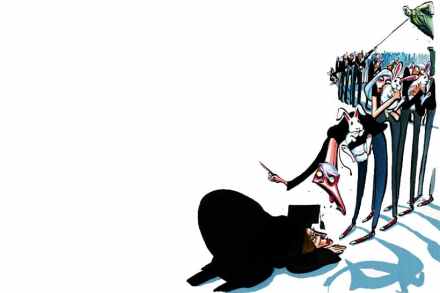
This week the EU revealed its true nature. Rather than hand power to a Eurosceptic, the Italian President Sergio Mattarella defied the democratic process, and the wishes of most Italians, and put a puppet in place. Once again a major European democracy has seen the results of a legitimate vote dismissed; swept aside because the EU can’t countenance dissent. It’s hard not to conclude that those who voted Leave in our own referendum so as to ‘take back control’ had a point. The governing elite in Europe simply can’t afford to relinquish control. They can’t let real people have a real say in who leads them because the grand EU project matters above all. In Italy, in March, the people went to the polls and were deemed to have returned the wrong verdict.

Meghan Markle and the myth of ‘racist’ Britain

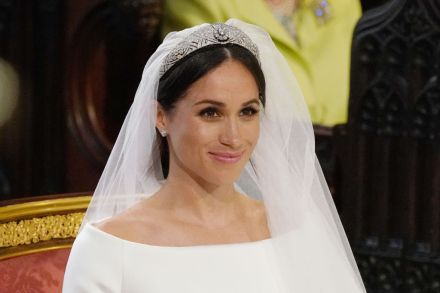
In recent years the British public have been bombarded with allegations about our alleged bigotry. When we failed to follow the advice of the ‘Remain’ campaign in the EU referendum this ramped up several gears. Since then there has been a seemingly endless parade of pseudo-scientific claims that ‘hate crime has soared’ and the like. This has encouraged politicians and pundits to spend the last two years insisting that while the UK had long been a cauldron, it is now one whose lid is off and where racists are allowed to roam the land, attacking foreigners at will. Some of us – certainly a majority – knew all this to be nonsense.

London’s knife crime problem is the talk of the town in New York

New York is as boiling as Naples. Yet walking by Central Park after dinner with friends on Fifth, several couples are heading back to their apartments in black tie. One old gent is even strolling back home in evening tails. It looks glamorous and natural in a way it no longer would in our capital. Everyone in New York asks about the knife crime in London. I tell them it won’t be sorted out because we’ve already decided what the causes can’t be. The next evening I am in conversation before a live audience on Lexington Avenue. It is great fun, and the hugely friendly, mainly young, audience brings some relief. In recent years I have spoken less and less.

Diary – 10 May 2018

I spend my life moving. Over recent years it was research. Now it’s caused by that research. But I have become adept at adding things on to each trip. In Naples at the weekend, I visited the Sansevero chapel which contains the ‘veiled Christ’ of Sanmartino — a work Canova said he would have given ten years of his life to have created. This is so moving to see in the flesh — even the nail wounds visible through the marble shroud — that you have to make an effort not to ignore the other masterworks around it. Afterwards I steal a night down the coast in Positano. The sun is searing and the Mediterranean like glass. Only the tablecloths billow frenetically in the wind that rushes down from the cliffs.

Hectoring Trump on Iran has done Britain and France no favours

Three years ago when the Iran nuclear agreement was signed there was massive political resistance in Washington. Notably – but not solely – from Republicans.  In London, by contrast, there was almost nothing. As Catherine Ashton and co worked away with the Iranians there was next to no resistance from the UK political class and very little pushback from the British media. Considering that the deal delivered an astronomical cash-infusion to the Mullahs and only stood at best to delay their nuclear ambitions, this was striking. At the time I asked one Parliamentarian why there had been such silence in Westminster and was told ‘When the White House wants something this much it probably isn’t worth standing against it.’ Well now the boot is on another foot.

What is social media’s problem with black conservatives?

From our US edition

Last week Dave Rubin (of The Rubin Report) sat down for a rare interview with Thomas Sowell.  For three quarters of an hour they roamed over an amazing array of issues – social, political and economic. YouTube (where The Rubin Report is posted) demonetised the video immediately.  This is a favourite trick of the platform – to signal YouTube’s disapproval of the content, making sure that the no one (other than YouTube, of course) and certainly not the content’s creator can make any money out of it.  For YouTube it would seem that nothing is scarier than a black economist talking brilliantly about the issues of the age. Then on Saturday something strange happened in the universe.

How many fourth-rate academics are first-rate bigots?

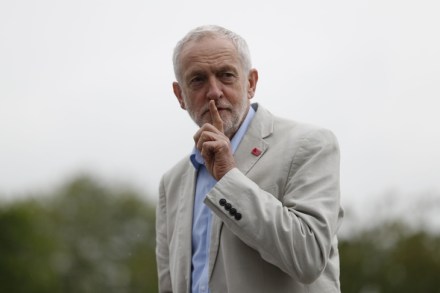
A couple of weeks ago I wrote two pieces about a very rum collection of ‘academics’ who had written to The Guardian defending Jeremy Corbyn from accusations of anti-Semitism.  Since then it is safe to say that the debate has not gone their way.  Or to put it another way – particularly after Tuesday’s debate in Parliament when Jewish Labour MPs and others testified to the racism now rife within the Labour party – there is even more evidence of anti-Semitism in Jeremy Corbyn’s Labour party today than there was when those forty ‘academics’ wrote to the Guardian.

The Guardian letter defending Jeremy Corbyn is a sham

Yesterday I wrote about a letter that was in the Guardian on Monday defending Jeremy Corbyn from accusations of anti-Semitism. In particular I noted that the signatories of that letter, who the Guardian described as being ‘forty senior academics’, were nothing of the sort. By way of example I gave readers one William Proctor from the University of Bournemouth, whose field of expertise turned out to be One Direction and Star Wars. Sadly he is not alone.

The truth about the ‘senior academics’ defending Corbyn

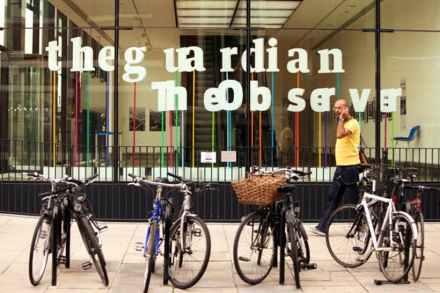
The Guardian has published a letter headlined ‘Stop Jeremy Corbyn’s trial by media over antisemitism.’  The paper explains: ‘More than forty senior academics write to condemn what they see as an anti-Corbyn bias in media coverage of the antisemitism debate.’  Mark. Not just forty academics, but forty senior academics. Why this quantity of Regius professors should be writing to the Grauniad about Jeremy Corbyn’s treatment in the media I have no idea. But I read on, and wade my way through the sixth-form politics letter to see who has signed. Scanning the list I cannot recognise one name. Well, I think, perhaps they are not in fields I am acquainted with. Yet it is not just that.

Why can’t we speak plainly about migrant crime?

On Wednesday, two striking events happened in France. The first was that the President of the Republic led the nation’s mourning for Lieutenant-Colonel Beltrame, the policeman who swopped himself for a hostage at the siege at a supermarket in Trèbes last week. Elsewhere in Paris on the same day there was a silent march past the flat of Mireille Knoll. As a girl, in 1942, Mme Knoll narrowly escaped being rounded up by the French police and put on a train to Auschwitz. Last weekend, at the age of 85, the remains of her wheelchair-bound body were found in her Paris flat. Her body had been stabbed and burned. Mme Knoll, who suffered from Parkinson’s disease had apparently previously told police about a neighbour who had threatened to ‘burn her’.

Why do politicians refuse to tell it how it is on immigration?

One of the presumptions of democracy is that leaders listen to the public. But as poll after poll in Europe shows, this presumption breaks down around the subject of migration. On that — and the numerous issues surrounding it — mainstream politicians consistently ignore the public. And not only ignore them but berate them and act against their concerns. This month sees the publication of the latest poll by Project 28, whose 2017 poll of public opinion I wrote about here last summer. Once again, the Századvég Foundation has polled opinion from 1,000 respondents in each of the 28 countries of the EU. And once again, the findings are startling. Any politician should consider them; a wise politician would listen to them.

Britain’s flawed definition of extremism is storing up trouble

Is Allah gay? The eventuality – as Jeeves might say – would seem to be a remote one. If such a being as Allah did exist and was gay then no harm could come from stating the fact. If such a being as Allah exists and is not gay then Allah would presumably be big enough to shrug off such insinuations. And if – and I only mention the possibility – such a being as Allah does not exist at all, then it really is neither here nor there whether he, she, they, ze or zir is alleged to be gay, bi, trans or anything else. Certainly none of this should be cause for being banned from the country. Yet that is what happened last week when a Canadian journalist-activist called Lauren Southern got turned away at the UK border and refused permission to enter the country.

My Rod Liddle nightmare

I do the overnight from Washington in order to be back for Jewish Book Week. Some months ago the organisers asked who I would like to interview me. I suggested Fraser Nelson or one of my other delightful Spectator colleagues. They give me Rod Liddle. Dozing on the plane, after a foul BA dinner and a beaker of Scotch, my mind throws up a highly specific nightmare. Before an impeccably liberal London Jewish audience, Rod eyes me manically and — rubbing his hands — begins with ‘So, Douglas, what are we going to do about the bloody immigrants?’ The hall goes into uproar. Sweating profusely, I appeal for calm. The event is cancelled. Of course, on the night nothing of the sort happens.

California is the unexpected antidote to censorious liberalism

From our US edition

If I needed a safe space, I would nominate California. Against most odds this seedbed of censorious liberalism has thrown up the antibodies to the lurgy it created. Here within a short space of each other are a group of leftists and conservatives, religious and non-religious, all of whom are united in deploring the ‘You can’t say that’ culture which has torn across America and the West in recent years. The state may still have the shoutiest students. But it now also has the best first-responders. On Monday morning in Los Angeles I go to be interviewed by Dennis Prager, a devout, Republican talk-show host. From there I go to the studios of Joe Rogan, a libertarian comedian and martial arts expert.

Diary – 15 March 2018

If I needed a safe space, I would nominate California. Against most odds this seedbed of censorious liberalism has thrown up the antibodies to the lurgy it created. Here within a short space of each other are a group of leftists and conservatives, religious and non-religious, all of whom are united in deploring the ‘You can’t say that’ culture which has torn across America and the West in recent years. The state may still have the shoutiest students. But it now also has the best first-responders. On Monday morning in Los Angeles I go to be interviewed by Dennis Prager, a devout, Republican talk-show host. From there I go to the studios of Joe Rogan, a libertarian comedian and martial arts expert.

The BBC’s shameful silence on the Telford sex scandal

Last month, I wrote here about the BBC and ‘grooming gangs’. In particular, I speculated that it was unlikely that having once (after more than a decade) dramatized the mass gang-rape of British girls (and a man from Wales having partly been fired-up by it then ploughing a van into a crowd outside a mosque) that the BBC might not venture into such territory again. As I said, ‘nobody should be surprised if the BBC reverts to ignoring crimes like Rochdale in the future.’ As so often the situation is worse than I imagined.

What the suspected poisoning of Sergei Skripal tells us about Russia

We live in a strange era when it comes to Russia. On the one hand there are people who seem willing to insist that absolutely everything is controlled by the government and agencies of that country. They claim that Russia has the power to install an American President, to make the British vote Brexit and much more besides. On the other hand – as supporters of Julian Assange seem put on earth in order to remind us – are people who seem to think that the SVR and FSB are quiescent organisations whose erstwhile employees spend their days doodling pointlessly in their offices. Perhaps the appalling suspected poisoning of Sergei Skripal in Wiltshire might help disabuse a few people from inhabiting either of these extremes.

The BBC’s coverage of Ben Bradley’s apology to Corbyn is fascinating

The story about Jeremy Corbyn’s contacts with a member of Czech intelligence in the 1980s has not been treated with great seriousness by our national broadcaster.  At first the BBC deigned not to run the story.  Then they treated it like some kind of joke.  For instance, given a chance to question Corbyn over his past record the BBC journalist Steph McGovern last week bowled Corbyn the humorous soft-ball ‘A final question: are you a Czech spy?’  A question which gave much opportunity for laughter and a firm ‘No’ from Corbyn, who now insists (as he does whenever he is caught in similar situations) that he was in fact discussing ‘peace’ with his agent of Czech intelligence.

Is it really homophobic to ask whether two men can make a baby?

When I saw the photo of Tom Daley and Dustin Lance Black holding a photo of an ultrasound, and all the subsequent headlines proclaiming ‘Tom and Lance are having a baby’ I thought one thing above all: ‘That’s strange’. Not ‘eww’, or ‘gross’, or ‘what a way to get over certain negative recent publicity’, but just ‘That’s strange’. Strange that we should have reached the point (inevitable in a way) in which two men announce that they’re having a baby and everyone is meant to just say ‘yay’ and not ask any more questions.

Inside the intellectual dark web

In January, Channel 4’s Cathy Newman interviewed the Canadian academic Jordan Peterson. The channel broadcast a short version of the interview on the evening news bulletin, where it would have been seen by the few hundred thousand people who watch the programme nightly. But to its credit, Channel 4 also published online the full half-hour encounter. Within days, it was viewed by millions around the globe. The interview, in which the presenter repeatedly tried to misrepresent the views of her interviewee, and in which his responses finally brought her to a confounded silence, became a sensation. Memes of Newman saying ‘So what you’re saying’ washed across social media.