Douglas Murray

Douglas Murray

Douglas Murray is associate editor of The Spectator and author of The War on the West: How to Prevail in the Age of Unreason, among other books.

The truth about Turning Point

Earlier this week I made the usual mistake of looking at Twitter and saw that ‘Turning Point’ was trending. This is unusual in Britain. Turning Point is a very successful organisation set up in the US to counter the dominance of left-wing views on campus. It turned out to be trending because of the launch of Turning Point UK this week. In essence the response to the launch of Turning Point demonstrated the need to launch Turning Point in the UK. After all, what we are talking about here is a student-oriented organisation which wants to extol the virtues of free markets over socialism and individual liberty over identity politics. There is nothing in the group’s statements so far that should cause a flutter even among the precious mobs on social media.

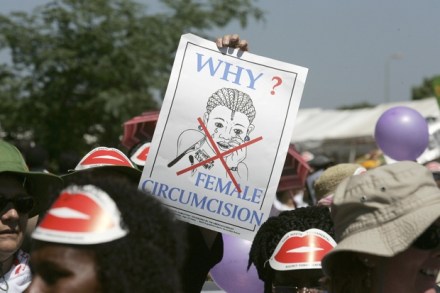
This week’s FGM prosecution raises deep questions which cannot go unaddressed

The first successful prosecution in the UK for the crime of female genital mutilation (FGM) has been widely covered. Not least because the laws that made this barbaric practice a crime have been on the books since 1985 without a single successful prosecution until this week. So the fact that a 37-year old mother from east London was convicted of the crime at the Old Bailey this week is significant. But there is something about this case that still needs to be noted. Campaigners against FGM are rightly saying that they hope that this prosecution will lead to more people coming forward to report the crime.

The darkest dawn

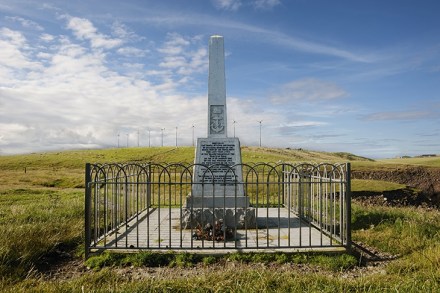
The centenaries of the Great War came to a close in November with commemorations of the 1918 Armistice. But one final British centenary associated with that conflict has just passed. Few people on the mainland will be aware of it, though it has certainly been marked in the Outer Hebrides. It is the commemoration of the worst peacetime naval disaster since the sinking of the Titanic. And one of the most terrible, poignant and final tragedies to have come from the Great War. On the evening of 31 December 1918, a vessel was boarding passengers at the Kyle of Lochalsh. His Majesty’s Yacht Iolaire had been requisitioned by the Admiralty to transport some of the hundreds of Royal Naval Reservists heading back to the Isle of Lewis and Harris after four years of service.

Cathy Newman’s catastrophic interview with Jordan Peterson

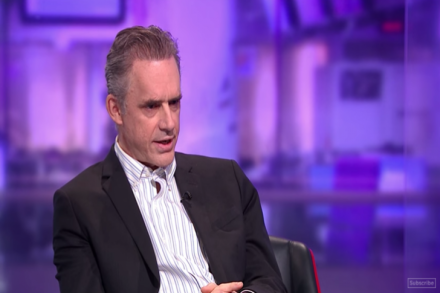
We’re closing 2018 by republishing our ten most-read articles of the year. Here’s No. 1: Douglas Murray on Cathy Newman’s interview with Jordan Peterson: In the magazine this week I have written a piece about the Canadian Professor Jordan Peterson. He has been in the UK over the last week to talk about his new book 12 Rules for Life: An Antidote to Chaos. Among many other things – much more of which I go into in the piece – his visit showed up the UK’s broadcast media in a very bad light. On Saturday morning, Peterson made an appearance on Radio 4’s Today programme. They gave him a hurried four minutes at the end of the show.

How terror changed Europe’s Christmas markets

The traditional Christmas market is one of the great sights in any European capital at this time of year. But as with all traditions it evolves over time. A few evenings ago, I went to visit the Duomo in Milan and walked through the beautiful Christmas market in the square surrounding it. It was all there: the Christmas lights, the chalet-like huts selling warm food and drink, the fake snow. And, of course, the crash barriers. For since December 2016, when Anis Amri hijacked a truck in Berlin, shot the driver and then ploughed the vehicle into the local Christmas market (killing eleven more people) crash barriers have become a necessary feature of any European Christmas market.

If Brexit is abandoned, will it ever be worth voting again?

Earlier this year I was approached at a party by a prominent and slightly oiled ‘Remainer’. Amid other pleasantries she asked me, interrogatively: ‘You voted “Leave”, Douglas. Can you give me one good reason why we should still leave the EU?’. Having watched the last two-and-a-half years from the sidelines, depressed by almost the entire political debate in the UK, I could think of no argument that would be new to her. We’ve all been round this too many times before, and almost no one has conceded anything new on the subject for years. So I decided to relay the feeling that was (and still is) foremost in my mind. The feeling which has disturbed me the most.

The ‘Islamophobia’ problem

This is a good time to bury bad news. And sure enough it turns out that a cross-party group of MPs and peers that includes the failed MP Baroness Warsi has chosen this moment to try to persuade the government to adopt their own definition of ‘Islamophobia’. Long-time readers will know that I have no sympathy for this term. The most succinct summary of the problem is often erroneously attributed to the late Christopher Hitchens. It is that, Islamophobia is ‘a word created by fascists, and used by cowards, to manipulate morons.’ That ‘Islamophobia’ was created by fascists is provable: the term was conjured up and pumped into the international debate around politics and religion decades ago by the Muslim Brotherhood.

The ‘Islamophobia’ problem | 27 November 2018

This is a good time to bury bad news. And sure enough it turns out that a cross-party group of MPs and peers that includes the failed MP Baroness Warsi has chosen this moment to try to persuade the government to adopt their own definition of ‘Islamophobia’. Long-time readers will know that I have no sympathy for this term. The most succinct summary of the problem is often erroneously attributed to the late Christopher Hitchens. It is that, Islamophobia is ‘a word created by fascists, and used by cowards, to manipulate morons.’ That ‘Islamophobia’ was created by fascists is provable: the term was conjured up and pumped into the international debate around politics and religion decades ago by the Muslim Brotherhood.

Does America oppose female genital mutilation – or not?

Twenty years ago almost no one in the West had heard of Female Genital Mutilation. Then in the 2000s, thanks to a few brave and vocal campaigners like Ayaan Hirsi Ali, knowledge of this barbaric practice began to spread. Originally there was some queasiness about taking up the subject at all. Lawmakers and opinion formers took a while to work out their line. There was an early question mark over whether FGM wasn’t just the same as male circumcision. Most people swiftly learned that the difference was, gynaecologically speaking, almost everything. There were some hold-outs among people who thought that since FGM was practiced among Muslims there might be something ‘Islamophobic’ about objecting to the mutilation of young girls’ genitals with knives.

Asia Bibi and the case that makes a mockery of Britain’s asylum laws

In between the small amount of other news this week there has been a certain amount of attention on the plight of the Pakistani Christian Asia Bibi and her family. Bibi has spent most of this decade on death-row in Pakistan. Her crime is that a bigoted Muslim neighbour of hers made up a crock accusation against her and said she had blasphemed against Islam. In the last week there has been some attention on the fact that various countries are looking into giving asylum to Bibi and her family – Britain among them. But it appeared earlier this week that the UK would not be offering this genuine asylum seeker any asylum because there were concerns about – ahem – ‘community’ relations within the UK should she be allowed to move here.

The ignorant hounding of Roger Scruton

There are times when you wonder whether our culture is too stupid to survive. The thought has kept occurring over recent days as I have watched the cooked-up furore over the appointment of Sir Roger Scruton to chair a British government commission looking into beauty in architecture. What are Scruton’s qualifications for this unpaid job? Well, he has written two exceedingly influential books on architecture, The Aesthetics of Architecture (1980) and The Classical Vernacular (1995), as well as numerous papers and articles on the subject. He has spent more than half a century thinking about the question.

Should it be illegal to insult Mohammed?

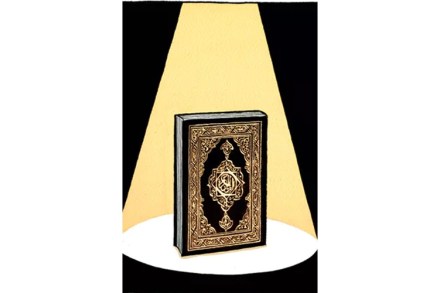
Should you be allowed to say that the founder of one of the world’s largest religions was a paedophile? According to the European Court of Human Rights the answer is ‘no’. In a decision issued this week the Court in Strasbourg ruled that this statement is defamatory towards the prophet of Islam, ‘goes beyond the permissible limits of an objective debate’ and ‘could stir up prejudice and put at risk religious peace.’ Details of the long-running case can be read here. I will come to the civilisational problems with this in a moment. But first allow me to point out what a difficult position this puts my book collection in.

Mutti’s last days

Whatever anyone’s views on the enterprise, there was one question always begging to be asked of the European Union: ‘What do you want to be when you grow up?’ At an early stage it wasn’t clear to everyone. Then the purpose and direction of travel seemed agreed — under the stewardship of Angela Merkel. She was there to settle disputes, authorise bailouts, offer German help to struggling nations and protect the project as it led to ever-closer union. Whatever else can be said of it, with Merkel at the helm at least the EU appeared to have direction. Not anymore. This week — after another political drubbing for the CDU in Hesse — the German Chancellor announced that she would not seek re-election as head of the party she has led for 18 years.

Should it be illegal to insult Mohammed? | 28 October 2018

Should you be allowed to say that the founder of one of the world’s largest religions was a paedophile? According to the European Court of Human Rights the answer is ‘no’. In a decision issued this week the Court in Strasbourg ruled that this statement is defamatory towards the prophet of Islam, ‘goes beyond the permissible limits of an objective debate’ and ‘could stir up prejudice and put at risk religious peace.’ Details of the long-running case can be read here. I will come to the civilisational problems with this in a moment. But first allow me to point out what a difficult position this puts my book collection in.

Is Julian Assange the world’s worst tenant?

Before taking up residence at the Ecuadorian Embassy in London, Assange lived at Ellingham Hall in Norfolk. This was at the invitation of his then-supporter Vaughan Smith, who lived with his family at that house. According to Andrew O’Hagan’s memoir of this time, ‘Ghosting’, Assange was a nightmare house guest. O’Hagan was ghost-writing Assange’s memoirs at that time – before the two fell out (like everyone else Assange has ever worked with). Of that time O’Hagan records: ‘I’d always been amazed at how Vaughan Smith and his family had been able to cope with the whole studenty WikiLeaks charabanc in their house – the Smiths have small children – with its all-night rituals and almost comically bad table manners.

How three pranksters exposed the insanity of the social sciences

One of the most beautiful things to happen in recent years was ‘the conceptual penis as a social construct.’ This was an academic paper which proposed that: 'The penis vis-à-vis maleness is an incoherent construct. We argue that the conceptual penis is better understood not as an anatomical organ but as a gender-performative, highly fluid social construct.' This gobbledegook was presented in an academic journal, was peer-reviewed and published in Cogent Social Sciences. The only problem was that it was a hoax. A big, beautiful brilliant hoax carried out by two academics – Peter Boghossian and James Lindsay – who had immersed themselves in the academic BS of their time.

What does an illegal migrant have to do to get deported from Sweden?

There is an old paradox/joke about the law of averages. If the likelihood of getting on a plane with a bomb on it is (say) one in one hundred million, and the likelihood of getting on a plane with two bombs on it is (say) one in 20 billion, then the safest way to travel is to carry a bomb. Like many other newly ‘diverse’ societies, Sweden keeps supplying the world with paradox-jokes of its own. How about this one:  Question: ‘What is the best way to stay safe in Sweden?’ Answer: ‘Burn down a synagogue.’ Unfortunately this joke is being tested on a nation, in real-time. I refer to the case of the 22-year old Palestinian whose asylum case has recently been causing news in Scandinavia.

What happens when Steve Bannon is given a platform?

I wrote a couple of weeks ago about the interesting question of whether or not the former chief strategist to the President of the United States is too fringe a figure to be allowed to speak in public. A lot of very prominent people seem to think that Steve Bannon shouldn’t be given a platform. And among two venues to have recently invited him, the New Yorker promptly disinvited him from their festival under fire from political heavyweights including former ‘funny man’ Jim Carrey. By contrast, the Economist managed to hold firm, surviving the withdrawal of a British blogger and going ahead as planned with their live interview. The video of the resulting event is well worth watching.

What happens when Steve Bannon is given a platform? | 18 September 2018

I wrote a couple of weeks ago about the interesting question of whether or not the former chief strategist to the President of the United States is too fringe a figure to be allowed to speak in public. A lot of very prominent people seem to think that Steve Bannon shouldn’t be given a platform. And among two venues to have recently invited him, the New Yorker promptly disinvited him from their festival under fire from political heavyweights including former ‘funny man’ Jim Carrey. By contrast, the Economist managed to hold firm, surviving the withdrawal of a British blogger and going ahead as planned with their live interview.

Watch: Douglas Murray live with Jordan Peterson and Sam Harris

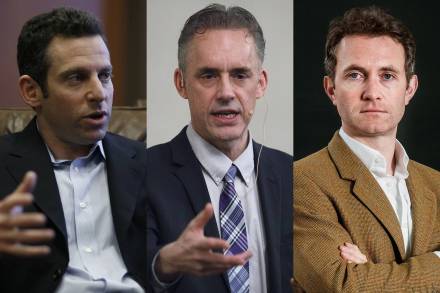
In July I did two live events in Dublin and London with Jordan Peterson and Sam Harris. At each of these venues (the first at the 3Arena in Dublin, and the second at the O2 Arena in London) there were something in the region or eight or nine thousand people in attendance. All of which makes them some of the biggest speaking events in recent history. In fact the Guinness Book of Records is apparently looking into the whole business. Anyhow, after a couple of months of delay, videos of these events are now emerging online. They are available at various venues, notably at Pangburn Philosophy’s YouTube channel here (for Dublin) and here (for London). I suspect they will get a fair amount of online views in the days to come.