Daniel Korski

Grim parallels with Germany for Nick Clegg?

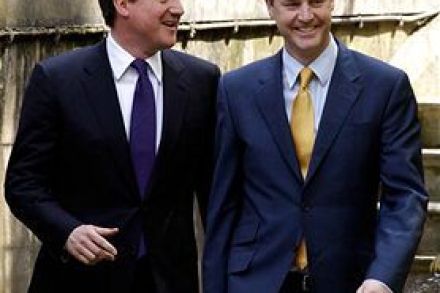
Germany is one of the few countries that Nick Clegg has been able to look to for tips on how to be a successful Liberal party in coalition with a larger Conservative party. In 2006, Guido Westerwelle even took a delegation of Free Democrats to a Lib Dem frontbench meeting. Coffee House once predicted that, if the AV referendum was won, Clegg could one day become Britain's Hans-Dietrich Genscher, a permanent powerbroker. The parties are of course different in many ways. The Free Democrats are decidedly more pro-market and pro-business than the Liberal Democrats. They also have a lot more experience of government. Before the last election, the Free Democrats were part of Helmut Kohl's governments until 1998.
DfID’s role put to the test

At a speech to the Royal Defence Academy earlier in the year, Andrew Mitchell outlined the costs of overseas conflict to Britain and offered a number of lessons for the future. The most important, he argued, was the need to help prevent wars before they start, starting with being “better at identifying the potential for conflict.” The Cabinet’s only ex-soldier, Mitchell has seen up close the cost of conflict, burns with anger about the Rwandan genocide and knows that development funds will forever be wasted if people are mired in violent conflict.

Gay America rejoices

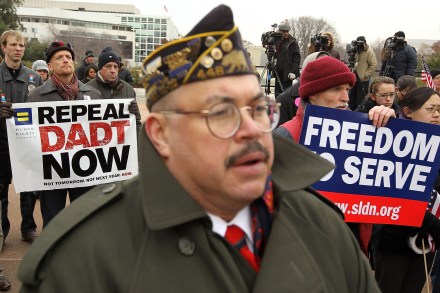
This week will give Barack Obama's liberal credentials a significant boost. On December 18th, the Senate had a  successful cloture vote in favour of a bill to repeal "Don't ask, don't tell". DADT as it is commonly known restricts the US military from trying to discover or reveal closeted gay, lesbian, and bisexual service members, while it bars those who are openly gay, lesbian, or bisexual from military service. The bill has now passed in both Houses of Congress and it only awaits President Obama's signature. As my friend R.

The gates of hell

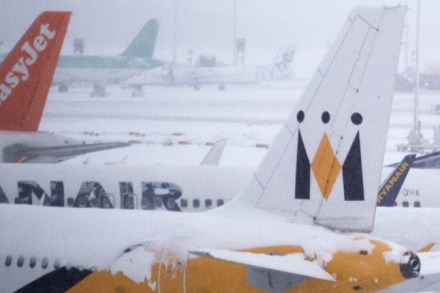
Some blogs get you the news from wizards of Wall Street, or the war-torn back alleys of Baghdad. But here at Coffee House we aim to capture a more, well, English experience: news and views from the gates of Gatwick Airport. I'm stuck here, watching the diligent but lonely tractors fight against a mass of snow. Several inches of snow blighted London yesterday, while icy winds made matters worse. Many flights have been cancelled and disappointed holiday-makers have had their Christmas plans put on ice - literally. Everywhere in the airport's soulless halls, amidst tacky tax-free offerings, you hear the same thing: why are the airport operators perennially unprepared for what more and more looks like an annual occurrence?

Kosovo deserves better

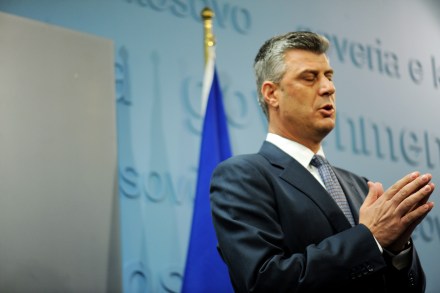
Dick Marty's report on Kosovo leader Hashim Thaci has rightly caused quite a storm. Accusing the recently re-elected Kosovo prime minister of running a mafia-like state, and even controlling a organ-trafficking ring, has not only led to condemnation but is being used by some as an excuse to re-tell conspiracy theories about what actually happened in the 1990s. First things first. The CoE report's accusations should be investigated by at least two courts: ICTY in the Hague and the Kosovo courts (the latter with the help of the 1800-strong EU police-and-justice mission). If any of these fail to take up the task, a court in an EU member-state should take it upon themselves to investigate the allegations.

Europe keeps vexing the coalition

That the Conservatives and the Lib Dems disagree fundamentally on Europe is a well-known fact. But how much they disagree is rarely put on display as clearly as in today’s European Voice. Andrew Duff, Liberal Democrat MEP and president of the Union of European Federalists, argues that the coalition’s European Union bill – David Lidington’s masterpiece – amounts to “legal pedantry” and will make the UK an “untrustworthy negotiating partner, particularly in matters of treaty amendment, which is such an important driver of European integration.” 'At home, referenda will unleash the forces of populist nationalism. Facile coalitions of nay-sayers will form to block Britain's progress in Europe.

What is the MoD for?

Yesterday, Liam Fox vowed to install a tougher procurement system in the Ministry of Defence and appointed the bureaucracy-busting Bernard Grey as Chief of Defence Materiel. The Defence Secretary said that it is important to start from first principles if reform is to take place. The ministry, he said, "exists to provide the Armed Forces with what they need". But is that right? The MoD exists, first, to maintain civilian and democratic control of the armed forces; and, second, to support effective operations. Supporting the military is a corollary of the second task, but not the same thing. In desiring to reform the MoD and cut costs, there is a real risk the government loses some of the capabilities the department needs to deliver its core tasks.

A “two stone” solution to the Euro crisis will unbalance the coalition

Whatever the British government wants, moves are now afoot on the Continent to address some of the structural problem with the Euro. They may in the end lead to some form of fiscal federalism. So far they are not supported by Angela Merkel, the key decision-maker, who worries constantly about the court in Karlsruhe, which has set clear limits on further European integration. But they are said to be supported, at least in part, by Finance Minister Wolfgang Shauble. Writing in the Financial Times, Frank-Walter Steinmeier and Peer Steinbrück argue that the EU needs "a more radical, targeted effort to end the current uncertainty, and provide stronger support for the future of Europe’s common institutions.

Rome smoulders

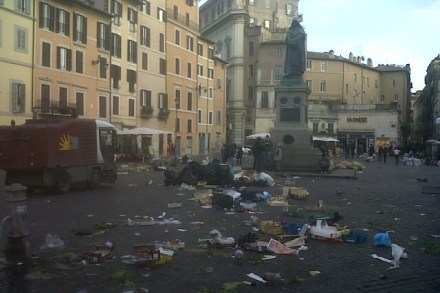
I'm visiting a stylish but tense Rome today, just as the Italian legislature has voted down a non-confidence vote in Silvio Berlusconi, Italy's mogul-cum-leader. "Rome is at war" my taxi driver told me and numerous demonstrations are going on. Ill Cavaliere, as Berlusconi is sometimes known, put in a strong defence of his record in the Senate and managed to coax, cajole and, some claim, bribe enough parliamentarians in the Chamber of Deputies to secure a small victory. He pulled not a Full Monty but a "Full Andreotti", using every trick and tactic in the book (and some scribbled in the margin too). For now, Berlusconi survives and can resume a life of partying pleasure-seeking and friendship with Vladimir Putin, which caused the political ructions in the first place.

Holbrooke’s war ends

He was known as brash and abrasive. A gale force wind. The "bulldozer" some called him based on his time bullying Slobodan Milosevic during the Dayton negotiations to end the Bosnian War in the 1990s. However, veteran US diplomat Richard Holbrooke, who died last night, had a far greater register. When he visited London before assuming his latest post, as President Obama's AfPak envoy, he surprised the US embassy staff by travelling alone, with no bag-carrying entourage, and exhibiting none of the airs he was expected to have. His first experience of the Balkans was not as the all-mighty diplomatic trouble-shooter, but as a normal citizen eager to highlight the plight of the refugees. He braved sniper fire and dangerous roads to document Yugoslavia’s tragedy.

US Middle East initiative takes early holiday

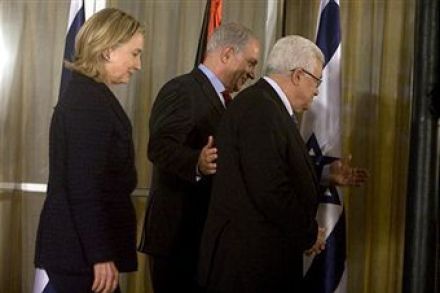
When the Obama administration started its latest Middle East initiative, it was amid great fanfare. I blogged – sceptically -- about the optimism exuding from the State Department at the time. Now, however, the US government has given up its push for a freeze in Jewish settlement construction as quietly as possible. As Martin Indyk of the Brookings Institution puts it: “The Middle East peace process just died, but nobody seems to be in mourning. Twenty months of U.S. efforts to freeze Israeli settlement activity to create a conducive environment for negotiations have produced only deadlock.

Laughing Mohammad Larijani, the Comical Ali of Iran

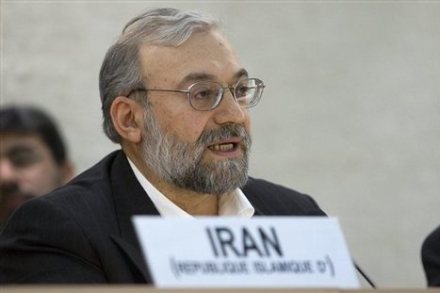
In the week when the Iranian regime forced Sakineh Mohammadi Ashtiani to goulishly re-enact the murder of her husband on TV, it is worth reading Newsweek's interview with Mohammad Javad Larijani, a regime insider. His answers call to mind Comical Ali, whose delusional denials of the US advance in Iraq made everyone realise how detached from reality Saddam Hussein's regime really was. First on the matter of torture, routinely said by the UN, former prisoners and defectors to be used by Iranian officials: "Torture is forbidden by the Constitution. Any law officer who tortures civilians will meet a very harsh punishment." Of course, he admits, the Iranian system could "need refinements," but over-all it is full of checks and balances.

Time for jaw-jaw

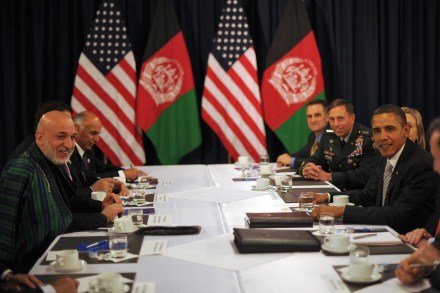
Today I joined number of leading Afghan experts, from Ahmed Rashid to Gilles Dorronsoro, in calling on President Obama to change the American strategy in Afghanistan. Based on our work in and on Afghanistan, we wanted to make a number of points just as the White House begins reviewing its strategy: First, that the cost of the war is now over $120 billion per year for the United States alone. This is unsustainable in the long run. Second, despite these huge costs, the situation on the ground is much worse than a year ago because the Taliban insurgency has made progress across the country. The military campaign is suppressing, locally and temporarily, the symptoms of the disease, but fails to offer a long-term cure.

The students vs the Lib Dems

One of the things I heard yesterday when I strolled around the edges of the protests, particularly from older people, was how the coalition's policies had politicised Britain’s young. “It has really made my children wake up”, said an elderly bystander with a wistful look in his eyes.  Student leaders say they now hope to punish Lib Dems who voted for the tuition fees, targeting MPs in seats such as Bath, Burnley, Bradford East, Bristol West and Brent Central.   The sense of rage directed against the Liberal Democrats comes, I suspect, from a deeper sense of betrayal - and not simply student dissatisfaction over today’s issue.

Serbia’s Nobel U-turn

Yesterday, I blogged that Serbia's decision not to attend the Nobel Prize ceremony because of Chinese pressure was a shameful stance for the Balkan would-be EU member to take. Many others felt the same. Now, feeling the international pressure, it seems that Serbia's government has decided that the country's Ombudsman, Sasa Jankovic, will attend the event as special representative of Prime Minister Mirko Cvetkovic. A good outcome, and a sensible decision, which will hopefully be followed by a reprimand to Serbia's calculating Foreign Minister, Vuk Jeremić, who originally decided that Serbia would not attend the ceremony.

China’s new BFF: Serbia

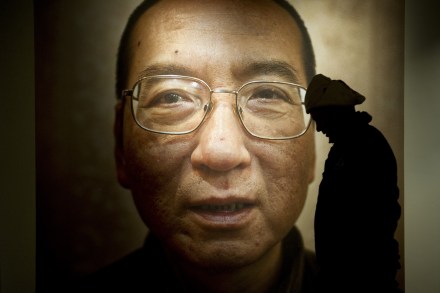
China is doing what it can do to scupper the forthcoming Nobel Peace Prize ceremony in Oslo. Their Foreign Ministry has now said that countries who decided to attend event would be showing disrespect to China: "We hope those countries that have received the invitation can tell right from wrong," the ministry's spokeswoman told journalists. Many of the world's human-rights abusers have been only too happy to oblige, including Pakistan, Iran and so on. They want to keep friendly with China and share Beijing's anti-democratic agenda. But, oddly enough, Serbia, a would-be EU member, is said to have chosen to boycott the Norwegian event. Keen to get Chinese financial assistance and help in its Kosovo policy, Belgrade's thinking is clear.

Time for an Afghan Inquiry

The Iraq Inquiry had been conspicuously silent, but now John Chilcot's team has called Tony Blair to give evidence again. It's expected that our former PM will make the trip to the Queen Elizabeth II centre early next year. That would push the expected deadline for the inquiry's work finishing – at the end of this year – into 2011. Few people, however, expect the inquiry to say anything novel or get Tony Blair to say anything different than before. Its well-phrased final report may change policy in the margins – but in the security establishment there is little question of what needs doing.

Wiki-danger

Now the Wikileaks are beginning to become dangerous. Before, the leaks contained high-level tittle-tattle, confirmation of existing analyses and embarrassingly accurate portraits of world leaders. I still thought it wrong to regurgitate this data, as it will lead to more secrecy, bilateral problems and potentially even conflicts – the things that Julian Assange claims he is seeking to avoid. Yet I told NPR that the idea of prosecuting the Wikileaks founder for treason was far-fetched; he is not a US citizen and it was not clear to me what kind of charges could be brought against him in the US courts. Now, however, with the publication of data which will be useful background reading for any would-be terrorist, the situation has changed.

Will the US become more isolationist in the years to come?

Isolationist sentiment seems to be on the rise in the United States. At an annual foreign policy event in Halifax in Canada, US Senator Lindsay Graham warned about the risk of an "unholy alliance" developing between the far left and far right that calls for greater US retrenchment from the world – and, potentially, a new era of isolationism. Or neo-isolationism. Such an inward focus is likely sound meet with the approval of an increasingly domestically-occupied public. Last year, 49 percent of Americans told Pew Research that they believed the US should "mind its own business" and let other nations get along on their own.  That was up from 30 percent in 2002.

There is such a thing as society, and it comes out in the snow

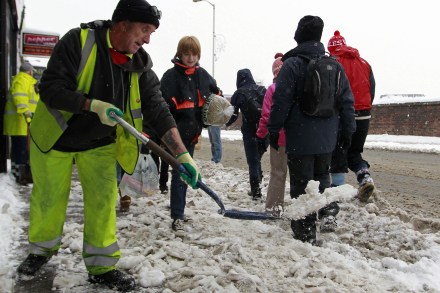
Snow makes people statist. Or at least that is what you'd think if you went by newspaper headlines alone. Why has the government not bought enough grit?, they scream. Why has Mayor Boris Johnson gone abroad instead of commanding London's snow-clearing? Should the PM not freeze with the rest of us? (As it happens, the Foreign Office heating system has broken down so at least the Foreign Secretary's gilded office is as cold as anywhere else in the country). It is true that only governments can order salt in industrial quantities, clear roads and grit streets. But dealing with a snow blizzard can also put the big in Big Society, so to speak.