Daniel DePetris

Daniel DePetris is a fellow at Defense Priorities, a syndicated foreign affairs columnist at the Chicago Tribune and a foreign affairs writer for Newsweek.

How the Saudis embarrassed Biden over oil prices

As Americans confront high inflation rates, tumbling prices at the gas pump are at least giving them a little relief. Brent Crude, the global benchmark for oil, has declined by 27 percent from its $127 peak six months ago. Gas prices in the United States, which were averaging just over $5 a gallon earlier in the summer, are now in the $3.72 range. That means Americans are saving $10 to $15 every time they fill up their tanks. Yet crude is a global commodity, and its price can fluctuate for any number of reasons — war, recession, and an economic slowdown in China to name but a few.

Iraq is fracturing again

From our UK edition

Political turmoil is nothing new in Iraq. The American invasion and occupation turned the country from a brutal dictatorship led by the late Saddam Hussein into a quasi-democracy that spends more time fighting against itself than providing for its citizens. Iraqi politics is laced with sectarianism. When the US helped construct Iraq’s political system, dividing the spoils among Iraq’s three main groupings, the Sunnis, Shia and Kurds, it was thought to be the best way to ensure the system didn’t collapse. The more buy-in from Iraq’s major communities, the logic went, the more incentive they would have to make Iraqi democracy work. Since then, the world has become familiar with factional disputes and violence between Iraq’s sectarian communities.

Are sanctions against Russia actually working?

Six months ago this week, the United States and its European allies enacted one of the most comprehensive, stringent sanctions regimes against a major economy in history. Russia’s unprovoked invasion of Ukraine on February 24 not only shocked the West’s sensibilities, but pushed Washington and Brussels to take actions that would have been unthinkable only a few weeks prior. As far as the West is concerned, Vladimir Putin’s Russia is nothing less than a dangerous pariah state — and its aggression against a neighboring country meant it had to be treated as one.

Ukraine is convinced that time is on its side. So is Russia

As the war in Ukraine approaches its six-month anniversary this coming Wednesday, the fighting shows no sign of stopping. Peace talks are a figment of the imagination, as Russian president Vladimir Putin and Ukrainian president Volodymyr Zelensky remain just as committed to achieving their objectives today as they were when the war first broke out. The Russians continue to pound residential areas with artillery in the Donbas, hoping to slowly capture more territory after months of slow, high-cost maneuvering in the Donetsk region. The Ukrainians, meanwhile, are settling on a new strategy in the south, harassing Russian supply lines deep into Russian-occupied territory.

ukraine

One year later, Biden is right to have left Afghanistan

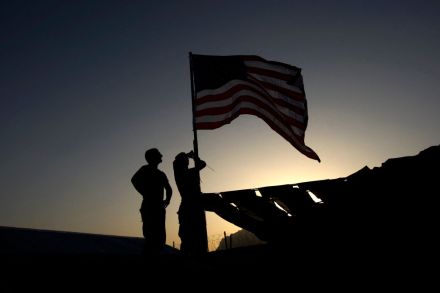
A year ago today, the Taliban captured the northern Afghan city of Kunduz, dealing the US-supported Afghan government an embarrassing blow and setting in motion a blitz across the country that would eventually send Afghan President Ashraf Ghani and his closest aides into exile. A week later, Taliban fighters entered Kabul virtually unopposed. American forces would leave the country two weeks later, cutting the cord on a two-decade war that cost the US over $2 trillion and tens of thousands of casualties. "We succeeded in what we set out to do in Afghanistan over a decade ago,” President Biden said from the White House last August 31. "Then we stayed for another decade. It was time to end this war.” Much has changed since the troops left.

Questions linger after Zawahiri is killed

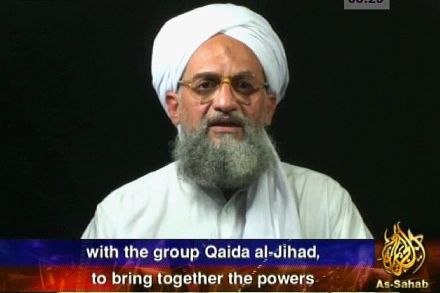
If Osama bin Laden was the showman with the AK-47 slung over his shoulder, his deputy, Ayman al-Zawahiri, was the bespectacled man in the corner who looked more like an academic than a holy warrior. Zawahiri's demeanor, however, didn’t make him any less of a threat so far as the US intelligence community was concerned. The Egyptian and 9/11 plotter, who took over al-Qaeda in 2011 after US special forces killed Bin Laden, had a $25 million reward on his head for information leading to his death or capture. That money will now be disbursed. Zawahiri’s reign as al-Qaeda’s ideological brain met a violent end last weekend when a US drone killed him while he was standing on his balcony in Kabul.

The Ukraine war enters its sixth month

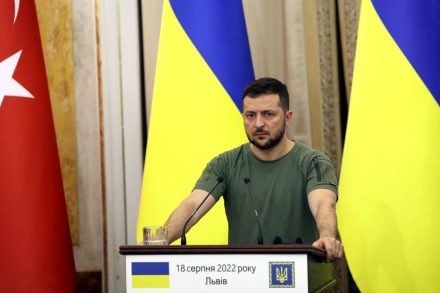
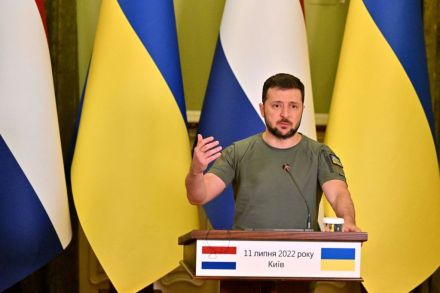
On February 24, Volodymyr Zelensky, the comedic actor-turned-president of Ukraine, addressed his countrymen at the same hour Russian missiles were landing in multiple Ukrainian cities simultaneously. Clad in olive garb and sporting a light stubble on his face, Zelensky promised his citizens victory for Ukraine and defeat for the Russians — and he implored the Russian people to protest the actions of their government in Moscow and St. Petersburg. As the war entered its sixth month this Sunday, Zelensky — this time dressed in a camouflage army uniform with a full beard — is just as defiant and sure of victory today as he was on that depressing February night. "Even the occupiers admit that we will win,” Zelensky boasted during his daily speech to the nation.

Why Putin still might shut off Europe’s gas

There was a time in the not-so-distant past when Europe and Russia had a mutually beneficial relationship with each other — at least in the energy field. Europe, a major oil consumer, received reliable supplies of crude and natural gas from Moscow, while the Russians received tens of billions of dollars in return. The European Union imported 155 billion cubic meters of natural gas from Russia last year, equivalent to about 45 percent of its total gas imports. There was an ingrained assumption in European capitals that, even if relations with the Russians were thorny, fossil fuels would continue to head west. War, however, can change things in a flash. European and Russian officials now talk past each other, and sometimes they leave the room when the other is speaking.

sanctions putin russia davos oligarch

Don’t expect much from Biden’s Middle East trip

It took Barack Obama less than three months to fly to the Middle East for a visit, landing in Iraq to visit the tens of thousands of US troops stationed there at the time. Donald Trump’s first overseas trip as president was to the Kingdom of Saudi Arabia (also three months into his tenure), where he basked in the limelight, watched in awe as his face was plastered on buildings in Riyadh, and hovered over a glowing orb with King Salman. Now, eighteen months into his presidency, Joe Biden will be spending a few days this week in the region, making stops in Israel, the West Bank, and Jeddah, Saudi Arabia, for a summit of the Gulf Cooperation Council.

The Taliban’s rough year in power

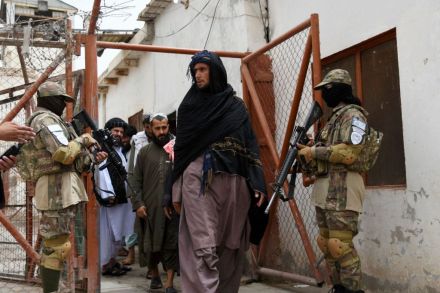
Next month will mark the first anniversary of the Taliban’s second stint in power in Afghanistan after a twenty-year insurgency against the US-backed government. In August 2021, Taliban fighters, flush with captured American military equipment and the jubilation of victory, were openly walking the streets of Kabul. While the disgraced Afghan president, Ashraf Ghani, was preparing for a life of exile in the United Arab Emirates, Taliban officials were converting his offices into their headquarters. The Taliban’s first year in power, however, hasn’t been pretty. The group has quickly come to understand that administering a poor and faction-prone country is a lot more difficult than taking up arms against a deeply unpopular, corrupt, foreign-dependent government.

Defending Ukraine should be a European project

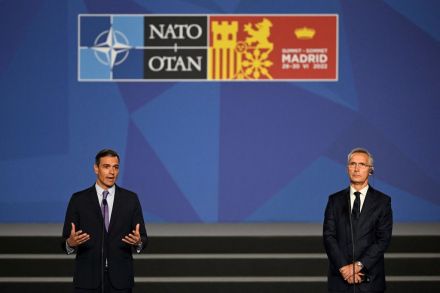
NATO gatherings at the head-of-state level are ordinarily placid, even boring affairs. But this week’s three-day NATO summit in Madrid will be quite different. For the first time in twenty-three years, the alliance is meeting as a war churns on European soil. Russian President Vladimir Putin’s invasion of Ukraine has been an electric shock to the continent’s defense establishment, at least if their rhetoric is any indication. European officials have finally come around to noticing that Europe isn’t an exceptional zone of peace and tranquility, but a region no more immune to armed conflict than any other. NATO, which was straying out of theater in a desperate attempt to stay relevant, is now back to performing the defensive mission it was meant to do.

Russia is sidestepping American oil sanctions

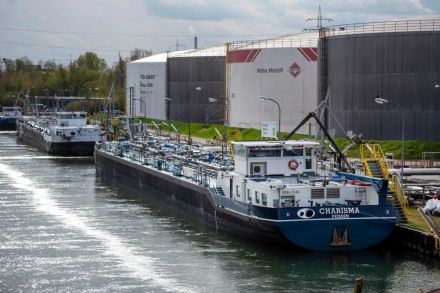
When the European Union finally made the decision to ban 90 percent of Russia’s crude oil imports by the end of the year, the bureaucrats in Brussels were jubilant. The EU’s adoption of oil sanctions was thought be a big blow to Russian President Vladimir Putin, who depends on the revenue generated by his country's oil exports to fund his war in Ukraine. It doesn’t take a genius to figure out why European officials were so thrilled. The EU imported 2.2 million barrels per day of Russian crude last year, amounting to tens of billions of dollars in profits for the Kremlin every month.

Biden of Arabia

When news broke that President Biden was planning a trip to Saudi Arabia to visit the crown prince Mohammed bin Salman (known as MbS), members of his party were horrified. Representative Adam Schiff, the chairman of the House Intelligence Committee, was especially disturbed and recommended the White House cancel it outright. "I wouldn't go. I wouldn't shake his hand,” Schiff told CBS on June 5. "This is someone who butchered an American resident, cut him up into pieces in the most terrible and pre-meditated way.” That resident was Jamal Khashoggi, a former Saudi royal family insider who used his perch as a columnist at the Washington Post to raise awareness about the crown prince’s ruthless ways.

arabia

Why is America bombing Somalia again?

From our UK edition

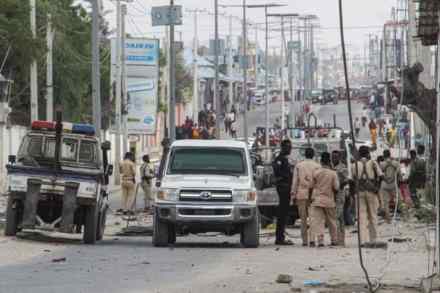
You may not have caught it amidst other international developments, but the United States bombed Somalia last Friday. No, that isn’t a misprint. On June 3, the Somali government announced that the US had conducted an airstrike against al-Shabaab militants west of the southern port city of Kismayo, killing approximately five fighters. The Pentagon has yet to release any information about the strike, a concerning (but not surprising) display of nonchalance. The latest strike came as President Biden reversed his predecessor’s decision to withdraw all US troops from Somalia.

What if the Ukraine war is never won?

From our UK edition

In late March, roughly a month into Russia’s invasion of Ukraine, an unnamed Nato official told NBC News that the conflict was turning into a meat grinder for both sides. ‘If we’re not in a stalemate, we are rapidly approaching one,’ the Nato official said at the time. ‘The reality is that neither side has a superiority over the other.’ Sure enough, a month and a half later, the Pentagon’s top intelligence official testified to the Senate Armed Services Committee that ‘stalemate’ is exactly what is occurring.

‘America or chaos’ is a false choice

There is an age-old dogma in the US foreign policy establishment: when America pulls back, chaos ensues. Like an anti-inflammatory that keeps arthritis under control, Washington’s presence in this or that region keeps enemies cowed, partners reassured, and the barbarians at the gates. Of course, just because an argument is popular doesn’t mean it’s accurate. There are several problems with the “America must be everywhere, at all times” line of thinking, the most poignant of which is that it turns the US military into an agency of global rent-a-cops.

Putin’s Victory Day speech shows he’s not backing down

“Victory Day” is one of the most solemn events on the Russian calendar. Every year on May 9, the country gets together to celebrate the defeat of Nazi Germany in what Russians call “the Great Patriotic War,” in which as many as 26 million Soviet troops and civilians perished. It’s a time for reflection, for an appreciation of history, and, yes, for pomp and circumstance, with Russian troops decorated in dazzling uniforms marching in unison throughout Moscow's Red Square. This year’s Victory Day celebrations, however, had much of the world on edge. In next-door Ukraine, Russian forces were taking a beating, with smaller but nimbler and more determined Ukrainian units continuing to mount stiff resistance against a Russian military offensive in the Donbas.

The Taliban’s Afghanistan quagmire

Hibatullah Akhundzada is a secretive man who is only occasionally heard and seldom seen. But on May 1, the Taliban’s supreme leader was delivering a sermon in Kandahar’s central mosque, bragging about his organization’s supposed successes. “Congratulations on this victory, freedom and success,” said the reclusive Akhundzada, surrounded by armed bodyguards. Nine months after the Taliban captured Afghanistan and forced the hapless Ashraf Ghani to flee the country in a helicopter, its chief official remains content with relishing the past. But truth be told, the Taliban has nothing to brag about.

Is NATO about to get even bigger?

The last time NATO inducted a new member was in 2019. The alliance agreed to accept North Macedonia’s request for membership. The small Balkan country was an odd choice to become the alliance’s thirtieth member state. At roughly 7,500 troops, North Macedonia’s military was smaller than the Los Angeles Police Department. Its entire population was smaller than Brooklyn's and its economy was one fifth the size of North Dakota’s. Three years later, NATO is set to become even bigger. Finland and Sweden, two Nordic nations with a decades-long policy of military neutrality between the West and Russia, will very likely submit their own membership bids as early as next month. Before Russia’s invasion of Ukraine, neither power was especially interested in becoming full-fledged members.

Russia becomes a lost cause

After an embarrassing two-month start to its war in Ukraine marked by pictures of abandoned armored personnel carriers, destroyed tanks and stalled armored columns outside Ukraine’s major cities, the Russian army is re-tooling and re-arming itself for a more manageable fight in the east. I use the word “manageable” not because the battle in the Donbas will be easy for Russian forces, but because the objective of expanding Russian control over the entirety of Donetsk and Luhansk is more realistic than overthrowing the Ukrainian government and occupying the entire country. Capturing, let alone holding, Kyiv, Kharkiv and Chernihiv would have entailed a massive number of personnel and a long-term commitment Russia doesn't have the resources to sustain.

U.S. President Joe Biden and Russian President Vladimir Putin (Getty Images)