Daniel DePetris

Daniel DePetris is a fellow at Defense Priorities, a syndicated foreign affairs columnist at the Chicago Tribune and a foreign affairs writer for Newsweek.

Stop pretending Ukraine will ever be in NATO

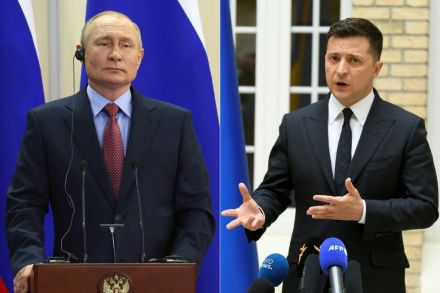
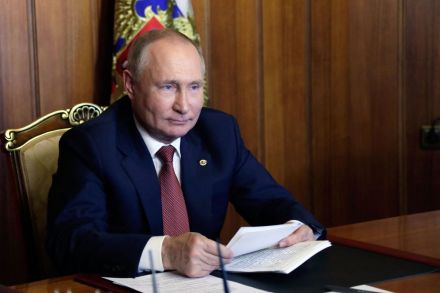
Russian President Vladimir Putin is once again making the West nervous. And unlike his previous display of military might near the border with Ukraine last spring, Washington is concerned enough that it's sent CIA director (and former US ambassador to Russia) William Burns to Moscow for talks earlier this month. If Burns’s trip was meant to scare the Kremlin into halting additional military formations near the Russia-Ukraine border, then the confab didn’t work as planned. The Ukrainian government estimates that up to 100,000 Russian forces are now camped out in the area. American and European officials are sharing information with one another about various scenarios the Russians could be contemplating, the most dramatic being a second invasion of Ukraine in seven years.

ukraine

The dictator behind Europe’s next migrant crisis

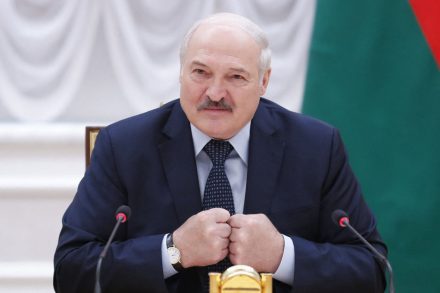
Belarus, the former Soviet satellite state, isn’t exactly a global heavyweight. Alexander Lukashenko, the country’s authoritarian president, is an international pariah who is better at concocting conspiracy theories than he is at running a country. At $60 billion, the Belarusian economy is about the size of Rhode Island’s. Other than petroleum, cheese and dump trucks, Belarus doesn’t offer much in the way of exports. A once promising information technology sector is now gutted, as Lukashenko’s crackdown on dissent forces highly educated talent to flee the country for the Baltics. Lukashenko, however, is smarter than he looks.

lukashenko

Can America avoid the next crisis in Iran?

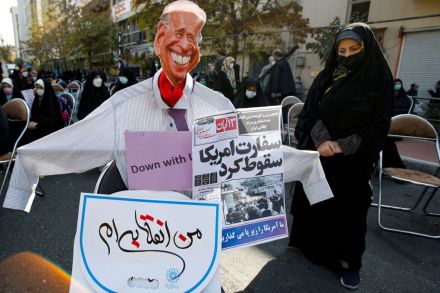
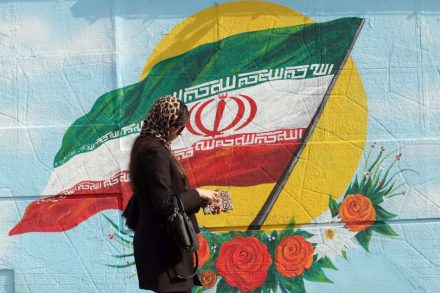
After meeting with his Israeli and Emirati counterparts on October 13, Antony Blinken emerged from behind closed doors with a message for Iran: you are running out of time to negotiate a return to the 2015 nuclear deal. “We are prepared to turn to other options if Iran doesn't change course,” the secretary of state told reporters. US envoy to Iran Robert Malley exhibited similar frustration on October 25, saying US officials, in coordination with its partners in the Middle East and Europe, have “given a lot of thought to what we will do if Iran doesn’t go back to the table.” The Iranian government appears to have gotten the message, at least to a degree. Ali Bagheri Kani, Iran’s chief nuclear negotiator, has said talks will resume on November 29.

iran

Why is the US still in Syria?

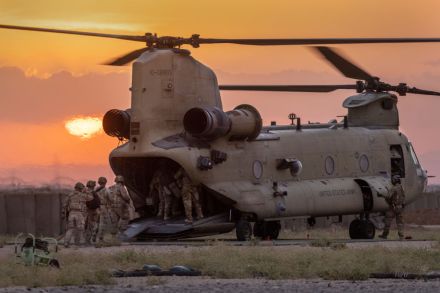
A week ago, US troops camped out in the small, dusty Syrian outpost of al-Tanf suddenly found themselves under a “deliberate and coordinated attack", as multiple explosive-laden drones barreled toward their positions. According to US officials who spoke to the AP on background, Iran “resourced and encouraged” the latest drone attack targeting US forces. The five drones were also reportedly Iranian-manufactured, leading to speculation that Tehran is testing the Biden administration at a time when nuclear negotiations between the US and Iran remain in limbo. Fortunately, US troops managed to defuse the drone attack without suffering any casualties.

syria

America has few good options in Haiti

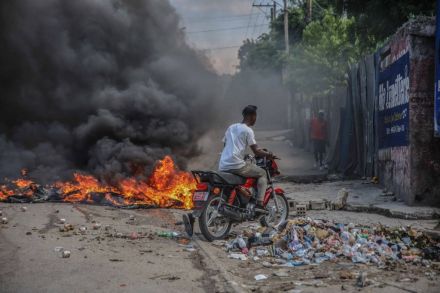
Haiti has never been known as a beacon of stability and tranquility. Most of its politicians are feckless, in league with criminals, or too consumed with trying to stay alive themselves. America not so long ago intervened on the island twice in 10 years — the first time in 1994, when President Clinton’s threat of an invasion compelled the junta to reverse its coup three years earlier, and the second in 2004, when the Bush administration participated in an international stabilization force after Haiti’s president Jean-Bertrand Aristide resigned. But this year has been an especially tough one for the Western Hemisphere's poorest nation.

haiti

The Taliban learn just how hard governing Afghanistan is

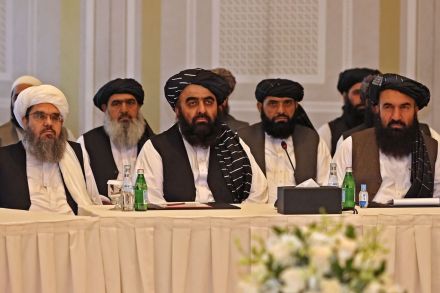
For the first time in two decades, and arguably for the first time since the late 1970s, there is a semblance of calm in Afghanistan’s countryside. The US troop withdrawal last August, ending Washington’s 20-year misadventure in the country, has ushered in a period when airstrikes, IEDs, and Taliban-orchestrated bombings are no longer daily facts of life. Afghans who haven’t seen their relatives for years are now able to travel the roads without worrying about getting menaced by Taliban gunmen or fleeced by corrupt Afghan army troops. At the same time, Afghanistan is at a perilous moment in its history.

taliban

Biden stole Trump’s foreign policy

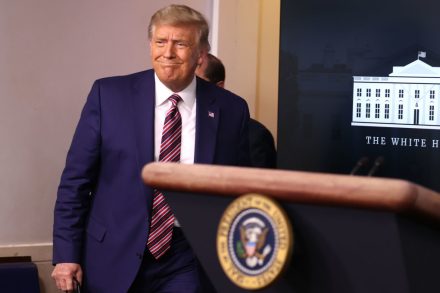
When President Donald Trump in 2020 signed a trade deal with China after years of escalatory tariffs, then-presidential candidate Joe Biden blasted the agreement. 'China is the big winner of Trump’s "phase-one" trade deal with Beijing,' Biden said after the agreement was finalized. He wasn’t alone. Many trade experts at the time believed the purchasing targets Beijing was required to meet were highly unrealistic. Sure enough, China’s compliance has been less than ideal. According to the Peterson Institute for International Economics, China is roughly 70 percent of the way there with two months left to go. Yet despite Biden’s past comments about the accord, not to mention the tariffs that set the stage for the deal, the White House isn’t fully breaking with the pact.

foreign policy

Congress’s defense budget is pure madness

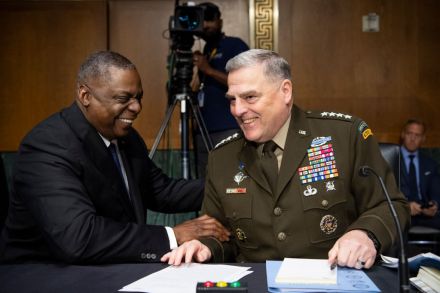
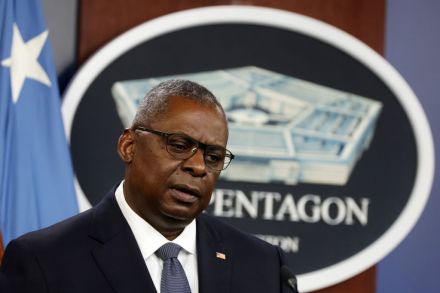
The United States Congress is divided on pretty much everything these days. But there is one agenda item that traditionally brings lawmakers together: the defense budget. Usually Pentagon funding amounts to a pro-forma love-fest with a result — higher military spending — that is basically baked in. The defense budgeting process is usually like a boring movie, where the conclusion is foreseen about 10 minutes into the flick. Last week, the House of Representatives passed its own version of the National Defense Authorization Act by a resounding 316-113 vote. It's a mammoth 1,362-page bill that piled an additional $25 billion onto what President Joe Biden had submitted in his own $753 billion budget request.

congress defense budget

Biden’s big UN whopper

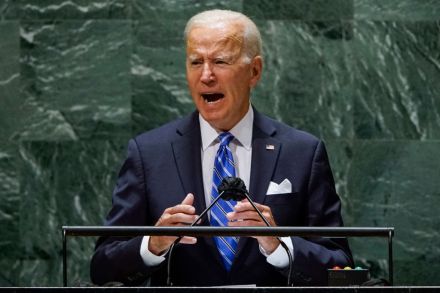
President Joe Biden walked into the grand UN General Assembly chamber this morning with a list of asks, an appeal for greater cooperation among the world’s great powers and a bit of controversy trailing behind him. Biden’s first UN address came at a difficult time in American diplomacy. The European Union, led by an irate France, is livid over a $60 billion US-Australian nuclear submarine deal that European leaders view as skeevy and duplicitous. And last month’s American troop exit from Afghanistan remains a sore point for contributing nations in the Nato coalition, some of which wanted more time to evacuate their own nationals. Biden, however, sidestepped all of these disputes.

un

Will Biden deal with the Taliban?

When President Joe Biden tapped longtime aide Antony Blinken to be his secretary of state last November, Blinken landed his dream job. Here he was, a man widely respected in foreign policy circles, continuing the family business (his father and uncle were both ambassadors and his stepfather was an adviser to John F. Kennedy). What Blinken could have lived without, however, was the grandstanding, bravado and livid speeches from lawmakers responsible for overseeing his work. Unfortunately, fielding self-righteous questions is a part of the job description.

taliban

Congress got mad about Afghanistan 20 years too late

Nearly a week after the last American C-17 flew out of Kabul, the Biden administration remains in the middle of a firestorm. Lawmakers are shouting about what they consider a botched withdrawal and evacuation process from Afghanistan. Calls for oversight and accountability on Capitol Hill go beyond President Biden’s traditional opponents. Multiple Senate committees are planning to conduct investigations into why officials weren’t prepared for worst-case scenarios, why the administration believed the Afghan army could hold out longer than it did, and why tens of thousands of Afghans who assisted the US military during the war were unable to be airlifted out of the country.

congress

Europe has been a helpless bystander in Afghanistan

From our UK edition

America’s allies in Europe understood months before President Joe Biden’s fateful April speech to the American people that a full and complete US troop withdrawal from Afghanistan was a very real possibility. Biden talked about the urgency of getting the United States out of what he termed ‘forever war’ conflicts which required tens of billions of dollars a year (not to mention thousands of US troops on the ground) to maintain.

Can Iran’s ‘butcher’ president make peace with the Saudis?

From our UK edition

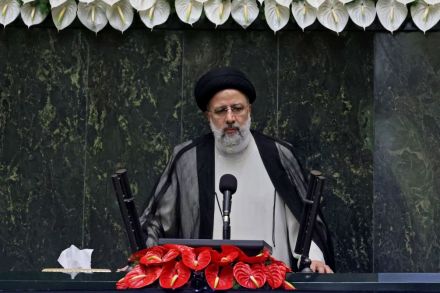
It’s official: after eight years of a relatively pragmatic administration, Iran is now under new management. Ebrahim Raisi, a disciple of Supreme Leader Ayatollah Ali Khamenei and the former judiciary chief, was inaugurated this week as Iran’s next president. Clad in a white shirt, black robe and thin-framed glasses, Raisi accepted a task that will likely prove to be his toughest assignment in a decades-long career serving the Islamic Republic system.  Protests over poor public services, like water shortages, are becoming more frequent. While the International Monetary Fund projects Iran’s economy to grow at 2.5 per cent this year, the country is in the midst of a highly fractious period.

George Bush’s attack on Joe Biden’s Afghan strategy is hard to take

From our UK edition

The world doesn’t hear a lot from George W. Bush these days. The former president of the United States has spent his post-presidential life in a cozy, somewhat secluded existence on his Texas ranch in Crawford, about a two-hour drive south of Dallas. Other than issuing the occasional statement and urging Americans to get vaccinated, Bush largely spends his time painting or hanging out with his wife, former First Lady Laura Bush. Apparently, though, the nearly-complete US withdrawal from Afghanistan is too much for the ex-president to bear. Speaking to German television broadcaster Deutsche Welle, Bush all but excoriated president Joe Biden for pulling the troops out and ending the longest war in US history.

Why the Biden-Putin summit wasn’t a waste of time

From our UK edition

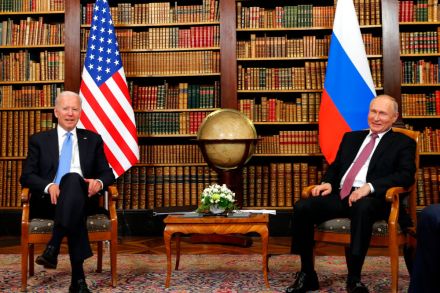
The meeting between U.S. president Joe Biden and Russian president Vladimir Putin in Geneva started cordially enough. A quick handshake, toothy smiles for the cameras, and some standard words of diplomacy. 'I would like to thank you for the initiative to meet today,' a slouching Putin told an attentive Biden. 'Still, U.S.-Russian relations have accumulated a lot of issues that require a meeting at the highest level, and I hope that our meeting will be productive.' Putin's words were something of an understatement. U.S.-Russia relations are scraping the bottom of the barrel and may very well be at their lowest point since the early 1980s, when Washington and Moscow were turning Europe into a parking lot for intermediate-range missiles.

Can Biden bring relations with Russia back from the brink?

From our UK edition

Russian foreign minister Sergey Lavrov delivered a depressing assessment on the state of U.S.-Russia relations earlier this month. While holding out a sliver of hope that ties between Washington and Moscow could improve, Lavrov said 'the confrontation has hit the bottom'. His remarks came a fortnight after U.S. president Joe Biden and Russian president Vladimir Putin scolded one another like two children in the schoolyard, with the former calling Putin 'a killer' and the latter hinting that Biden may be suffering from ill health. Relations, in turns out, weren’t at the bottom as Lavrov thought.  We know this because the dynamics between the U.S. and Russia have only gotten worse in the weeks since. You can excuse someone for thinking U.S.

Biden’s backhanded bid to kill Nord Stream 2

From our UK edition

Washington, D.C. is universally known as a town divided, a place where compromise and dialogue are often sacrificed at the altar of competing agendas. But on one issue, at least, there is consensus: the 764-mile Nord Stream 2 pipeline that will pump Russian natural gas into Germany is a project that must be stopped. And the United States needs to use all of the economic and diplomatic tools at its disposal to do it. In both congressional testimony and in meetings with Nato allies, U.S. Secretary of State Antony Blinken has reiterated the official U.S. view that Nord Stream 2 is 'a bad deal' for Europe, a potential cash windfall for Russia, and a potential geopolitical coup for Vladimir Putin.

Russian sanctions are futile

From our UK edition

During the 2020 presidential campaign, Joe Biden promised to approach Russia and its irascible President Vladimir Putin with a new sense of toughness and purpose. Now calling the shots in the White House, President Biden appears to have made good on that promise — at least symbolically. On Tuesday, the Biden administration announced several sets of sanctions against Moscow for last summer's attempted assassination of the Russian activist Alexei Navalny, a plot that involved the Soviet-era nerve agent Novichok. The sanctions, taken in concert with the European Union’s own measures, included asset freezes and travel bans on seven Russian officials deemed responsible for the poisoning, imprisonment, and prosecution of Navalny.

What the Khashoggi murder report means for US-Saudi relations

From our UK edition

Today, after pressure from senior US lawmakers and staring at an impending statutory deadline, the Biden administration authorised the release of a declassified intelligence report on one of the most grisly state-sanctioned murders in recent history. The killing of Saudi dissident and Washington Post columnist Jamal Khashoggi may have occurred 16 months ago, but the murder has hung around the US-Saudi relationship like a wet blanket. The US intelligence community’s assessment that Crown Prince Mohammed bin Salman, the heir to the throne, was intricately involved in Khashoggi’s death was a bombshell heard around the world. And yet media reactions notwithstanding, MbS’s role in Khashoggi’s demise was hardly a surprise. This was the worst-kept secret on the planet.

Good luck to Joe Biden. He’ll need it

From our UK edition

It’s official: the inauguration is over, the speeches have been given, and political power in the United States has been transferred to new hands. Joe Biden, a man who first entered the national spotlight in 1972 as a young senator from Delaware, is now the 46th president of the United States. Biden is the quintessential politician, someone who is an expert glad-hander and in many ways a creature of Washington. He knows how power is wielded, understands how to smooth the bloated egos of lawmakers, and is the one person his former boss, Barack Obama, felt comfortable taking the lead in negotiations with Republicans.