Daniel DePetris

Daniel DePetris is a fellow at Defense Priorities, a syndicated foreign affairs columnist at the Chicago Tribune and a foreign affairs writer for Newsweek.

Turkey’s heavy price for pressuring the Russians

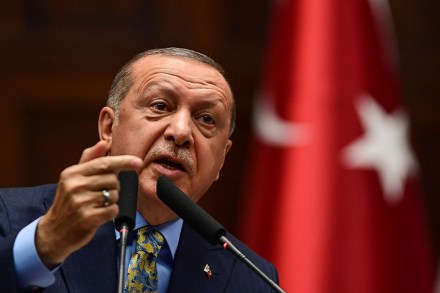
If you enjoyed the weeks-long intra-NATO spat about whether to send heavy tanks to Ukraine, then you’re going to love the ongoing kerfuffle about whether Sweden and Finland should be admitted into the transatlantic alliance. Whereas Germany was the lone holdout in the first instance, Turkey is the obstacle in the second — and going by the fiery words of Turkish President Recep Tayyip Erdogan, the squabble won’t end soon. Erdogan, in the midst of his toughest election campaign in two decades, has been using his veto over Sweden's and Finland’s NATO memberships to press both countries on one of his top priorities: cracking down on the Kurdistan Workers’ Party, a group Turkey, the US, and the European Union all label a terrorist organization.

greece

Germany’s broken promise to rebuild its military

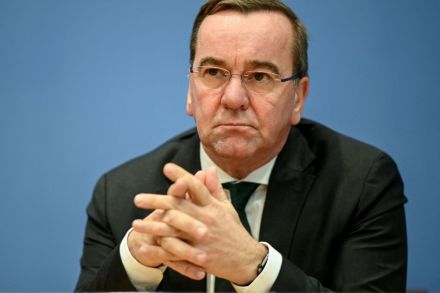
Germany has a new defense minister. The funny thing is that nobody really knows who he is, what he stands for, and whether he’s capable of doing his job. Boris Pistorius will take over the ministry from Christine Lambrecht, whose one-year tenure was about as embarrassing and gaffe-prone as the Bundeswehr itself. There are too many blemishes on her record to examine in a single post — we would be here all day. But one of the more notable misfires was her tone-deaf New Year’s Eve video, where she reminded viewers that a war was going on in Europe as a fireworks display went off behind her. For many in the German defense establishment, Lambrecht’s departure can be summed up in two words: good riddance. Not much is known about her replacement.

South Korea toys with developing nuclear weapons

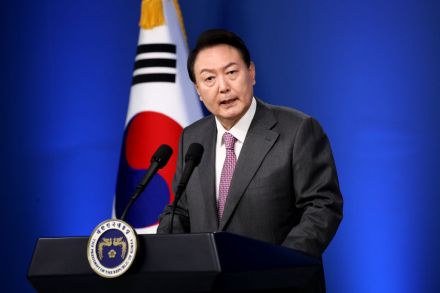
Yoon Suk-yeol isn’t a household name in the United States, but his comments this week have put him in the international spotlight. Speaking at a press briefing on Wednesday, the South Korean president openly surmised that if North Korea’s nuclear weapons program continued unabated, Seoul may have to explore an option the United States wouldn’t like: producing nuclear weapons of its own. Referring to Pyongyang’s weapons programs, Yoon said, "It’s possible that the problem gets worse and our country will introduce tactical nuclear weapons or build them on our own. If that’s the case, we can have our own nuclear weapons pretty quickly, given our scientific and technological capabilities.” The remarks generated immediate pushback from nuclear security experts.

Venezuela’s anti-socialist opposition has faltered

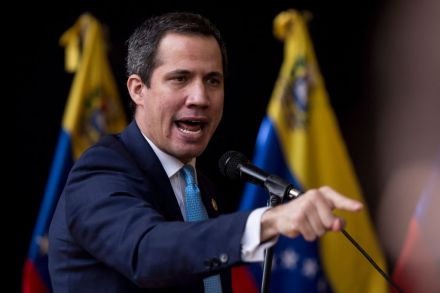
2019 was a banner year for Juan Guaidó, a relatively obscure Venezuelan lawmaker who announced to a crowd of thousands in the heart of Caracas that he, and he alone, was Venezuela’s new interim president. The United States and dozens of other countries in Europe and Latin America quickly followed up with official recognition for the fresh-faced head of the Venezuelan National Assembly. Nicolás Maduro, the man who took over the presidency after Hugo Chávez’s death, was for all intents and purposes relegated to the status of an isolated despot who had no legitimate claim to the Miraflores palace. 2022, however, has brought Guaidó and his international supporters back down to earth, with the opposition ditching his government in a 72-28 vote.

Juan Guaidó venezuela

The Brittney Griner swap was nothing out of the ordinary

Viewed from a coldly logical perspective, releasing Viktor Bout for Brittney Griner is a highly lopsided trade in favor of the Russians. The former was one of the world’s most prolific arms dealers on earth, a man responsible for sending weapons to some of Africa’s deadliest conflicts during the 1990s and early 2000s. The latter was a basketball player who was arrested for a smidgen of cannabis oil in her luggage. The two offenses are incomparable, which is one of the reasons why conservatives were so upset about President Biden green-lighting the swap. Donald Trump and John Bolton don’t agree on much, but both believe the decision was the epitome of feckless surrender (for Griner’s family, of course, it’s anything but).

griner

Japan’s defense revolution

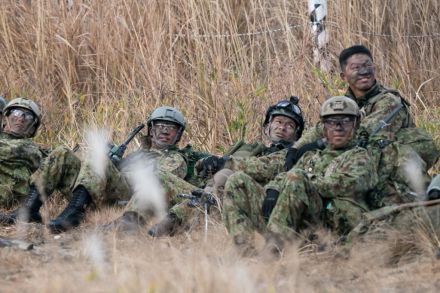
You don’t need to be an Asia specialist to recognize that China is undergoing a significant military modernization campaign. China’s leader, Xi Jinping, and the Chinese Communist Party are seeking to transform the People’s Liberation Army (PLA) into a world-class military by 2049, and complete the development of the military platforms, capabilities, enablers, and amphibious weapons systems necessary for a potential Taiwan contingency by 2027. Beijing’s defense budget rose by 139 percent between 2010 and 2020.

The Europeans are complaining, again

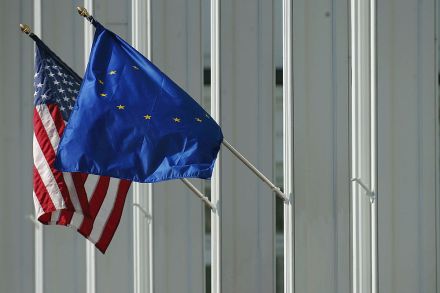
All is not well in the transatlantic relationship. This might come as a surprise given that the United States and Europe have been remarkably unified on Europe’s most urgent security crisis in the post-Cold War era. Despite Russian President Vladimir Putin’s attempt to inject division into the pro-Ukraine coalition by throttling gas supplies to Europe, the West is sticking to its guns, maintaining sanctions on Moscow until either the war ends or Russian troops are forced to withdraw. This consensus, however, has masked disputes between Washington and its European allies that are becoming more difficult to manage.

The coming turbulent times in the oil market

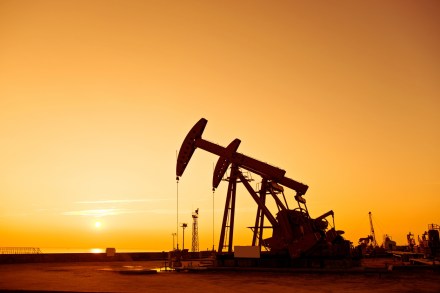
When the Wall Street Journal reported on November 21 that OPEC, the oil cartel dominated by Saudi Arabia, was planning to increase production by 500,000 barrels per day in December, the crude market immediately reacted. Oil prices plunged by 6 percent, bringing the Brent benchmark close to $80 a barrel. Saudi energy minister Prince Abdulaziz bin Salman, the older brother of king-in-waiting Mohammed bin Salman, immediately went to work disputing the report. No decisions at OPEC had been made, he said, and it was possible the cartel could even proceed with further production cuts if needed to maintain balance in the market (for the Saudis, "balance" is usually defined as padding the kingdom’s balance sheet). Abdulaziz’s intervention helped make up most of those earlier losses.

oil

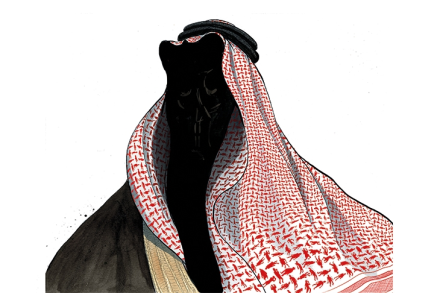
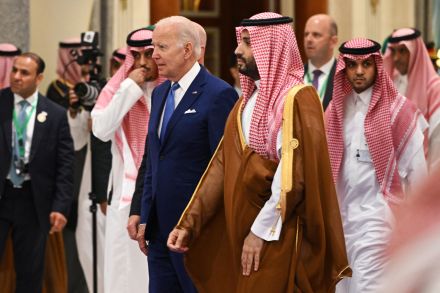
Why Biden has given MBS immunity over the Khashoggi killing

From our UK edition

For US President Joe Biden, Saudi Arabia is the problem that never goes away. First came his decision to refrain from slapping penalties on Saudi Crown Prince Mohammed Bin Salman (MBS) following the kidnapping and murder of Washington Post columnist Jamal Khashoggi, a former Saudi royal insider who became increasingly critical of the ruling family (the Biden administration did place travel restrictions on 76 other Saudi officials and sanctioned the elite Saudi intelligence force that carried out the operation).

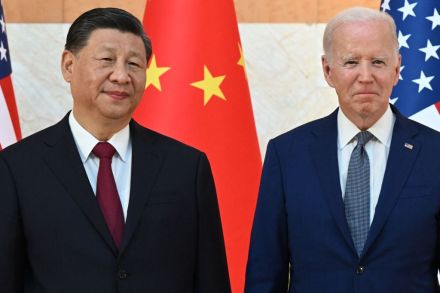
The Biden-Xi meeting was long overdue

The bilateral relationship between the United States and China is arguably the most important in the world today. The two countries make up approximately 42 percent of the world’s economic output and more than half of global military expenditure (at $801 billion, the US share of that total dwarfs China’s). The Biden administration’s recently released National Security Strategy names China as "the only competitor with both the intent to reshape the international order and, increasingly, the economic, diplomatic, military, and technological power to do it." The central objective from Washington’s standpoint is to compete vigorously with Beijing, prevent China from attaining hegemonic status in the Asia-Pacific, and ensure this competition doesn’t slide into conflict.

Don’t expect the midterms to change our foreign policy

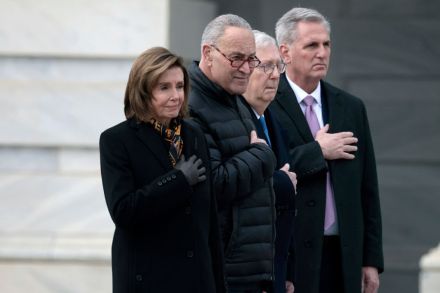
President Joe Biden and his Democratic allies were expecting a romp on Tuesday. So were many of the career prognosticators surveying the election landscape. Instead, many of the close Senate races, including in all-important Georgia and Nevada, haven’t been called. Those of us who have been staring at the returns for hours on end still don’t know the full extent of the results. But what can be said with reasonable certainty is that however the balance of power stacks up, foreign policy is likely to be the same as it ever was. The status quo is an all-powerful force inside the Beltway, where conventional wisdom rules the roost and any tilt away from the mainstream is usually corrected before an honest discussion can be had on the merits. Part of this is institutional.

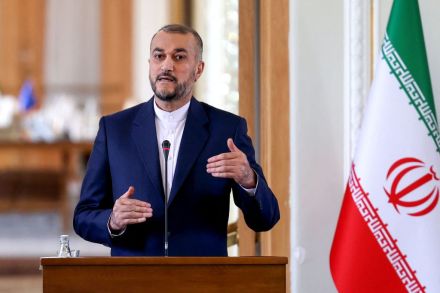
Why Biden’s attempt to revive the Iran deal is faltering

Robert Malley may not technically be a diplomat, but he walks and talks like one. A specialist in the Middle East, Malley has extensive experience in government. He had an integral role in negotiating the Joint Comprehensive Plan of Action, or JCPOA, the deal that limited Iran's nuclear activities in exchange for sanctions relief. President Biden brought him into his administration as his special envoy to Iran in the hope he could find some way to bring both Washington and Tehran back into an agreement. Nineteen months later, Malley himself bluntly admitted that the talks were, if not dead, then frozen for the foreseeable future. Speaking at the Carnegie Endowment for International Peace, Malley said the Biden administration is no longer thinking much about the negotiations.

iran

Is Biden finally finished with Mohammed bin Salman?

From our UK edition

Saudi Arabia’s energy minister had some cheeky words for the Biden administration this week: don’t blame us for manipulating the oil markets, and start acting like grown-ups. Standing on stage at the Saudi-organised Future Investment Initiative, known as ‘Davos in the Desert’, Prince Abdulaziz bin Salman laid into American officials. Not only was Washington responsible for where oil prices are today, but they were also selfishly expecting Saudi Arabia to sacrifice its own economic interests for the sake of the West’s foreign policy. ‘We keep hearing you “are with us or against us”, is there any room for “we are with the people of Saudi Arabia?”’ the kingdom’s top oil man said.

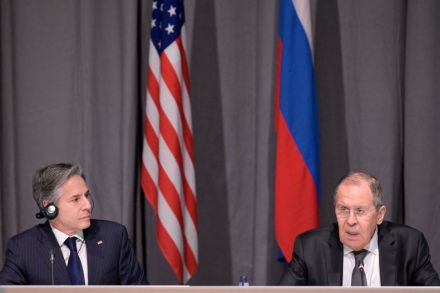
America and Russia are finally talking to each other again

Defense Secretary Lloyd Austin and Russian Defense Minister Sergei Shoigu haven’t really been on speaking terms. That is, until last weekend, when the two defense chiefs conversed with each other twice in three days. The readouts released by the Defense Department are about as brief as brief can get. They don’t tell us much about what was said, other than the general observation that Austin, a former four-star army general, swatted away Moscow’s explanations for the war in Ukraine. What the conversations illustrate more than anything is just how rare they've been. Indeed, the reason why so many news outlets wrote about the Austin-Shoigu calls was because they were extraordinary.

How long can Europe’s support for Ukraine last?

Can Ukraine sustain a war effort that is proceeding far better than most military analysts ever expected? Part of that answer, of course, depends on the extent to which the Ukrainian army can keep their troops in the field equipped, supplied, and motivated. That challenge comes as the Russian military increasingly relies on so-called “kamikaze drones” to strike deep into Ukrainian territory (on October 17, a Russian drone attack killed four people in Kyiv during the morning rush hour). But another factor that will determine success or failure is whether Europe remains onboard — or, more to the point, whether Europe’s support to Kyiv will continue as the war enters a dreary, unforgiving winter.

How the Ukrainians personally humiliated Putin

The Russian army has been the source of an endless list of shortcomings and embarrassments over the last eight months. There are simply too many of them to count, from the failure to move through Kyiv’s suburbs in March to the sinking of the flagship Moskva in April to the loss in September of more than 3,000 square kilometers of territory in just days. But by far the most humiliating to Vladimir Putin personally was last weekend’s attack on the twelve-mile bridge that connects mainland Russia with Crimea, the peninsula Moscow annexed in 2014. That bridge, which cost more than $7 billion to build, was one of Putin’s pet projects, a visible signal to the world about Moscow’s staying power in the region.

putin

Europe is more bark than bite on Ukraine

Last Friday, President Biden signed a spending bill that will keep the government’s lights on until December 16, when lawmakers will have to cobble together a funding resolution to avert a shutdown. Tucked into that law was another tranche of security and economic assistance to Ukraine, to the tune of $12.3 billion. The signing came two days after the Defense Department announced the release of an additional $1.1 billion military package for Kyiv, which will include 18 more HIMARS systems, 150 armored vehicles, and ammunition of various calibers. The Biden administration has provided the Ukrainians with over $16 billion in security assistance since Russia’s invasion in February. Washington’s hands have been cramping up from writing so many checks.

macron europe blame

Don’t expect the protests to topple Iran’s government

The Islamic Republic of Iran is reeling. Its 43-year-old patriarchal system of bearded clerics is witnessing its biggest nationwide demonstrations in years. Iranians of all classes, regions, and professions are pouring into the streets. All this in the heart of the world’s only theocracy, where voicing any discontent can land you a bloody face and a hefty prison sentence. The protests, which will enter their second full week on Friday, were sparked by a particularly gruesome crime by the Iranian authorities against a young woman named Mahsa Amini, who was detained by the morality police in Tehran for supposedly dressing immodestly.

The UN gets ready for hell week

Every year in late September, the east side of Manhattan morphs into a giant sea of immovable cars. The culprit: the annual United Nations General Assembly debate, where diplomats from around the world fly to New York to shake hands, give speeches, and participate in dozens of side meetings and events throughout the city. This week’s UN General Assembly debate, however, is unique. For the first time since the UN was established after World War II, the meeting is occurring amid a large, deadly, conventional conflict in Europe. The war in Ukraine, which will cross its eight-month mark this Saturday, will dominate the session from beginning to end.

Vladimir’s no good, very bad week

The Ukraine war’s first seven months have been a long slog, with high costs in both men and material. Then, over the last week of combat, that suddenly changed. While casualties undoubtedly remained high on both sides, the Ukrainian army’s surprise counteroffensive in the northeast shattered Russia’s defensive lines and culminated in the most humiliating Russian tactical defeat since its forces were pushed out of Kyiv in April. While Russian President Vladimir Putin was celebrating the opening of a new Ferris wheel in Moscow, his troops 534 miles to the south were dropping their weapons and retreating.

russia realities