Daniel DePetris

Daniel DePetris is a fellow at Defense Priorities, a syndicated foreign affairs columnist at the Chicago Tribune and a foreign affairs writer for Newsweek.

Is a Saudi-Israel deal now off the table?

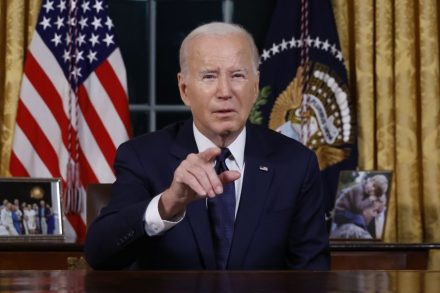
Joe Biden can point to a few concrete foreign-policy accomplishments during his presidency thus far. Ukraine would be in far worse shape against Russia were it not for the financial, economic and military assistance the White House has provided. Washington has also done a commendable job getting Japan and South Korea back on speaking terms after years of bickering. Yet both of these items are tactical in nature and aren’t going to bring Biden into the history books. Shepherding a comprehensive normalization agreement between Israel and Saudi Arabia, however, just might. That was, until an unprecedented Hamas-led attack into Israel threw a wrench into his plans.

saudi

The truth about the US-Iran prisoner deal

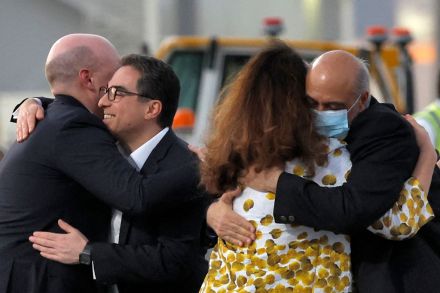
Negotiating with Iran can be the diplomatic equivalent of a day-long migraine. While Iran policy often strikes a chord in Washington, DC, people across the political spectrum come together on this basic proposition: the Iranians are some of the best hagglers on the planet. Wendy Sherman, a career US diplomat who played a major part in negotiating the now-defunct Iran nuclear deal, referred to the Iranians as legendary for their skill at the bargaining table. Donald Trump alluded to their skill, too: “[T]]he Iranians, frankly, are great negotiators,” he said in 2016. And former ambassador (and now CIA Director) William Burns commented the same year, “The Iranians are very skilled negotiators, very tough.

The never-ending War on Terror

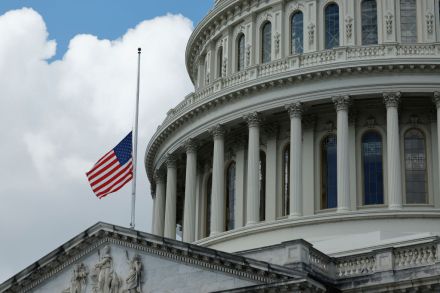
Twenty-two years ago today, the United States experienced its worst terrorist attack in history. It was a life-changing moment for tens of thousands of Americans, particularly those in the New York metropolitan area who saw two of the city’s most iconic buildings reduced to smoldering heaps of rubble and ash. The Pentagon, a stoic building across the Potomac River from our capital, saw one of its sides destroyed. About 166 miles to the northwest, another hijacked plane went down in rural Shanksville, Pennsylvania. By the time that horrible day was over, nearly 3,000 people had lost their lives. The country’s entire being was shaken to the core. Americans, particularly those in New York and Washington, DC, felt more vulnerable than they had in years. For President George W.

terror

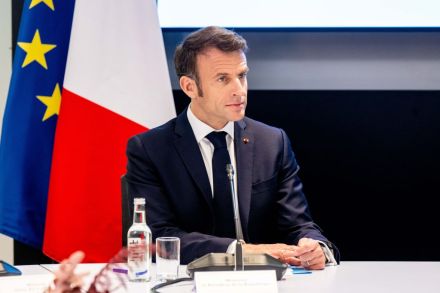
How Macron is preparing for Trump’s return

From our UK edition

We are still fifteen months away from the 2024 U.S. presidential election, but much of the world is already busy trying to decipher the results. With a second Donald Trump presidency in the realm of possibility, governments around the world are holding strategy sessions and informal conversations about how such an event would change U.S. foreign policy, impact their relationships with the United States and, just as importantly, what they can do to mitigate whatever shock to the system that may ensue. For Europe specifically, Trump wasn’t just a shock – it was a lightning bolt to the skull. For a continent accustomed to getting what it wanted from Washington, enjoying relatively harmonious trade ties and complacently living behind the wall of U.S.

Why bombing Mexican cartels is a bad idea

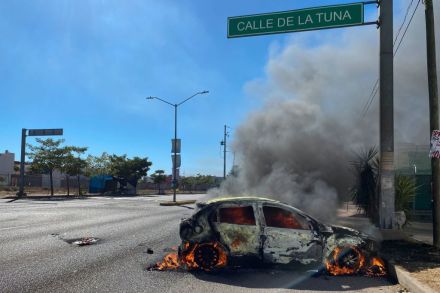
Responding to a voter during a campaign stop this week, Florida governor and 2024 presidential candidate Ron DeSantis endorsed a once fringe idea that is becoming increasingly mainstream in Republican policy circles: that the United States has the right, indeed obligation, to use military force in Mexico to protect the American people from drug cartels. And yes, that includes the use of US drones, a revolutionary military technology the US military and CIA have deployed repeatedly to target terrorists in countries such as Afghanistan, Iraq, Libya and Somalia (among others).  "We will absolutely reserve the right if they’re invading our country and killing our people,” DeSantis told the voter.

mexican cartels mexico

What would Trump’s second-term foreign policy look like?

Former president Donald Trump is in a world of legal trouble. Not only is he the first president in history to be impeached twice, he holds the unenviable distinction of being the first president to be indicted. He doesn’t do things by half-measures — he’s been indicted twice. So far he faces a total of seventy-one criminal charges of various severity in two separate investigations, from falsifying business records and retention of national defense information to obstruction of justice. And as this magazine goes to press, we still haven’t heard from Fani Willis in Georgia, or from the second Jack Smith investigation. Yet despite his legal woes, Trump remains a top contender for the highest office in the land.

donald trump foreign policy

Nato’s members still don’t see eye to eye on Ukraine

From our UK edition

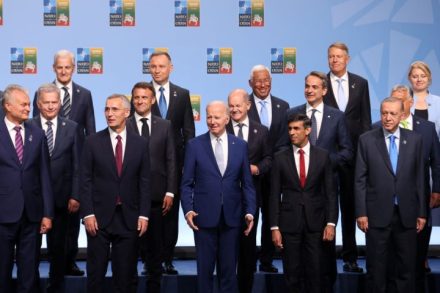
US President Joe Biden flew into Vilnius, Lithuania early on Tuesday with a big task ahead of him: to keep Nato as united as possible at a time when the alliance is fractured on a bunch of major issues. Foremost among them is when and how to provide Ukraine a path toward eventual membership. In public, the two-day session will be full of group photos of smiling heads of state and warm words about the alliance’s resolve in the face of Russian aggression. But behind closed doors, where the actual business is done, difficult conversations will certainly be had.

Macron has a point about Russian war crimes

From our UK edition

French President Emmanuel Macron tends to rock the boat whenever he opens his mouth, saying hard truths that many of his European colleagues, both at the state level and in the European Union’s gargantuan bureaucracy, would rather be left unsaid. Examples are legion: his insistence in 2019 that Nato was going ‘brain-dead’; his proclamation in June 2022 that Russia shouldn’t be humiliated if Europe wants to preserve working relations with Moscow after the war ends; or his comments last April urging Europe to grow a backbone and refrain from blindly following the United States into a confrontation with China over Taiwan.   Should the thirst for justice override the possibility, however faint, of peace?

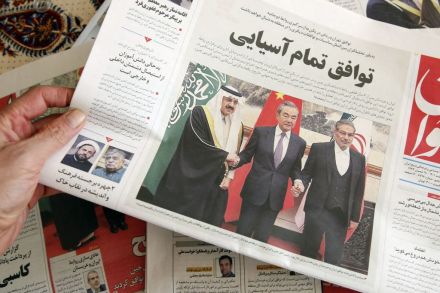
Why Saudi Arabia wants to be a peacemaker in the Middle East

From our UK edition

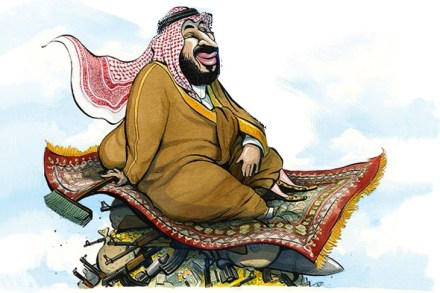
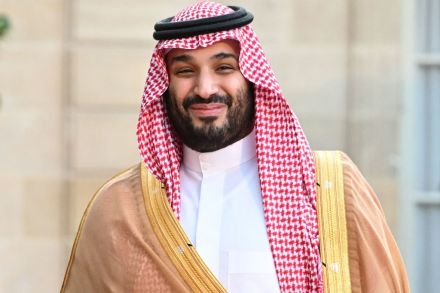
The Middle East, etched into the Western psyche as a region prone to conflict, economic malaise and geopolitical rivalry, is now awash in a frenzy of diplomatic activity. Much of the action is springing from an unlikely source: Mohammed Bin Salman (MBS). The young, ambitious Saudi crown prince is making quite a personal transformation—and it’s one that should be encouraged. Even before he won the job after a cut-throat battle with Mohammed Bin Nayef, his older and more respectable cousin, the US and its allies perceived MBS to be a hot-headed, impulsive workaholic with big dreams for Saudi Arabia but very little patience.

After decades of waiting, China goes on the diplomatic offensive

China has been an epicenter of diplomacy over the last month and American officials can’t help but take notice of the shift. Statesmen flying to China, hat in hand, to sign business deals with Chinese firms or enlist Chinese diplomats to assist in solving international disputes gives the foreign policy graybeards ulcers. The general rule seems to be: what’s good for China is bad for the United States. There’s no question that China’s Xi Jinping has had a good few weeks. After being occupied with a nationwide Covid-19 disaster that lasted for three years, Xi, a man whose entire legacy depends on China transforming into a superpower on par with or perhaps even surpassing the US, isn’t wasting any time before injecting his country back into the diplomatic arena.

syria peace

Macron’s China controversy is a big nothingburger

French president Emmanuel Macron, the self-appointed leader of Europe, is having a not so great week. His multi-day visit to China and successive meetings with Xi Jinping were high on pomp but low on deliverables. But it was during the plane ride back to Paris, when he gabbed with journalists, that he got into trouble. Seated aboard France’s version of Air Force One, Macron presented himself as a leader with an independent streak who believes Europe can't follow the United States like docile little ducklings. His interview wasn’t remarkable, yet foreign policy commentators and politicians are hung up on his remarks about China and Taiwan.

emmanuel macron

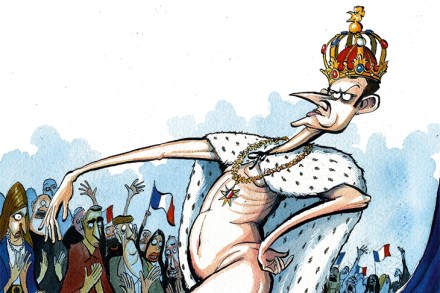
Macron tries to be the Xi whisperer

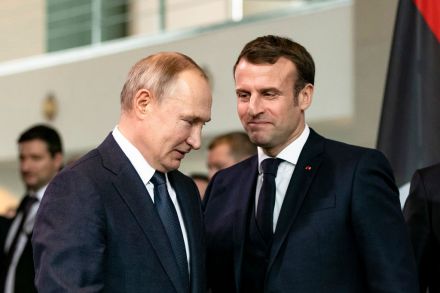
God bless Emmanuel Macron for his perseverance and self-confidence. The French president seeks to lead Europe and turn the continent into a strong, independent player in its own right. And he is eager to take on the hard, thankless diplomatic work that few of his peers are willing to do. Whether it was his ploy in 2019 to connect then-US president Donald Trump and then-Iranian president Hassan Rouhani on the phone or his months-long, intensive personal dialogue with Russian President Vladimir Putin before the war in Ukraine, Macron invests a lot of time and capital into these gambits. Unfortunately for him, many of them fail to accomplish anything of substance. Macron wasn’t able to convince Rouhani to speak with Trump (although Trump reportedly agreed to the call).

napoleon macron tantrum diplomacy

It’s time for Congress to take back its war powers

On March 29, more than twenty years after the United States commenced Operation Shock and Awe in Baghdad, the Senate made history by repealing the military force authorization that green-lit the operation. The bill, which also aims to kill a previous 1991 authorization for the use of military force, or AUMF, against Iraq during the Gulf War, now heads to the House of Representatives where it faces an uncertain future.  On the face of it, repealing both measures would seem like an ordinary event. Saddam Hussein, after all, has been dead for over sixteen years, hanged by an Iraqi court for a litany of crimes against his own people. His regime dissolved within three weeks of the 2003 invasion.

state of the union

The Middle East catches diplomacy fever

Peace isn’t exactly blossoming like rosebuds in the Middle East. The region is still host to a devastating civil war in Yemen, a humanitarian crisis in Syria, sporadic terrorist attacks in Iraq and an endless tit-for-tat between the US and Iranian-backed militias in Iraq and Syria. Indeed, just last night, President Biden authorized several airstrikes against three militia locations in retaliation for a drone attack on an American base in Syria that killed one contractor and injured six others. But for an area of the world so often regarded as hopeless, the Middle East is suddenly looking like an epicenter of diplomacy.

syria peace

Contra the hawks, Biden’s defense budget keeps ballooning

This week we heard a lot about AUKUS, a trilateral initiative between the United States, the United Kingdom and Australia that will revamp the Australian naval fleet with nuclear-powered submarines over the next two decades. President Biden, UK Prime Minister Rishi Sunak and Australian Prime Minister Anthony Albanese made a show of it in sunny San Diego on March 13, where they officially inaugurated the defense agreement and gave speeches about defending sea lanes and the rules-based international order in the Indo-Pacific. But there was another story here: the Pentagon released a torrent of charts and bureaucratic documents on what it would like to see in the coming year’s defense budget.

Marking twenty years of America’s most endless war

The Iraqi people have been through plenty over the last twenty years: a regime change operation against Saddam Hussein; a jihadist insurgency against American occupation forces; a sectarian civil war between Shia and Sunni armed groups; Iranian political interference; an Islamic State rampage; a US-organized counter-ISIS coalition that destroyed the terrorist group’s territorial caliphate. According to Brown University’s Cost of War Project, at least 275,000 Iraqi civilians died in war-related violence between 2003 and 2019. On March 19, the US will mark the twenty-year anniversary of Operation Shock and Awe, the massive air campaign against Saddam’s Iraqi army that paved the way for the ensuing armored drive to Baghdad.

foreign policy

How Afghanistan erred by thinking Biden would never leave

By now, the American troop withdrawal from Afghanistan is etched into history as a failure — one that punctured the Biden administration’s self-professed persona as a collective of calm and cool national security veterans. The Taliban’s rapid capture of the entire country, coinciding with the meltdown of the US-funded Afghan security forces and the awful optics of desperate Afghans trying to get on a flight out of Kabul, will be examined by historians for decades. The history-writing is already well underway. On February 17, the GOP-held House of Representatives sent letters to several government departments demanding any and all records related to the withdrawal.

Jimmy Carter’s second act was better than his first

Jimmy Carter is commonly depicted as one of America’s worst presidents. His four-year tenure is said to be a mishmash of screw-ups, from high energy prices and even higher inflation to low economic growth and a very public, very embarrassing hostage rescue attempt in Iran. His signature achievement, the 1978 Camp David Accords, which codified peace and normalized diplomatic relations between Egypt and Israel, is treated as a small stretch of fresh pavement in an otherwise potholed road. Fair or not, that’s the perception.

jimmy carter

How the earthquake is strengthening Syria’s dictatorship

Northwest Syria is one of the most wretched places on earth. The Syrian province of Idlib, straddling the border with Turkey, is a haven for the internally displaced and is in all practicality a state within a state. Throughout Syria’s twelve-year-long civil (and proxy) war, Syrian dictator Bashar al-Assad has treated the area as a dumping ground for fighters who refuse to lay down their arms and civilians who want nothing to do with Assad family control. Idlib, representing 4 percent of Syria’s total land, is now host to 25 percent of its entire population. And that was before the earthquake hit. If Syria’s northwest was a gateway to misery before the tremors, it’s now a hellscape. Entire families have been wiped out. Buildings have been reduced to rubble.

China won’t have gained much from its spy balloon

From our UK edition

If you didn’t know any better, you might have thought China was preparing to unleash a large-scale invasion on the continental United States. News of a Chinese surveillance balloon loitering over the picturesque landscape of Montana generated a wave of sensationalist coverage and panicked responses from lawmakers. We don’t know much about the balloon other than what the Pentagon has told us: the device, which was orbiting miles above the earth, made its way through Alaska’s Aleutian Islands into Canada before flying somewhere over Montana and drifting across the continental United States. On Friday, the Pentagon reported a second balloon flying somewhere over Latin America.