Daniel DePetris

Daniel DePetris is a fellow at Defense Priorities, a syndicated foreign affairs columnist at the Chicago Tribune and a foreign affairs writer for Newsweek.

Washington’s dirtiest war at last goes silent

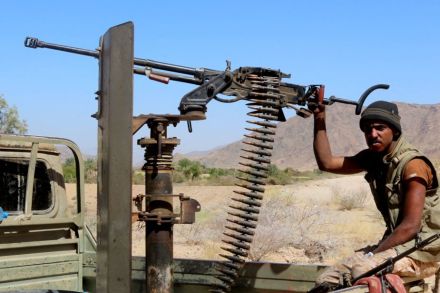
Something strange, but miraculous, is happening in Yemen right now: no bombs are falling from the sky. According to the Yemen Data Project, an independent group keeping track of the violence in the Arab world’s poorest country, there hasn’t been a single Saudi coalition airstrike over the last week. This is the first time since Yemen’s civil-turned-proxy war began that an airstrike hasn’t been recorded, an unprecedented and welcome development for the millions of Yemenis who have lost so much as their rich Saudi neighbors seek to drive the Houthi-led rebel movement to the negotiating table.

Don’t blame the West for its Ukraine hesitance

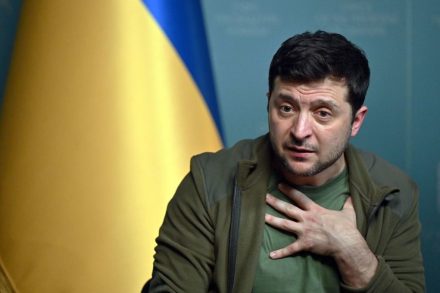
As Ukrainian President Volodymyr Zelensky addressed the UN Security Council today with all the anguish you would expect from a wartime commander-in-chief, he could nonetheless be relatively pleased about several things. Sure, Zelensky and his advisers are constantly making the point that Ukraine needs bigger and better weapons to resist Russia’s invasion, but the West has been quite responsive to Kyiv’s requests. The Biden administration’s latest weapons shipment, announced last week, adds to the $1.6 billion in military aid the US has sent to the Ukrainian military since the war broke out on February 24.

Biden’s ad-libs are making the world less safe

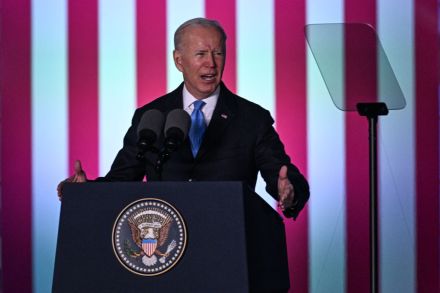
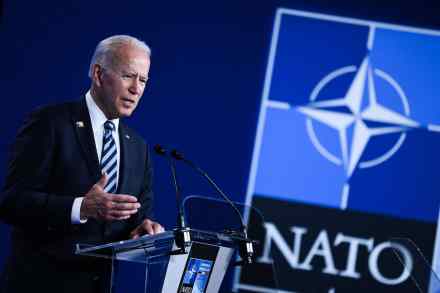
Joe Biden, by his own admission, is a man who sometimes goes off script. Whereas some presidents seek to bottle up their emotions and remain reserved for the cameras, Biden wears his emotions on his sleeves. The president proved that yet again during his visit to Poland over the weekend, where he let loose on Russian president Vladimir Putin at the conclusion of a speech: “For God’s sake, this man cannot remain in power.” Many in the West would privately agree with Biden’s assessment.

biden

What’s the difference between Yemen and Ukraine?

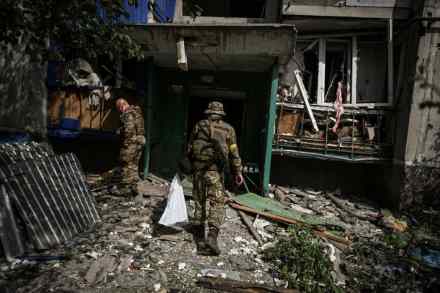
Millions of innocent civilians uprooted from their homes. Residential areas turned into dust, rubble and wire. Thousands of people killed in errant airstrikes. Store shelves emptied of basic staples. A humanitarian crisis dominating the everyday lives of a large swath of the population, who just want to escape the shelling and the fighting. This is the scene the world now equates with Ukraine, which has been subjected to a barbaric war of choice courtesy of Russian president Vladimir Putin. Yet for one poverty-stricken nation more than 2,400 miles to the south, this has been the grim reality for years.

yemen

Is Putin nuts?

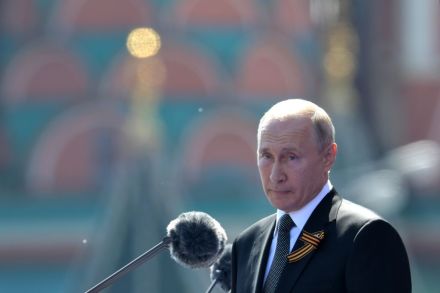
As Russian forces level Ukrainian cities with artillery, missiles and airstrikes, there's a concerted effort to get inside the mind of Vladimir Putin: from pundits, former US national security officials and current heads of government. What could possibly get the man to stop the bombardment and support a ceasefire? Is Putin intent on conquering all of Ukraine? Or is there some combination of concessions the Ukrainian government and the West could offer that would end the war and bring about a full Russian troop withdrawal? The fact is none of us know what Putin’s endgame is. Putin’s own advisors, especially those kept out of the inner circle, may not even understand what the Russian leader is planning.

crazy nuts

Putin the reckless gambler

Vladimir Putin’s two-week-long war in Ukraine is not going as planned. What the Russian strongman thought would be a romp of the Ukrainian army in a matter of days has turned into a slow-motion train-wreck, with thousands of Russian soldiers killed in battle, images of burned-out tank husks littering the roads and Russia’s economy circling the drain. CIA director William Burns told the House Intelligence Committee today that Putin is increasingly frustrated about the level of progress achieved thus far in the campaign. "He was confident that he had modernized his military and they were capable of quick, decisive victory at minimum cost,” Burns said during his testimony. “He’s been proven wrong on every count.

vladimir putin alexei navalny

Putin is making the EU great again

The Europeans have been jolted awake from their deep Pax Americana slumber, when the continent was largely content to eat the spoils of economic prosperity and allow the United States to do the heavy lifting on all things security. And we have Vladimir Putin to thank for it. Russia’s nearly week-long invasion of Ukraine has shocked the conscience of many who believed Europe would never return to the dark days of large-scale land warfare.

Russia’s invasion of Ukraine: what we know so far

From our UK edition

Vladimir Putin finally made his move overnight. In a spontaneous address to the Russian people in the early hours of the morning, Putin declared the beginning of a special military operation to demilitarise Ukraine. The missiles started flying almost immediately. Based on the opening hours, it’s safe to say that the Russian military operation is far larger, more coordinated and geographically dispersed than many assumed previously. Cruise missiles and artillery fire landed on targets in at least seven Ukrainian cities simultaneously, from Kharkiv and Odessa to the capital, Kiev. Matthew Chance, a CNN international correspondent, had to change into his flak jacket and helmet during the middle of his broadcast, with audible booms sounding in the distance.

Diplomacy is Ukraine’s last hope

Amid a pile of Russian disinformation, a mass evacuation of civilians from the self-proclaimed separatist republic and reports that Russian commanders are preparing to execute an invasion order, diplomacy (or at least the hope of it) reared its beautiful head late Sunday night. After a frantic series of calls orchestrated by French president Emmanuel Macron, the White House released a statement confirming President Biden’s openness to a direct meeting with Russian president Vladimir Putin. Whether or not the leader-to-leader discussions happen, however, won’t be fully up to Biden or Macron. It takes two to tango, as the hackneyed phrase goes. And right now, Moscow has been habitually cryptic about its intentions.

ukraine

NATO won’t bleed for Ukraine

Ask three different people whether Russian President Vladimir Putin will approve an invasion of Ukraine, and you are likely to get three different answers. Yes, a Russian land, air, and sea blitz is inevitable and will come in fairly short order, likely without warning. Yes, a Russian invasion is possible, but could still be averted with some shrewd diplomacy. Or, no, surely Putin understands an invasion would be a disaster for his legacy and his country’s economy. In the midst of all of this comes wild speculation about what Putin is thinking at any given moment, how the weather may factor into his calculations, and what the Russian government’s end goal really is. What can be said for certain, however, is that diplomacy has picked up significantly over the past week.

ukraine

Kudos to Macron for going to Moscow

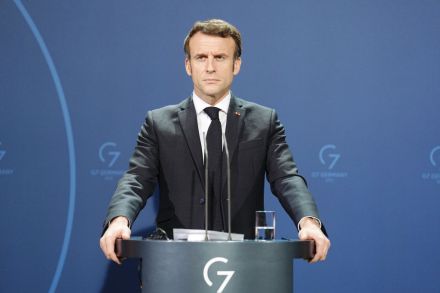
Landing in Moscow on February 7, French President Emmanuel Macron had a twinkle in his eye and a spring in his step. There he was, taking it upon himself to be the first European head-of-state to meet Russian President Vladimir Putin since over 130,000 Russian troops massed on Ukraine’s border from three sides. Macron's mission was to explore whether a de-escalation with Russia was possible. “I believe that our continent is today in an eminently critical situation, which requires us all to be extremely responsible,” he told reporters before his five-hour session with Putin began. The other option, what could be the largest land war in Europe since World War II, would be far worse.

Europe: the little kids’ table at the Ukraine talks

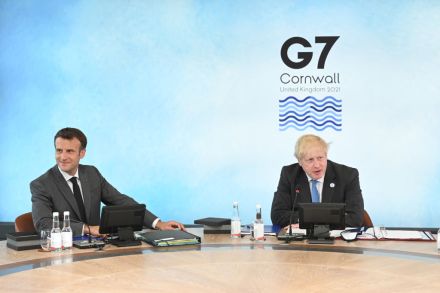
While American and Russian officials are yelling at one another in the UN Security Council chamber, another international actor has found itself at the little kids’ table: Europe. It's possible the phrase “little kids’ table” is too harsh. To be fair, French president Emmanuel Macron is at least in direct communication with Russian president Vladimir Putin and urging his European colleagues to formulate a joint European negotiating position on the Ukraine question. France is also a chief mediator of the Normandy Format, which seeks to resolve the eight-year conflict in Ukraine’s Donbas region. But Macron is largely an outlier on his own continent.

Russia may very well invade Ukraine

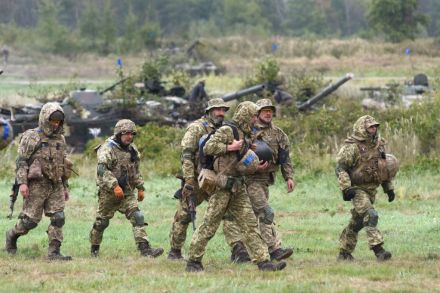
The United States is doing what it can to deter Russian President Vladimir Putin from ordering another invasion of Ukraine. Despite the cool and collected persona that Ukrainian President Volodymyr Zelensky is trying to present to his people, the White House still believes Russian military action is "imminent.” The Biden administration recently put 8,500 American troops on alert for deployment to Eastern Europe. Washington has spent the last several weeks trying to convince the Kremlin that any incursion into its neighbor would be costly. On Tuesday, the US sent a third shipment of lethal equipment to the Ukrainian military, including 300 additional Javelin anti-tank missiles. This comes on top of the 200,000 pounds of lethal aid that had already been provided by Washington.

The decline of drone killings

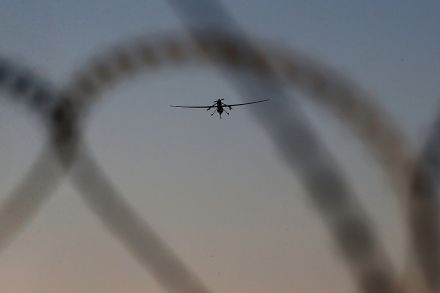
On the very same day that Joe Biden was inaugurated, he imposed an order on the national security bureaucracy that received little attention at the time: drone strikes in Yemen and Somalia were to be curtailed until further notice. If American commanders wanted to strike a target in those countries, they would have to bring the request directly to the White House for debate. The new, temporary guidelines would be in place until the Biden administration completed its inter-agency review on America's policy of targeted killings. That review is still in the process of being finalized. And while we don’t necessarily know what the Biden administration’s new rules and procedures will be, we do know that the White House is ramping down the pace of drone strikes.

America still won’t risk a war with Russia over Ukraine

Anybody who thought this week’s intense diplomacy between American, European, and Russian officials would magically resolve the ongoing crisis in Ukraine should lie down until the feeling passes. Crisis diplomacy isn’t a walk in the park; if anything, it’s a slow-moving car ride through rush-hour traffic, with plenty of speed bumps along the way. On Monday, January 10, Washington and Moscow met for a round of discussions in Vienna to sound each other out and present their list of seemingly endless grievances. After eight hours of talks, both delegations left the room with, coincidently, similar assessments as to how it all went.

Why we keep getting North Korea wrong

Kim Jong-un is focused first and foremost on managing his country’s lingering food crisis. But that doesn’t mean the thirty-seven-year-old dictator has any intention of siphoning off resources from North Korea’s weapons programs. He made that abundantly obvious this week, when Pyongyang conducted its second ballistic missile test using hypersonic technology in four months. According to North Korean media, the missile traveled 435 miles to the east, hitting the designated target. The response to the latest test was predictable. South Korea called an emergency meeting to discuss the launch. The US State Department quickly issued a statement to reporters reminding them that the tests are a violation of multiple UN Security Council Resolutions (as if North Korea cared).

north korea

Biden’s diplomacy with Iran is falling apart

While American and Iranian negotiators continue to clash in Vienna, policymakers back in Washington are debating the right course of action should nuclear diplomacy collapse. Ever since negotiations between the US and Iran resumed in late November after a five-month hiatus, the Biden administration has repeatedly told their Iranian counterparts that Washington’s patience for diplomacy isn’t unlimited. In the ensuing weeks, American officials have grown frustrated by Iran’s hardening stance, including its insistence on verified sanctions relief before Tehran rolls back its own nuclear advances. According to the State Department, the current round of talks, the eighth since April, are making scant progress toward a mutually agreed-upon resolution.

iran

Another wasteful defense budget for the Pentagon

In a perfect world, lawmakers responsible for crafting defense policy would actually debate defense policy. Yet rarely does this occur when the annual National Defense Authorization Act (NDAA) works its way through Congress. If there is debate, it typically revolves around numbers: how much money does the Pentagon need to keep the United States safe and ahead of its strategic competitors? How many F-35 airframes should be purchased for the Air Force? How much cash should be appropriated for the various “assurance initiatives” the Defense Department runs on a daily basis? This year was no different. The Senate this week sent a compromise $768 billion NDAA to President Biden’s desk in a resounding vote after a multi-day hiccup over amendments killed the original version.

congress defense budget

Biden must encourage Ukraine to negotiate

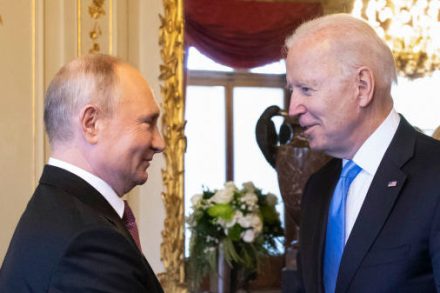
President Joe Biden spoke with Russian President Vladimir Putin today via video conference for just over two hours, the second time in six months that the two leaders have engaged in a face-to-face conversation. For Biden, the message he sought to deliver was strict and to the point: if you, Mr. Putin, go ahead and order a second invasion of Ukraine in nearly eight years, you can expect a raft of economic penalties that will negatively effect everything from Russia’s access to the SWIFT payment system to the ability of Russian banks to convert rubles into dollars. For the security-minded Putin, the meeting was an opportunity to press Biden on his principal demand: a written legal guarantee from Washington and the rest of NATO that Ukraine will not be invited into the alliance.

Biden’s Pentagon wants to keep the military overstretched

Nearly ten months after President Biden ordered defense secretary Lloyd Austin to undertake a comprehensive, across-the-board review of America's military overseas, the Pentagon finally concluded the study this week. And it landed with a loud thud of disappointment. So far as we can tell (the entire product won’t be released to the public), the results of the Global Posture Review (GPR) range from unimaginative to pitiful. Or, in the words of one congressional aide familiar with the findings, "No decisions, no changes, no sense of urgency, no creative thinking. Lots of word salad.” Of course, the GPR is hardly the first government report to be classified this way.

military