Daniel DePetris

Daniel DePetris is a fellow at Defense Priorities, a syndicated foreign affairs columnist at the Chicago Tribune and a foreign affairs writer for Newsweek.

Expect tension and clashes at Italy’s G7 summit

From our UK edition

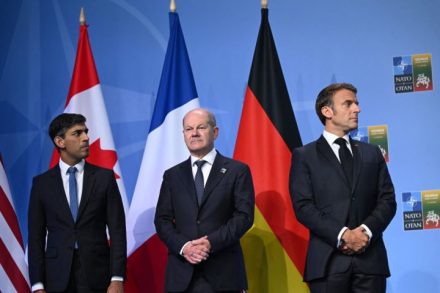
Another year, another G7 Leaders’ summit. The confab between the world’s wealthiest democracies has long since become one of those boring events etched into the global diplomatic landscape, a more intimate and picturesque version of the UN General Assembly meetings held every September. Speeches are given. Private dinners are arranged. Handshakes and hugs proliferate. And group photos are taken, where the well-dressed leaders smile as if they’re at a family reunion. But this year’s session, which begins today, will entail a significant amount of weighty business. It comes at a particularly fraught moment for Europe’s centrist politicians, who were dealt an embarrassing blow by far-right political parties during the European Union elections this weekend.

Will Iran’s foreign policy change after Raisi’s death?

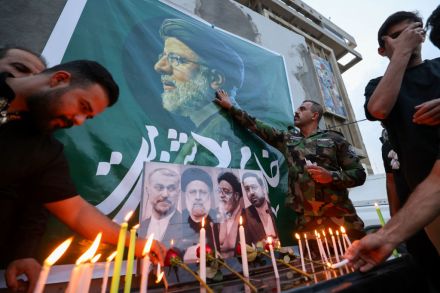
Ebrahim Raisi, the hardliner jurist-turned-president of the Islamic Republic of Iran, died in a plane crash over the weekend after coming back from a ceremony marking a new joint dam project with Azerbaijan. Iranian foreign minister Hossein Amir-Abdollahian, who was also on board, perished in the crash as well.  Few Iranians outside the political system will mourn their deaths. Raisi, for instance, was a notorious, unapologetic defender of the Iranian regime and first got involved in its machinations in his mid-twenties. In 1988, he served on a panel that handed down death sentences for thousands of dissidents.

iran ebrahim raisi

Is Europe ready for Trump 2.0?

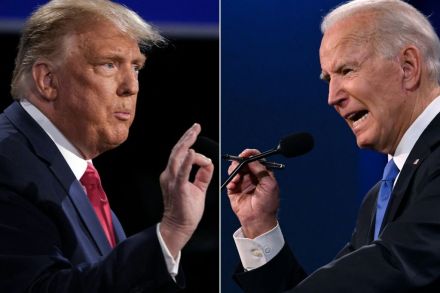
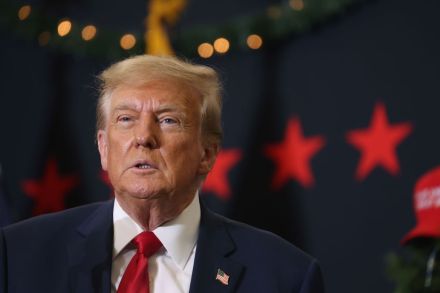
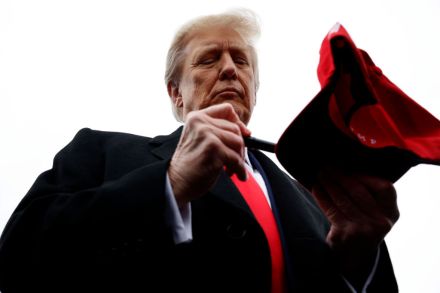
The 2024 presidential race between Joe Biden and Donald Trump is a dead heat. At most, a few percentage points separate them in the polls. Thousands of miles away, however, European leaders are operating as if Trump has already won, not wanting to be caught flat-footed yet again. When Trump defeated Hillary Clinton in 2016, European officials scrambled to establish contacts with the incoming administration. This time, the same wonks are proactively reaching out to Trump-friendly lawmakers and think-tankers, not only to understand what Trump’s foreign policy would look like in a second term but to press their own priorities. The Europeans, of course, are right to be worried.

Trump

Is the special relationship between Israel and America souring?

From our UK edition

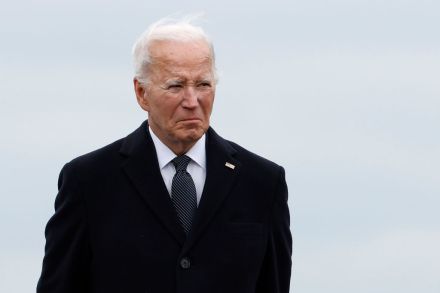
President Biden doesn’t give many sit-down television interviews, but when he does, he tends to make news. This week he sat down for an on-air session with CNN’s Erin Burnett, who asked him point-blank whether US bombs given to Israel have caused civilian casualties in Gaza. Biden’s response was notable not necessarily because the answer was a mystery (of course US bombs have killed civilians there) but rather because Biden showed a considerable degree of frustration with Israel’s war strategy. 'Civilians have been killed in Gaza as a consequence of those bombs and other ways in which they [Israel] go after population centres,' the President said.

Can Joe Biden really strike a deal between Israel and Saudi Arabia?

From our UK edition

Very rarely do American presidents get policy wins in the Middle East. The region hasn’t been kind to the United States over the last thirty years. The signing of the Israel-Egypt peace treaty during the Jimmy Carter years and the U.S.-led military campaign against Saddam Hussein’s Iraq during the 1991 Gulf War are two exceptions to the rule. Everything else has been a failure of degree. Others, like the U.S. invasion of Iraq in 2003 and the Trump administration's arbitrary withdrawal from the Iranian nuclear deal in 2018, were self-inflicted wounds that made the region bloodier and more difficult to manage. True to tradition, the Biden administration doesn’t have much foreign policy success in the Middle East either.

Is Biden’s patience with Israel running out?

Back in 2016, Donald Trump had a memorable quote that pretty much encapsulated his old over the Republican Party: "I could stand in the middle of Fifth Avenue and shoot somebody, and I wouldn't lose any voters, OK.” At this point, you might be able say the same thing about Israeli prime minister Benjamin Netanyahu. The premier could stroll up Fifth Avenue, shoot somebody on the street and still receive US-supplied joint direct attack munitions, 2,000-pound bombs, fighter aircraft and no-strings-attached diplomatic support. The man can apparently do no wrong in the eyes of the Biden administration — or more accurately, he couldn’t do anything that would warrant even a minor, let alone substantive, adjustment in US policy.  But is that changing?

joe biden israel idf jose andres

On the anniversary of the Iraq invasion, spare us the sermons

Twenty-one years ago today, the United States committed its worst foreign-policy mistake in generations: invading Iraq to overthrow Saddam Hussein, the despot who ruled the Arab country with an iron fist for nearly a quarter-century. The entire operation was supposed to be a “cakewalk,” in which the mighty US military, stocked with the best technology and weapons the world had to offer, would pummel a decrepit Iraqi army that was hobbled by international sanctions for the better part of a decade. The mood at the time was serious but stoic. Donald Rumsfeld, the US defense secretary, argued that the entire war wouldn’t last more than five months.

iraq war

Pope Francis’s Ukraine war faux-pas

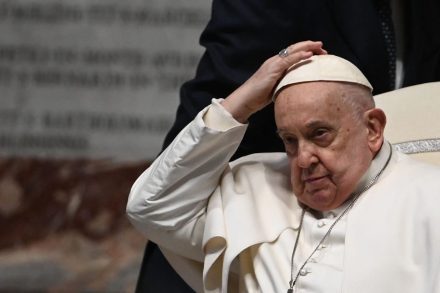
If you didn’t know any better, you might think that Pope Francis was no longer welcome in Ukraine. His recent interview with a Swiss broadcaster, excerpts of which were released over the weekend, has caused a whirlwind of disappointment and anger in Ukrainian policy circles as well as with some of Ukraine’s staunchest supporters in the West. The subject of derision: whether Ukraine should do a little less fighting and a lot more talking. Asked to comment about the debate between those who seek a negotiated end to Russia’s two-year-long war in Ukraine and those who oppose such a stance, Pope Francis chose the side of dialogue.

pope francis

Biden’s Gaza gaffe risks relations with the Democratic base

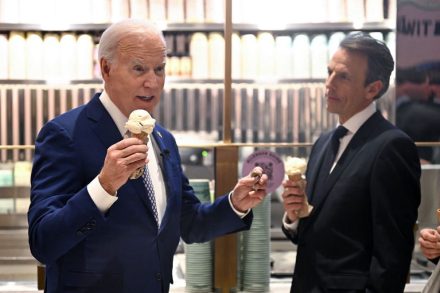
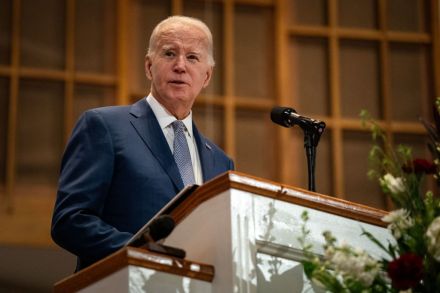
One of the first rules of politics and policy is to keep expectations low, lest you disappoint your constituents and embarrass yourself for being hopelessly naive.  Apparently President Joe Biden didn’t get the memo.  During a stop in New York City this week for a taping of NBC’s Late Night with Seth Meyers, Biden was eager, if not downright giddy, about the prospects of a temporary ceasefire in Gaza. Ice cream cone in hand, the president told the White House press corps that Jake Sullivan, his national security advisor, believes a truce is close at hand.  “My hope is that, by next Monday, we’ll have a ceasefire,” Biden said.

joe biden gaza gaffe

Alexei Navalny won’t be the last of Putin’s martyrs

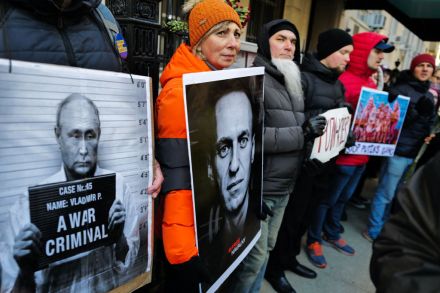
Alexei Navalny, Russia’s most prominent opposition leader and a constant irritant to Russian president Vladimir Putin’s regime for more than a decade, has died in a remote penal colony in the Arctic Circle at the age of forty-seven. The news was greeted with shock, outrage and sadness across the US and Europe and came at a time when the West’s most high-profile politicians and security figures were in Germany for the annual Munich Security Conference.   There’s no denying Navalny’s bravery. Most high-profile Russian figures who criticize Putin and live long enough to tell the tale choose to live a life in exile. Navalny, however, was never interested in that option.

alexei navalny

What Trump gets right about Nato

From our UK edition

With the exception of Hungary’s Viktor Orbán and Slovakia’s Robert Fico, it’s safe to assume that Europe is petrified about the prospects of a second Donald Trump presidency. As one European foreign policy analyst told the New York Times last summer: ‘It’s slightly terrifying, it’s fair to say.’ The terror meter went up a few notches this weekend, when Trump addressed supporters at a campaign rally and told a story (who knows if the story was actually true) about the time he told a European bigwig that the United States would protect a European country from Russian invasion if it failed to meet Nato’s defence spending benchmark. ‘In fact,’ Trump said, ‘I would encourage them to do whatever the hell they want.

What will US air strikes actually achieve?

From our UK edition

The 28 January drone strike in Jordan that killed three American soldiers and wounded 40 more necessitated a US military response. Under no scenario was President Biden not going to retaliate. The question was how strong the retaliation would be. We now have the answer.  Yesterday’s series of airstrikes against the Iran’s Islamic Revolutionary Guard Corps (IRGC) and Iranian-supported militias was by far the largest US military operation we’ve seen in Iraq and Syria since Biden’s term began. Before yesterday, the US limited its operations to precision strikes to one or two militia facilities at a time. Those operations didn’t result in the deterrent effect the White House was looking for.

What are Biden’s options on Iran?

The drone strike that struck near the sleeping quarters of a small US outpost in northeastern Jordan, killing three American troops in the process, has landed like a thud in the corridors of the Biden administration. Hawkish lawmakers who have been jonesing to bomb Iran into the Stone Age for years, such as Lindsey Graham and Tom Cotton, are using the weekend’s travesty to push the argument to an even higher decibel. The logic: Iran and its proxies need to understand that the US won’t be pushed around. It’s an emotionally satisfying response, but one that could get the United States into a heap of trouble if not thought through and tailored appropriately. President Biden and his advisors have spent the last forty-eight hours talking through options.

joe biden iran

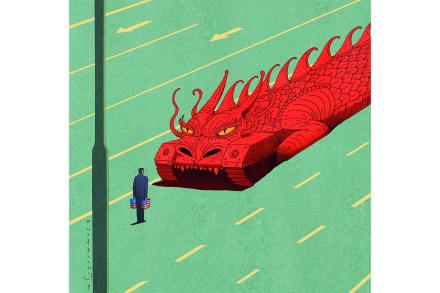
How will the 2024 election impact US-China relations?

There was a time when the relationship between the United States and China had a bright future. While bilateral relations have never been particularly rosy since the two countries formally established diplomatic ties on January 1, 1979, US and Chinese leaders have long worked on the assumption that they had much to gain by deepening their cooperation and, if possible, expanding it to new heights. This was a widespread sentiment in Washington, reflected in speeches given by presidents from both parties. “I know there are those in China and the United States who question whether closer relations between our countries is a good thing,” President Bill Clinton told students at Beijing University in June 1998.

Gallagher china ccp confucius institutes china

How the Houthis can frustrate the West

From our UK edition

On Thursday, the United States and the United Kingdom launched two rounds of strikes against 72 Houthi targets in Yemen – a turn of events that is unsurprising given the joint statement issued to the Houthis a week prior, which read like an ultimatum. The Houthis have attacked civilian vessels in the Red Sea 27 times since 19 November, most recently less than 24 hours before the American and British bombs started falling. John Kirby, Joe Biden’s national security spokesman, told reporters a day later on Air Force One that ‘valid, legitimate military targets’ were struck and that Washington would do what is necessary if the Houthis continued on their present course.  This isn’t the first time Washington and London have taken military action against the Houthis.

Why 2024 will be tough on Joe Biden

From our UK edition

In the United States, presidential elections are rarely won or lost on foreign policy. Domestic matters like the economy, crime, and the overall state of the country are far more relevant to candidates. Even so, incumbents can’t allow the world to degenerate in front of them. Just ask Jimmy Carter, whose 1980 campaign against challenger Ronald Reagan shrivelled away in part to the lingering Iranian hostage crisis. As Joe Biden looks to 2024, his administration is juggling a cornucopia of conflicts, challenges and crises. Whether events outside America’s borders will help or hurt him at the polls next November is anyone’s guess. But there is a sense that the next year could be pivotal both for the status of these conflict as well as for Biden’s capacity to help resolve them.

Why isn’t Biden being straight with Zelensky?

From our UK edition

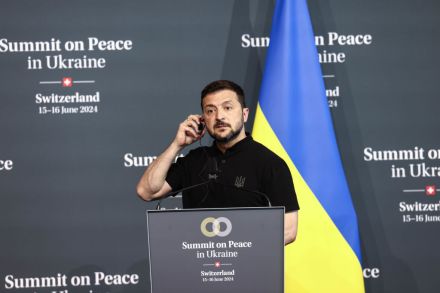
Ukrainian president Volodymyr Zelensky’s visit to Washington a year ago was a love-fest, characterised by standing ovations from American politicians, lavish praise from president Biden and a commitment to keep the aid flowing. His visit this week, however, occurred in a much different atmosphere. The politics of Ukraine aid have changed, with a growing number of Republican lawmakers wondering whether sending more taxpayer dollars to underwrite a stalemate is a wise course of action.

Biden and Xi will resolve nothing in San Francisco

A year ago today, President Biden and Chinese President Xi Jinping shook hands with each other on the sidelines of the G-20 Summit in Bali, Indonesia, in an attempt to reset the world’s most important bilateral relationship. The two men, who knew each other during their previous encounters at the vice presidential level, hoped to exploit their familiarity with one another to bring US-China relations onto a more productive plane. And for a moment, the Bali talkathon seemed to have that effect.

xi

The man who made Reagan

Ronald Reagan has been dead for nearly twenty years, but sometimes it still feels like he’s still the head of the Republican Party. The fortieth US president has been etched in American folklore as one of the country’s most effective and historic statesman, the man who stared down the Soviet Union and pursued policies that ultimately brought down the so-called “Evil Empire” in December 1991. Republican politicians of all stripes, from presidential aspirants to local councilmembers, utter his name at every opportunity. The first GOP presidential debate took place at the Reagan Library in Simi Valley, California, where multiple candidates looked back at the 1980s as a time when the mighty US shook off the cobwebs from the Vietnam War and rediscovered its self-confidence.

President Reagan walking with George P. Shultz outside the Oval Office (Wikimedia Commons)

Biden’s Oval Office address was a sales pitch

A primetime address in the Oval Office is the pinnace of presidential speechifying. Ronald Reagan used the room in 1986 to console the nation after the Challenger blew up on live television. George W. Bush declared the global war on terrorism there. Donald Trump leveraged the weight of the Resolute Desk as he talked to Americans about a deadly but mysterious virus called Covid-19 for the first time.   Tonight, it was Joe Biden’s turn. The topics, the wars in Ukraine and Israel, couldn’t be more different with respect to the players, the stakes or the circumstances leading up to them. Even so, Biden tried to convince the American people on the idea that the two wars were one and the same.

oval office joe biden