Daniel DePetris

Daniel DePetris is a fellow at Defense Priorities, a syndicated foreign affairs columnist at the Chicago Tribune and a foreign affairs writer for Newsweek.

Will Trump’s pause of Ukrainian military aid force Zelensky to the negotiating table?

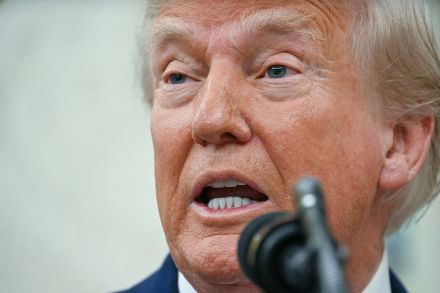
The decision couldn’t have come as a surprise to Ukrainian president Volodymyr Zelensky. And if it did, then his capacity to read the room is even worse than imagined. Last night, the Trump administration paused all US military aid to Ukraine. The move came after an extremely tumultuous few weeks, which started on February 19 when Zelensky claimed that Trump was living in a Kremlin-orchestrated disinformation bubble. Trump wasted no time howling back by calling Zelensky a dictator because he canceled elections during a time of war. The spat accelerated on Friday, when the two men, egged on by Vice President J.D.

ukraine military aid pause

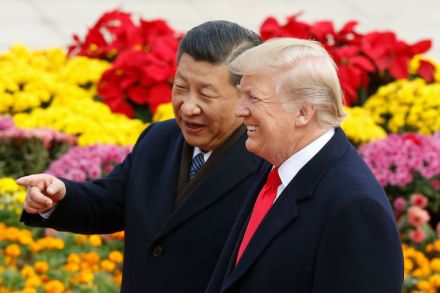
The utterly idiotic reaction to the Trump-Putin phone call

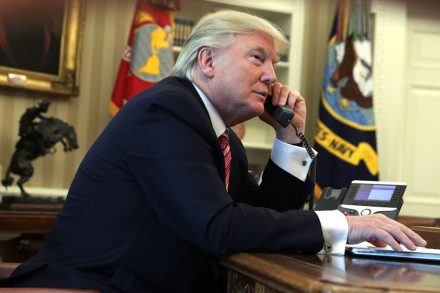
President Donald Trump called Russian president Vladimir Putin yesterday and discussed various topics, including the war in Ukraine, for an hour and a half. According to Trump, the two agreed to begin negotiations on ending the three year-long conflict immediately and even set up preliminary talks about traveling to one another’s capitals. Shortly after the call with Putin, Trump dialed Ukrainian president Volodymyr Zelensky for yet another conversation that reportedly went ”very well.” Trump’s call with Zelensky, of course, wasn’t the controversial part. Nobody had a problem with it. The dialogue with Putin, however, was apparently blasphemy, akin to violating all of the Ten Commandments on the same day.

call

Trump the ‘Peacemaker’ has his work cut out

From our UK edition

Joe Biden is out, Donald Trump is in, and ‘the golden age of America has begun.’ Trump’s second inaugural address on this frigid January afternoon was, as one might expect, laced with grievances, bombast, self-congratulation and big promises. The speech was a preview of the dozens of executive orders primed for the president’s signature hours later, some of which, such as declaring a national emergency along the US–Mexico border, were at the core of his campaign. While Trump stuck with domestic issues, there were several broad foreign policy themes he chose to highlight.

Trump is coming for Europe on defence

From our UK edition

Hundreds of millions of Americans will have a new president tomorrow. Depending on where you land on America’s increasingly hyper-partisan political spectrum, 20 January will either be a day of dread or joy, a return to the good old times or a step back into rough, unpredictable waters.  The same could be said for policymakers across the Atlantic Ocean. Most of Europe’s political heavyweights, the majority of whom are still content to live in the 1990s as if the geopolitical changes of the last two decades didn’t occur, are dreading Trump’s return. Fresh off another victory, Trump and his administration want to see clear, unambiguous action It doesn’t take a doctorate in international relations to understand why.

Jimmy Carter was a master of conflict resolution

From our UK edition

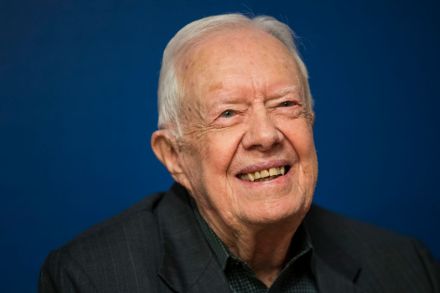
On 29 December, former US president Jimmy Carter died peacefully at his ranch house in Plains, Georgia, at the age of 100. Over the last few years, most people knew him as the old head of state in the rocking chair, surrounded by family and friends, whose sense of morality and numerous good works were the stuff of legends. Whether it was building houses for the poor or establishing an institution that monitored elections around the world, nobody could accuse Carter of living an unproductive life after the presidency. The former peanut farmer from Georgia, however, was also given a bad wrap. He is frequently remembered as the bumbler whose one-term in office was weak and ineffectual.

America is not prepared for Syria after Assad

From our UK edition

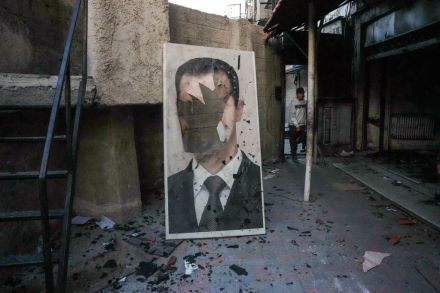
On Saturday afternoon, US intelligence officials leaked an assessment: the Assad regime, which has ruled Syria for over half a century, could very well collapse in a manner of days. As one official told CNN, ‘Probably by next weekend the Assad regime will have lost any semblance of power.’ It turns out that Washington was giving Assad too much credit. Less than eight hours later, a regime that had locked up hundreds of thousands of prisoners in dudgeons across the country, and used chemical weapons against its own people on multiple occasions to keep itself in power, was burning up and heading for the ash heap of history.

Trump is already the diplomat-in-chief

The United States only has one president at a time. Until January 20, that’s Joe Biden. But President-elect Donald Trump and his skeleton foreign policy team are waiting in the wings, plotting policy behind the scenes on issues — Ukraine, Gaza, Iran, Middle East peace — that have stymied the Biden administration for the last year. In fact, Trump is already influencing the respective calculations of allies, partners and adversaries before he even steps foot in the Oval Office. And Biden’s advisors seem perfectly fine with it. Trump fancies himself as a master negotiator, somebody who’s inherently skilled at poking, pressuring and sweet-talking the opposite side of the table until he gets what he wants.

diplomat

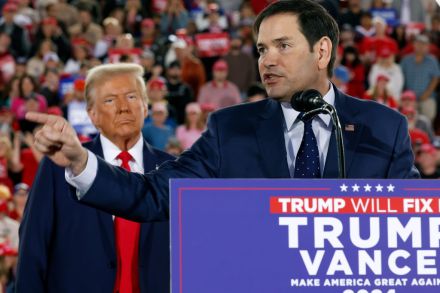
Would a Secretary Marco Rubio implement Trump’s policies?

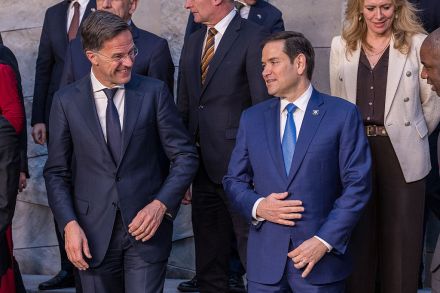
What on earth is Donald Trump thinking? That’s what many realists and restrainers inside and out of Washington are asking themselves after news broke late last night that Marco Rubio, the senior senator from Florida, is set to be tapped as secretary of state in the next administration.  The reactions haven’t been uniformly bad, mind you. Other candidates rumored to be under consideration, such as Vivek Ramaswamy, caused many in the US foreign policy elite to wretch in fear. Others, like former national security advisor Robert O’Brien and Senator Bill Hagerty, who served as US ambassador to Japan during Trump’s first term, would have been predictable choices with whom most could live.  Rubio, however, is one of the most hawkish options Trump could have picked.

rubio

What does Trump’s win mean for America’s allies – and its enemies?

From our UK edition

When Donald Trump won his first-ever election in 2016, the world woke up the next morning in a collective state of shock and disbelief. Washington’s allies in Europe were caught completely unprepared; all of a sudden, they had to contend with a leader who relished needling them for all kinds of sins, real and perceived. America’s allies like Japan and South Korea, whose defence policies depend almost entirely on a stable alliance with the United States, were now forced to deal with a man who threatened to use those alliances as leverage to extract greater defence spending in Tokyo and Seoul. Latin America didn’t know what to believe, and frankly neither did many Americans. Trump should schedule a phone call with Putin relatively early Nobody is shocked this time around.

Why a Trump win may not rock the boat as much as you think

From our UK edition

If you didn’t know any better, you might think the 2024 US presidential election was a make-or-break moment for America and the world. Allies and adversaries alike will be watching the election results like the rest of us: on the edge of our seats. Pennsylvania, Michigan, and Wisconsin are at the centre of the universe right now. So goes the result in those three states, so goes the fate of the international system as we know it. Pennsylvania, Michigan, and Wisconsin are at the centre of the universe right now It’s all a bit dramatic. Sure, certain countries have their favourites.

The endgame: Biden’s quest for a foreign policy legacy

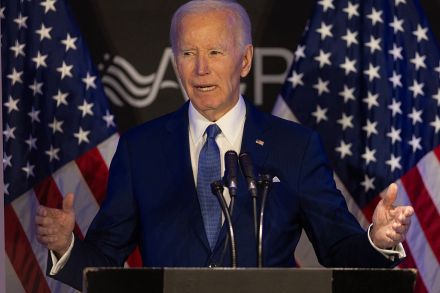
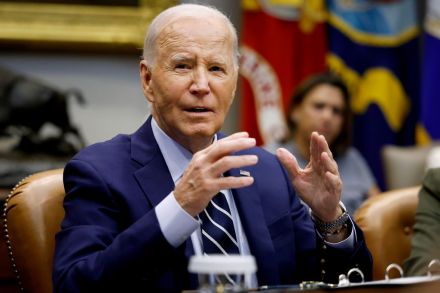
President Joe Biden only has a few more months before he steps out of the White House, hands over the keys to his successor and spends his remaining days soaking in the Delaware sun. But before he enjoys retirement, the lifelong public servant has a big piece of unfinished business: scoring a major foreign policy win that will secure his place in the history books. Unfortunately, dreaming about being a statesman is one thing; being one is quite another. The two conflicts that would give the president that coveted status — the wars in Gaza and Ukraine — aren’t presently amenable to diplomatic resolution. And while Biden and his advisors may be committed to doing the impossible, all the commitment in the world won’t do much if the combatants are intent on slugging it out.

Biden

How will Yahya Sinwar’s death change Netanyahu’s calculations?

It was a short, stern, matter-of-fact message from the Israeli Defense Forces — "Eliminated: Yahya Sinwar." The man the Israeli military establishment was searching for throughout Gaza's alleyways, underground tunnels and blasted-out buildings for more than a year, responsible for the worst terrorist attack on Israel since the founding of the state, is now dead and gone. Sinwar becomes the latest in a long line of Hamas leaders and commanders — Ahmed Yassin, Abdel Aziz Rantisi, Mohammed Deif and Ismail Haniyeh, to name a few — who have eventually met their fate at Israel’s hand.  Sinwar, however, often made the others look like conciliatory men. The sixty-something-year-old Palestinian, born in a Gaza refugee camp, lived and breathed Hamas for his entire adult life.

sinwar netanyahu

With Israel, the US is caught in a world of contradictions

Ever since a 2,000-pound bomb demolished Hezbollah’s headquarters in Southern Beirut last Friday and killed Hassan Nasrallah, the leader of the organization since 1992, there was an expectation among the commentariat that Iran would retaliate. The scope of that response, however, was very much in dispute. The Iranian government was reportedly divided about whether to respond at all, with the newly-elected president, Masoud Pezeshkian, taking the position that an attack against Israel would likely ruin his foreign policy agenda — he offered the West the thinnest of olive branches during his time in New York for the UN General Assembly meetings — and give the Israeli government an excuse to strike inside Iranian borders.

Why the Palm Beach assassination attempt is unlikely to affect the 2024 race

Again? That was the immediate reaction I had when the Associated Press bulletin popped up on my phone as I was watching copious amounts of football on a Sunday afternoon: “BREAKING: Trump was the subject of an ‘apparent assassination attempt’ at his Florida golf club, FBI says.” The second question immediately followed: how on Earth could this happen again?  Fortunately, unlike the incident in July when Donald Trump had to duck and cover on stage during a rally and spend a few days with a bandage on his ear, the former president wasn’t hurt this time around. The Secret Service detail prevented the attack from actually occurring, spotting a rifle scope through the trees as Trump was playing a round of golf at his Palm Beach, Florida resort.

assassination routh

The US should stop raising false hope of an Israel-Hamas ceasefire

The months-long ceasefire and hostage release negotiations between Israel and Hamas have been the diplomatic equivalent of Groundhog Day. And the US officials tasked with bringing those talks across the finish-line have contributed mightily to the very bad, never-ending movie we (not to mention the hostages’ families and the more than 2 million Palestinians in Gaza) have watched since President Biden rolled out his ceasefire plan in late May. In the months since, Washington has committed verbal blunder after verbal blunder by getting over its skis and proclaiming progress where no progress exists.

ceasefire

The US is unwise to lift restrictions on the sale of bombs to Saudi Arabia

To the extent Joe Biden had anything to say about Saudi Arabia during the 2020 presidential campaign, it largely centered on shaming the oil-rich monarchy into changing its ways. Coming off the 2018 state-sponsored murder of Washington Post columnist and former royal court insider Jamal Khashoggi in a Turkish consulate, Biden aired numerous complaints about Saudi crown prince Mohammed bin Salman. He pledged to make the kingdom a pariah state during a Democratic presidential debate, accused the Saudi air force of killing children in Yemen — it wasn’t as much an accusation as a fact — and committed himself to reassessing US arms sales to Riyadh. The Saudis didn’t like what they saw during the Biden administration’s opening months.

saudi

Why America was in the dark over Israel’s assassinations

For the last three months, the Biden administration has had one top priority in the Middle East: end the war in Gaza. President Biden’s May 31 address, during which he outlined a three-stage process whereby a temporary six-week ceasefire and hostage exchange would eventually led to a permanent end to the fighting and Gaza’s reconstruction, remains official US policy. CIA director Bill Burns, a former senior negotiator himself courtesy of his decades-long experience in the State Department, has spent the last ten months flying to Cairo, Doha, Jerusalem and Rome to close the remaining gaps between Israel and Hamas. It’s hard and thankless work.

President Kamala could spell trouble for Israel – but good news for Ukraine

From our UK edition

In the two days since Joe Biden dropped his re-election bid and endorsed vice president Kamala Harris as the Democratic party nominee, much attention has been devoted to the mechanics of Biden’s decision, which close advisers or family members may have convinced him to pull out and how the entire episode will shake up the race. But with Harris the strong favourite to become the Democratic's presidential nominee, it's worth asking what president Harris could mean for other countries, not least the United State's allies – and enemies. The VP is tougher on Israel than Biden for the way it’s prosecuting its war on Hamas Does Harris have a foreign policy agenda, let alone a foreign policy philosophy?

The Biden-Trump debacle doesn’t mean America is in decline

From our UK edition

There’s no point sugarcoating it: the first presidential debate between Joe Biden and Donald Trump was a complete mess. Biden was listless, frail and confused. Trump was defiant, ranting and often incoherent. Kim Darroch, Britain’s former ambassador to the United States, summed it up well. ‘Every answer from Trump, if you listen to them carefully, is a mixture of wild exaggeration and total fantasy…his performance is pretty terrible too, but it was fluent and confident nonsense rather than stumbling, losing my train of thought nonsense.’ I suspect most Americans would agree with him. Yet it’s important to resist the temptation to extrapolate from a single event. Domestic politics is one thing, international politics is another.

Inside the debate over Ukraine joining NATO

NATO’s summit in Washington, DC will be full of pomp and circumstance. The gathering, from July 9-11, is intended in part to celebrate the Alliance’s seventy-fifth anniversary, a symbolic and emotional event for the leaders in attendance. You can expect the red carpet to cover the entire city. Dozens of speeches will be given about how NATO is the oldest and most successful military alliance in history and why the bloc remains a crucial check on Russian expansionism. Some will even claim matter-of-factly that NATO enlargement over the last twenty-five years — NATO has doubled its membership during that period of time — was sound policy and had nothing to do with Russia’s decision-making calculus on Ukraine.

nato