Charles Moore

Charles Moore

Charles Moore is The Spectator’s chairman.

He is a former editor of the magazine, as well as the Sunday Telegraph and the Daily Telegraph. He became a non-affiliated peer in July 2020.

Trump and Macron’s special relationship is no surprise

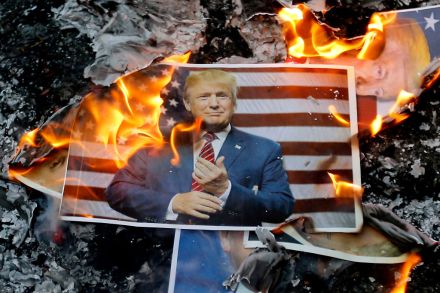
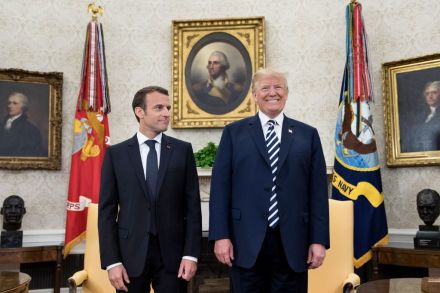
People are expressing bemusement that Presidents Trump and Macron should get on well, since they seem such different people. Surely a clue lies in their shared title. They are the only important executive presidents in the western world, so they have that particular combination of real power and ceremonial pomp which is rightly denied to prime ministers. They love it. Besides, they are not so different, though M.Macron is Gallicly suave and Mr Trump is Yankee brash, and the former is small and thin, the latter neither. Both seem to be egomaniacs who believe in and embody führerprinzip (though luckily neither leads a country which gives it anything like full rein). They recognise it in one another. They can pump it up further by mutual admiration. ‘And the flags.

The Spectator’s Notes | 19 April 2018

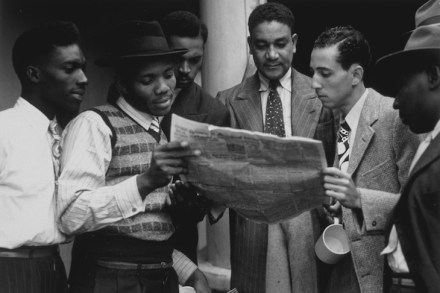
Everyone speaks about the Windrush. The boat was actually called the Empire Windrush. The full name reveals what the story was about. The boat was one of a series called Empire X, X being the name of a British river, as if each were a tributary to a common stream. Mass coloured immigration to Britain was the act of an imperial power — almost, one might say, an imperialist act. In 1948, a Labour government (Attlee’s) created a common ‘Citizenship of the United Kingdom and Colonies’. Just as we wanted the raw materials of our colonies, so — later in the day — we wanted their labour. This also explains the context of Enoch Powell’s ‘Rivers of Blood’ speech 50 years ago this week.

Unlike Labour, the Tories would never survive an anti-Semitism scandal

Yesterday, Parliament debated anti-Semitism. It is hard to get over the oddness of the situation. It is 150 years ago since the Conservatives produced their first Jewish leader: Benjamin Disraeli became Prime Minister on 27 February 1868. If the Tory party in the 21st century had a leader who was seen as tolerant of anti-Semitism, and was backed by its most anti-Semitic factions, the scandal would bring him and/or it crashing to the ground. Yet with Labour, this is not so. Mr Corbyn is a bit uneasy with his predicament, but not fearing for his political life. How have we got here? This is an extract from Charles Moore's Notes. The full article will be available in this week's issue.

Vladimir Putin and the new Cold War

In my researches for the final volume of my Thatcher biography, there is plenty, of course, about the Cold War, and its end. A constant bone of contention with the Russians was defection to the West. They were particularly furious about the MI6 exfiltration of the KGB man and British double agent Oleg Gordievsky in 1985. For several years afterwards, despite persistent personal pleas from Mrs Thatcher to Mikhail Gorbachev, the Soviet Union refused to allow his wife and small children to join him in Britain. The KGB persecuted her, and told her untruthfully that her husband had remarried. The family were not allowed out until 1991. But what is striking is that the underlying conversation about wider issues between London and Moscow was well sustained.

The Spectator’s Notes | 12 April 2018

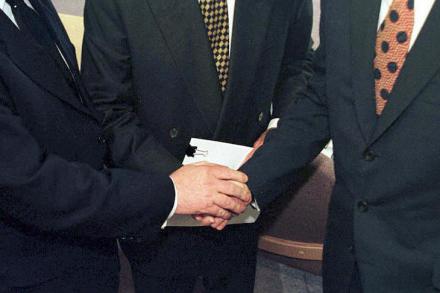
The Good Friday Agreement (GFA), which celebrates its 20th anniversary this week, is not a peace, but a truce. This does not mean that it has no value. Most people in Northern Ireland wish to abide by its terms; it has helped them get on with normal life. But it does mean that difference, rather than being gradually dissolved, is institutionalised. You almost have to sign up to one side or the other. A friend sends me the diversity form of the Northern Ireland civil service which, as a candidate for the service, you must fill in. Unlike some such forms, it offers no ‘prefer not to say’ option. Each candidate must declare whether he or she has ‘a Protestant community background’ or a ‘Roman Catholic’ one or neither.

No, David Miliband isn’t the Messiah

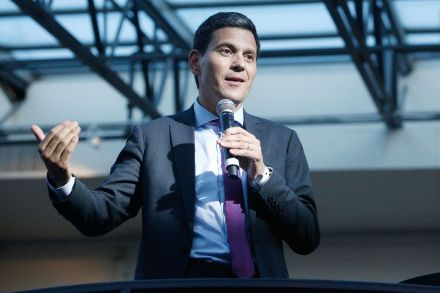
Rachel Sylvester of the Times is a brilliant journalist. I am proud to have given her her first Lobby job. But I cannot help smiling at her columns as she searches desperately for signs that a party which she thinks virtuous — centre-left, pro-European, with ‘open’ values — could rise from the dead (this, literally, is her metaphor in Easter week). Rachel’s current candidate for Messiah is David Miliband, who lives in New York. She quotes ‘one friend’ of his as saying, ‘David is still attracted to Britain.’ That is big-hearted of him, but the bigger question is, ‘Is Britain still attracted to David?’ One must recognise how deeply Blairism lies in ashes before one can find a phoenix to rise from them.

The Spectator’s Notes | 5 April 2018

What is it, psychologically, that makes it so hard for Jeremy Corbyn to recognise that some of his supporters are horrible people with horrible views (in this case, raving anti-Semites)? I remember asking myself the same question, in the early 1980s, about Tony Benn. I used to attend Labour party conferences and their numerous left-wing fringe meetings (often addressed by Benn’s no. 1 fan, J. Corbyn). Benn was always there, always courteous, genially smoking his pipe. Often, however, his supporters would say extremist things, and sometimes they would yell foul abuse — either at party and trade union moderates or at the media. Never once was Benn vile himself, but never once did he rebuke those who were.

What do Corbyn and Thatcher have in common?

The late Alan Watkins was so right that no half-hour spent with Who’s Who is ever wasted. This is partly because it is complete in certain categories — MPs, peers, bishops, judges, generals etc — and therefore dependable; partly because no one can be removed from it except by death, so that it builds up a picture of the past 50 years or so; and partly because each entry is self-composed, so that one can read character between the lines. It takes a certain buoyancy, for example, to dare to fill an entire column of the book with your own entry.

Civilisations isn’t ‘dumbed down’ – it’s too intellectual

I have been faithfully watching Civilisations. It is not at all dumbed down. Indeed, the series suffers from the opposite fault. It is too intellectual — pressed into the service of its presenters’ theories rather than telling a story which the common viewer can follow and enjoy. One finds oneself excited by a particular idea — Mary Beard on the ‘lack of light’ which is often a feature of religious art, David Olusoga on the way that Vermeer never opens windows on the wider world, yet contains symptoms of empire — globes, rugs, a beaver hat — in his interiors. But then one doesn’t learn where it is all tending.

The Spectator’s Notes | 28 March 2018

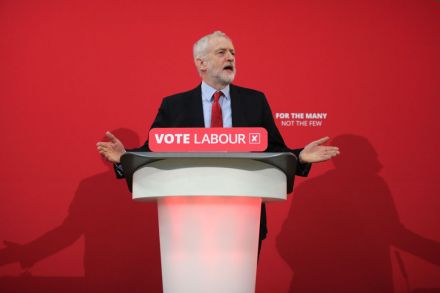
At last Jeremy Corbyn is being made to pay a price for Labour’s anti-Semitism under his leadership. It has now, for the first time, become definitely hard for him to get through mainstream interviews. He is challenged, and although his answers bend to the wind of criticism a little, this affords him no respite. His repeated response of saying how much he ‘detests all racism’ is like Sinn Fein’s traditional denunciation of violence ‘wherever it comes from’ — an evasion. His demeanour raises wider questions about whether he will ever answer anything which is difficult: there is a reason, after all, why he has not agreed to be interviewed on the Today programme since the election. One can see how uneasy he now is.

The Spectator’s Notes | 22 March 2018

For almost as long as I can remember, Eurosceptic Tory MPs have been defined by the media as ‘head-bangers’. As a result, few notice that they scarcely bang their heads at all these days. The European Research Group (ERG), now led by Jacob Rees-Mogg, is surprisingly united, and makes most of its arguments blande suaviterque. The noise of craniums bashing themselves against Pugin panelling is much louder on the other side — Anna Soubry in the Commons, Andrew Adonis in the Lords. The Eurosceptic head-bangers are being particularly cautious about this week’s transition deal. Although they dislike most of it, they broadly accept the whips’ arguments that if the party can agree the transitional arrangements, Brexit is assured, and if not, not.

Russia Today’s useful idiots

Some people I respect are content to go on the Russian TV channel RT, on the grounds that ‘they let me say what I think’. I’m afraid this is a form of vanity. Of course, RT lets you say what you think: they would be ludicrously ineffective propagandists if they didn’t. The point is that by appearing, you legitimise their platform. You help create the utter confusion about what is true and who is right which is the Russian government’s aim. To reverse the usual expression, your honest opinions allow lies to be surrounded by a bodyguard of truth.

Jeremy Corbyn’s Phrygian cap

Gimson’s Prime Ministers, out this week, is a crisp and stylish account of every one of them. I happened to be reading Andrew Gimson’s admiring essay on George Canning (PM for 119 days in 1827) just after Jeremy Corbyn’s parliamentary remarks about the Salisbury poisoning. The way Mr Corbyn talked, one got the impression that it was Britain which had caused Mr and Miss Skripal to be poisoned. Canning had a gift for light verse. He satirised the sort of Englishman who adored the French Revolution: ‘A steady patriot of the world alone,/ The friend of every country but his own.’ That Phrygian cap fits Mr Corbyn perfectly.

The Spectator’s Notes | 15 March 2018

Gimson’s Prime Ministers, out this week, is a crisp and stylish account of every one of them. I happened to be reading Andrew Gimson’s admiring essay on George Canning (PM for 119 days in 1827) just after Jeremy Corbyn’s parliamentary remarks about the Salisbury poisoning. The way Mr Corbyn talked, one got the impression that it was Britain which had caused Mr and Miss Skripal to be poisoned. Canning had a gift for light verse. He satirised the sort of Englishman who adored the French Revolution: ‘A steady patriot of the world alone,/ The friend of every country but his own.’ That Phrygian cap fits Mr Corbyn perfectly.

Italy’s next PM will be chosen by Brussels, not voters

Paolo Gentiloni, who may now have to step down since his Democratic party got only 18.7 per cent of the vote in the Italian elections, is the fourth Italian prime minister in a row not to have been chosen by the electorate. Voters have shown a repeated disinclination to support the candidate of Brussels, so Brussels has found ways of imposing one. Italy has not had the prime minister of its choice since Silvio Berlusconi was brought down, with the support of EU leaders, in 2011. After the latest result, when that 18.7 per cent represents the only uncritically pro-EU section of voter opinion, Brussels is in a quandary. Try to sustain Mr Gentiloni in some awkward coalition, or suborn one of the other party leaders?

The Spectator’s Notes | 8 March 2018

Almost eight million people have now watched Cathy Newman’s Channel 4 News interview with Jordan Peterson. This figure must be unique in the history of Channel 4 News online. Only a few minutes were broadcast on the original news programme, but Channel 4 then put out the full half-hour on YouTube, perhaps miscalculating the effects of watching the allegedly ‘transphobic’ Canadian clinical psychologist whose book 12 Rules for Life is selling out. I think what the majority of the eight million appreciate is that Peterson’s performance is noble. He attempts a clear exposition of his views about the differences between women and men. Despite every effort by Cathy Newman, he succeeds.

Poor Cathy Newman is the prisoner of the age

Almost eight million people have now watched Cathy Newman’s Channel 4 News interview with Jordan Peterson. This figure must be unique in the history of Channel 4 News online. Only a few minutes were broadcast on the original news programme, but Channel 4 then put out the full half-hour on YouTube, perhaps miscalculating the effects of watching the allegedly ‘transphobic’ Canadian clinical psychologist whose book 12 Rules for Life is selling out. I think what the majority of the eight million appreciate is that Peterson’s performance is noble. He attempts a clear exposition of his views about the differences between women and men. Despite every effort by Cathy Newman, he succeeds.

The key difference between the far right and the Islamists

Mark Rowley, who is just stepping down as the country’s chief counterterrorism officer, is a classic British policeman of the best sort — a low-key, quietly amusing, naturally moderate professional who does not play political games. He became something of a hero (not a word he would endorse) for his cool handling of last year’s atrocities. On Monday night, he delivered the Cramphorn Memorial Lecture at Policy Exchange, firmly entrenching the understanding which the British authorities were too long loth to recognise, that extremism — even when not itself violent — is a necessary condition for Islamist violence to develop. On one point, however, I felt Mr Rowley did not convince. He warned, justifiably, that right-wing terrorism is on the rise.

The Spectator’s Notes | 1 March 2018

Jeremy Corbyn wants Britain to ‘stay in a customs union’, according to the BBC. The phrase does not make sense. We could possibly stay in the customs union, if the EU decided to let us, but that is not the policy of his party or of the government. We cannot ‘stay’ in ‘a’ customs union, because that would require us to join something which does not at present exist. But the use of the reassuring word ‘stay’, in reference to an as yet unformed, unnegotiated customs union, is exactly the rhetorical sleight of hand which Mr Corbyn seeks. It is designed to persuade Remainer Conservative rebels that they must side with Labour in the forthcoming parliamentary vote.

Jeremy Corbyn’s custom union fantasy

Jeremy Corbyn wants Britain to ‘stay in a customs union’, according to the BBC. The phrase does not make sense. We could possibly stay in the customs union, if the EU decided to let us, but that is not the policy of his party or of the government. We cannot ‘stay’ in ‘a’ customs union, because that would require us to join something which does not at present exist. But the use of the reassuring word ‘stay’, in reference to an as yet unformed, unnegotiated customs union, is exactly the rhetorical sleight of hand which Mr Corbyn seeks. It is designed to persuade Remainer Conservative rebels that they must side with Labour in the forthcoming parliamentary vote.