Charles Moore

Charles Moore

Charles Moore is The Spectator’s chairman.

He is a former editor of the magazine, as well as the Sunday Telegraph and the Daily Telegraph. He became a non-affiliated peer in July 2020.

Civilisations isn’t ‘dumbed down’ – it’s too intellectual

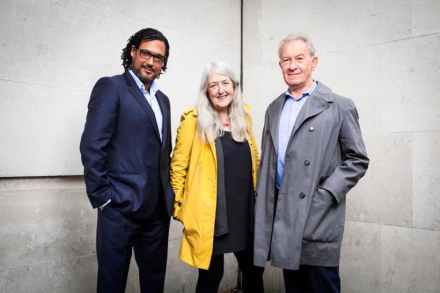
I have been faithfully watching Civilisations. It is not at all dumbed down. Indeed, the series suffers from the opposite fault. It is too intellectual — pressed into the service of its presenters’ theories rather than telling a story which the common viewer can follow and enjoy. One finds oneself excited by a particular idea — Mary Beard on the ‘lack of light’ which is often a feature of religious art, David Olusoga on the way that Vermeer never opens windows on the wider world, yet contains symptoms of empire — globes, rugs, a beaver hat — in his interiors. But then one doesn’t learn where it is all tending.
The Spectator’s Notes | 28 March 2018

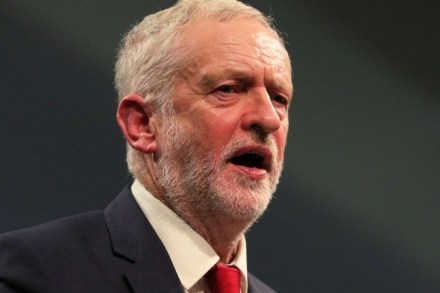
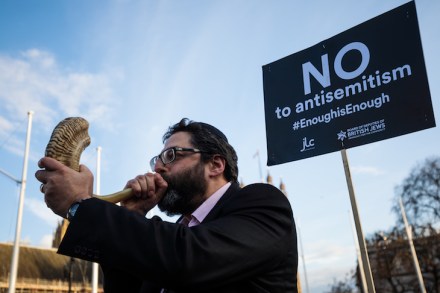
At last Jeremy Corbyn is being made to pay a price for Labour’s anti-Semitism under his leadership. It has now, for the first time, become definitely hard for him to get through mainstream interviews. He is challenged, and although his answers bend to the wind of criticism a little, this affords him no respite. His repeated response of saying how much he ‘detests all racism’ is like Sinn Fein’s traditional denunciation of violence ‘wherever it comes from’ — an evasion. His demeanour raises wider questions about whether he will ever answer anything which is difficult: there is a reason, after all, why he has not agreed to be interviewed on the Today programme since the election. One can see how uneasy he now is.

The Spectator’s Notes | 22 March 2018

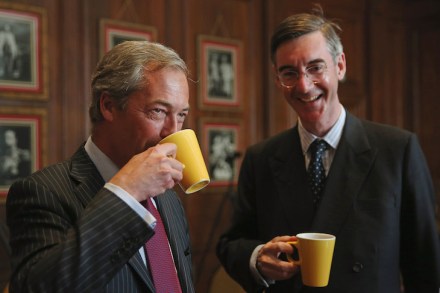
For almost as long as I can remember, Eurosceptic Tory MPs have been defined by the media as ‘head-bangers’. As a result, few notice that they scarcely bang their heads at all these days. The European Research Group (ERG), now led by Jacob Rees-Mogg, is surprisingly united, and makes most of its arguments blande suaviterque. The noise of craniums bashing themselves against Pugin panelling is much louder on the other side — Anna Soubry in the Commons, Andrew Adonis in the Lords. The Eurosceptic head-bangers are being particularly cautious about this week’s transition deal. Although they dislike most of it, they broadly accept the whips’ arguments that if the party can agree the transitional arrangements, Brexit is assured, and if not, not.

Russia Today’s useful idiots

Some people I respect are content to go on the Russian TV channel RT, on the grounds that ‘they let me say what I think’. I’m afraid this is a form of vanity. Of course, RT lets you say what you think: they would be ludicrously ineffective propagandists if they didn’t. The point is that by appearing, you legitimise their platform. You help create the utter confusion about what is true and who is right which is the Russian government’s aim. To reverse the usual expression, your honest opinions allow lies to be surrounded by a bodyguard of truth.

Jeremy Corbyn’s Phrygian cap

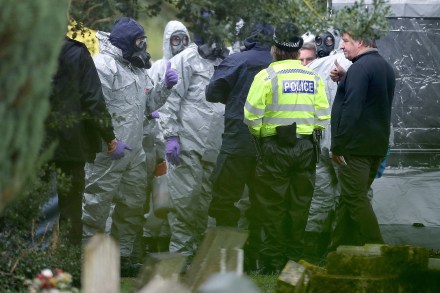
Gimson’s Prime Ministers, out this week, is a crisp and stylish account of every one of them. I happened to be reading Andrew Gimson’s admiring essay on George Canning (PM for 119 days in 1827) just after Jeremy Corbyn’s parliamentary remarks about the Salisbury poisoning. The way Mr Corbyn talked, one got the impression that it was Britain which had caused Mr and Miss Skripal to be poisoned. Canning had a gift for light verse. He satirised the sort of Englishman who adored the French Revolution: ‘A steady patriot of the world alone,/ The friend of every country but his own.’ That Phrygian cap fits Mr Corbyn perfectly.

The Spectator’s Notes | 15 March 2018

Gimson’s Prime Ministers, out this week, is a crisp and stylish account of every one of them. I happened to be reading Andrew Gimson’s admiring essay on George Canning (PM for 119 days in 1827) just after Jeremy Corbyn’s parliamentary remarks about the Salisbury poisoning. The way Mr Corbyn talked, one got the impression that it was Britain which had caused Mr and Miss Skripal to be poisoned. Canning had a gift for light verse. He satirised the sort of Englishman who adored the French Revolution: ‘A steady patriot of the world alone,/ The friend of every country but his own.’ That Phrygian cap fits Mr Corbyn perfectly.

Italy’s next PM will be chosen by Brussels, not voters

Paolo Gentiloni, who may now have to step down since his Democratic party got only 18.7 per cent of the vote in the Italian elections, is the fourth Italian prime minister in a row not to have been chosen by the electorate. Voters have shown a repeated disinclination to support the candidate of Brussels, so Brussels has found ways of imposing one. Italy has not had the prime minister of its choice since Silvio Berlusconi was brought down, with the support of EU leaders, in 2011. After the latest result, when that 18.7 per cent represents the only uncritically pro-EU section of voter opinion, Brussels is in a quandary. Try to sustain Mr Gentiloni in some awkward coalition, or suborn one of the other party leaders?

The Spectator’s Notes | 8 March 2018

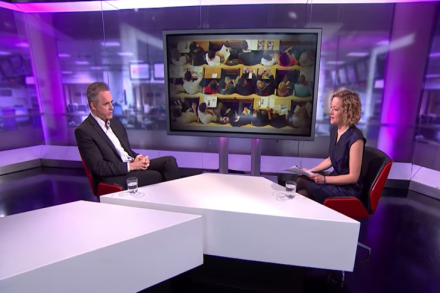
Almost eight million people have now watched Cathy Newman’s Channel 4 News interview with Jordan Peterson. This figure must be unique in the history of Channel 4 News online. Only a few minutes were broadcast on the original news programme, but Channel 4 then put out the full half-hour on YouTube, perhaps miscalculating the effects of watching the allegedly ‘transphobic’ Canadian clinical psychologist whose book 12 Rules for Life is selling out. I think what the majority of the eight million appreciate is that Peterson’s performance is noble. He attempts a clear exposition of his views about the differences between women and men. Despite every effort by Cathy Newman, he succeeds.

Poor Cathy Newman is the prisoner of the age

Almost eight million people have now watched Cathy Newman’s Channel 4 News interview with Jordan Peterson. This figure must be unique in the history of Channel 4 News online. Only a few minutes were broadcast on the original news programme, but Channel 4 then put out the full half-hour on YouTube, perhaps miscalculating the effects of watching the allegedly ‘transphobic’ Canadian clinical psychologist whose book 12 Rules for Life is selling out. I think what the majority of the eight million appreciate is that Peterson’s performance is noble. He attempts a clear exposition of his views about the differences between women and men. Despite every effort by Cathy Newman, he succeeds.

The key difference between the far right and the Islamists

Mark Rowley, who is just stepping down as the country’s chief counterterrorism officer, is a classic British policeman of the best sort — a low-key, quietly amusing, naturally moderate professional who does not play political games. He became something of a hero (not a word he would endorse) for his cool handling of last year’s atrocities. On Monday night, he delivered the Cramphorn Memorial Lecture at Policy Exchange, firmly entrenching the understanding which the British authorities were too long loth to recognise, that extremism — even when not itself violent — is a necessary condition for Islamist violence to develop. On one point, however, I felt Mr Rowley did not convince. He warned, justifiably, that right-wing terrorism is on the rise.

The Spectator’s Notes | 1 March 2018

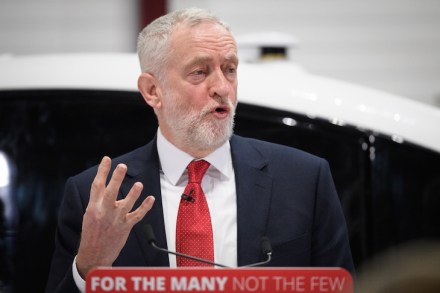
Jeremy Corbyn wants Britain to ‘stay in a customs union’, according to the BBC. The phrase does not make sense. We could possibly stay in the customs union, if the EU decided to let us, but that is not the policy of his party or of the government. We cannot ‘stay’ in ‘a’ customs union, because that would require us to join something which does not at present exist. But the use of the reassuring word ‘stay’, in reference to an as yet unformed, unnegotiated customs union, is exactly the rhetorical sleight of hand which Mr Corbyn seeks. It is designed to persuade Remainer Conservative rebels that they must side with Labour in the forthcoming parliamentary vote.

Jeremy Corbyn’s custom union fantasy

Jeremy Corbyn wants Britain to ‘stay in a customs union’, according to the BBC. The phrase does not make sense. We could possibly stay in the customs union, if the EU decided to let us, but that is not the policy of his party or of the government. We cannot ‘stay’ in ‘a’ customs union, because that would require us to join something which does not at present exist. But the use of the reassuring word ‘stay’, in reference to an as yet unformed, unnegotiated customs union, is exactly the rhetorical sleight of hand which Mr Corbyn seeks. It is designed to persuade Remainer Conservative rebels that they must side with Labour in the forthcoming parliamentary vote.

The Spectator’s Notes | 22 February 2018

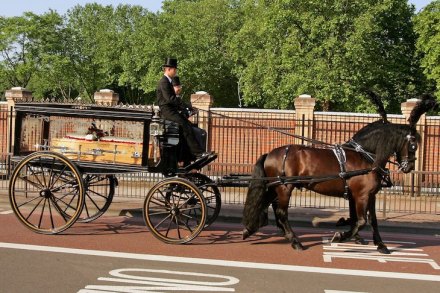
Bev died, aged 61. She was the wife of ‘Foxy’ John, kennel huntsman of our local hunt. Bev was the matriarch of the clan, with six children, 14 grandchildren, and other young people in need of help whom she cared for. Both John and Bev have Traveller ‘heritage’. That requires a Traveller funeral. Only the best would do. Bev was laid out for three days in an open coffin, lined in pink, in their rural council house — the only council house I know which plays host to a hunt meet. In the course of the wake, 500 guests somehow crammed in. As custom demands, the people of the house did not sleep. As is also the custom, a pyre consumed her possessions. On Monday, I drove there.

What Prince Charles should say to the Commonwealth

The Queen is Head of the Commonwealth. The Commonwealth is headquartered in London, in the splendour of Marlborough House. The Secretary-General of the Commonwealth, Lady Scotland, is British (and also Dominican). Britain is about to take the chair of the Commonwealth for the customary two years, and so the next Heads of Government Conference — probably the last to be attended by the Queen — will take place in London in April. At the same time, Britain is leaving the European Union. So it would seem that circumstances combine to favour a push by the British government to make the Commonwealth work much more actively in our favour. Being a Brexiteer, I am tempted by this idea; but in fact I fear it could all go horribly wrong.

The Spectator’s notes | 15 February 2018

The Queen is Head of the Commonwealth. The Commonwealth is headquartered in London, in the splendour of Marlborough House. The Secretary-General of the Commonwealth, Lady Scotland, is British (and also Dominican). Britain is about to take the chair of the Commonwealth for the customary two years, and so the next Heads of Government Conference — probably the last to be attended by the Queen — will take place in London in April. At the same time, Britain is leaving the European Union. So it would seem that circumstances combine to favour a push by the British government to make the Commonwealth work much more actively in our favour. Being a Brexiteer, I am tempted by this idea; but in fact I fear it could all go horribly wrong.

My conversion to Catholicism has warmed me to the CofE

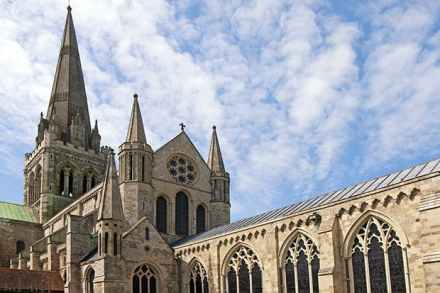
One of the pleasures of being a Catholic convert from Anglicanism is that I feel much warmer towards the Church of England than when I was in it. Last week, I went to a truly endearing Anglican ceremony in Westminster Abbey. After evensong, there was a short service to unveil a plaque in memory of the Chadwick brothers, Owen and Henry. Both were clergymen, both were Regius professors (Owen at Cambridge, Henry at Cambridge and Oxford). Both were tipped to be Archbishops, but preferred the life of the mind. They are the first brothers to be thus linked in an Abbey monument since John and Charles Wesley. Professor Eamon Duffy — who is, as his name hints, Catholic — gave a brilliant tribute to the two.

The Spectator’s Notes | 8 February 2018

A reader writes: ‘In my last letter, I called you a numbskull. However I should have qualified this with “sometimes you are a numbskull”.’ I must apologise for an example of my sometimes-numbskullery in this column last week when I asserted that Joe Chamberlain had opposed votes for women in Parliament in 1917. This would have been impossible, as he had been dead three years. I saw the ‘Rt Hon. J.A. Chamberlain’ in Hansard’s division lists and lazily failed to check. J.A. was, in fact, Joe’s son, Austen.

Why should suffragettes who broke the law be pardoned?

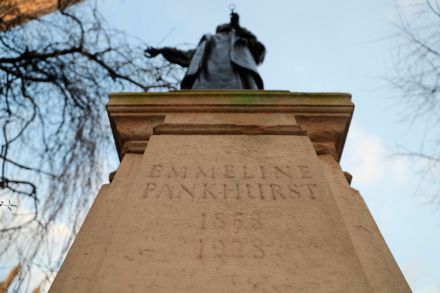
I am proud of my great-aunt Kathleen Brown, who once hijacked a horse-drawn fire-engine in the suffragette cause and charged it down Tottenham Court Road clanging its bell. She did time in Holloway. She was also sent to prison in Newcastle for breaking a window in Pink Lane Post Office, and went on hunger strike. She was tiny and brave and I remember her for having hair so long she could sit on it. Would she have wanted to be pardoned by Jeremy Corbyn, as he now proposes? Surely the point of a pardon is to correct an individual injustice — because the person concerned did not commit the crime, for instance. It is not to apply a retrospective political view to what happened.

Gavin Williamson’s unusual approach is a welcome change

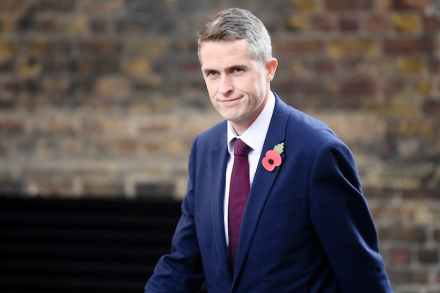
So we have to make do with a little touch of Gavin in the night. The new Defence Secretary has an unusual but rather successful technique. A likeable version of Uriah Heep (if that is imaginable), Mr Williamson is ever so ’umble about his intellectual attainments and deferential to those of others, yet ruthless in stealing a march on colleagues and swift in enlisting the media. Having been a loyal Chief Whip (no other sort is the slightest use), he is now an almost insurrectionist minister. His burst of activity has exposed the oddity that, since the 20th century, the Tories have chosen not to make the running on defence. They have taken pro-defence voters for granted and tried, for reasons both of cost and image, to play the subject down.

Darkest Hour is superb Brexit propaganda

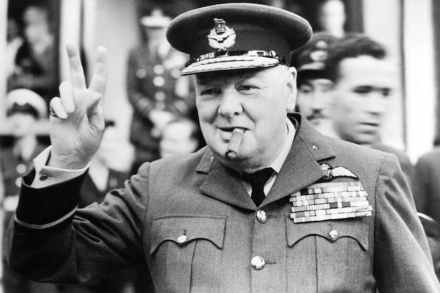
After I wrote that I would not be going to see Darkest Hour, so many people told me I should that I did. The Kino cinema in the village of Hawkhurst was packed for the afternoon showing and the youngish man in the seat next to me wept copiously. The scene in which Churchill travels by Tube is as absurd as I had heard. But one can understand the purpose of the device: here is a man who has become prime minister without a popular mandate yet has a stronger intuition of the general will than most of the high-ups who surround him. So he moves among the people — rather as Shakespeare presents ‘a little touch of Harry in the night’ on the eve of Agincourt: ‘That every wretch, pining and pale before,/ Beholding him, plucks comfort from his looks’.