Charles Moore

Charles Moore

Charles Moore is The Spectator’s chairman.

He is a former editor of the magazine, as well as the Sunday Telegraph and the Daily Telegraph. He became a non-affiliated peer in July 2020.

The BBC’s new female panel show is patronising to women

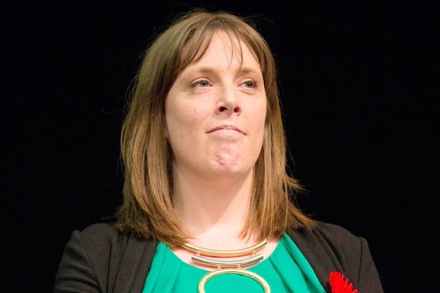
Where’s the F in News, new on Radio 4, is ‘an energetic, intelligent female-anchored show with a female panel’, according to its BBC description, of ‘fresh and funny challenges’. I listened to the latest episode. The panel of two comedians, one restaurateur and the Labour MP Jess Phillips were unanimous in their prejudices. The subjects were: vegetarianism (good, unless producing food that tastes like meat), Brexit (bad), Jacob Rees-Mogg (bad), Theresa May (bad/robot), parliamentary traditions (bad), Sir Christopher Chope (bad), new Girl Guide badges (good because they’ve abolished the ones for ironing and vermin control and introduced ones for ‘protesting’).

The Spectator’s Notes | 2 August 2018

Early in his career — and mine — I got to know Frank Field. Then, as now, he was being persecuted by extremists in his local Labour party. Then, as now, he was serenely uncompromising. Then, he won. But then — the early 1980s — the Bennite faction had not taken over the national party. Even Michael Foot, though fairly feeble in his fights with the hard left, came to Frank’s constituency and declared ‘If we lose Birkenhead, we lose the party.’ Now Benn’s most fervent disciple is Labour’s leader, and Frank has had not one word of support from the party’s central machine.

Don’t let Jeremy Corbyn gloss over his eurosceptic past

Here is quite a good trick question. Which current Member of Parliament has voted most often against pro-EU measures? I have not done the count, but I suppose it would be natural to guess Bill Cash, who entered Parliament in 1984. In fact, it is much more likely to be Jeremy Corbyn who came into the House in 1983 and has defied his party more often on the subject than has Sir William. It is fascinating how Mr Corbyn’s tenacious Bennite Euroscepticism has been glossed over by the media. The most likely candidate, however, must be Dennis Skinner, who entered Parliament in 1970 and must be the last person still sitting there to have voted against entry in the first place.

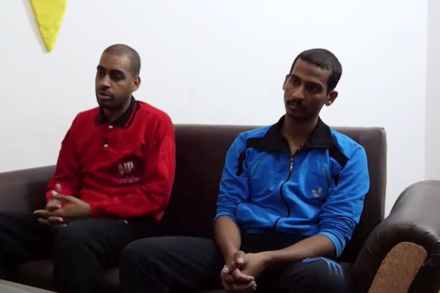
Could the CPS be trusted to prosecute the Isis ‘Beatles’?

At a speaker luncheon last week, someone I didn’t know passed me a note asking ‘Have you stopped supporting capital punishment?’ As far as I could remember, I have never supported capital punishment, so I was slightly at a loss for a reply. My problem with the subject is that I have always felt ambiguous. On the one hand, capital punishment is horrible, bad for the executioner as well as the victim, and fatal to the innocent. On the other, I cannot confidently argue that, when conducted under law, it would be wrong in every single circumstance. Some times, and perhaps some actions, are so bad that the death penalty may be needed to maintain order, crush evil and show who’s boss.

The Spectator’s Notes | 26 July 2018

At a speaker luncheon last week, someone I didn’t know passed me a note asking ‘Have you stopped supporting capital punishment?’ As far as I could remember, I have never supported capital punishment, so I was slightly at a loss for a reply. My problem with the subject is that I have always felt ambiguous. On the one hand, capital punishment is horrible, bad for the executioner as well as the victim, and fatal to the innocent. On the other, I cannot confidently argue that, when conducted under law, it would be wrong in every single circumstance. Some times, and perhaps some actions, are so bad that the death penalty may be needed to maintain order, crush evil and show who’s boss.

There is no such thing as a Brexit ‘no deal’

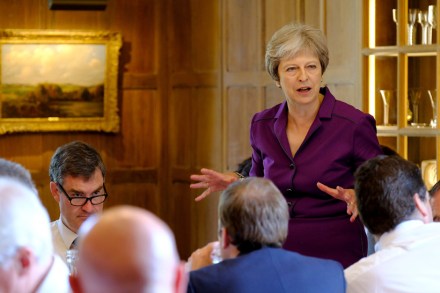
The collapse of Mrs May’s Chequers plan, followed by Tuesday’s failure of the Tory Remainers to defeat the government, creates a new situation. Mrs May greatly underestimated the threat to her from the ‘betrayal’ narrative which her plan invites. Two years of getting nowhere have made people long for decision and furious at Brussels dogmatism. There is a new appetite for no delay and for no deal. ‘No deal’ however, is not the right phrase. There is a deal — and we and the member states of the EU are already signed up to it. It is called World Trade Organisation terms. The clue to its nature is in the name: it allows the world to trade.

The Spectator’s Notes | 19 July 2018

The collapse of Mrs May’s Chequers plan, followed by Tuesday’s failure of the Tory Remainers to defeat the government, creates a new situation. Mrs May greatly underestimated the threat to her from the ‘betrayal’ narrative which her plan invites. Two years of getting nowhere have made people long for decision and furious at Brussels dogmatism. There is a new appetite for no delay and for no deal. ‘No deal’ however, is not the right phrase. There is a deal — and we and the member states of the EU are already signed up to it. It is called World Trade Organisation terms. The clue to its nature is in the name: it allows the world to trade.

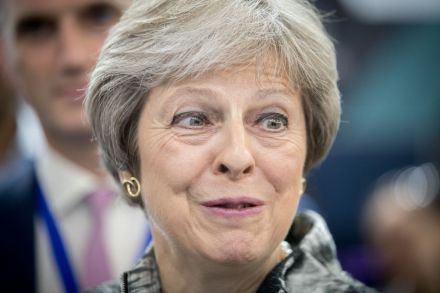
Why is Theresa May so dependent on Angela Merkel?

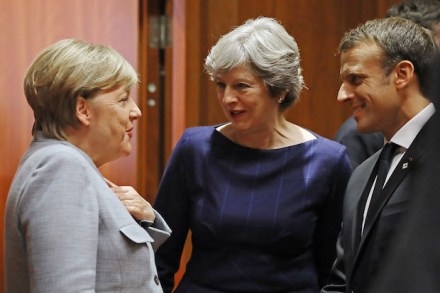
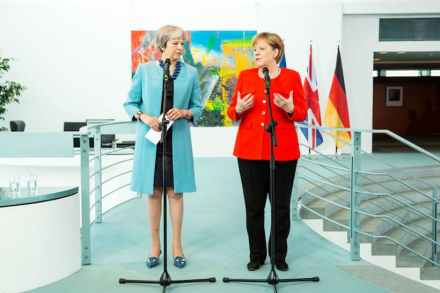
Why do the British turn to the Germans in their moments of European trouble? It never works. When Jacques Delors conceived his single currency plans, Mrs Thatcher over-relied on Karl Otto Pöhl at the Bundesbank to squash them. Dr Pöhl preferred to side with Helmut Kohl. When Britain was struggling to stay in the ERM in the late summer of 1992, the Major government put faith in what they thought were German promises to help them out. These failed to materialise. When David Cameron sought a new EU deal which would win him the 2016 referendum, he placed his greatest hopes in Angela Merkel, who offered him concessions so feeble that even he quickly gave up trying to sell them. Last week, Mrs May flew to Berlin.

The irreplaceable Lord Carrington

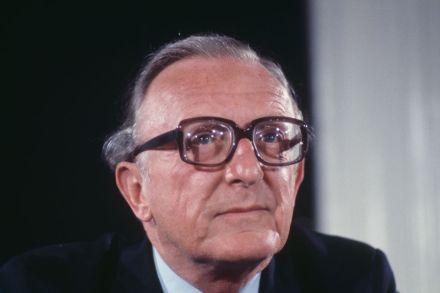
Lord Carrington, who has just died, may well have been longer in public life than any non-royal person ever. He took his seat in the House of Lords in 1946 (having already won the MC at Nijmegen in 1944), and never really retired until ill health confined him 70 years later. Hereditary privilege, I suppose, put him in; but what kept him there, giving him office under six prime ministers, as well as making him high commissioner to Australia, secretary-general of Nato etc? The obvious answer would be that, as someone who could not be elected, he was like the eunuch in the seraglio. Certainly prime ministers were disposed to trust him, in part because they knew he couldn’t have their job. Certainly, too, he had a strong sense of public service.

On Brexit, the Germans are against us

Why do the British turn to the Germans in their moments of European trouble? It never works. When Jacques Delors conceived his single currency plans, Mrs Thatcher over-relied on Karl Otto Pöhl at the Bundesbank to squash them. Dr Pöhl preferred to side with Helmut Kohl. When Britain was struggling to stay in the ERM in the late summer of 1992, the Major government put faith in what they thought were German promises to help them out. These failed to materialise. When David Cameron sought a new EU deal which would win him the 2016 referendum, he placed his greatest hopes in Angela Merkel, who offered him concessions so feeble that even he quickly gave up trying to sell them. Last week, Mrs May flew to Berlin.

The Spectator’s Notes | 12 July 2018

Why do the British turn to the Germans in their moments of European trouble? It never works. When Jacques Delors conceived his single currency plans, Mrs Thatcher over-relied on Karl Otto Pöhl at the Bundesbank to squash them. Dr Pöhl preferred to side with Helmut Kohl. When Britain was struggling to stay in the ERM in the late summer of 1992, the Major government put faith in what they thought were German promises to help them out. These failed to materialise. When David Cameron sought a new EU deal which would win him the 2016 referendum, he placed his greatest hopes in Angela Merkel, who offered him concessions so feeble that even he quickly gave up trying to sell them. Last week, Mrs May flew to Berlin.

Why won’t the BBC call ‘Mexico’s Corbyn’ a populist?

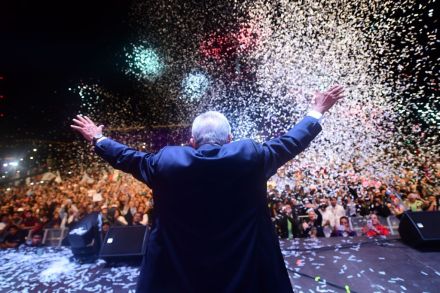
The career of the new President of Mexico, Andrés Manuel López Obrador (‘Amlo’), suggests he is a populist. He jumps from party to party and ends up founding his own. He advocates price ceilings for tortillas. Disputing his defeat in the presidential election of 2006, he proclaims himself ‘legitimate President’, wearing a presidential sash. Yet the BBC — with the honourable exception of Justin Webb on Today — avoids calling Amlo a populist, attributing the word only to his enemies (‘His critics call him a cheap populist’). This contrasts with its ready application of the word to Trump, Orban and Salvini. Amlo, of course, is left-wing, and the three just mentioned are not.

Brexit isn’t the cause of High Street woes

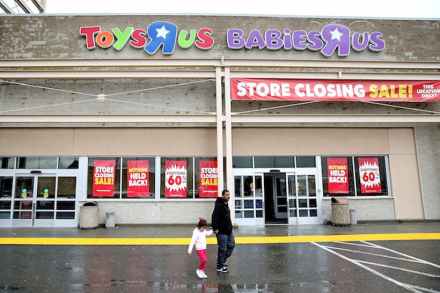
As someone who follows the news on Radio 4 at 6, 7 and 8 each morning, I notice that the bulletins begin very leftish and become slightly less so later. I assume the unit responsible, ‘Newsgathering’, works through the night from its default political position. So it relies heavily on the ready supply of ‘news’ from pressure groups, NGOs and right-on charities: ‘A new report warns that millions will die unless the government immediately injects £400 billion into X’; ‘A survey by an independent, Brussels-based think tank reveals that independent, Brussels-based think tanks believe that Brexit will be a disaster for Britain’. As actual news gets going, this dreary propaganda is sometimes dislodged by reality.

The Spectator’s notes | 5 July 2018

Newsmax, the magazine of the eponymous US conservative multiplatform network, carries a full page advertisement for ‘The Presidential 1911 Pistol’, produced by an organisation called Heroes and Patriots. This ‘beautifully engraved’ and ‘fully functional’ Limited Edition Colt Government 1911 A1 Semi-Automatic Pistol is gold-plated and holds 12 rounds. Its purpose is to ‘unite with our President and show support for his policies’. On the grips is a portrait of Donald Trump surrounded by Celtic scrollwork and thistles, ‘honoring the President’s Scottish heritage’. One side of the barrel proclaims ‘Make America Great Again’, the other ‘Drain The Swamp’.

Are wedding vows unfair against men?

We went to the perfect midsummer wedding of my wife’s god-daughter in Norfolk this weekend. The service was pure Book of Common Prayer, omitting only some of the longer prayers and the woman saying ‘obey’ and (I think) ‘serve’. The service states the theological nature of marriage (‘signifying unto us the mystical union that is betwixt Christ and His Church’), and then its purposes. These are 1) children, ‘to be brought up in the fear and nurture of the Lord’. 2) as ‘a remedy against sin, and to avoid fornication’. 3) for ‘the mutual society, help and comfort, that the one ought to have of the other, both in prosperity and in adversity’.

The Spectator’s Notes | 28 June 2018

Gordon Brown, echoing Aneurin Bevan, says that the greatest gift that the NHS brings to people is ‘serenity’. He is surely right that this is what it brought 70 years ago — for the simple, important reason that people would no longer need to say of treatment, ‘I just can’t afford it’. But comparable ‘serenity’ is provided, in different ways, in, for example, Germany, the Netherlands and Australia. Defenders of today’s NHS have to explain not why it is more serene than pre-1948, but whether it matches the current arrangements of comparable countries. ‘Serenity’ is not the word one would apply to many British hospitals today. In these Notes last week, I mentioned the fear felt by the old.

Don’t interfere with Britain’s charitable causes

A new body called the Charity Tax Commission has been asked to look into the £3.7 billion tax reliefs given to charities. The Financial Ombudsman, Sir Nicholas Montagu, chairs the commission. He asks, ‘Are the right charities benefiting and should we start asking some awkward questions about whether there might be more to show for the money if we distinguished between charities?’ He invites the views of interested parties. Jonathan Ruffer, the rescuer of Auckland Castle, about whom I have written in these pages, has sent Sir Nicholas an interesting reply, based on his experience of giving away £200 million (95 per cent of his post-tax income) to charitable causes. He strongly challenges the idea of the ‘right’ charities.

Dealing with Question Time’s left-wing claque

The departure of David Dimbleby from Question Time is certainly sad from the point of view of the panellist. He was, in recent years, one’s sole protector. Calm, humorous, very slightly bored (but too polite to show it), David reminded one by his mere presence that there is a world of sane and civilised people outside the studio. He cheered me in adversity, rather as I once felt when I discovered Château Latour for £12 in an otherwise unremarkable hotel in Blackpool during a party conference. I also got no sense of his politics. Because he is rich, successful and on the BBC, I assume he must be mildly left-wing; but he has never given me any evidence to confirm or refute this theory.

Fleet Street’s upskirting secret

Upskirting is such a pretty word: it sounds like a charming village in Yorkshire, or an olde worlde custom, like swan-upping. Actually, it is nasty, and not as new as people claim. Fragonard depicts it in ‘The Swing’ (though obviously the young man had no camera). Margaret Thatcher, who was most reluctant to wear trousers, nevertheless did so when she knew she would have to climb a ladder, because she did not trust the photographers. Upskirting has been the raison d’etre of the Sunday Sport ever since it was founded in 1986. In 1993, the Mirror published close-up pictures, taken by a concealed camera, of Diana, Princess of Wales, when working out in a gym. It paid the gym-owner, who had set up the camera, more than £100,000.

The Spectator’s notes | 21 June 2018

Seen from almost any point of view, the government’s decision to increase spending on the NHS is disgusting. It is cynical in its timing to coincide with the Health Service’s 70th birthday in England; weak in its refusal to tie the increase to any improvements; mendacious in its claimed link between the increase and a Brexit dividend; evasive in its refusal to present this as a straightforward tax rise; constitutionally improper in its efforts to ‘take the issue out of politics’ by trying to agree it for many years ahead; and, as always, for those who still think the NHS is ‘the envy of the world’ (have they actually asked the world?), ‘too little, too late’.