Charles Moore

Charles Moore

Charles Moore is The Spectator’s chairman.

He is a former editor of the magazine, as well as the Sunday Telegraph and the Daily Telegraph. He became a non-affiliated peer in July 2020.

Carrie Gracie’s first-world problem

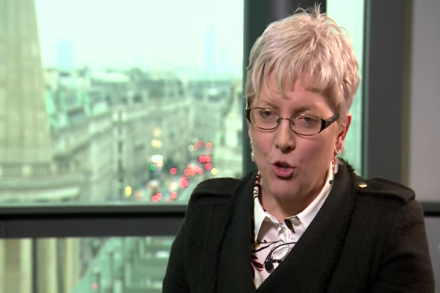
Carrie Gracie is more or less in the right, but I did laugh out loud when I heard her, on the BBC programme she was herself presenting, say that her resignation from her post as China editor over the equal pay issue had brought wonderful sympathy from ‘across the country and internationally’, as though speaking of the plight of the Rohingya. People who earn six-figure salaries and are allowed, by the organisation which employs them, to complain on air to millions about an aspect of their pay are not easy for most of us to regard as persecuted victims. Even Ms Gracie’s ‘resignation’ from her Beijing post seems to permit her to stay on the staff. Hers are what young people call ‘first-world problems’.

The Spectator’s Notes | 11 January 2018

Gavin Stamp, who died just before the year’s end, will be mourned by many Spectator readers. For years, particularly in the 1980s, he was the paper’s main voice on architectural questions, notably as they affected the public space. His voice, both angry and compassionate, would be raised whenever he thought someone in authority — in church, state, local government, big business — was damaging what belonged to the people. He was very important at changing official attitudes imbued with fag-end modernism. No one expounded better the conception of a building’s public purpose, so to hear him talk about, say, Lutyens’s Memorial to the Missing of the Somme at Thiepval, was revelatory.

Are we morally better people than our ancestors?

The doctrine of progress implies that things get better. This is clearly true in terms of scientific knowledge, though not necessarily of how that scientific knowledge is applied. It has proved broadly true, in our lifetimes, about economic and political freedom, though not so decisively that we can all sit back and relax. Is it also true of virtue? We often praise ourselves for having cast aside prejudice, taboo, imperialism, sexism and so on, but can we truthfully say that we are, on average, morally better people than our ancestors? We might simply be blind to different things. It is not difficult to make a list of virtues that are in decline (honour, patience, respect for the old) or not seen as virtues at all (virginity, obedience).

My childhood horror of a warm Christmas

As a child, I had a horror of the idea of Christmas in a hot place. Somebody told me that in Australia they ate roast turkey on the beach. This sounded positively irreligious, and I gave no consideration to the fact that the chief subject of the Christmas story probably never enjoyed a white Christmas himself (though it can be surprisingly cold in the Judaean hills at this time of year). Actually, I never experienced a white Christmas either, on the day itself, though I do remember the evening of Boxing Day 1962 when it began to snow, and didn’t melt till March. The other day, I re-read The Sword in the Stone by T.H. White. I loved the book when I was eight, but had almost forgotten it.

Is the Saudi Crown Prince putting his money where his mouth isn’t?

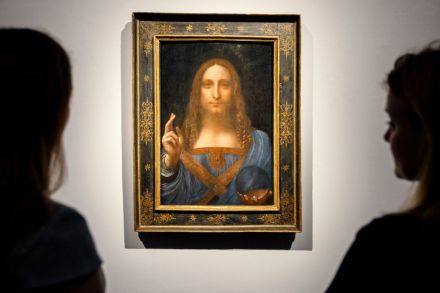
How interesting, if true, that the Crown Prince (and effective ruler) of Saudi Arabia, Mohammad bin Salman, is the real buyer of Leonardo’s ‘Salvator Mundi’, which sold for $450 million. If he were to bring back the picture to his own country — he is said to have bestowed it on Abu Dhabi — he would presumably be in breach of its laws. All Christian depictions, symbols and texts are forbidden there, even if held privately. The dominant traditions of Islam also forbid depictions of the human form. This applies more strongly to pictures of Jesus, who is a prophet in that religion, though quite definitely not regarded, as Leonardo shows him, as the Saviour of the World.

The Spectator’s notes | 13 December 2017

The doctrine of progress implies that things get better. This is clearly true in terms of scientific knowledge, though not necessarily of how that scientific knowledge is applied. It has proved broadly true, in our lifetimes, about economic and political freedom, though not so decisively that we can all sit back and relax. Is it also true of virtue? We often praise ourselves for having cast aside prejudice, taboo, imperialism, sexism and so on, but can we truthfully say that we are, on average, morally better people than our ancestors? We might simply be blind to different things. It is not difficult to make a list of virtues that are in decline (honour, patience, respect for the old) or not seen as virtues at all (virginity, obedience).

Cutting the number of MPs would be a mistake

The slow-moving attempt to reduce the number of MPs trundles forward. When David Cameron announced the idea, it sounded a reasonable saving. But it has two flaws. The first is that our system of smallish constituencies with one Member is essentially good, and is recognised as such by voters, who usually have a higher opinion of their own MP than of MPs in general. The other is that, if you cut the number of MPs but keep the number of ministers the same, you make the ‘pay-roll vote’ even more significant than it is now. After Brexit, Parliament should grow stronger. Government should not get proportionally bigger.

Cressida Dick’s response to the Damian Green row deserves credit

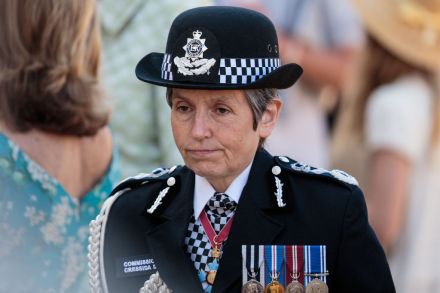
Because there is a hue and cry against Damian Green, the media underreported the remarks of Cressida Dick, the Metropolitan Police Commissioner, on Monday. They were notable, though, for their jargon-free English and their clarity. This is what she said about the ex-policemen reviving allegations of having found (legal) pornography on Mr Green’s computer nine years ago: ‘Police officers have a duty of confidentiality. We come into contact with personal information very regularly, sometimes extremely sensitive… We all know that we have a duty to protect that information and to keep it confidential. In my view, that duty endures… after you leave the service, so I believe that what this officer and, indeed, other retired officers, appear to have done, is wrong.

The Spectator’s Notes | 7 December 2017

I’m afraid I have a deep faith in the Democratic Unionist Party’s capacity to cede an issue of principle in return for more gold, baubles, Renewable Heat Incentives etc. It may well give in, after receiving some bung, in a few days. But its resistance, at the time of writing, to the idea of ‘regulatory alignment’ with the Republic, seems wholly justified. This is not a pernickety matter solely for the province — it should apply just as much to the entire United Kingdom. If we agree to align trade rules with EU ones (as opposed to each recognising the other’s rules), we are sacrificing the economic point of Brexit, which is competitive advantage.

Meghan Markle ticks almost every modern box

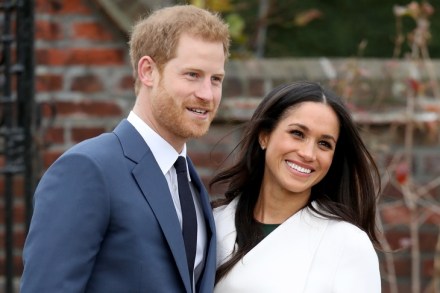
We are congratulating ourselves and the royal family on overcoming prejudice by welcoming Meghan Markle’s engagement to Prince Harry. But in fact this welcome is cost-free: Ms Markle’s combination of Hollywood, mixed ethnicity, divorced parents, being divorced herself and being older than her fiancé ticks almost every modern box. It was harder, surely, for Kate Middleton. She was simply middle-class, Home Counties, white, and with no marital past — all media negatives. Her mother was a former flight assistant. People made snobby jokes about ‘cabin doors to manual’. There was nothing ‘edgy’ about Kate that could be romanticised.

The government’s ‘industrial strategy’ is harmless nonsense

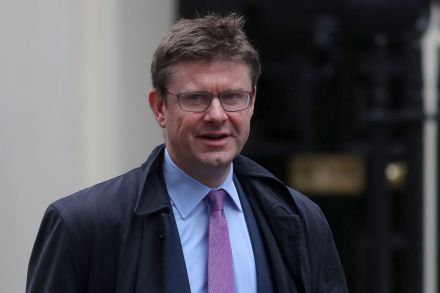
‘Industrial strategy’ must be added to this column’s collection of phrases which automatically lower the spirits. Others include ‘replacement bus service’, ‘all the toys’ and ‘smart casual’. There is literally no need for any government to have one — what industrial strategy built Silicon Valley? — and it is literally impossible to remember, when one has been announced, what it is. (If you doubt me, try reading Greg Clark’s ‘Our vision to make Britain fit for the future’ in Tuesday’s Daily Telegraph.) Its sole raison d’être is presentational: it is (sadly) considered better to claim you have a plan than to explain why you don’t.

There is literally no need for any government to have an ‘industrial strategy’

‘Industrial strategy’ must be added to this column’s collection of phrases which automatically lower the spirits. Others include ‘replacement bus service’, ‘all the toys’ and ‘smart casual’. There is literally no need for any government to have one — what industrial strategy built Silicon Valley? — and it is literally impossible to remember, when one has been announced, what it is. (If you doubt me, try reading Greg Clark’s ‘Our vision to make Britain fit for the future’ in Tuesday’s Daily Telegraph.) Its sole raison d’être is presentational: it is (sadly) considered better to claim you have a plan than to explain why you don’t.

The Spectator’s notes | 30 November 2017

We are congratulating ourselves and the royal family on overcoming prejudice by welcoming Meghan Markle’s engagement to Prince Harry. But in fact this welcome is cost-free: Ms Markle’s combination of Hollywood, mixed ethnicity, divorced parents, being divorced herself and being older than her fiancé ticks almost every modern box. It was harder, surely, for Kate Middleton. She was simply middle-class, Home Counties, white, and with no marital past — all media negatives. Her mother was a former flight assistant. People made snobby jokes about ‘cabin doors to manual’. There was nothing ‘edgy’ about Kate that could be romanticised.

Germany’s green energy drive left Merkel vulnerable

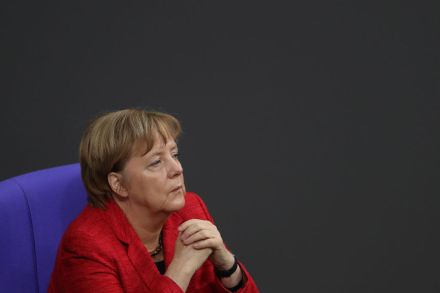
For a very long time, Angela Merkel successfully appealed to the post-war German longing for consensus. She hugged potential rivals in her motherly embrace. The rise of Alternative für Deutschland (AfD) makes this much more difficult. As its name suggests, it really does offer something different. Given its pariah status, people assumed that parties would happily coalesce against it after its electoral breakthrough. But in fact its presence opens up two big discontents — mass immigration and energy prices — forcing other parties to consider their positions. Immigration gets most of the headlines here, but the energy issue is almost equally problematic. Germany’s consumers have to pay huge bills because of their government’s determination to go green.

The Spectator’s Notes | 23 November 2017

Windsor Castle on Monday night sounds like a children’s party magnified. The rooms were filled with golden-leaved trees. A giant block of ice carved with the initials of the Queen on one side and the Duke of Edinburgh on the other dominated the reception room. Her sons wore their Windsor coats. A magician made a table levitate and move unsupported round the room. As with a children’s party, there were no speeches, and everyone was pleased and excited. After 70 years married, the two nonagenarians involved presumably felt, among family and friends, that they had earned the right to be unserious. The occasion must have been sweet for Prince Philip. All those years ago, he was patronised.

Is tax avoidance always wrong?

In the argument about tax avoidance, people feel very strongly, yet it is hard to define wrong behaviour. We all know that tax evasion, being illegal, is wrong. But what tax behaviour is legal, yet wrong? Take a deliberately trivial example. Safety riding hats carry no VAT if they are sold as children’s hats. No law says that only children may buy or wear them, and no law limits their size. So it is commonplace for adults, without any dishonesty, to buy children’s riding hats for themselves to avoid the VAT. I struggle to see this as immoral. Is it just a matter of scale, then? Is it all right to avoid 20 per cent of the cost of a riding hat but all wrong to avoid 40 per cent of the cost of dying by passing wealth on early or through trusts? If so, why?

The Spectator’s Notes | 16 November 2017

Although we all see rather too much of the present Mr Speaker, it was a good innovation that he and Lord Fowler, the Speaker of the House of Lords, laid wreaths at the Cenotaph on Sunday. It seems odd this never happened before: a parliamentary tribute is fitting. Since we shall soon, God willing, recover our parliamentary sovereignty, it is right to start paying more attention to the sovereign institution. I was amazed, listening to the PM programme on Tuesday, that the BBC led with an unadorned report of the latest Commons debate on Brexit. It was such a broadcasting novelty. For years, the media have given the most perfunctory attention to what the people we elect actually say in the chamber to which we elect them.

What tax behaviour is legal, yet wrong?

In the argument about tax avoidance, people feel very strongly, yet it is hard to define wrong behaviour. We all know that tax evasion, being illegal, is wrong. But what tax behaviour is legal, yet wrong? Take a deliberately trivial example. Safety riding hats carry no VAT if they are sold as children’s hats. No law says that only children may buy or wear them, and no law limits their size. So it is commonplace for adults, without any dishonesty, to buy children’s riding hats for themselves to avoid the VAT. I struggle to see this as immoral. Is it just a matter of scale, then? Is it all right to avoid 20 per cent of the cost of a riding hat but all wrong to avoid 40 per cent of the cost of dying by passing wealth on early or through trusts? If so, why?

What part does ageism play in the ‘Pestminster’ backlash?

I wonder if a factor additional to those widely mentioned lies behind differing attitudes to the ‘Pestminster’ scandal. It is well known in every generation that the young find it disgusting that old people (by which they mean anyone over 40) should have sex at all. In his own youth, the late Auberon Waugh wrote an article on this theme which enraged the now forgotten but distinguished novelist William Cooper (who used to write a column for this paper called Scenes from Science). Cooper was a passionate advocate and (uxorious) practitioner of sex for the old, and used to curse Waugh at every opportunity. Waugh, however, was probably more in tune with the zeitgeist.

The Spectator’s Notes | 9 November 2017

Let us assume — which we shouldn’t — that it is automatically wrong for the Queen to benefit financially from funds invested offshore. Let us agree — though we shouldn’t — to declare ourselves shocked that the Duchy of Lancaster put money on her behalf into funds in Bermuda and the Cayman Islands, and later, Guernsey. Let us forget — though it is difficult — that she is the Queen of all those places, and therefore that it is almost as strange to complain about her money being in them as it would be to complain about it being invested in Britain. Let us accept — though no evidence has been produced — that tax-dodging is involved.