Charles Moore

Charles Moore

Charles Moore is The Spectator’s chairman.

He is a former editor of the magazine, as well as the Sunday Telegraph and the Daily Telegraph. He became a non-affiliated peer in July 2020.

The Spectator’s Notes | 8 November 2018

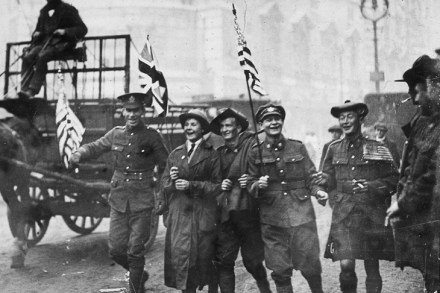
The sixth of November 1918 was remembrance day for my great-grandfather, Norman Moore. It was the fourth anniversary of the death of his younger son, Gillachrist (known as Gilla), a second lieutenant in the Royal Sussex Regiment, who had been killed at the first battle of Ypres. Sitting quietly in his London house in Gloucester Place, Moore heard shouting in the street: rumours of peace were spreading. ‘If it be so,’ he wrote in his diary, ‘how appropriate on Gillachrist’s day for he gave his life to resist German power.’ It became so five days later. On 9 November, NM (as he was always called) attended the Lord Mayor’s Banquet in Guildhall: ‘A fanfare of trumpets announced Mr Lloyd George.

The faulty logic of a ‘Norway for Now’ Brexit

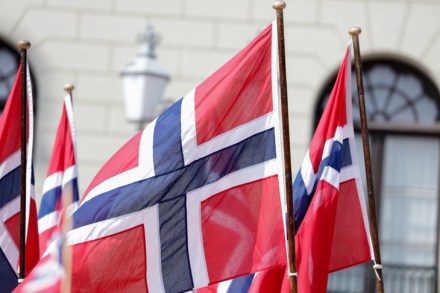
The campaign ‘Norway for Now’, an idea promoted by Nick Boles, is that Britain should join the European Economic Area and EFTA, until such time as we can move further out of the EU, for example with a Canada-style free-trade deal. This is what Norway and Iceland and Liechtenstein do. The idea sounds nice as a friendly and temporary compromise. But in fact the psychology is wrong. Such arrangements were devised more as an entry chamber to full membership (which is what Norwegian elites still want) than as part of an exit strategy. The Norwegian Prime Minister is now making this point. The point of Leave is to escape the gravitational pull of Brussels. Why make self-contradictory efforts to stay in the orbit and leave it at the same time?

Will a ‘zero tolerance’ approach stop attacks on NHS staff?

Obviously it is wrong to attack NHS staff. But does the government’s new ‘zero tolerance’ policy consider why such attacks take place? There are eternal reasons, such as the inherent nastiness of some people, and wider social ones, such as drug abuse. Are there also specific NHS-related ones too, though? The worst aspects of the NHS are not usually medical: they are to do with a bureaucracy which puts patients last. It is utterly extraordinary, for example, that a waiting time of four hours in A&E is now the norm or even, it would seem, the (often missed) target. Often have I sat there wondering not at the aggression of patients, but at their quiet acceptance of such ill treatment. It is wrong when patients attack, but not surprising.

The Spectator’s Notes | 1 November 2018

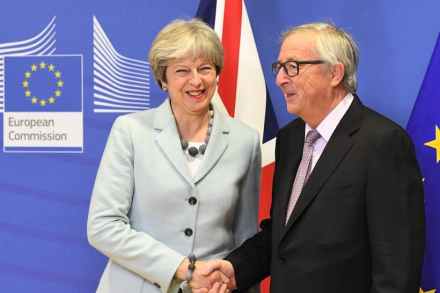
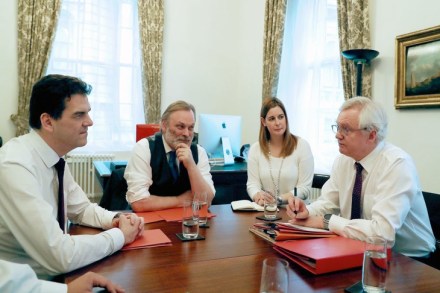
At the Brexit-related cabinet last week — as revealed by James Forsyth in these pages — David Lidington made an intervention in support of the Prime Minister’s approach to the negotiations. He was, he said, the only person present who had been an MP at the time of ‘Black Wednesday’, when the pound fell out of the ERM on 16 September 1992. It had been so disastrous and divisive, he went on, that the government must at all costs avoid a repeat over Brexit. Many heads nodded sagely. Mr Lidington, a moderate and public-spirited man, was quite right about the pain caused to his party 26 years ago; but the interests of the Tories and of the nation are not necessarily the same thing.

Violent metaphors in politics are nothing new

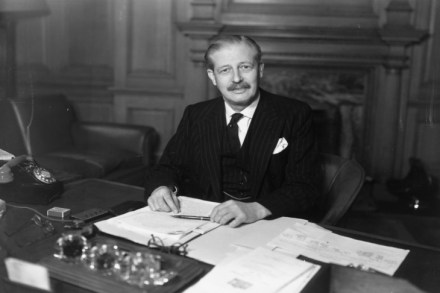
There is much shock professed about the metaphors used to describe Mrs May’s political plight — talk of the ‘killing zone’, or her being stabbed, and worse. I feel this shock myself, but in fact such metaphors are routine in politics and almost always have been. Think, for example, of Harold Macmillan’s ‘Night of the Long Knives’ — arguably more tasteless, since it compared a cabinet reshuffle with a Nazi murder spree. The real reason it seems shocking in this case surely, as it did when John McDonnell favourably invoked people who wanted to lynch Esther McVey, is that it is men speaking about a woman. On this, old-fashioned chivalry and modern feminism agree.

Making the right-wing case for George Orwell

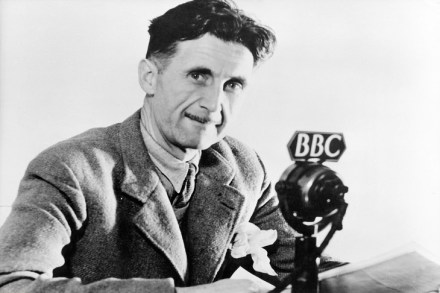
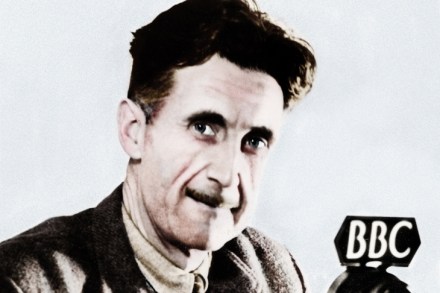
This year’s Orwell Lecture will be delivered by the novelist Kamila Shamsie. She will be complaining, it is announced, about this government’s talk of citizenship being ‘a privilege and not a right’. (Actually, it is both.) No doubt she will have interesting points to make, but it is a pity that Orwell’s flame is always tended by the left. There is a right-wing case for Orwell, or, to be more precise, an anti-left-wing case. Plenty of Orwell’s writing about England could make him a proto-Brexiteer, and it would be interesting to air this just now. His greatest satires were directed chiefly at communists, and he had a hearty dislike of the New Statesman.

Nick Clegg’s move to Facebook makes perfect sense

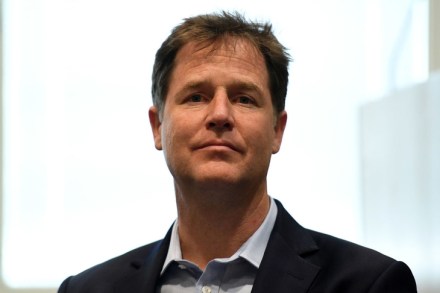
Do you remember that brief couple of weeks in British history when we all had to say ‘I agree with Nick’? It seems a long time ago, and now Sir Nick Clegg is off to Silicon Valley to be the head of Facebook’s global affairs and communications team. Some sneer, but the move makes perfect sense. Correctly clocking that he has no future in British politics, and that the European Union is not an area of growth and opportunity, he thinks that the United States has a brighter future than our common European home. I agree with Nick. This article is an extract from Charles Moore's Spectator notes, available in this week's magazine.

The Spectator’s Notes | 25 October 2018

Mrs May says she is taking her stand on the issue of Northern Ireland and the integrity of the United Kingdom. If so, good; but it cannot be the whole truth. After all, she surrendered on the Irish border issue in negotiations last December until, at the very last minute, the DUP forced her to row back. I think the irreducible core of her position is something which she does not fully disclose: that she is determined to keep Britain in the customs union, though perhaps only approximately and certainly by another name. This cannot work, surely, because to the EU it is ‘cherry-picking’ and to the Brexiteers it is BRINO, but there must be a reason why she revives it each time it is stamped on.
Did 750,000 people really attend the People’s Vote march?

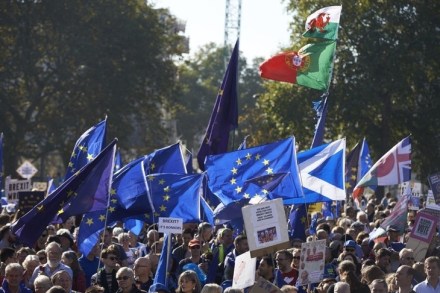
If you think about it, it is obvious that The People’s Vote march last Saturday in London could not have been attended by 750,000 people, as its organisers allege. That is the equivalent of every man, woman and child in Edinburgh, Oxford and Cambridge (to take three Remain-voting cities). Sky News reported that the organisers claimed more than 500,000 (itself a preposterous figure), and by Monday this had swollen in most reports by 250,000. Only the Sunday Telegraph mentioned that such estimates are dubious.

Isn’t every crime a hate-crime?

Can you think of a serious crime which does not involve hate or, at the very least, contempt? You must hate people to murder them, rape them, rob them, beat them up, post excrement through their letterbox or even defraud them. This intense hostility is a good reason for punishing such actions. The concept of ‘hate crime’ ignores this. It fastens on particular hatreds, making it worse for, say, a black person to call a white person a ‘white bastard’ than for him to call a black person a ‘f***ing bastard’ (or vice versa). Why? Racism, religious enmity, anti-gay feeling etc are sources and triggers of hate, so they are often important factors in a crime, but once they are specially categorised they skew the system to downplay all other forms of hate.

The Spectator’s Notes | 18 October 2018

Can you think of a serious crime which does not involve hate or, at the very least, contempt? You must hate people to murder them, rape them, rob them, beat them up, post excrement through their letterbox or even defraud them. This intense hostility is a good reason for punishing such actions. The concept of ‘hate crime’ ignores this. It fastens on particular hatreds, making it worse for, say, a black person to call a white person a ‘white bastard’ than for him to call a black person a ‘f***ing bastard’ (or vice versa). Why? Racism, religious enmity, anti-gay feeling etc are sources and triggers of hate, so they are often important factors in a crime, but once they are specially categorised they skew the system to downplay all other forms of hate.

Why the civil service’s Brexit approach is damaging the negotiations

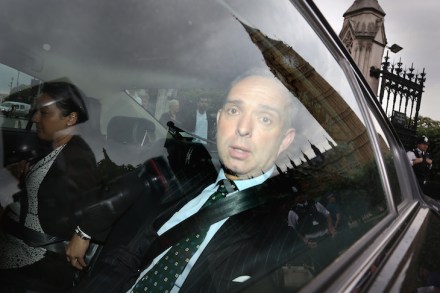
Sir Mark Sedwill, the acting cabinet secretary, wrote to the Times on Tuesday to defend the honour of Olly Robbins, the Prime Minister’s EU adviser, who is credited, if that is the mot juste, with delivering Brexit. He was right to do so, because Mr Robbins is not allowed, by the rules, to defend himself, and ministers have unfortunately become readier than in the past to brief against civil servants. (And it must be said, civil servants to brief against ministers: look at the torrent of stuff against Boris Johnson while he was Foreign Secretary.) But I would ask Sir Mark to consider the question as it looks from the outside. I suppose I know several scores of existing and former civil servants and diplomats quite well, some very well.

It’s the last chance to save the planet – until next time

‘Final call to halt “climate catastrophe”’, said the BBC’s website, covering the ‘special report’ of the Intergovernmental Panel on Climate Change after its meeting in South Korea. It won’t be the final call, though. Every IPCC conference is the ‘last chance to save the planet’, according to its promoters. What is more interesting is the way news organisations are gradually downgrading this story as the years pass. Even the BBC website did not put it top, at least by the time I looked early on Monday evening.

The Spectator’s Notes | 11 October 2018

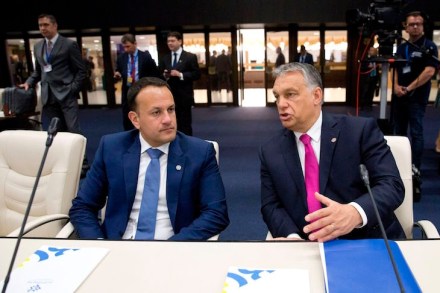
Although, in David Goodhart’s famous distinction, I see myself as one of the ‘Somewheres’ rather than the ‘Anywheres’, I do not believe in nationalism (as opposed to patriotism). Nationalism always involves falsified history and sees identity as a zero-sum game. Nation states should be respected, not deified, and are usually the better for not being ethnically ‘pure’. But the Anywheres’ attacks on nationalism are interestingly selective. They hate Viktor Orban’s Hungarian version, for instance, but love Leo Varadkar’s Irish one. The avowedly internationalist EU uses Irish nationalism as its biggest moral justification for blocking Brexit.

Is Scotland getting bored with Nicola Sturgeon’s nationalism?

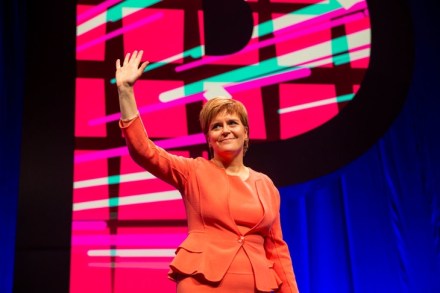
Nicola Sturgeon, Scotland’s First Minister, is not stupid, and there are signs in her annual party conference this week that she realises she pushed things too hard. Instead of clamouring for a second Scottish independence referendum, she has now switched to calling for a second Brexit referendum first. Nationalism within a wider nation, such as Scotland’s or Catalonia’s, does well when it expresses revolt, but hits a ceiling when it tries to take full independence. The classic example is Quebec, which has flirted with independence for nearly half a century. Now, as Ms Sturgeon will be uneasily aware, Quebec has become bored with its nationalists. The Parti Québécois won only 17 per cent of the vote in last week’s province-wide elections.

Boris’s critics are helping his cause

There are, one must admit, things to be said against Boris Johnson, but his leading critics do not understand that their attacks assist him. On Tuesday in Birmingham, Mrs May tried to upstage his arrival by claiming she had a new policy about post-Brexit immigration. She didn’t. The only person she upstaged was her Home Secretary, Sajid Javid, who should have been left alone to speak about a subject which, both by his job and his background, is his. Boris was boosted by her hostility, and people listened to his wide-ranging speech. His opponents must understand his subversive power instead of being pompous about it. He is clever. A classic device of our times, much employed by New Labour, is to set up a media hue and cry — ‘Where’s X?

The Spectator’s Notes | 4 October 2018

There are, one must admit, things to be said against Boris Johnson, but his leading critics do not understand that their attacks assist him. On Tuesday in Birmingham, Mrs May tried to upstage his arrival by claiming she had a new policy about post-Brexit immigration. She didn’t. The only person she upstaged was her Home Secretary, Sajid Javid, who should have been left alone to speak about a subject which, both by his job and his background, is his. Boris was boosted by her hostility, and people listened to his wide-ranging speech. His opponents must understand his subversive power instead of being pompous about it. He is clever. A classic device of our times, much employed by New Labour, is to set up a media hue and cry — ‘Where’s X?

Smuts-shaming at the University of Cambridge

One should not rise to the bait, but the latest little ‘Rhodes must fall’ type story makes it hard. Cambridge University, of which Jan Smuts was once Chancellor, has removed his bust from public display. According to John Shakeshaft, the deputy chairman of the university’s governing council, Smuts has ‘uncomfortable contemporary significance’, as ‘part of the system that led to apartheid’. No mention that the party that Smuts led was the fierce opponent of the National Party, which introduced apartheid in South Africa. True, Smuts, like virtually every white leader of his generation, did not want full democratic rights for black people in South Africa, but there are other things to be said.

Xi Jinping avoids the Hundred Acre Wood

Why does President Xi Jinping of China dislike being compared to Winnie-the-Pooh? The new film about Christopher Robin and his teddy bear has been banned in China, apparently because Chinese dissidents make the comparison. True, Pooh is a bear of very little brain, lacks leadership skills and is somewhat stout, but it seems a friendly thought all the same. Wouldn’t a dictator be pleased to be considered cuddly? It is interesting that characters from children’s books are seen as subversive. Saparmurat Niyazov (‘Turkmenbashi’), the late dictator of Turkmenistan, passed a law banning anyone from dressing up as a hobbit. I wonder if, in Pooh’s case, there is some cultural misunderstanding.

Labour plotters: please don’t overthrow Jeremy Corbyn just yet

According to the Daily Express, a tightly knit group of fanatical Labour moderates have been meeting in a country retreat to plot the overthrow of Jeremy Corbyn. Chuka Umunna, Chris Leslie and another ten or so smoothy-chops have met secretly for away-days at Fair Oak Farm, near Mayfield in Sussex, the paper claims. This scoop is a slight blow to me, since I live only a few miles away and failed to notice the plotters, but a much graver one to this country’s greatest defender of ordinary decent people, Paul Dacre, whose large southern estate all but borders Fair Oak. How did the Daily Mail’s inferior rival steal this story from under his nose? Those of us — including, of course, Mr Dacre — who support the cause of Leave, do not welcome such plots.